Saffron Iron Content: Is Saffron High in Iron?
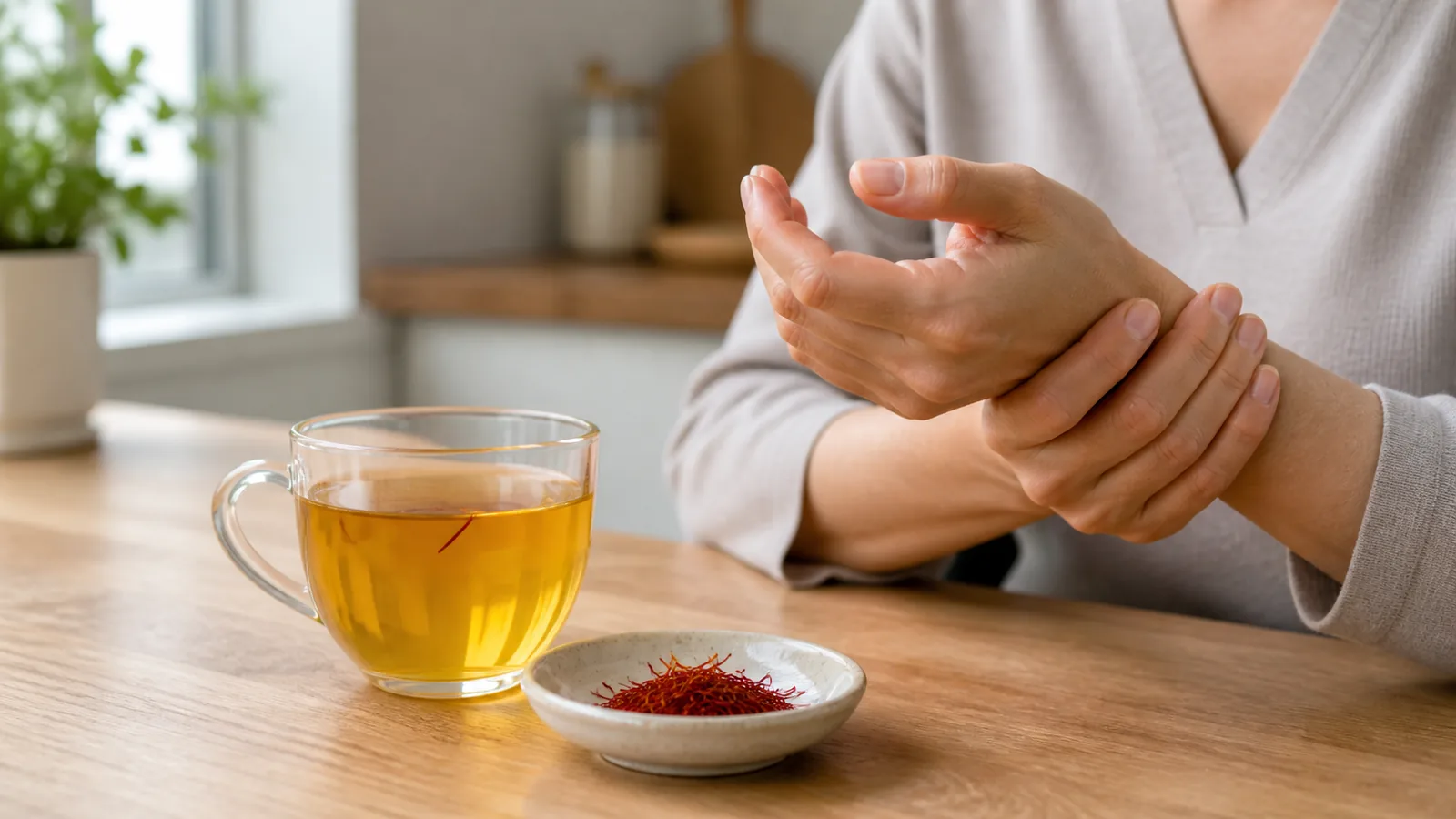
Saffron contains iron, but it is not a meaningful source in the amount used for cooking. The spice looks fairly iron-rich when nutrition data are shown per 100 grams. A normal pinch weighs only a tiny fraction of that, however, so the iron it contributes is correspondingly small.
That distinction matters if you are comparing saffron with foods eaten by the bowlful or serving. Saffron can add aroma, colour and flavour to an iron-rich meal, but it should not be treated as an iron supplement or relied on to correct a deficiency.
How much iron is in saffron?
The USDA FoodData Central entry for dried saffron reports 11.1 milligrams of iron per 100 grams. That figure is accurate for the database entry, but 100 grams is an enormous culinary quantity of saffron. It is not a realistic serving.
Put into amounts that make sense in a kitchen:
- 1 gram of saffron contains about 0.111 milligrams of iron.
- 0.1 gram contains about 0.011 milligrams.
- A smaller pinch contributes less again.
For context, the US Daily Value used on nutrition labels is 18 milligrams. Even 0.1 gram of saffron supplies far below one per cent of that value. This is why saffron iron content can sound impressive in a per-100-gram chart while remaining nutritionally minor on the plate.
How much iron do adults need?
Iron needs are not the same for everyone. The NIH Office of Dietary Supplements lists an average recommended amount of 8 milligrams a day for adult men aged 19–50, 18 milligrams for adult women aged 19–50, and 8 milligrams for adults aged 51 and older. Pregnancy raises the recommended amount to 27 milligrams a day. Individual medical needs can differ.
Iron is needed to make haemoglobin, which carries oxygen in the blood, and myoglobin, which supplies oxygen to muscles. The body also uses it in growth, development and hormone production. Those roles make adequate intake important, but they do not turn every food that contains a trace of iron into a useful iron source.
Why the serving size changes the answer
Nutrient databases usually standardise foods to 100 grams so they can be compared. That works well for foods such as beans, meat or spinach, which people may eat in substantial portions. It can mislead when applied to a potent spice measured in threads.
Saffron is added sparingly because a little is enough to perfume and colour a dish. If a recipe uses 0.1 gram across four servings, the iron from the saffron works out to roughly 0.003 milligrams per serving. The meal may still contain plenty of iron, but it will come mainly from its other ingredients.
Better food sources of iron
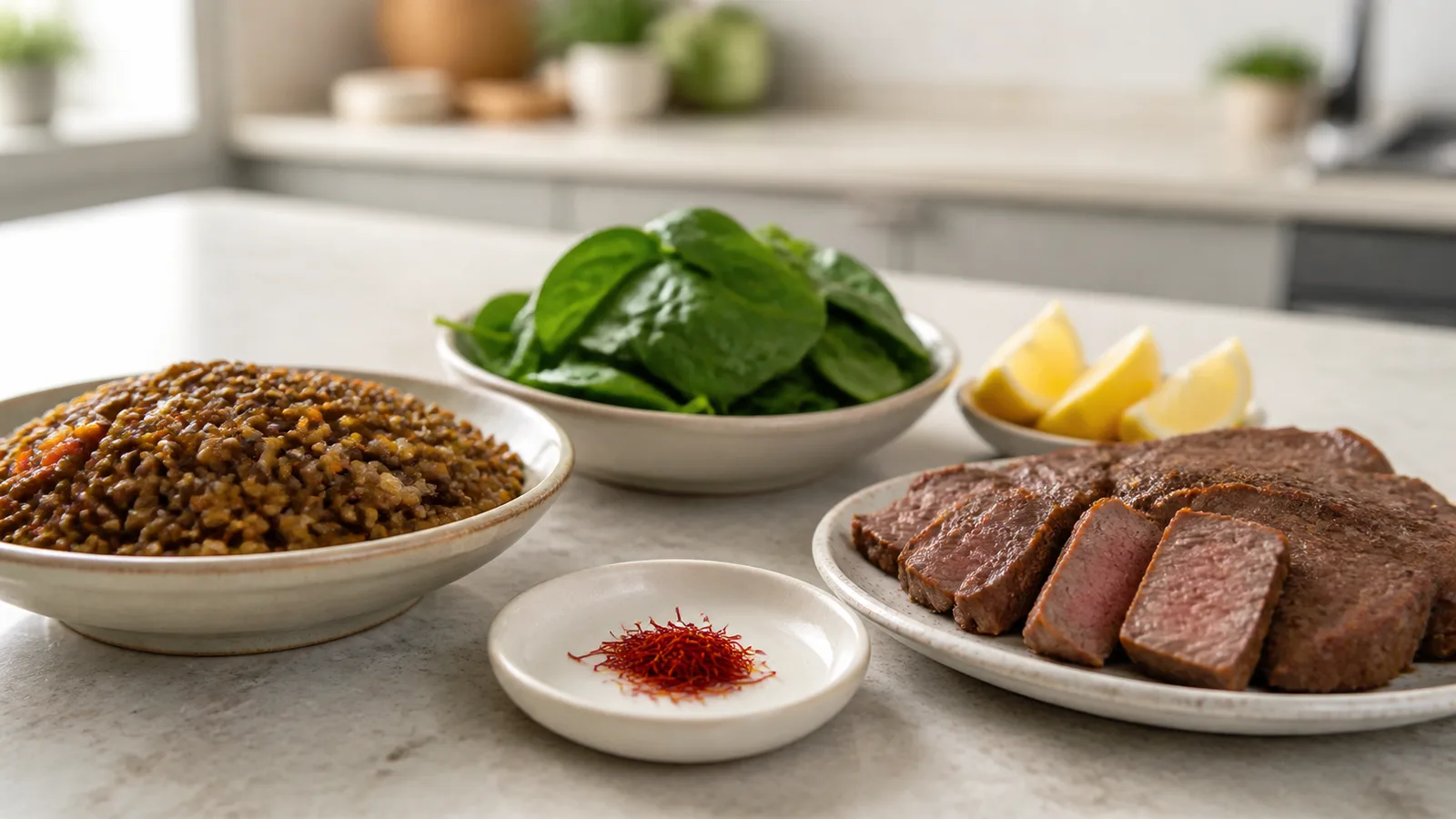
The NIH identifies lean meat, seafood and poultry as sources of iron, along with fortified cereals and breads, legumes such as white beans and lentils, spinach, kidney beans, peas, nuts and some dried fruits. Animal foods can provide haem iron, while plant foods provide non-haem iron. The body generally absorbs haem iron more readily.
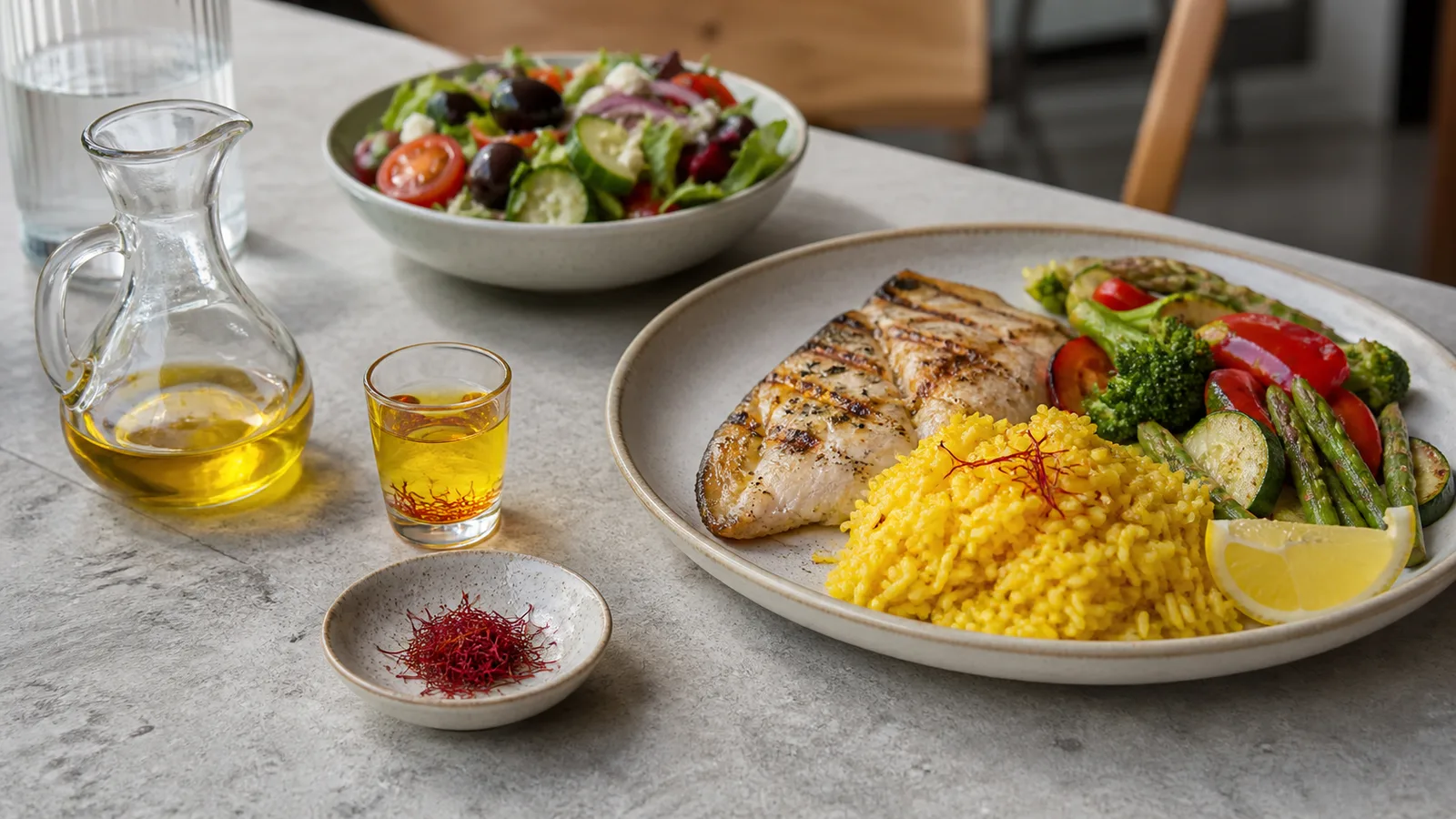
Plant-based meals can still provide iron. Pairing beans, lentils or leafy greens with a vitamin C source such as peppers, tomatoes, broccoli, strawberries or citrus can improve absorption of non-haem iron. Saffron fits comfortably into that meal for flavour: for example, it can season lentil rice, seafood, chicken or a vegetable dish without being presented as the source that meets the meal’s iron needs.
If you are unsure how to bloom a small culinary amount without wasting it, see our practical guide to using saffron correctly.
Can saffron be used as an iron supplement?
No. Culinary saffron is too low in iron per normal serving to work as an iron supplement. Taking much larger amounts to chase the per-100-gram number would be impractical, expensive and outside ordinary food use.
It is also unwise to self-treat suspected iron deficiency with either saffron or an iron supplement. Tiredness, weakness and difficulty concentrating can occur with iron-deficiency anaemia, but those symptoms have many possible causes. A clinician can use your history and blood tests to determine whether iron deficiency is present and what treatment is appropriate.
Iron supplements are concentrated and can cause digestive side effects; very high intakes can be dangerous. The NIH advises discussing supplements and medicines with a doctor, pharmacist or other healthcare provider, particularly because requirements and interactions vary.
What else does saffron contribute?
Saffron’s practical value in food is sensory rather than mineral. Its threads bring a distinctive aroma, a gently bitter note and a golden colour to rice, soups, drinks and desserts. Saffron also contains naturally occurring compounds such as crocin and safranal, but research on extracts or standardised products should not be confused with the nutritional effect of a culinary pinch. Research and traditional-use discussions sometimes connect saffron with mood, digestion or skin, yet those separate questions do not make the spice an effective source of dietary iron.
Our overview of saffron and health research explains that distinction in more detail. A food ingredient, an experimental extract and a supplement label are not interchangeable.
The practical answer
Is saffron high in iron? By weight, the USDA figure is 11.1 milligrams per 100 grams. In real cooking, no: the tiny amount used supplies only a minute fraction of daily iron needs. Enjoy saffron for what it does especially well, and build an iron-conscious diet around foods eaten in nutritionally meaningful portions.