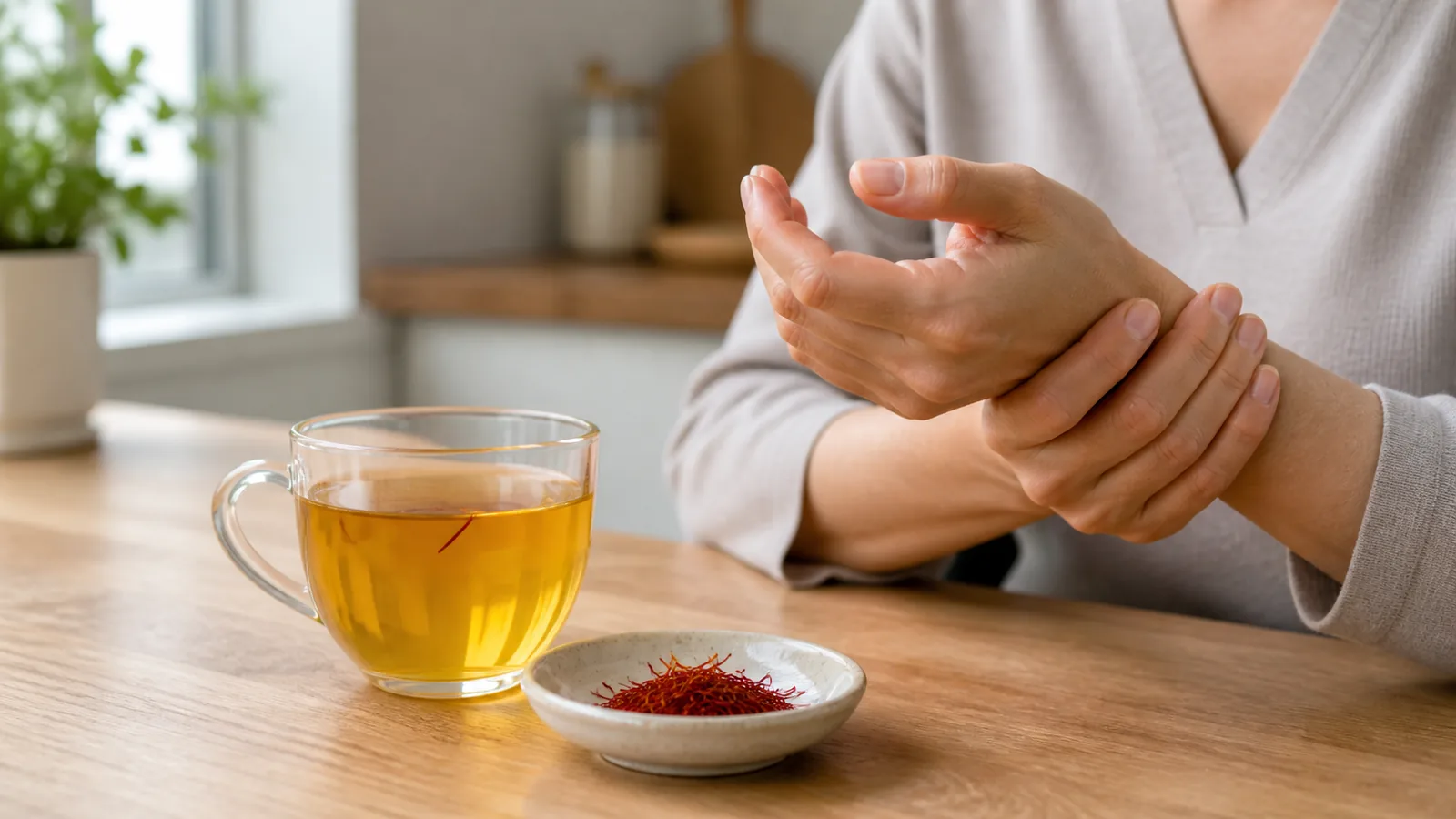
Saffron Dosage for Women: How Much Saffron Should a Woman Take?
There is no single daily saffron dose that is right for every woman. A small culinary pinch used in food is different from a measured saffron supplement or standardised extract. The appropriate amount depends on the product, the reason for taking it, pregnancy or breastfeeding, medicines, health conditions and advice from a qualified healthcare professional.
You may see 30–50 milligrams a day described online as a recommended saffron dosage for women. That range comes from the amounts used in some clinical studies and supplement products; it is not a general daily requirement and does not prove that every product within that range will be useful or safe for every woman.
Start by separating food from supplements
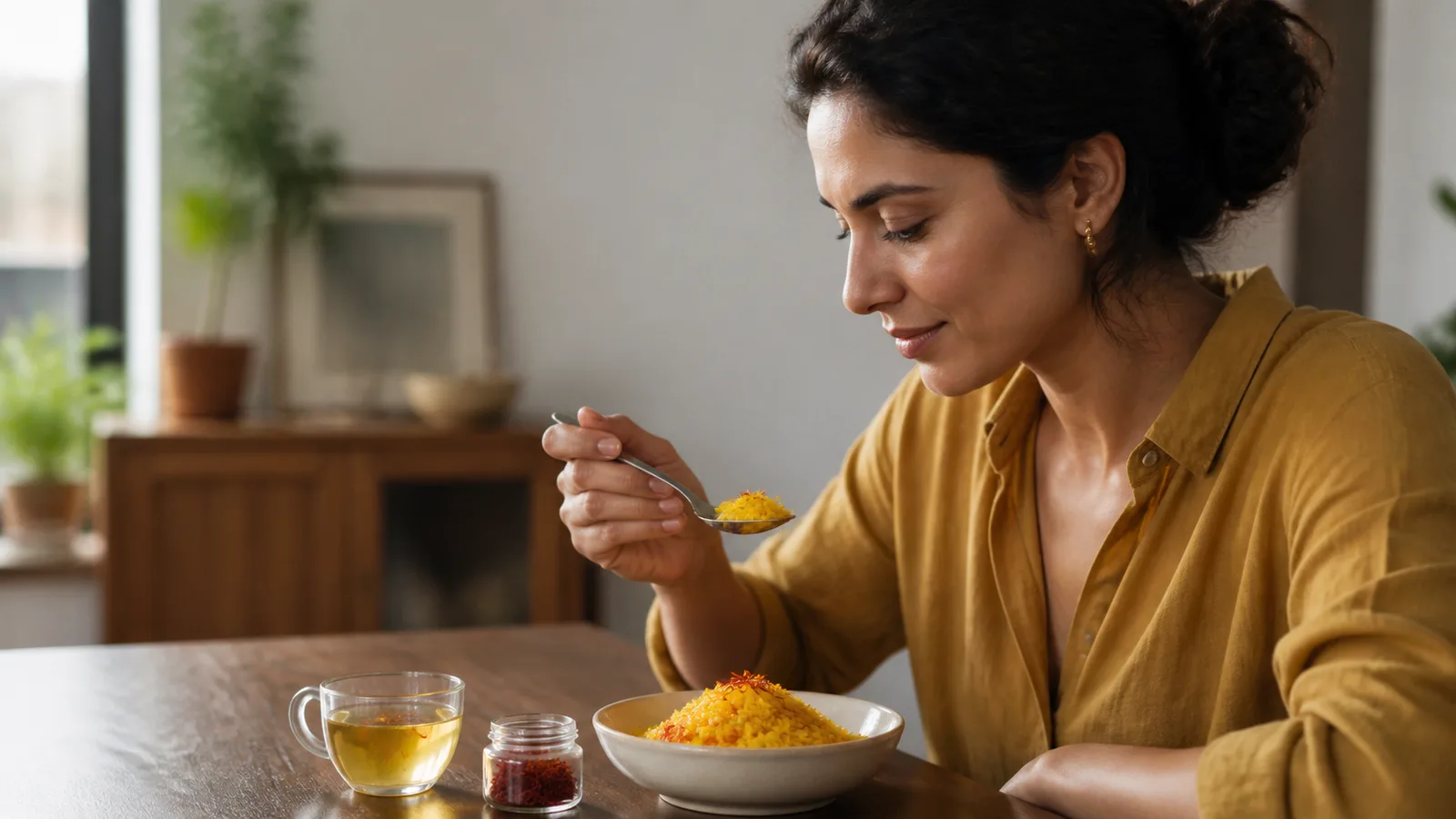
When saffron is used as a spice, a small amount is shared across an entire dish. It contributes aroma, colour and flavour. This is ordinary culinary use, not a treatment dose.
A capsule or liquid extract is different. It may contain a measured amount of saffron powder, an extract concentrated to particular compounds, or a blend with other ingredients. Milligrams from two products do not necessarily represent the same composition or strength. Check the full label rather than comparing only the number on the front.
The US Food and Drug Administration’s supplement guidance explains that supplements are not approved for safety and effectiveness before sale in the same way as medicines. The FDA advises discussing their benefits and risks with a doctor, nurse, registered dietitian or pharmacist.
Why 30 milligrams appears in saffron research
Several saffron trials have used 30 milligrams a day, often divided into two 15-milligram doses. For example, a small double-blind placebo-controlled trial in women with premenstrual syndrome tested 30 milligrams daily for two menstrual cycles. A later trial in premenstrual dysphoric disorder also studied 15 milligrams twice daily during a defined part of the cycle.
Those details matter. A study dose is a description of an experiment in selected participants, with a particular preparation and duration. It is not a blanket instruction for women to take saffron every day. Even when a study reports a benefit, its result may not apply to a different symptom, extract, medicine combination or person.
The upper end of the commonly quoted 30–50 milligram range should be understood in the same way: it is research or product context, not an official recommended daily allowance. Saffron has no established daily nutritional requirement comparable with a vitamin or mineral.
Potential benefits need specific language
Saffron and its compounds, including crocin and safranal, have been studied in several areas. Some controlled trials and reviews report promising findings for mood symptoms. Research has also examined cognition and premenstrual symptoms. These are not interchangeable outcomes, and a food serving cannot be assumed to reproduce the effect of a standardised trial product.
Claims about “hormonal balance” are especially easy to overstate. A 30-milligram PMS trial assessed symptoms; it did not establish that saffron generally regulates every woman’s hormones or menstrual cycle. Likewise, evidence does not support promising that an oral saffron dose will improve skin tone, remove pigmentation, create a youthful glow, improve digestion or relieve bloating. Those ideas may appear in traditional-use discussions, but they are not a sound basis for choosing a daily dose.
If a persistent mood, menstrual, digestive or skin problem is affecting you, seek an appropriate diagnosis. A supplement should not replace prescribed treatment or delay care.
What do we know about side effects?
A 2026 systematic review of human saffron safety data found that gastrointestinal problems were the most frequently reported adverse effects and were usually minor and self-limiting. The reviewers nevertheless advised clinical monitoring for medicinal use at higher doses or for longer periods because potentially significant adverse events have been reported.
Nausea, stomach discomfort, headache or dizziness are reasons to stop and seek advice rather than increasing or continuing a product automatically. An old rule sometimes repeated online says not to exceed 1 gram a day. That should not be read as a safe threshold: one gram is far beyond normal culinary use and far above the amounts used in many trials. There is no practical reason to approach it without medical direction.
Pregnancy and breastfeeding require extra caution
Pregnancy changes the decision. Experimental and observational literature has raised concern about reproductive effects at exposures beyond ordinary food use. A 2026 integrative review of saffron and pregnancy linked higher-dose or occupational exposure with uterine stimulation and increased miscarriage risk, while also finding that the evidence is not sufficient for broad clinical recommendations. Occupational harvesting exposure is not the same thing as adding a small pinch to food, but the available evidence still does not define a self-selected “safe supplement dose” for pregnancy.
The FDA’s supplement advice for women says to speak with a healthcare provider before using a supplement and to take special care during pregnancy. If you are pregnant, trying to conceive or breastfeeding, do not begin a saffron capsule, extract or medicinal-dose drink unless your obstetric or healthcare team approves the specific product and amount. Ordinary spice use and concentrated supplementation are not the same exposure, but personal advice is still sensible when there is uncertainty.
Medicines, surgery and health conditions
Tell your clinician or pharmacist about saffron along with every other supplement you take. The FDA warns that supplements can alter how medicines are absorbed, metabolised or removed from the body, and some can affect surgery or laboratory testing.
Professional advice is particularly important if you take prescription medicines, are being treated for a mood disorder, have a bleeding condition, have low blood pressure, are preparing for surgery, or live with another condition that changes your risk. Do not stop or replace a prescribed medicine in order to try saffron. Our safety overview, who should avoid or limit saffron, provides additional questions to take to your clinician.
How to use saffron in food or a drink
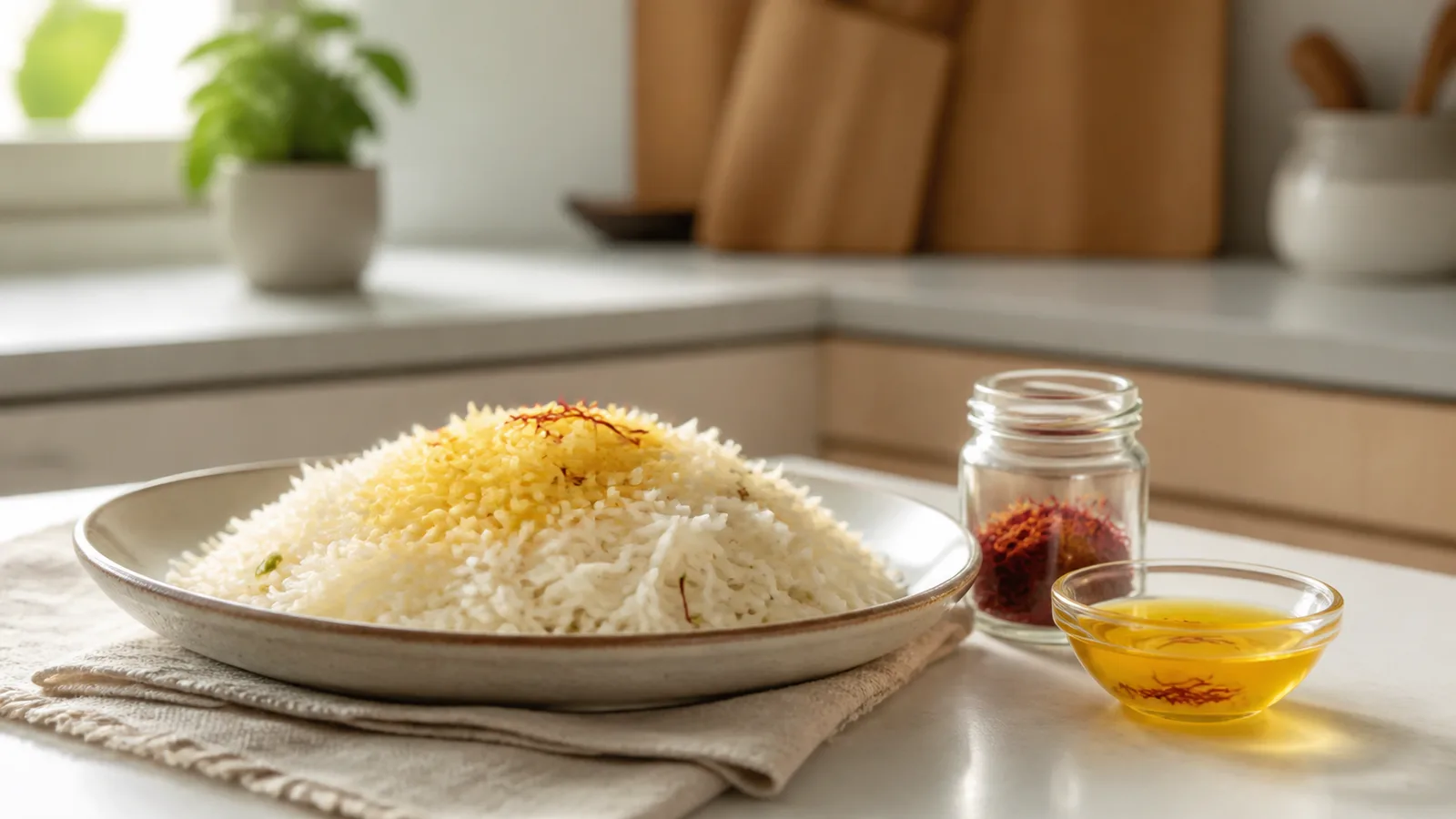
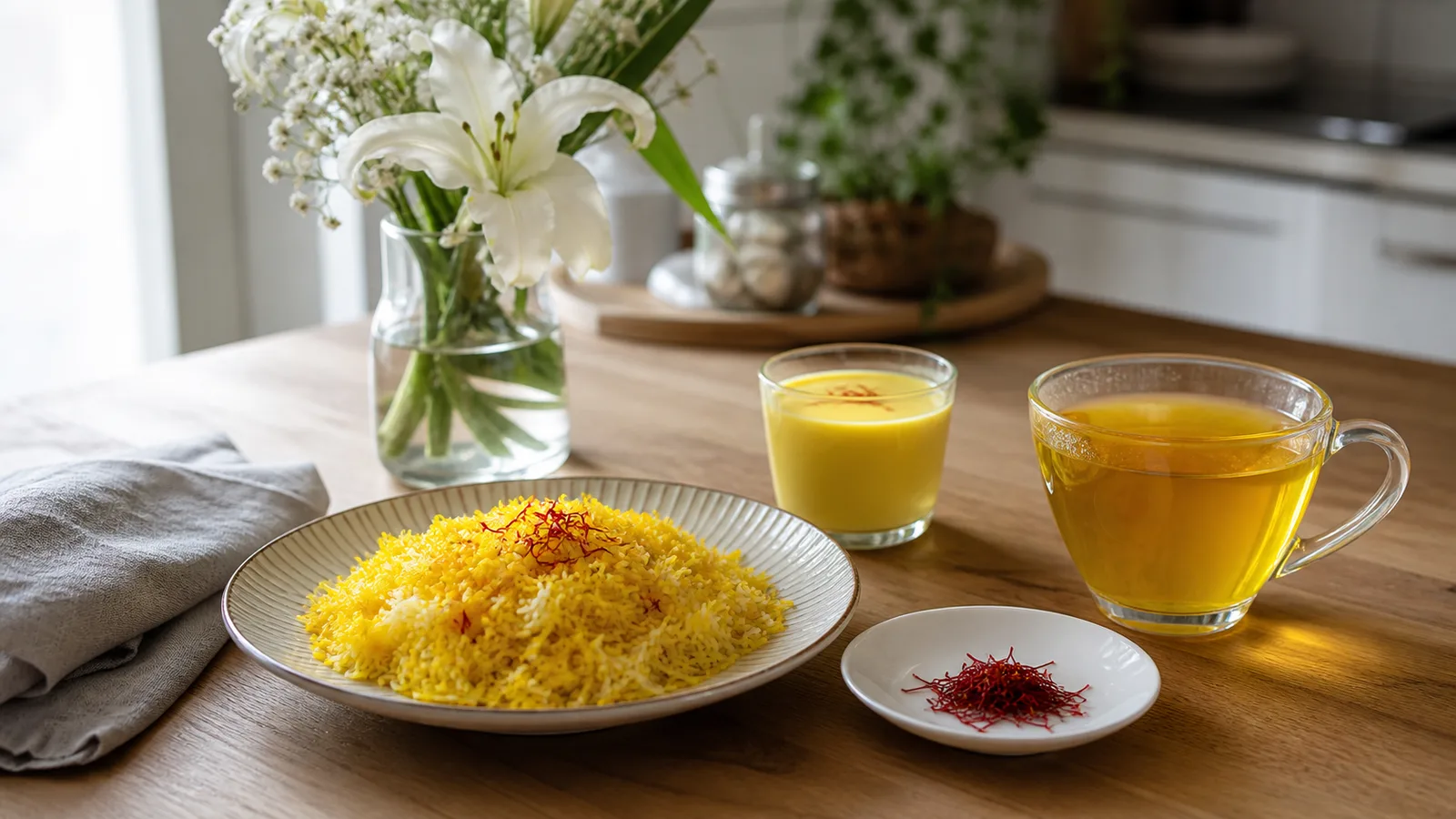
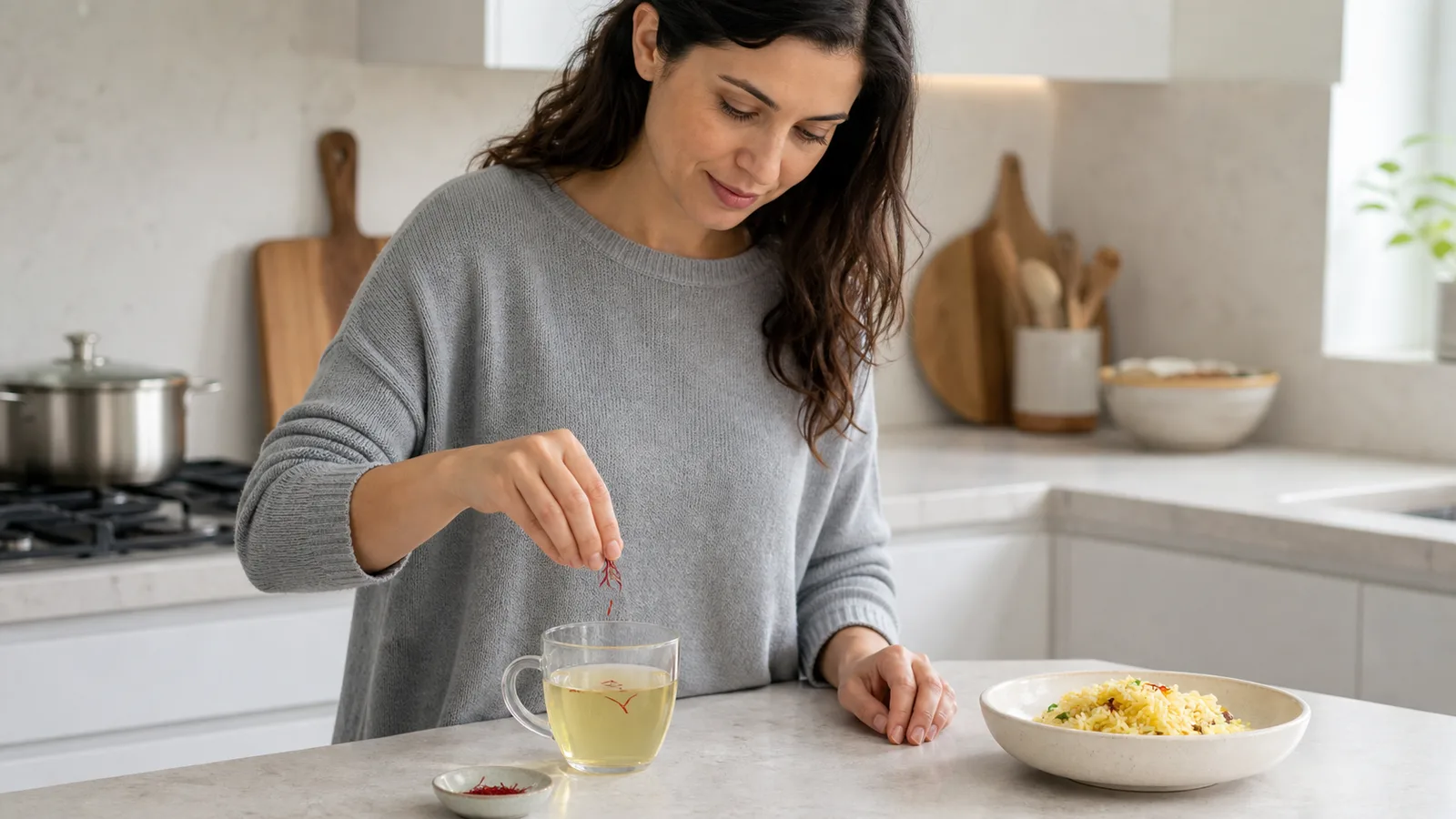
For culinary use, crush a small pinch of threads and bloom it in warm water or milk for about 10–15 minutes, then add the liquid and threads to rice, soup, a curry or another dish. Warm, rather than aggressively boiling, liquid makes the colour and aroma easier to distribute. This is a cooking technique, not a way to create a standardised medical dose or guarantee maximum absorption.
If a clinician agrees that a supplement is appropriate, use the exact product and amount you discussed. Follow its label, do not combine several saffron products, and do not assume that more will produce a greater benefit. Note the start date and any new symptoms so you can report them accurately.
The practical answer
How much saffron should a woman take? For food, use the small amount the recipe needs. For a capsule, extract or daily therapeutic purpose, there is no universal answer. Thirty milligrams a day is a common study amount and 30–50 milligrams is a frequently quoted research range, but neither is a personal prescription. Product composition, purpose, duration, pregnancy, medicines and health history all matter; confirm the decision with a qualified healthcare professional.