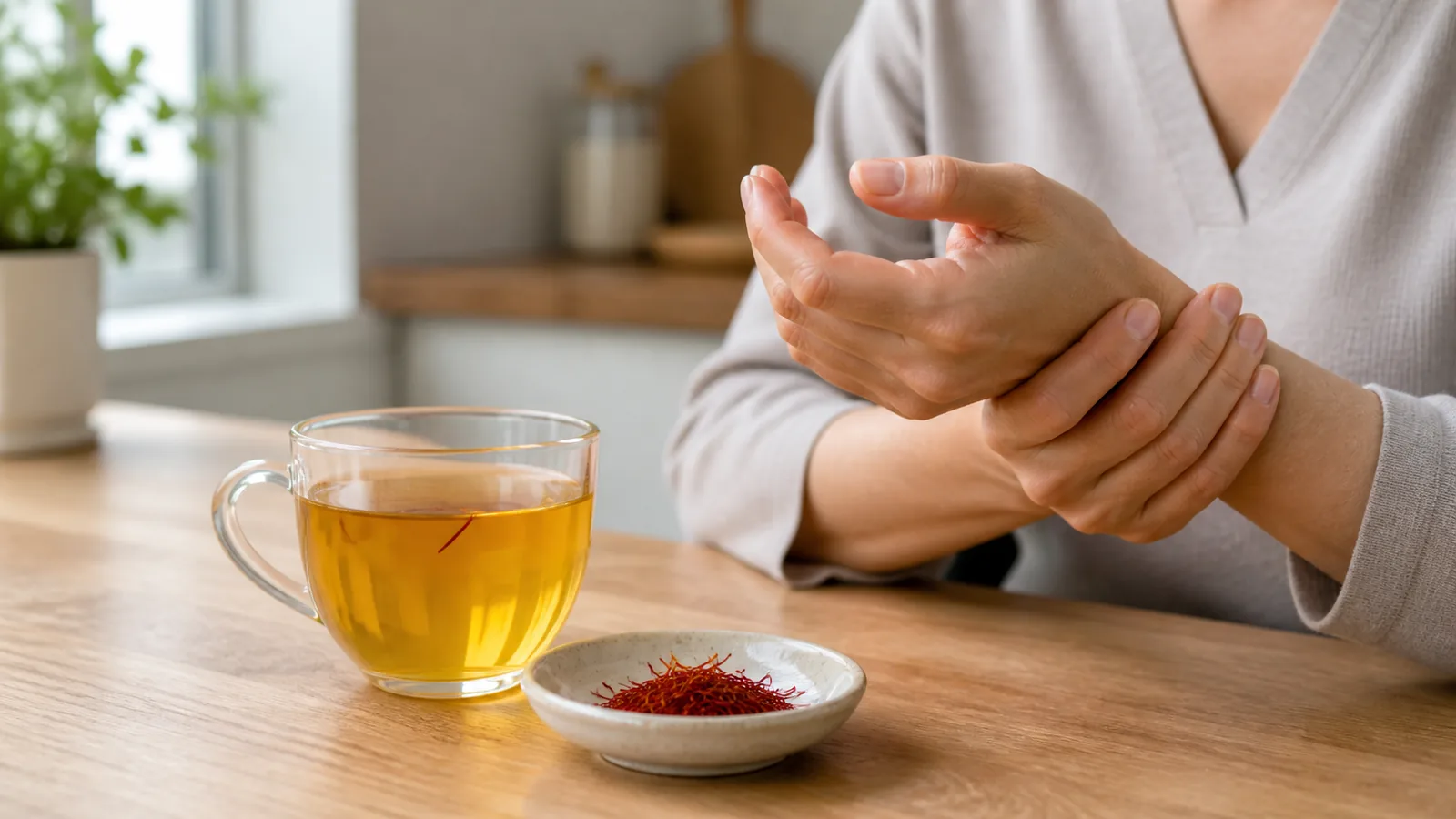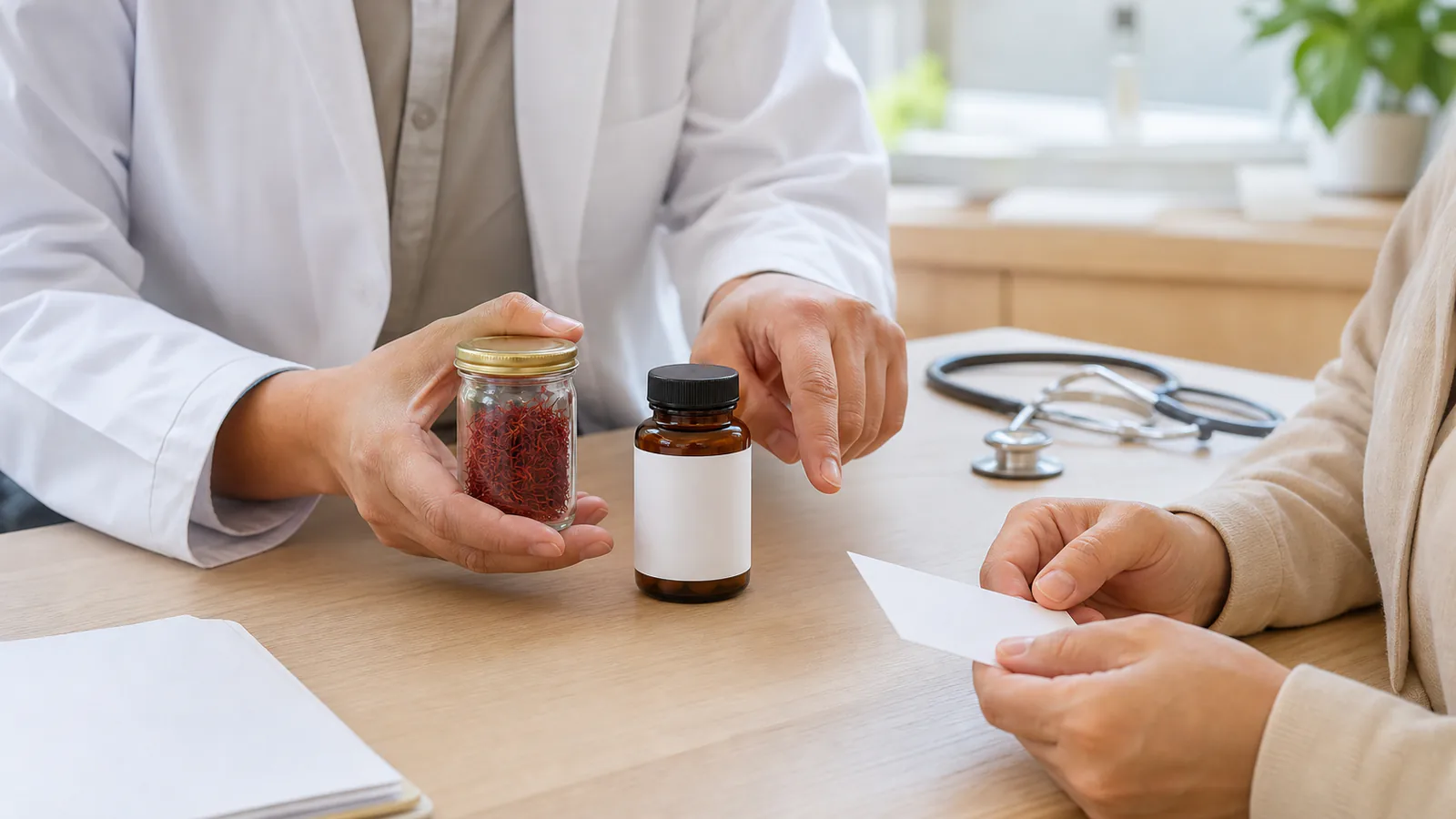
Who should avoid saffron? Most people can enjoy the small amount used to flavour food. The clearest reason to avoid concentrated saffron is pregnancy without clinical guidance. Breastfeeding, prescription medicines, planned surgery, allergies and significant health conditions also call for individual advice before using capsules, extracts or strong daily preparations.
“Avoid saffron” does not always mean removing a few threads from a shared meal. Risk depends on the product, amount, frequency and person. A culinary pinch and a standardised supplement should be considered separately.
Saffron and pregnancy
During pregnancy—especially in the first trimester—it is prudent to keep saffron to ordinary recipe amounts and avoid supplements, concentrated extracts and unusually strong teas unless an obstetric clinician directs their use. Traditional sources and toxicology research raise concern that high exposure may stimulate uterine activity.
A 2026 integrative review of saffron and pregnancy found limited and inconclusive evidence overall. Some small studies at term have explored cervical ripening, labour pain and anxiety, while high or occupational exposure has been associated with increased miscarriage risk. These findings do not support a home method for starting labour.
Pregnancy stage matters. A preparation studied under supervision during active labour cannot be extrapolated to early pregnancy, daily household use or another extract. If a pregnant person has already consumed a normal food portion, that is not the same as a high-dose exposure; concerns about a specific amount should be discussed with the obstetric team or local poison-information service.
Breastfeeding and infant exposure
Reliable data on concentrated saffron during breastfeeding are limited. It is not clear how much of each constituent reaches breast milk, how different extracts compare or what repeated exposure means for an infant. That uncertainty is the reason for caution, not evidence that every saffron-flavoured dish is dangerous.
A nursing parent considering a supplement should show the exact label to a clinician or pharmacist. The product name alone is not enough: strength, standardisation, other ingredients and frequency all matter.
People taking prescription medicines
Saffron extracts have been studied for mood, sleep, blood pressure and other outcomes. That makes interaction review important, particularly for someone taking:
- antidepressants, sedatives or other medicines that affect mood and alertness;
- anticoagulants, antiplatelet medicines or treatment for a bleeding disorder;
- medicine for low or high blood pressure;
- several prescriptions, where combined effects are harder to predict; or
- medicine with a narrow safety range.
This is not a list of proven saffron interactions. Human interaction data remain incomplete, and a broad online list cannot account for a specific extract. A pharmacist can review the preparation and medicines together. Do not stop prescribed treatment in order to take saffron.
People preparing for surgery
Tell the surgical and anaesthesia team about every supplement, including saffron extracts. Supplements can affect bleeding, blood pressure, sedation or other perioperative decisions, and products sometimes contain undeclared ingredients.
Follow the team’s instructions on when to stop or restart a product. Do not invent a standard waiting period from an article, because the operation, medicine list and supplement strength differ.
People with allergies or a previous reaction
Anyone who has reacted to saffron or a related plant should avoid the suspected product until evaluated. Stop use and seek advice for a new rash, itching, mouth irritation or persistent stomach symptoms. Swelling of the face or throat, wheezing, trouble breathing, fainting or a rapidly worsening reaction needs urgent medical help.
A reaction can also come from an adulterant, colour, capsule material or another ingredient. Keep the package and lot number; without them, it may be impossible to identify the cause.
People with significant health conditions
Clinical monitoring is sensible for anyone with a bleeding disorder, marked low blood pressure, kidney disease, a complex psychiatric history or another condition that could be affected by a concentrated product. A 2017 toxicology review described changes in blood, blood-pressure and kidney measurements at some studied exposures, although clinical trials at lower medicinal doses generally found no important toxicity.
A newer systematic review of human adverse events found saffron generally well tolerated but estimated related adverse events in about 17.5% of study participants. Gastrointestinal problems were most common and were usually minor and self-limiting. “Generally tolerated” is not the same as suitable for every individual.
Children and concentrated products
Saffron in family food is different from giving a child an adult supplement. Children vary greatly in weight and development, while extracts marketed for attention or mood may not match the products used in published studies.
Parents should not copy an adult dose or use saffron to replace an assessment or prescribed treatment. A paediatric clinician should review the child, intended outcome, exact preparation and other medicines.
When the product itself should be avoided
Do not use saffron that has an unexplained chemical smell, obvious applied dye, mould, moisture damage, broken seal or missing supplier and lot information. Counterfeit products may contain other plant material or undeclared colourants. Our guide to counterfeit saffron signs and test limits explains why no single home test proves identity.
Stop using any product linked to a new symptom. Keep the container for a clinician or food-safety authority, and do not mix a suspect batch with trusted saffron.
Traditional uses in Persian and Islamic medicine
In Persian and Islamic medicine, saffron has been described as a mild sedative, appetite stimulant and digestive aid. Historical texts also mention respiratory complaints, skin and eye conditions, urinary discomfort, jaundice, menstrual complaints, bloating, stomach pain and low energy associated with anaemia.
These are historical uses, not a list of medically established treatments. A survey of major Islamic traditional-medicine books documents the tradition; it does not prove that saffron treats each condition or that old preparations are safe in modern self-care.
What modern research says
Small clinical trials and laboratory studies have examined saffron for mood, memory, sleep and cardiovascular markers such as blood pressure and cholesterol. Some findings are encouraging, but preparations and populations vary, and the evidence does not make saffron a way to prevent heart disease, cancer or depression.
A health condition that makes saffron interesting can also make unsupervised use riskier. The right question is not simply “Does saffron have benefits?” It is whether this product, for this purpose, is appropriate alongside the person’s diagnosis and treatment.
How to make a safer decision
- Decide whether the use is culinary or medicinal.
- Keep the label, including extract ratio, standardisation and other ingredients.
- List medicines, supplements, pregnancy or breastfeeding status and relevant conditions.
- Ask a clinician or pharmacist about that exact combination.
- Stop and seek advice if a new symptom appears.
The bottom line on who should avoid saffron
Pregnant people should avoid concentrated saffron unless their obstetric clinician directs it. Nursing parents, children, people taking prescription medicines, those approaching surgery, and anyone with a significant condition or prior reaction should obtain individual advice before using a supplement.
For most other adults, a small culinary amount is a different and lower-exposure choice. Detailed side effects and excessive-intake guidance are covered in our article on the disadvantages of saffron.