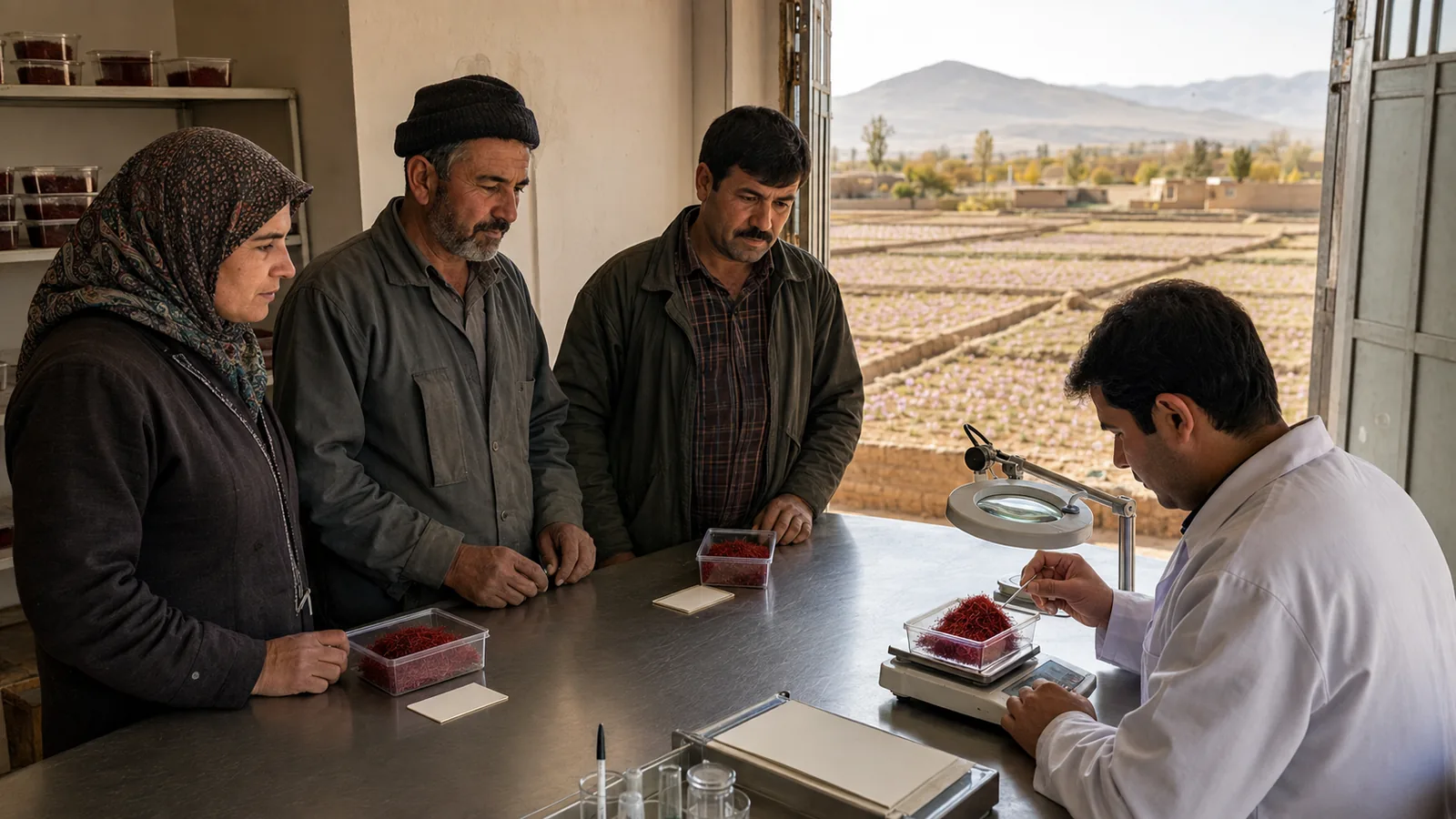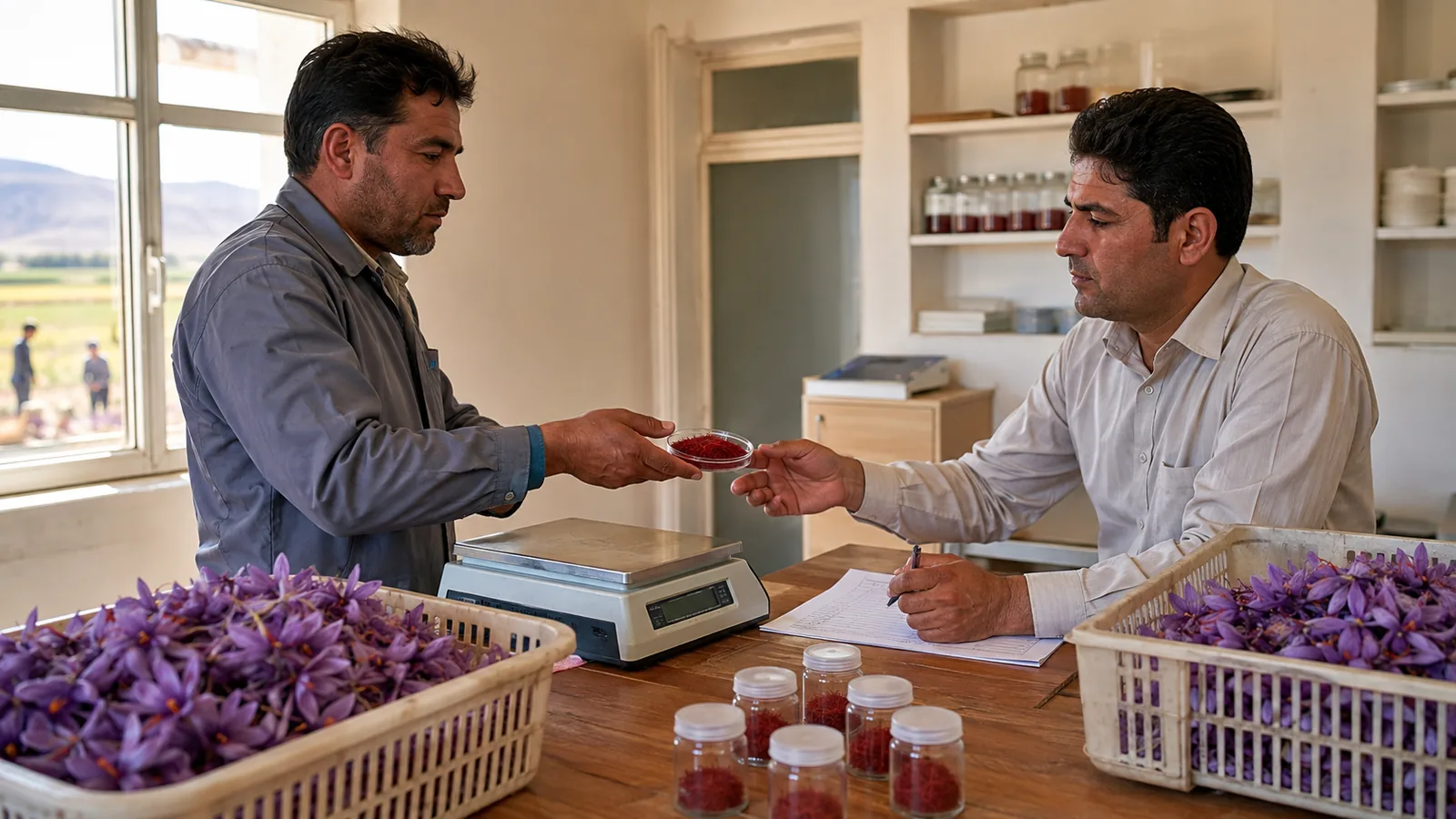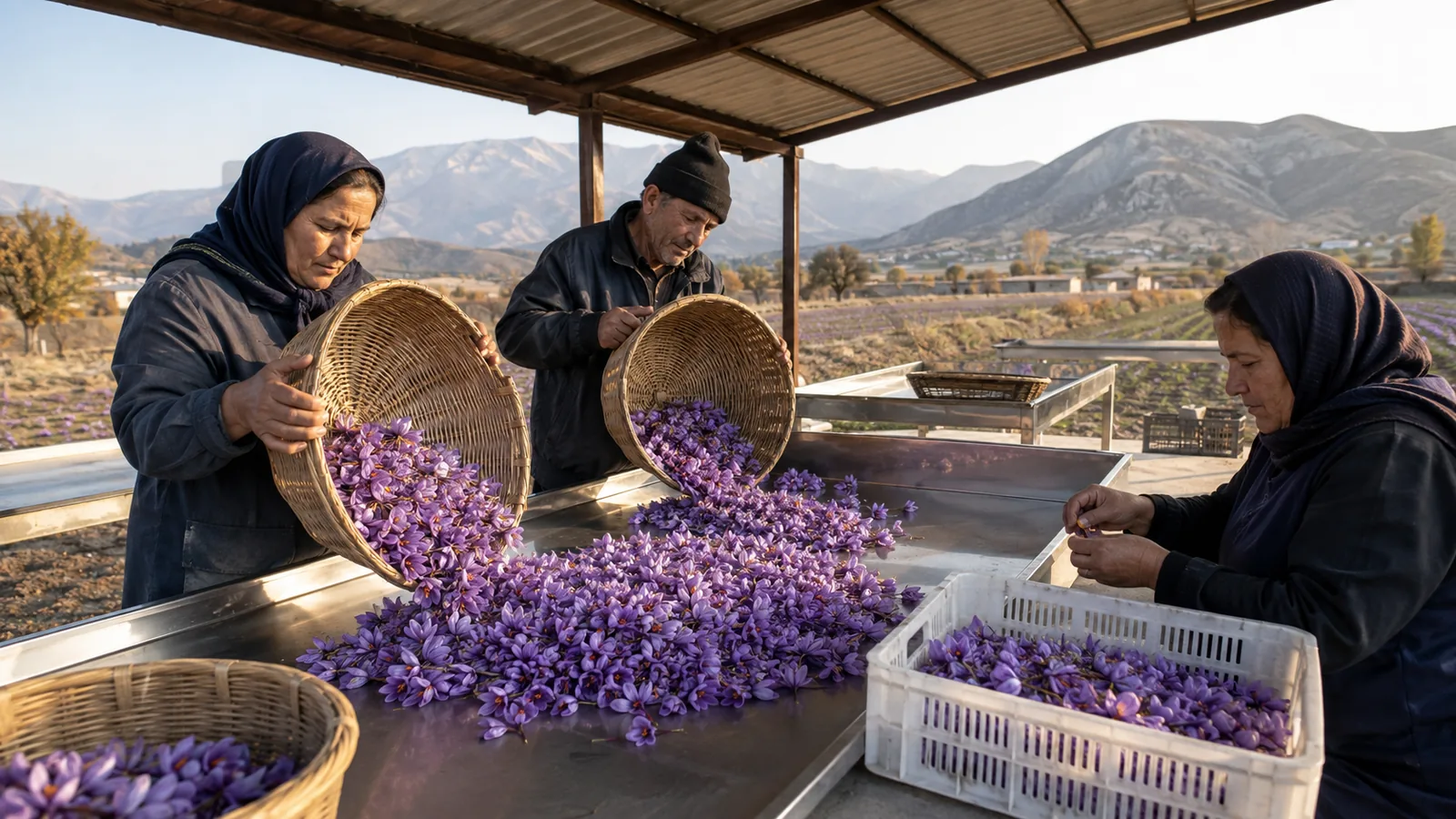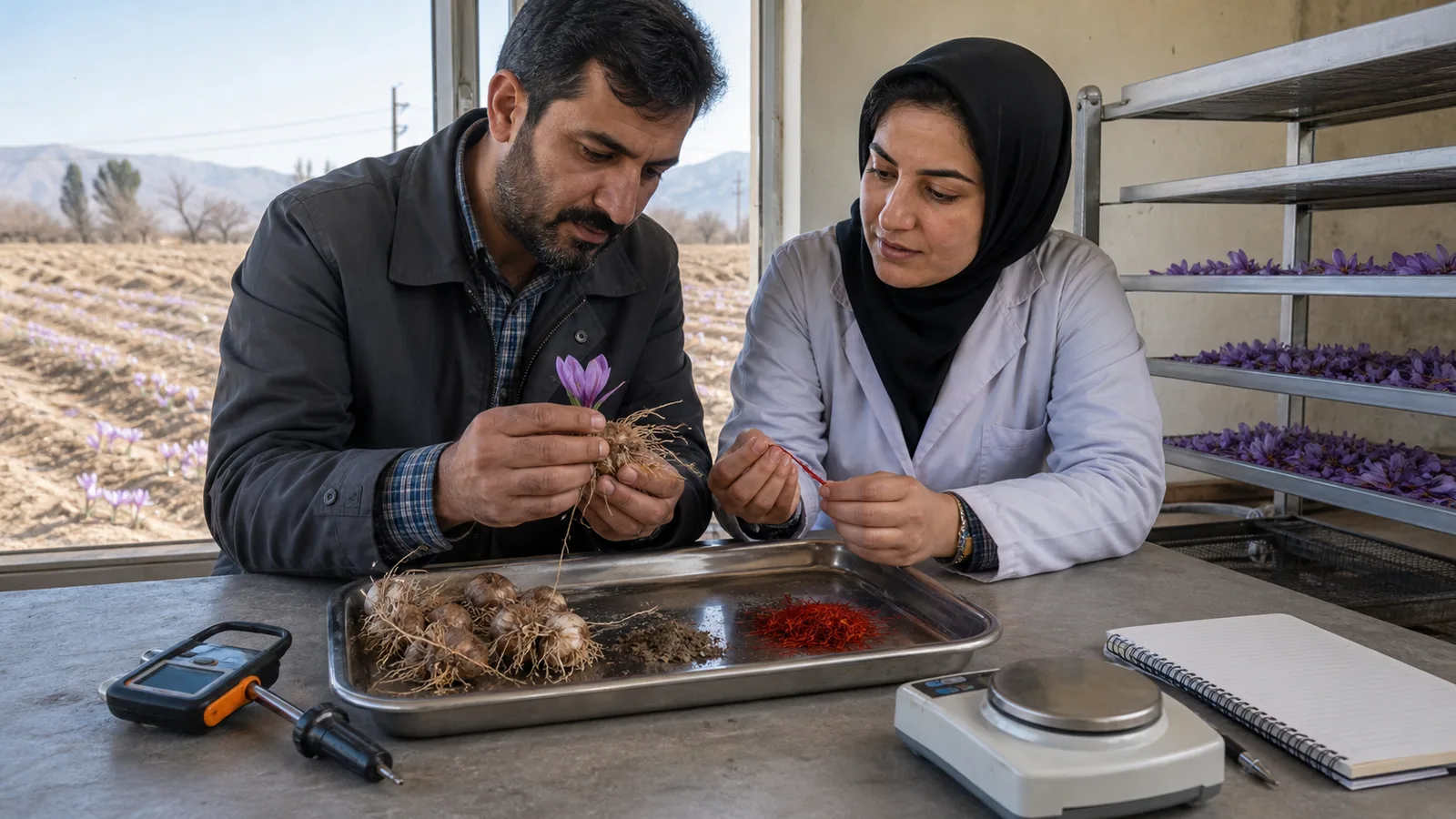


The “3 million” in this report was a claimed price spread on one kilo of saffron during the 2015 market, not a current quotation and not three million dollars. Gholamreza Miri, then vice-president of Iran’s National Saffron Council and head of the exporters’ union, said some traders bought a kilo for 3.8 million tomans near the start of the season and later sold it for 6.8 million tomans. The difference was 3 million tomans before storage, finance, grading and other costs.
What the original price figures meant
The old English version damaged both the currency and several numbers. In Miri’s account, saffron had reached roughly 5.3 million to 7.2 million tomans per kilogram that year. He said domestic sellers typically added about 20,000 to 50,000 tomans per kilo, while exporters added USD 20 to USD 30.
Those figures describe a particular period in Iran’s wholesale market. They are useful as a historical case study, but they should not be used to estimate today’s saffron price. Currency values, grades, harvest size, inflation and export conditions have all changed since then.
Was the full 3 million tomans profit?
No. Subtracting 3.8 million tomans from 6.8 million produces a gross spread of 3 million tomans. It does not establish net profit. A trader who stores saffron may pay for finance, secure storage, insurance, quality loss, laboratory checks, packaging and transport. The product may also be held while the market falls rather than rises.
Miri’s criticism was about the size and speed of the reported increase. He argued that a reasonable commodity price should cover production costs and leave the grower a fair margin, rather than rewarding short-term scarcity or repeated resale. The original article’s phrase “net profit doubled” was therefore too definite. No audited accounts were supplied.
How storage can move the saffron market
Saffron is harvested in a short season but sold throughout the year. Properly dried threads can be stored, so the amount offered for sale depends on more than the current crop. Farmers, processors, exporters and independent traders may all hold stock.
Storage is not automatically harmful. Releasing stock between harvests can give buyers a steadier supply and protect sellers from having to accept the first offer they receive. The concern arises when opaque inventories, coordinated withholding or rapidly changing offers make it difficult for growers and exporters to discover a dependable price.
Miri alleged that some speculators bought early, kept saffron in homes or warehouses and sold when conditions allowed them to name a higher price. That remains an attributed statement from the period, not proof that every intermediary behaved in the same way.
Why unstable prices create problems for exporters
An exporter may quote a buyer days or weeks before purchasing the saffron needed to fill the order. If the domestic price rises sharply during that interval, the agreed export price may no longer cover the purchase. A seller can either absorb the loss, renegotiate or fail to supply. None is good for a long-term customer relationship.
Food manufacturers also need predictable ingredient costs. Sudden changes make recipes, production budgets and retail prices harder to plan. Buyers may reduce saffron use, delay orders or qualify suppliers from other producing countries. Afghanistan, Greece and China were among the alternatives mentioned in the original statement.
Competition should not be confused with a loss of Iranian quality. Iran’s experience, growing regions and scale remain important strengths. The commercial risk is that an unreliable offer can encourage a buyer to test another origin even when Iranian saffron is preferred.
The effect on farmers is not straightforward
A higher market price can help a grower only when the grower still owns the crop and can sell at that price. Farmers who need cash for harvest labour or household expenses may sell early. If most of the increase comes later, the benefit goes to whoever holds the stock.
Sharp increases can also encourage rapid expansion of planting. Because saffron corms remain in the field for several seasons, a planting decision has consequences beyond one harvest. Expansion without reliable water, clean planting material, labour and committed buyers can create excess supply or poor-quality output later.
The old article predicted that farmers might eventually dig up and discard corms if an uncontrolled production increase weakened the consumer and export markets. That was a warning, not a documented outcome. It is better understood as an argument for measured production and dependable routes to market.
What a transparent saffron price needs
A price comparison is meaningful only when the product and transaction are defined. At minimum, buyers and sellers need to know:
- the saffron type and grade, including whether it is Negin, Sargol, Pushal or another cut;
- moisture, colour strength and laboratory specification;
- lot size, harvest year and origin;
- whether the price includes testing, packaging, tax, freight or export documentation;
- the currency and payment date; and
- whether the figure is paid to the farmer, quoted wholesale or charged at retail.
Without those details, two prices per kilo may refer to different products or different stages of the supply chain. A large difference does not by itself prove excessive profit.
The market-control proposal made at the time
Miri proposed a committee involving the industry ministry, the agriculture ministry, the provincial government and the saffron exporters’ union. The idea was to buy from farmers at an expert-assessed price and release stock when speculative increases disrupted the market. He also argued for finance that would let growers avoid distress sales, or help private businesses buy, store and release saffron in an orderly way.
Such a programme would need transparent purchasing rules, independently reported inventory and clear quality grades. Otherwise, an intervention price can simply become another uncertain number in the market.
How to read the 3-million-kilo claim today
The headline captures a real debate about who receives value between the farm and the final buyer. Its numbers must stay in their historical setting. The claim was a 3-million-toman gross spread between two reported prices, not a verified net profit and not a current price signal.
For anyone buying a kilo of saffron now, the safer approach is to request a dated quote for a defined grade and lot, then compare like with like. For the trade as a whole, traceable lots, visible quality standards and better price information are more useful than treating every difference between farm and retail price as speculation.
Source reviewed: a contemporary Persian report of Miri’s statement, published 14 September 2015. It supplies the tomans and corrected figures missing from the old English translation. All market prices above are historical and attributed to that statement.