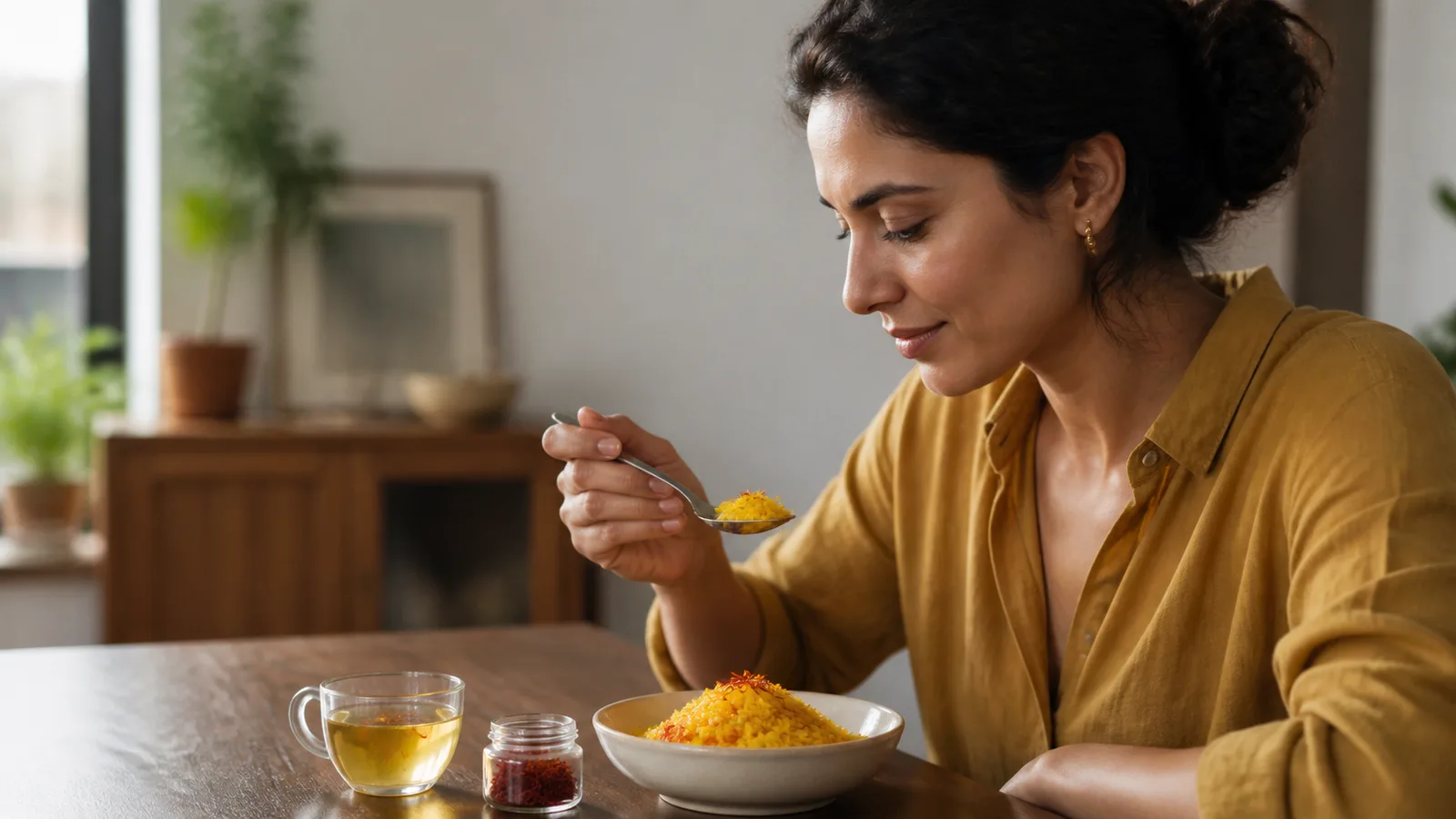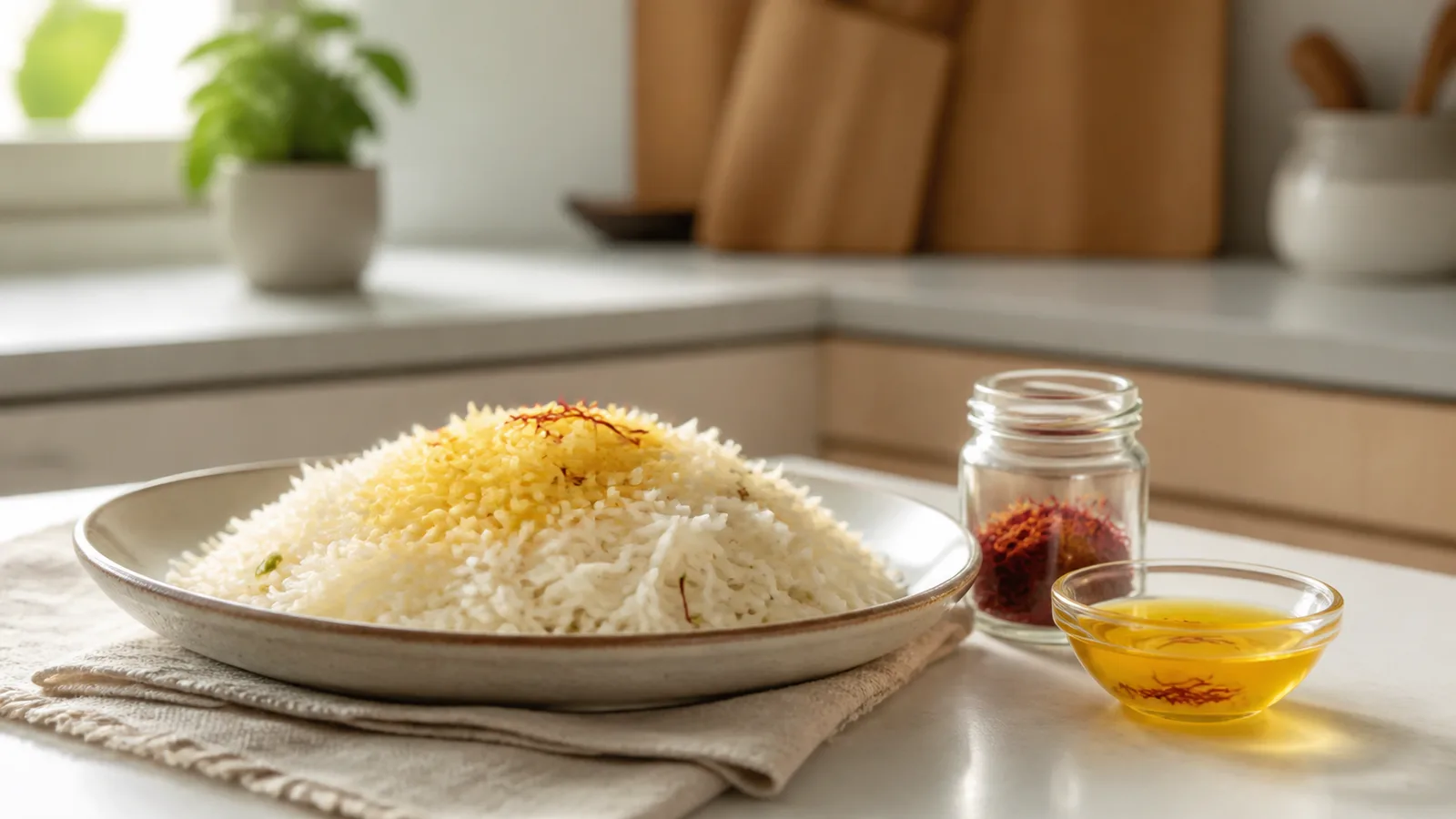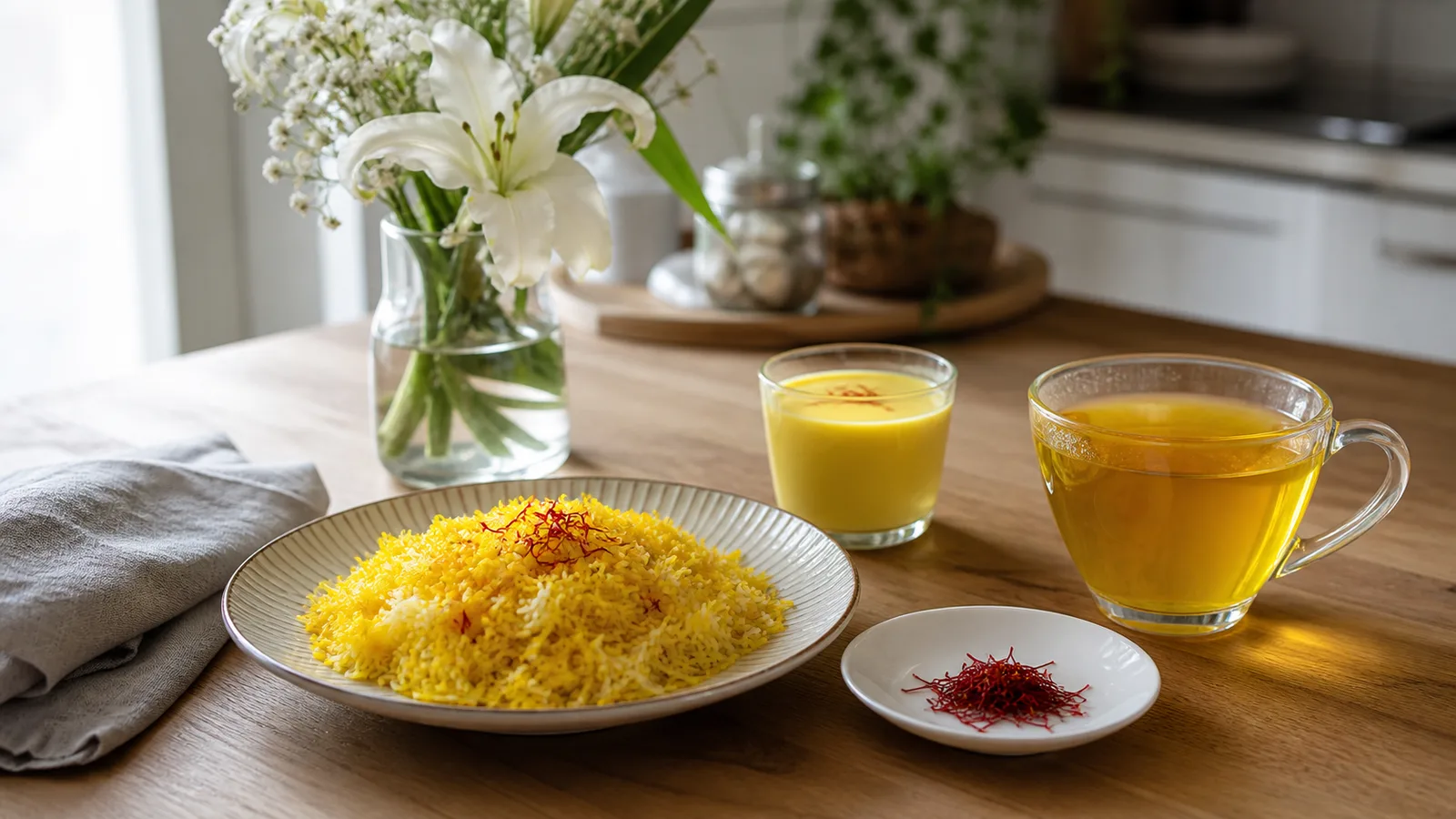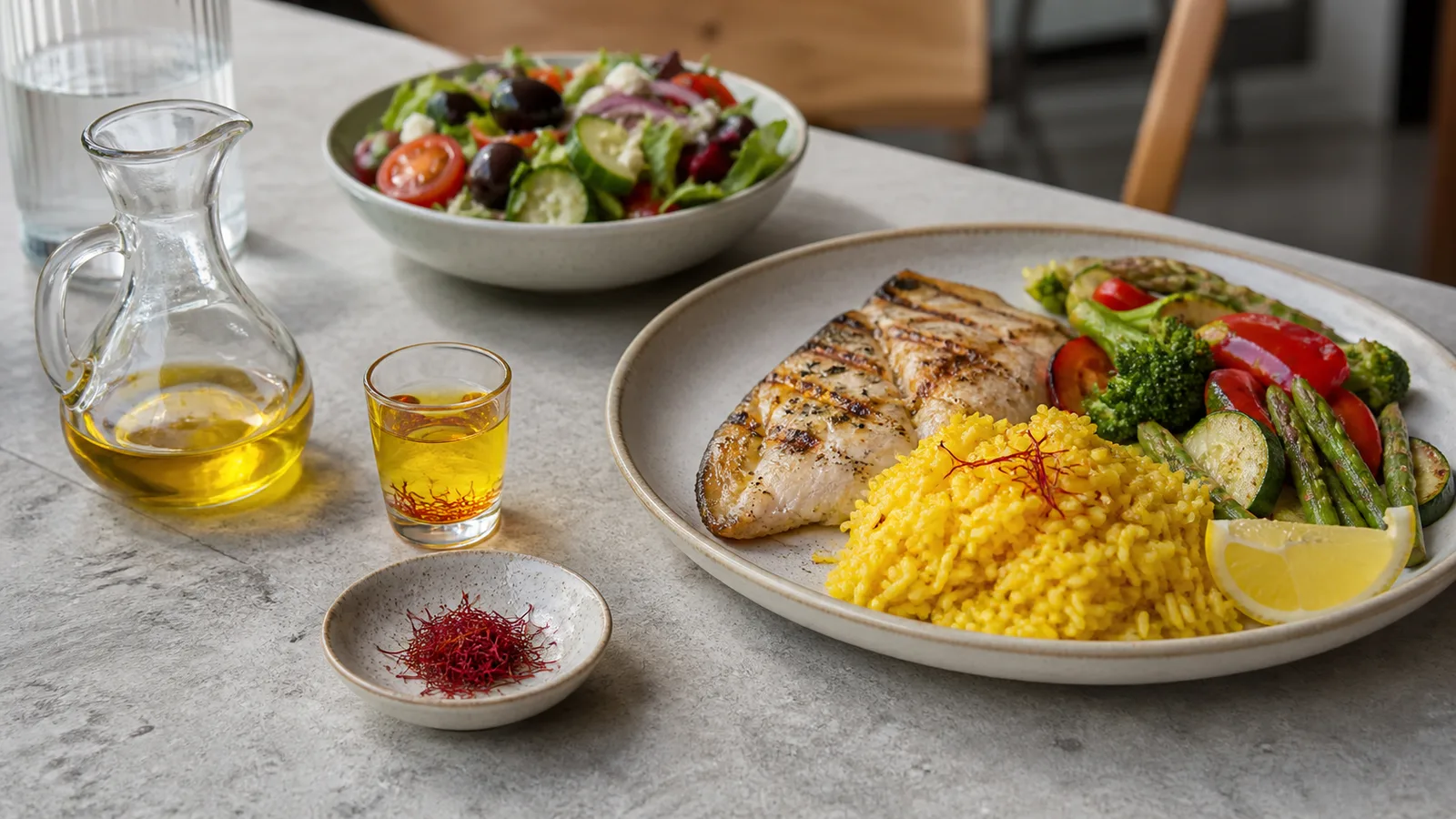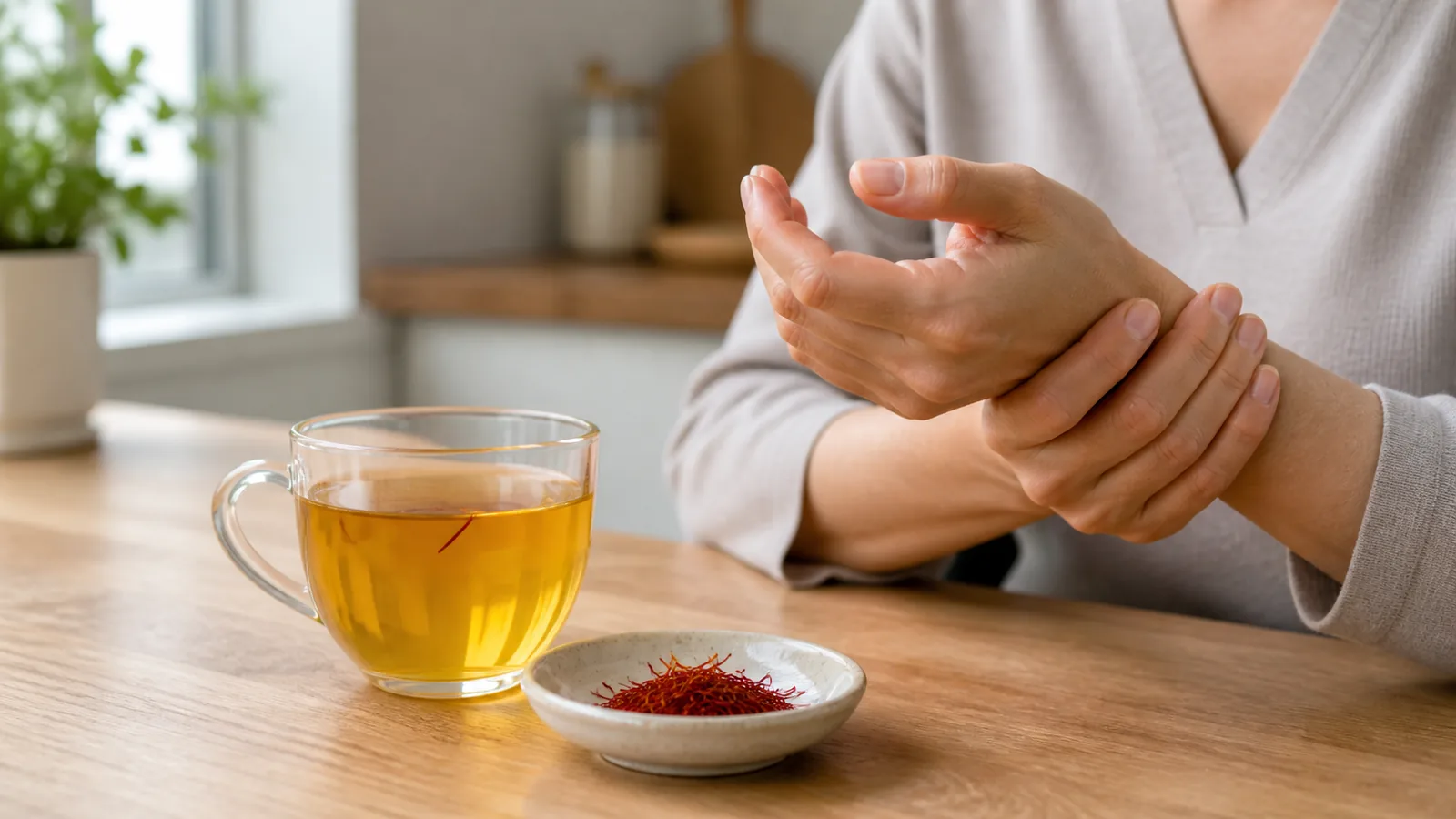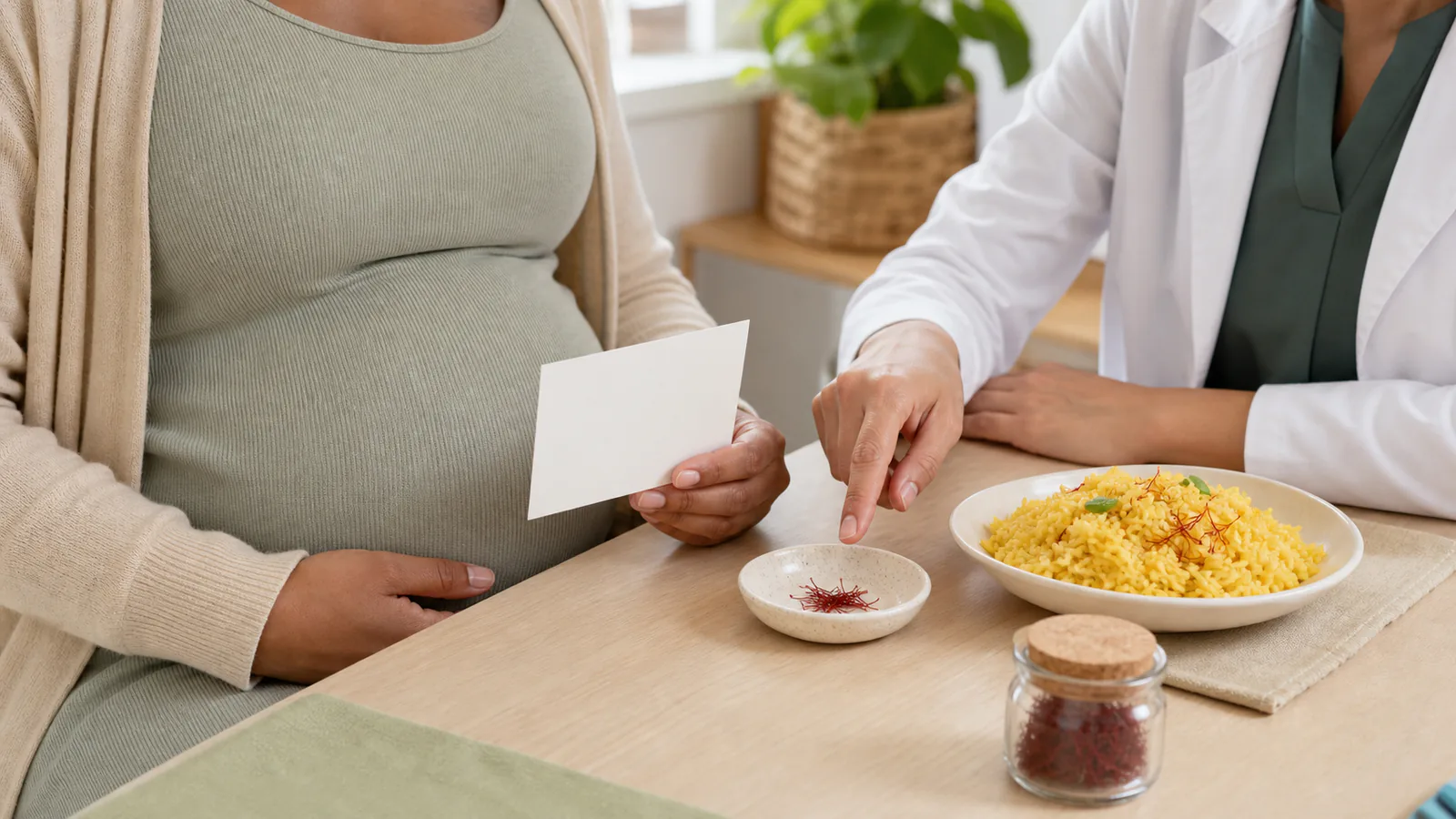
Can eating saffron cause miscarriage? A small amount of saffron used as seasoning is not the same exposure as a concentrated supplement or a large medicinal dose. Evidence is limited, but high exposure may stimulate uterine activity and has been associated with a greater miscarriage risk. Pregnant people should avoid saffron capsules, extracts and unusually strong preparations unless their obstetric clinician recommends them.
If you have eaten an ordinary saffron-flavoured meal, do not assume that a miscarriage will follow. Contact your maternity team if you are worried about the amount, and seek prompt care for bleeding, severe or persistent abdominal pain, fainting, breathing difficulty or other acute symptoms.
What the pregnancy evidence actually shows
A 2026 integrative review examined cultural practices and clinical evidence on saffron during pregnancy. It found that the overall evidence on efficacy and safety remains limited and inconclusive. The literature includes small studies of supervised use at term, observational evidence and traditional accounts rather than one definitive safety trial covering all trimesters.
The review reports that high doses or occupational exposure have been linked to uterine stimulation and increased miscarriage risk. The earlier 2017 toxicology review also discusses a prospective case-control study in pregnant saffron harvest workers, where miscarriage was more frequent among those with high exposure.
That occupational finding cannot tell us that a few threads in food cause miscarriage. Harvest work may involve repeated contact and inhalation as well as other workplace factors. It does, however, reinforce the need to distinguish normal cooking from high or repeated exposure.
Why trimester and preparation matter
Early pregnancy is the period of greatest concern when a substance may stimulate uterine contraction or bleeding. Caution is therefore especially important in the first trimester. “Third stage of pregnancy,” the phrase used in the old translation of this article, is too ambiguous to guide anyone safely.
At the other end of pregnancy, small clinical studies have investigated specific saffron capsules during active labour or at term. Those studies do not make saffron a safe home method to start labour. A supervised term-pregnancy protocol cannot be transferred to an earlier trimester, another extract or an unmeasured tea.
Pregnancy is also individual. Placental problems, bleeding history, multiple pregnancy, medicine use and other complications can alter risk. The obstetric team—not a recipe or an online dosage table—should make decisions about medicinal exposure.
Food, tea and supplements are different exposures
- Culinary use: a small pinch distributed through several portions of rice, stew, bread or dessert.
- Food-strength infusion: the same modest recipe quantity steeped in water or milk before it is added to a dish.
- Strong tea: a drink made with an unmeasured or repeated large amount, which may deliver much more than food.
- Supplement or extract: a concentrated, sometimes standardised preparation designed to deliver a medicinal exposure.
The label “natural” does not make these forms interchangeable. Extract strength, other ingredients and product authenticity all matter. Never copy the dose from a research paper without clinical direction.
If you already ate saffron while pregnant
First, identify what was consumed: whole threads in food, a homemade strong drink, powder, a capsule or an extract. Keep the package, note the amount and time, and contact the maternity team or pharmacist if the exposure was concentrated, unusually large or uncertain.
An ordinary food serving is different from gram-level intake, and anxiety alone cannot determine risk. A clinician can consider the gestational age, symptoms and actual preparation. For a large accidental intake, contact the local poison-information service as well as obstetric care.
Symptoms that need urgent assessment
Bleeding during pregnancy should be discussed promptly with a healthcare professional. Severe or one-sided abdominal pain, shoulder pain, fainting, marked dizziness, breathing difficulty, confusion, heavy bleeding or a rapidly worsening condition needs urgent evaluation.
Do not use saffron to manage the symptoms and do not induce vomiting unless a poison specialist instructs you to do so. The old article’s word “ectopic” appears to be a translation error in a side-effect list; saffron should not be presented as a known cause or treatment of ectopic pregnancy.
Large-intake side effects are not pregnancy advice
Toxicology reports describe nausea, vomiting, diarrhoea, dizziness, drowsiness, bleeding and changes in blood pressure or laboratory measurements at some large exposures. A systematic review of human adverse events found saffron generally well tolerated in clinical trials, with gastrointestinal complaints the most common reported problem.
Neither finding supplies a universal pregnancy dose. The old recommendation of two to three grams per month was unsupported, while an amount associated with toxicity is not a target to stay just below. Avoiding self-prescribed medicinal use is safer than trying to calculate a monthly allowance.
What about saffron’s mood and appetite research?
Saffron extracts have been studied for mood, appetite and other outcomes. That does not make an extract a pregnancy treatment. Many trials exclude pregnant participants, and evidence from non-pregnant adults does not establish fetal or maternal safety.
Depression, severe anxiety, loss of appetite or anaemia during pregnancy deserves professional assessment. Do not replace mental-health care, iron treatment or another prescribed plan with saffron. A clinician can select options with pregnancy-specific evidence.
Antioxidants and minerals do not remove the risk
The original article argued that saffron’s antioxidants and minerals protect against cancer, regulate heart rate and improve haemoglobin. That reasoning is misleading. A spice may contain measurable nutrients or antioxidant compounds without delivering a clinically meaningful dose in a culinary serving, and antioxidant activity does not prove cancer prevention.
Pregnancy safety is not a balance sheet in which possible benefits cancel uterine or bleeding concerns. Each claimed use requires evidence for the specific preparation, outcome, trimester and population.
A safer practical approach
- Use saffron only in modest recipe amounts unless the maternity team advises otherwise.
- Avoid supplements, extracts and strong repeated teas during pregnancy without clinical approval.
- Keep labels and lot details for every product.
- Ask before combining saffron with prescription medicines or other herbal products.
- Seek advice based on the actual exposure rather than an internet threshold.
Our broader guide to who should avoid saffron covers breastfeeding, medicines, surgery, allergy and other precautions.
The bottom line
Eating a normal saffron-flavoured dish is not equivalent to taking a high dose, and the evidence does not show that one ordinary serving causes miscarriage. High, repeated or concentrated exposure is a legitimate concern, particularly early in pregnancy, and should be avoided without obstetric guidance.
If you have already taken a concentrated product, do not rely on a generic article to calculate the risk. Keep the product information and contact the maternity team, pharmacist or poison service for advice specific to the amount, preparation and stage of pregnancy.