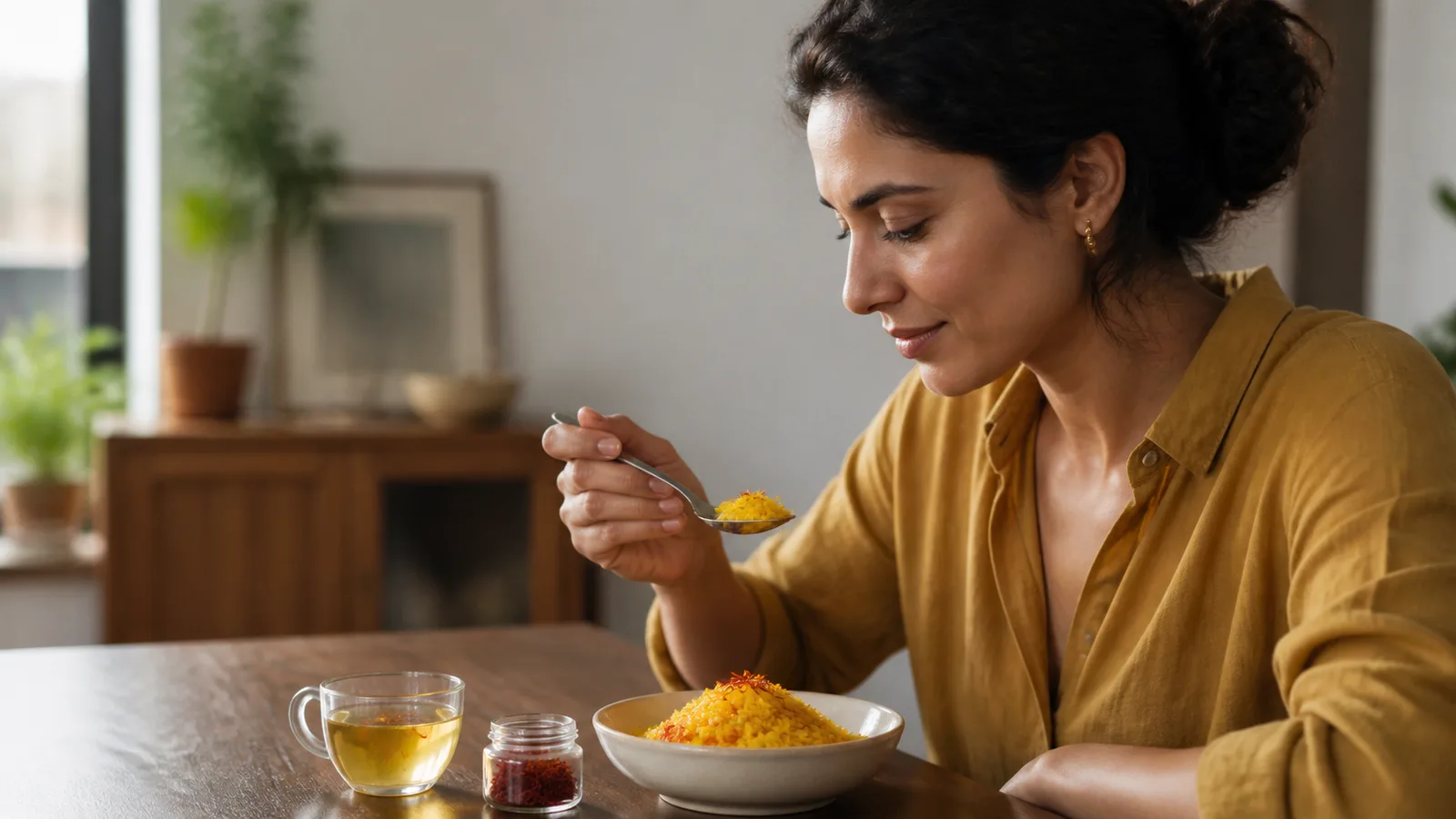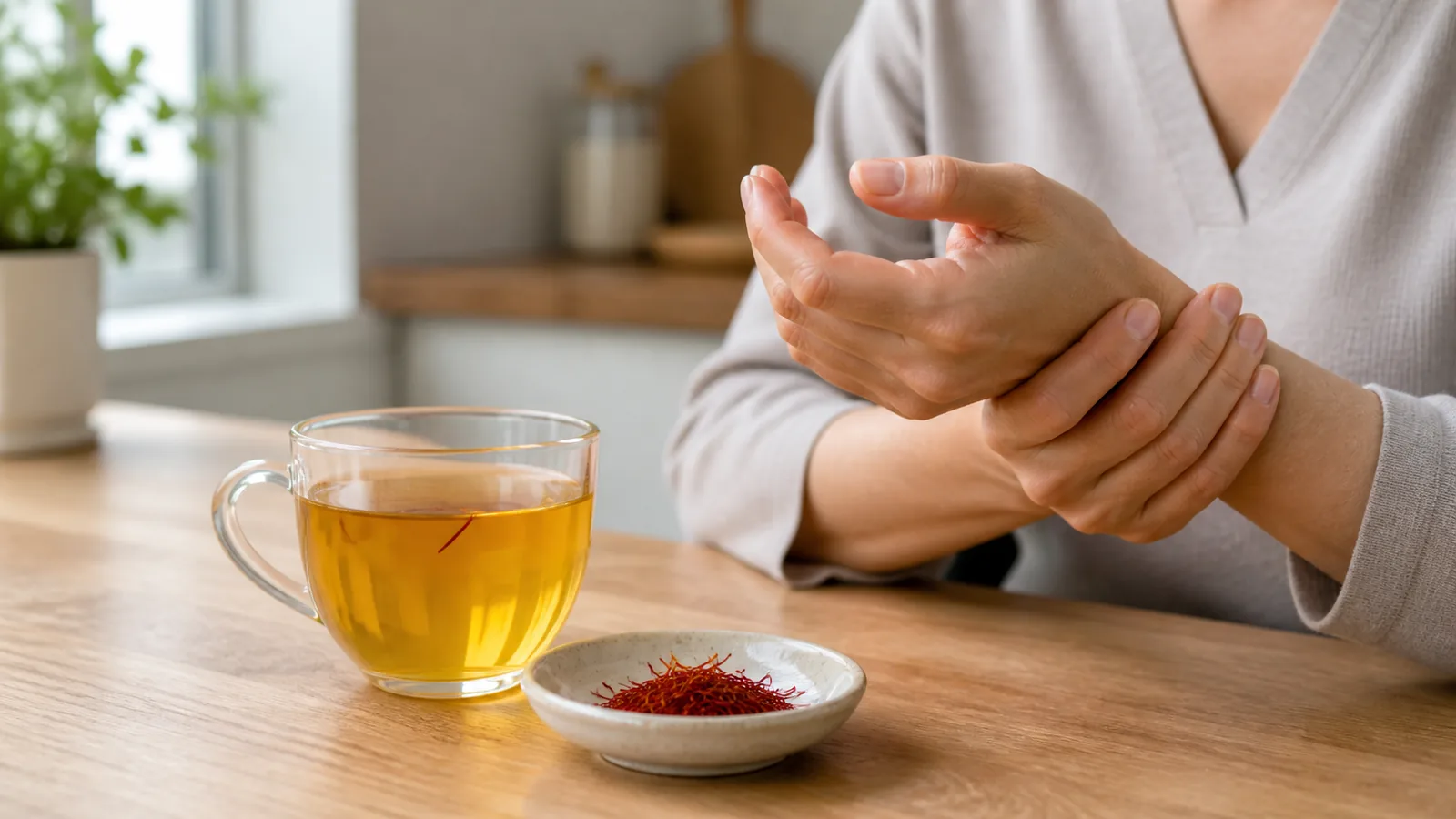
The maximum allowable consumption of saffron is not one universal number. For cooking, the useful amount is a small pinch that gives the dish its aroma and golden colour. A supplement, strong tea or gram-level home remedy is a different use and needs a different safety decision.
The original version of this guide mixed three consumer questions: how much saffron belongs in food, how brewed saffron should be stored, and how to avoid buying safflower or turmeric as saffron. This updated guide keeps those questions separate so each answer is clear.
Start with the purpose
Before measuring anything, decide what you are making:
- A family recipe: use the amount needed for taste, aroma and colour across all servings.
- A food-strength infusion: steep that recipe amount in a small volume of warm liquid, then add it to the dish.
- A daily health preparation: treat this as medicinal use, not as seasoning.
- A commercial batch: weigh the saffron accurately and record the amount per batch and per serving.
Research doses and alleged toxicity thresholds are not recipe instructions. Product type, extract strength, pregnancy, medicines and medical history all affect risk. Our detailed guide to the maximum allowable consumption of saffron explains why a universal daily or monthly figure is misleading.
How much saffron should a cook use?
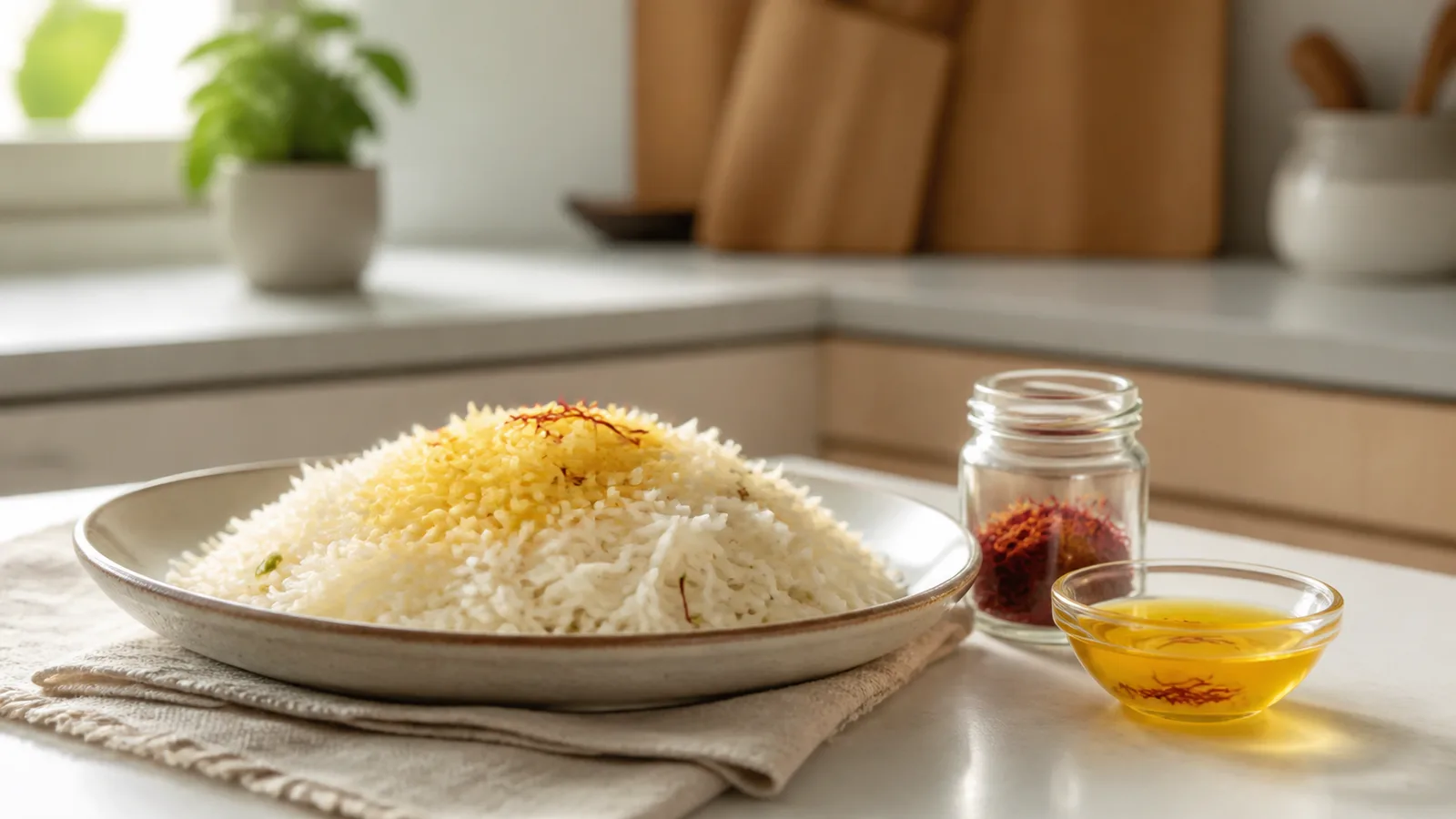
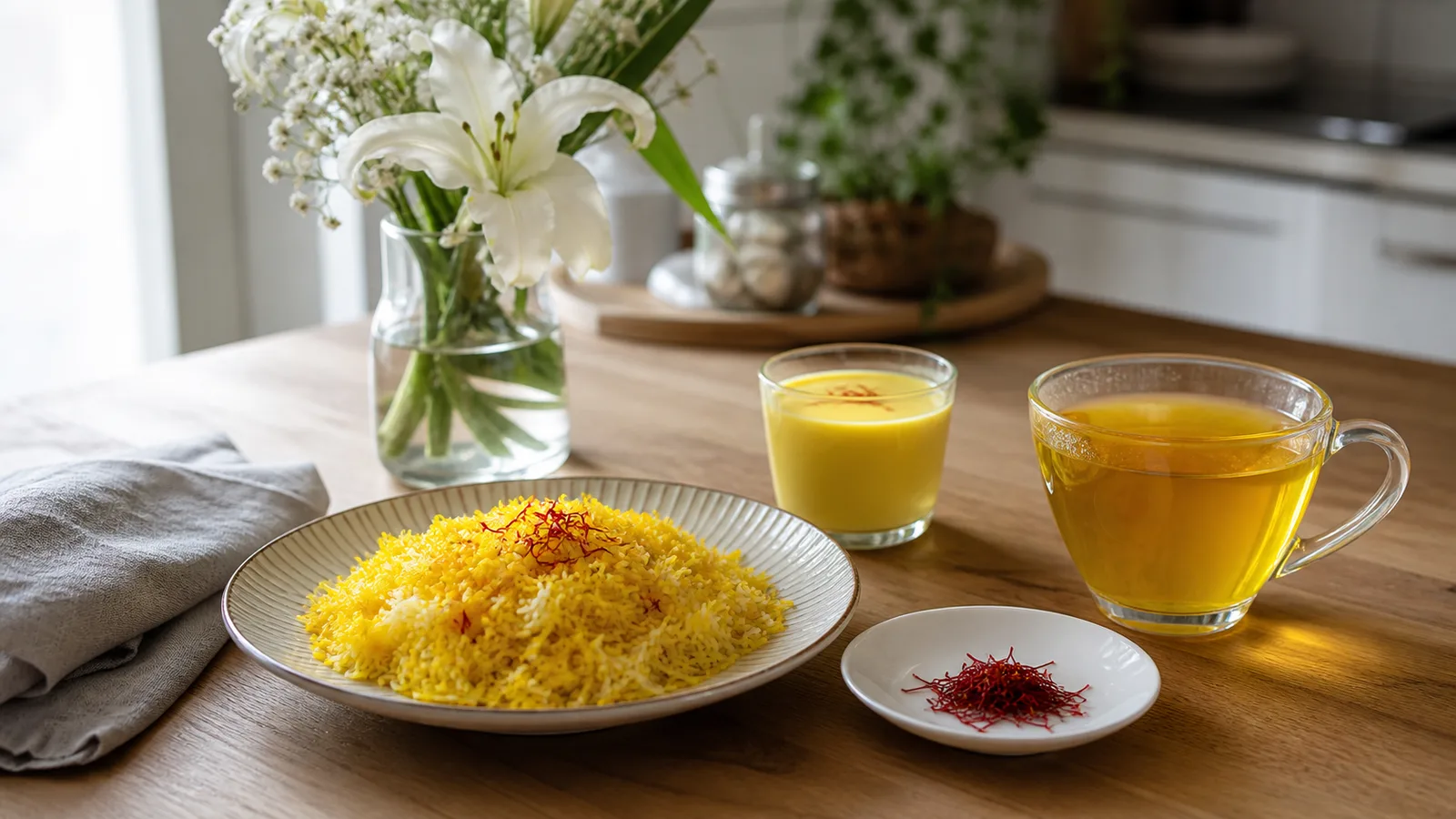
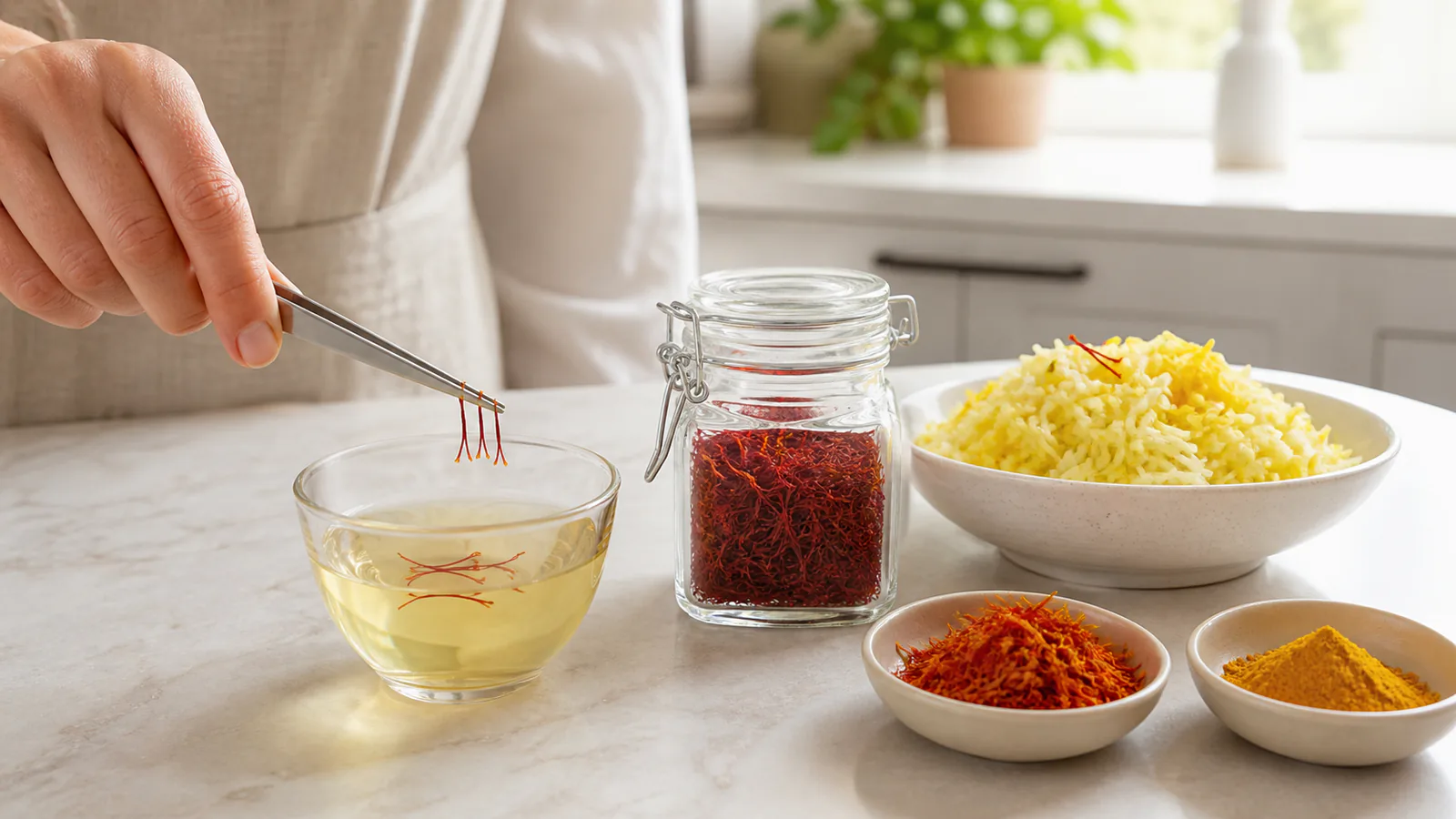
Start small. Lightly crush a modest pinch of genuine threads and steep them in warm water, milk or stock for 10 to 15 minutes. Add the infusion to the recipe and give it time to spread before deciding whether more is needed.
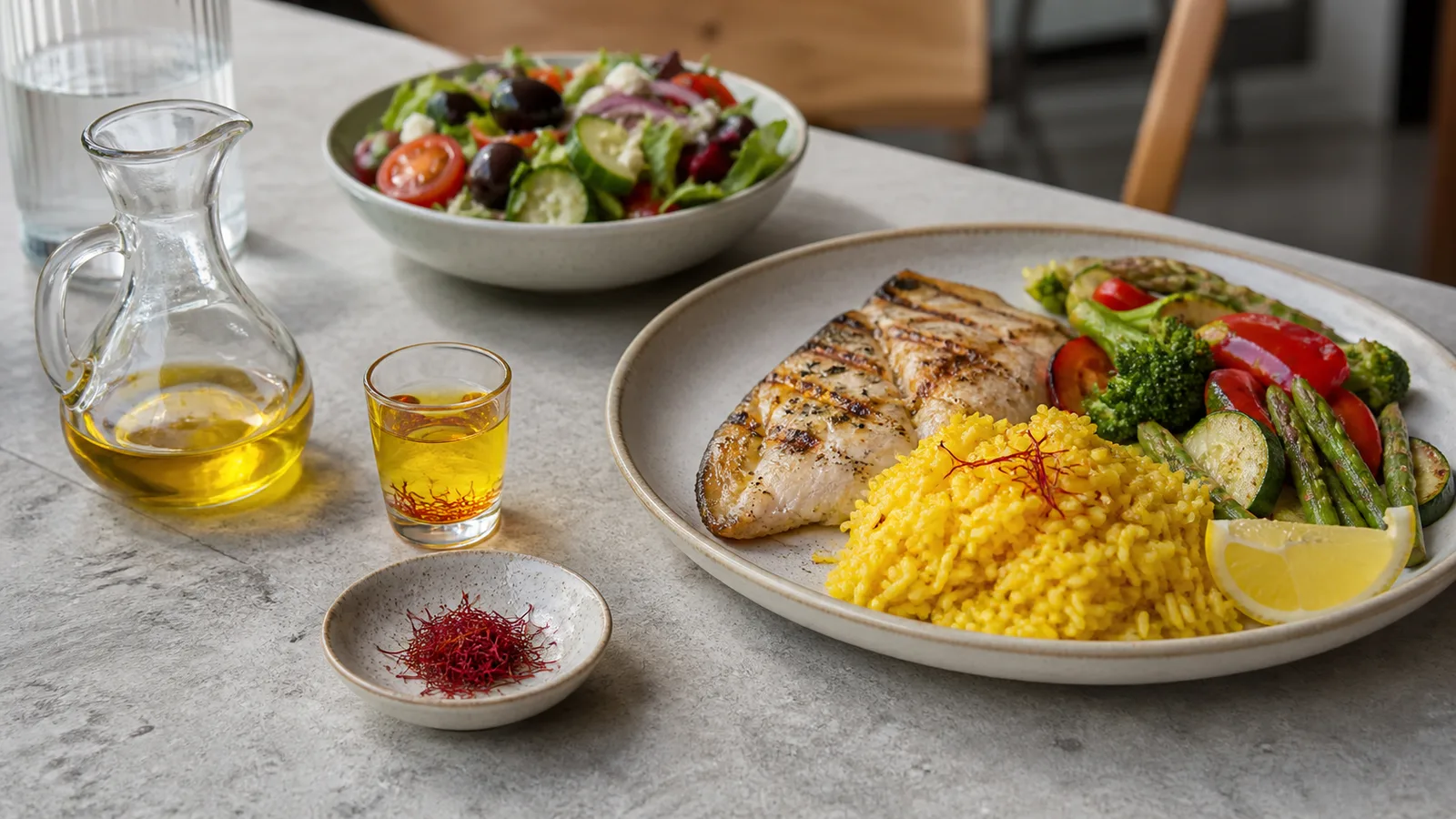
Saffron is especially effective in rice, sweets, breads, soups and slow-cooked dishes. Iranian cooking uses it as both a flavour and a colour, but the aim is not to make every grain bright orange. Good saffron contributes a layered aroma and a clear golden tone without becoming bitter or medicinal.
Counting threads is imprecise because dried stigma pieces vary in length and thickness. A restaurant or packaged-food producer should use a calibrated scale. A home cook can rely on a well-tested recipe and a small infusion rather than a spoonful of dry spice.
Brewed saffron: make only what you need
A small fresh infusion gives better control than brewing a large, strong batch. Use clean utensils and a covered food-safe container. If the infusion will not be used immediately, cool it promptly and refrigerate it.
Treat brewed saffron as prepared food. If it contains milk, stock or another perishable ingredient, the shortest safe life of any component governs the mixture. The USDA’s leftover guidance uses three to four refrigerated days for cooked leftovers; discard an infusion sooner if it was left warm, handled repeatedly, or develops an unusual smell, cloudiness or mould.
Freezing a clean infusion in small covered portions can prevent waste. Label the date and do not mix an old batch into a fresh one.
Store dry saffron away from heat, light and moisture
Keep whole threads in a tightly closed glass or metal container in a dark, dry cupboard. Do not place the jar beside an oven, kettle or sunny window. Open it only with dry hands or utensils.
Grinding exposes more surface area to air and makes the product harder to inspect. Keep most of the batch whole and grind only the amount needed for the recipe. A transparent jar is fine when the jar itself is stored in darkness.
The refrigerator is usually unnecessary for dry saffron and can create condensation when a cold jar is opened. In a very hot climate, if refrigeration is used, keep the container completely airtight and allow it to reach room temperature before opening.
Safflower is not saffron
Safflower petals may be sold under names such as “American saffron.” Safflower is a legitimate plant and food ingredient, but it is not Crocus sativus. It can add yellow-orange colour yet lacks genuine saffron’s characteristic aroma and chemical profile.
Safflower pieces often look flatter and more petal-like than saffron stigmas. Genuine whole saffron threads are irregular, narrow and slightly trumpet-shaped at one end. Length alone is not a reliable test because grades, harvesting and breakage vary.
The old article claimed that safflower is sedative and damages liver tissue when too much is eaten. That statement did not identify a preparation, dose or reliable source and should not be used to judge a food product. The relevant consumer problem here is substitution and mislabelling.
Turmeric creates colour, not saffron flavour
Turmeric can give food a strong yellow colour and is valuable in its own recipes. It does not reproduce saffron’s aroma or stigma structure. A product containing turmeric is not counterfeit when it is labelled honestly; it is counterfeit when sold as pure saffron.
Ground saffron is easier to dilute with turmeric, paprika, starch or coloured material because the threads can no longer be inspected. Buying traceable whole threads and grinding a little at home reduces that information loss.
Home authenticity checks have limits
A few genuine threads in warm water usually release golden-yellow colour gradually while keeping their structure. A vivid red cloud or fibres that immediately lose all colour may be suspicious. Rubbing a damp thread on white paper can reveal obvious surface dye or oil, but neither check proves identity.
A systematic review of saffron-fraud research documents safflower, marigold, turmeric, other plant material and synthetic dyes as adulterants. Laboratory methods such as microscopy, spectroscopy, chromatography and DNA analysis are far more reliable than one home trick.
Our complete guide to counterfeit saffron signs and test limits explains how to use visual, water and paper checks without overclaiming what they show.
Choose traceability over a “too good” price
Look for a sealed food-grade package, supplier contact details, origin, lot or batch number, packing date, net weight and clear storage instructions. A certificate is useful only when it identifies the relevant batch and laboratory.
No origin, packaging design or brand name proves purity by itself. Extremely low pricing is a reason to ask how a hand-harvested product can be supplied at that cost. Avoid anonymous powder when the seller cannot explain its source or testing.
A simple consumer checklist
- Buy traceable whole threads.
- Keep the batch sealed, dark and dry.
- Infuse a small recipe quantity rather than adding a spoonful.
- Refrigerate prepared infusion promptly and use it as perishable food.
- Stop using a product that smells chemical, appears mouldy or behaves suspiciously.
- Seek clinical advice before using capsules, extracts or strong daily preparations.
What to know about consumption of saffron
Culinary saffron works in small amounts. The safest and most economical approach is to buy genuine threads, make a modest infusion and add only what the recipe needs. Large or repeated medicinal use cannot be made safe by comparing it with an unsupported monthly number.
Quantity, storage and authenticity are connected, but they are not the same question. Measure food carefully, store it correctly and verify the supply chain. That protects both the customer and the qualities that make saffron worth buying.