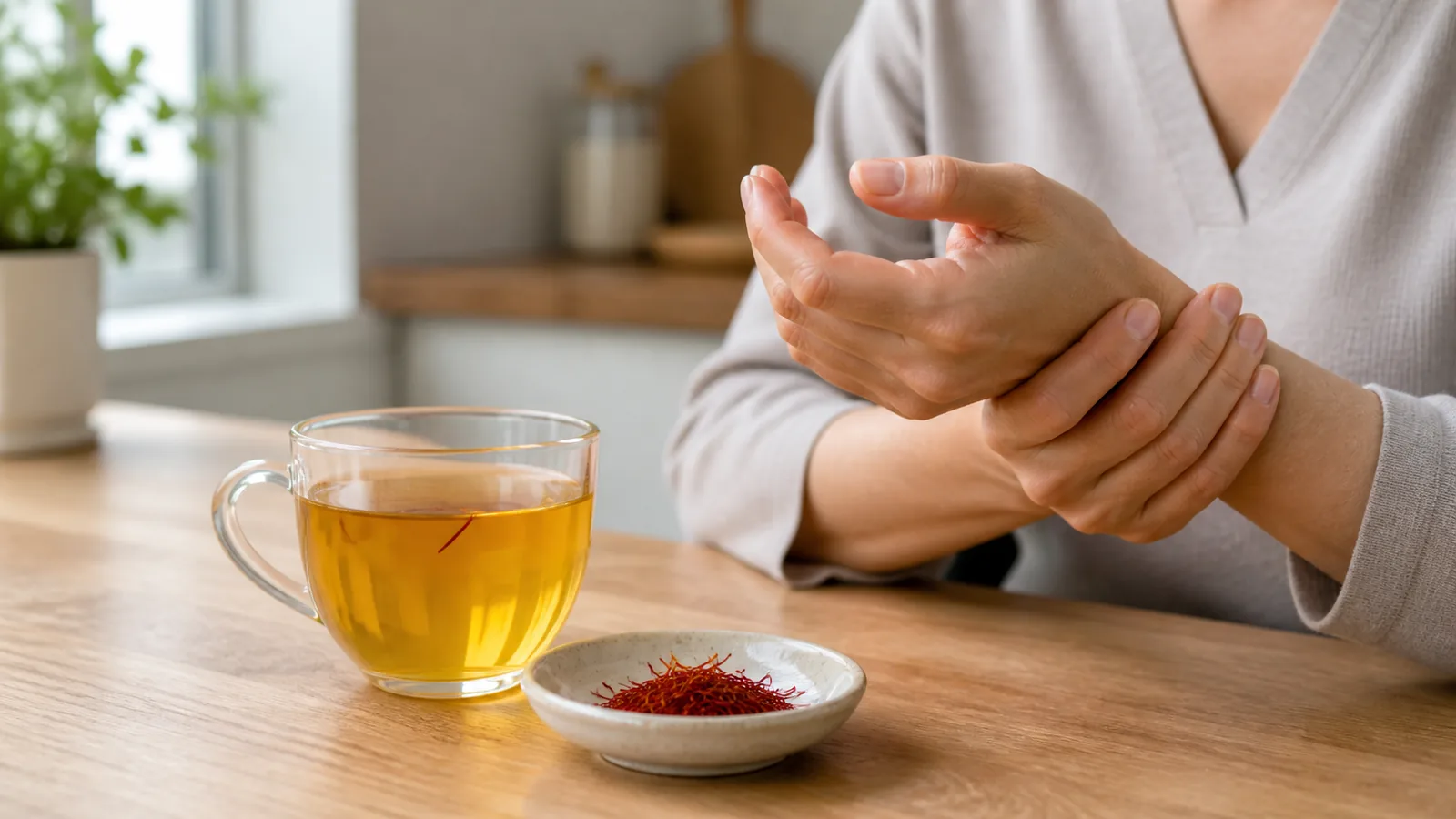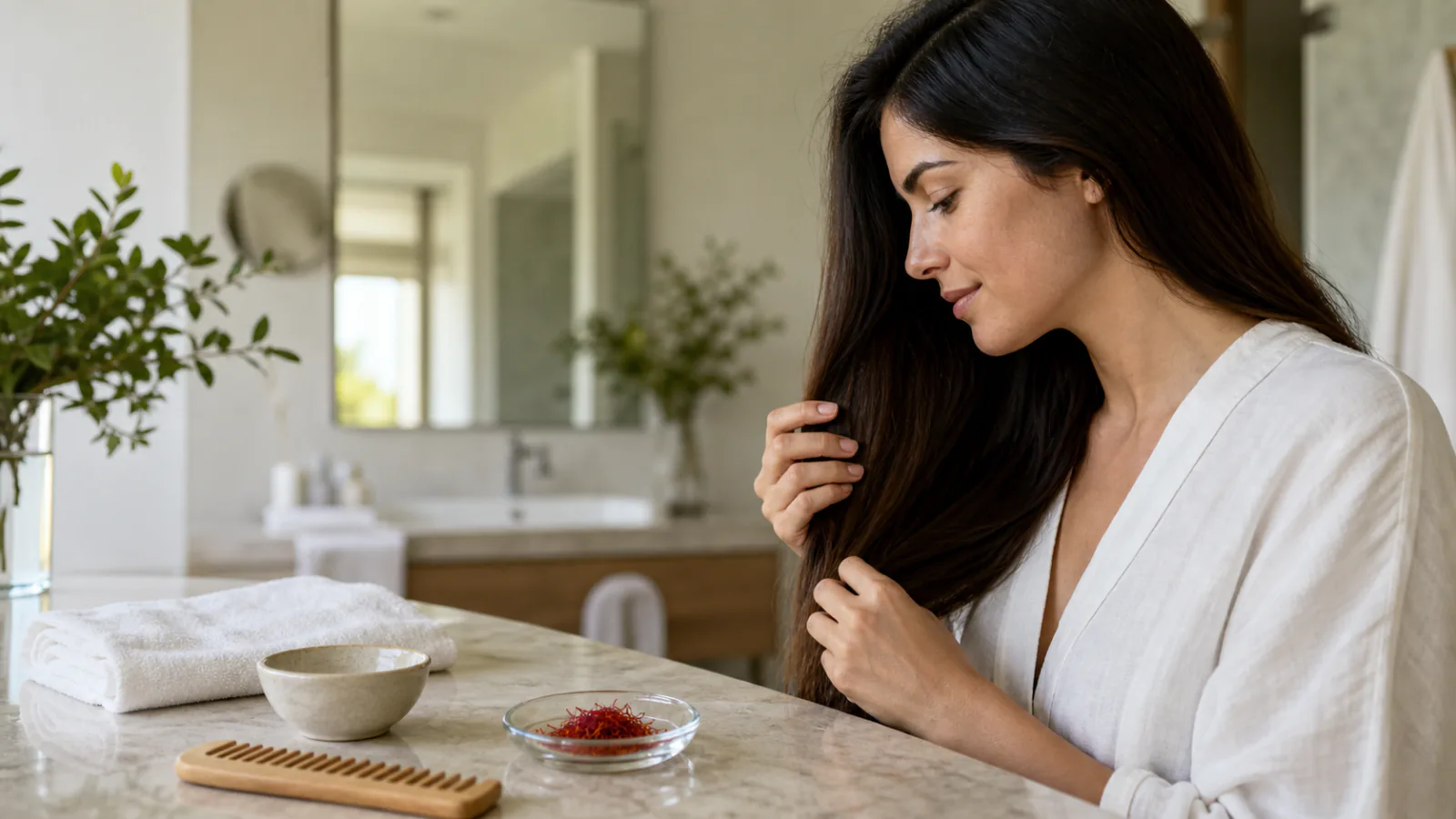
The most useful way to understand saffron hair benefits is to separate a pleasant beauty ritual from a proven treatment. Saffron brings colour, aroma and a long history of traditional use to food and personal care, but evidence for regrowing hair is not established. For skin, a few small studies of formulated saffron extracts are interesting, although they do not prove that a homemade mask will treat acne, pigmentation or another condition.
This first part of our two-part guide looks closely at ten commonly repeated benefits of saffron for skin, hair and health. Each one is labelled by what we actually know: culinary value, traditional practice, early research or a claim that needs more evidence.
31 amazing benefits of saffron for skin, hair and health (part 1)
1. Saffron adds a distinctive sensory experience
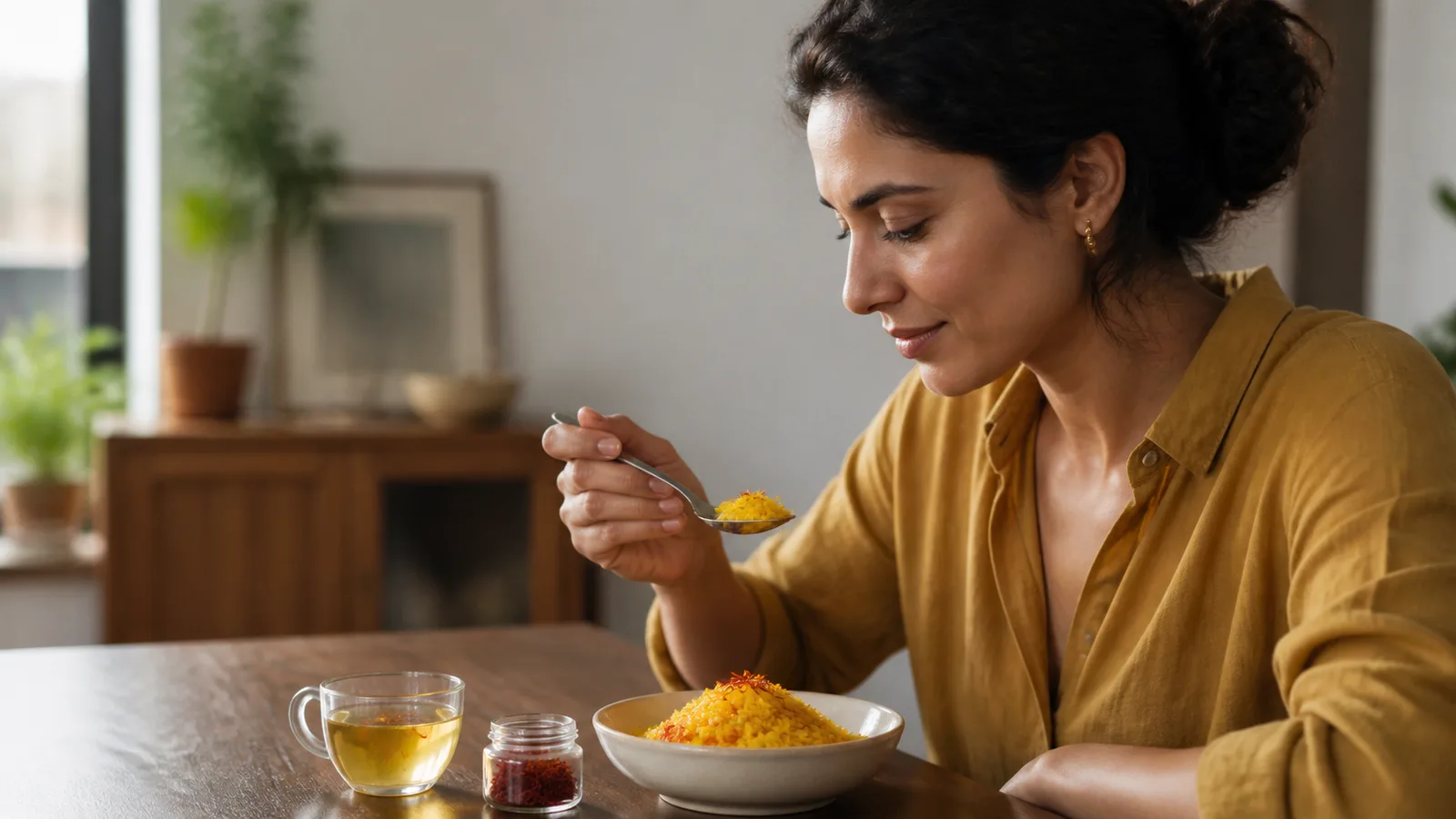
A small amount of genuine saffron changes a dish in three ways: crocin compounds contribute its golden colour, picrocrocin contributes bitterness, and safranal is important to its aroma. That combination is why saffron is difficult to replace with a single substitute. Enjoying its flavour and fragrance is a real benefit in cooking, without needing to turn the spice into medicine.
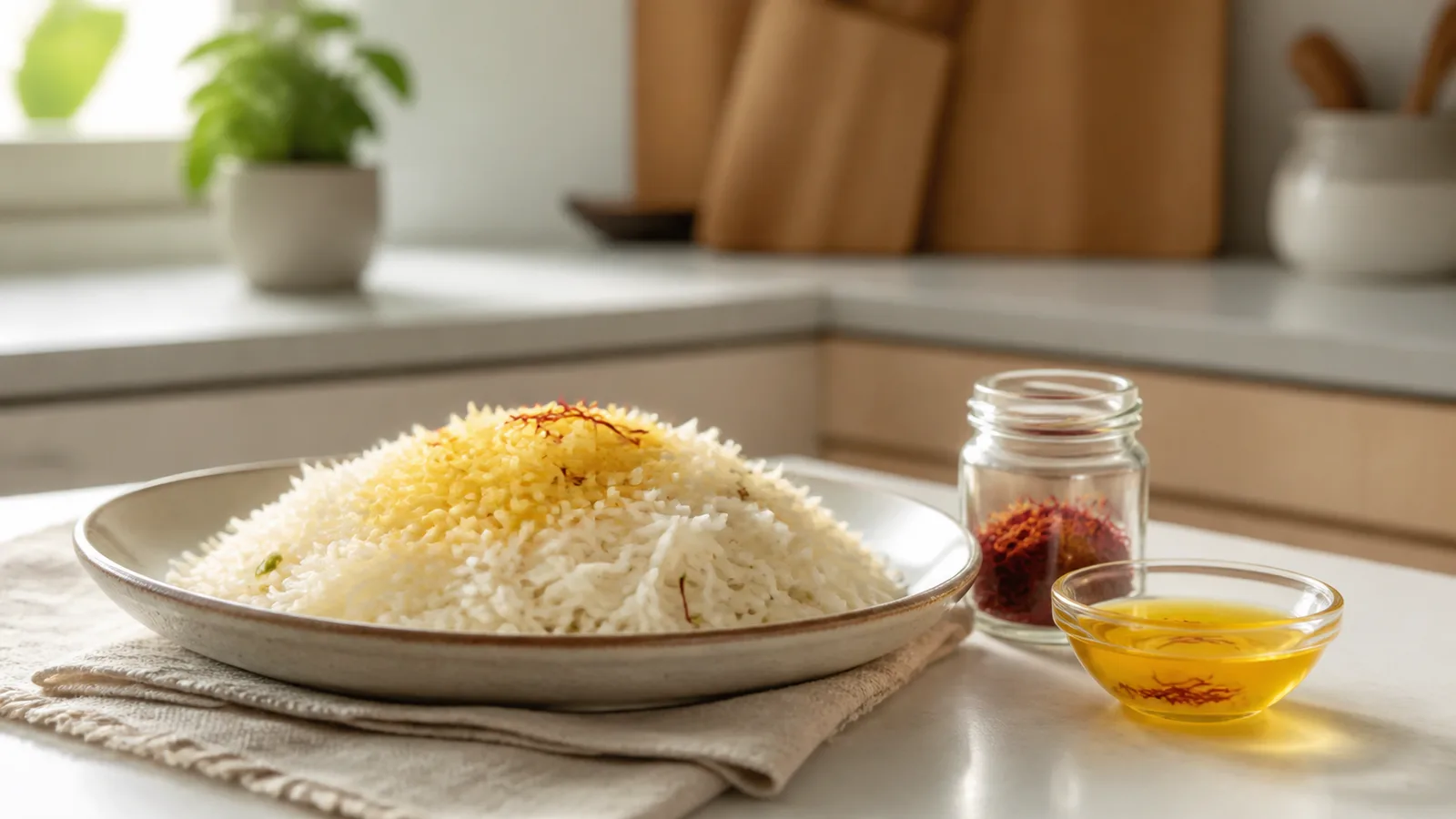
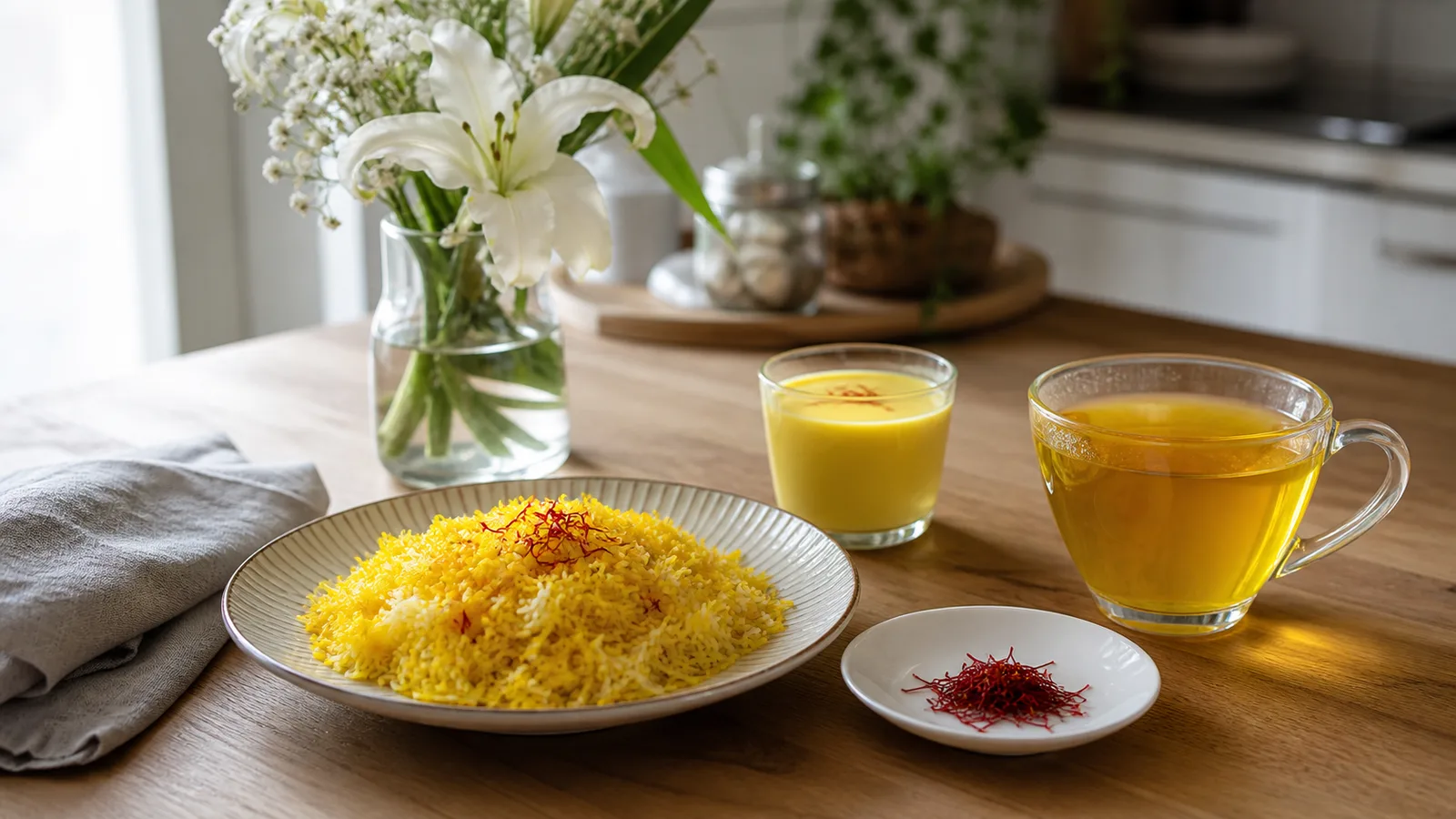
Use only the amount a recipe needs. Threads can be gently crushed and infused in warm water or milk before being added to rice, stew or dessert. This distributes the colour and aroma more evenly than dropping dry threads into one corner of the dish.
2. Saffron contains antioxidant compounds
Crocin, crocetin and related plant compounds can act as antioxidants in laboratory settings. This is a property of the compounds, not proof that eating saffron prevents disease. A 2021 review of meta-analyses on saffron and health outcomes found promising results in several areas but also concluded that the quality of the reviews needed improvement and that larger, higher-quality trials were required.
It is reasonable to describe saffron as an antioxidant-containing spice. It is not reasonable to promise that it will prevent cancer, reverse ageing or protect every cell in the body.
3. A formulated saffron cream may support skin moisture
One small study compared a professionally formulated cream containing a concentrated saffron extract with its cream base. It reported changes in skin moisture and transepidermal water loss over eight weeks. The human moisturizing study is a useful starting point, but it tested a stable 3% extract formulation—not loose threads mixed in a kitchen.
That distinction matters. A cosmetic formula has controlled ingredients, concentration, preservation and stability. A homemade milk or water mixture does not automatically have the same effect and should not be stored for later use.
4. A simple saffron ritual may make skin look temporarily refreshed
Saffron water can leave a faint warm tint, while the liquid and the base ingredients in a mask may make the surface feel softer for a short time. That cosmetic effect is different from changing the structure of the skin or treating a condition.
If you want to try a simple preparation, infuse only a few threads in a small amount of clean water, let it cool, patch-test it on a small area, and rinse it away if there is stinging, redness or itching. Avoid the eyes and broken skin. Do not assume that a natural ingredient is automatically non-irritating.
5. Saffron is not a proven acne or blemish treatment
Older home-care lists often suggest mixing saffron with basil, milk, sandalwood or other ingredients for acne, dark spots and wrinkles. Those recipes combine several possible irritants and do not show which ingredient caused any observed change. They also have not been shown to treat acne in robust clinical trials.
Anyone with persistent acne, painful lesions, scarring or a changing pigmented spot should seek qualified medical advice. A saffron mask should not delay an evidence-based diagnosis or treatment. Our guide to saffron and skin care explains the same evidence-first distinction in more detail.
6. Saffron hair benefits are not the same as hair-regrowth evidence
Readers looking for the benefits of saffron for hair usually want to know whether it can reduce shedding or stimulate new growth. That is exactly where the evidence is weakest.
Applying saffron, milk and licorice to the scalp is a traditional remedy, but we found no reliable human clinical evidence that this mixture stops hair loss or regrows hair. It can also leave residue or irritate a sensitive scalp. For that reason, it should not be presented as a treatment for alopecia or thinning hair.
Hair shedding has many possible causes, including inherited hair loss, illness, medication, hormonal change, nutritional deficiency and damaging hair practices. The American Academy of Dermatology advises that an accurate diagnosis comes first and describes evidence-based options in its hair-loss diagnosis and treatment guidance. If you notice sudden shedding, bald patches, scalp pain or continuing thinning, speak with a dermatologist.
7. Gentle hair care has clearer practical value
A saffron ritual may feel luxurious, but everyday habits matter more for preventing avoidable breakage. Use a gentle shampoo, condition the lengths, detangle without pulling, limit high heat and avoid styles that keep the roots under tension. These steps do not cure medical hair loss, but they reduce unnecessary damage to fragile hair.
If you still choose to try saffron on the scalp, patch-test the complete mixture first and rinse it out promptly. Do not use it on inflamed or broken skin. Read our focused discussion of saffron benefits for hair before deciding what a home preparation can—and cannot—reasonably do.
8. Saffron contributes flavour, not meaningful mineral doses
Saffron contains trace amounts of minerals, but a culinary serving is tiny. It is therefore misleading to describe a pinch as a practical source of potassium, iron, calcium, magnesium or zinc. Those nutrients are important to normal body functions; the amount of saffron on a plate is not a treatment for anaemia, high blood pressure or a heart condition.
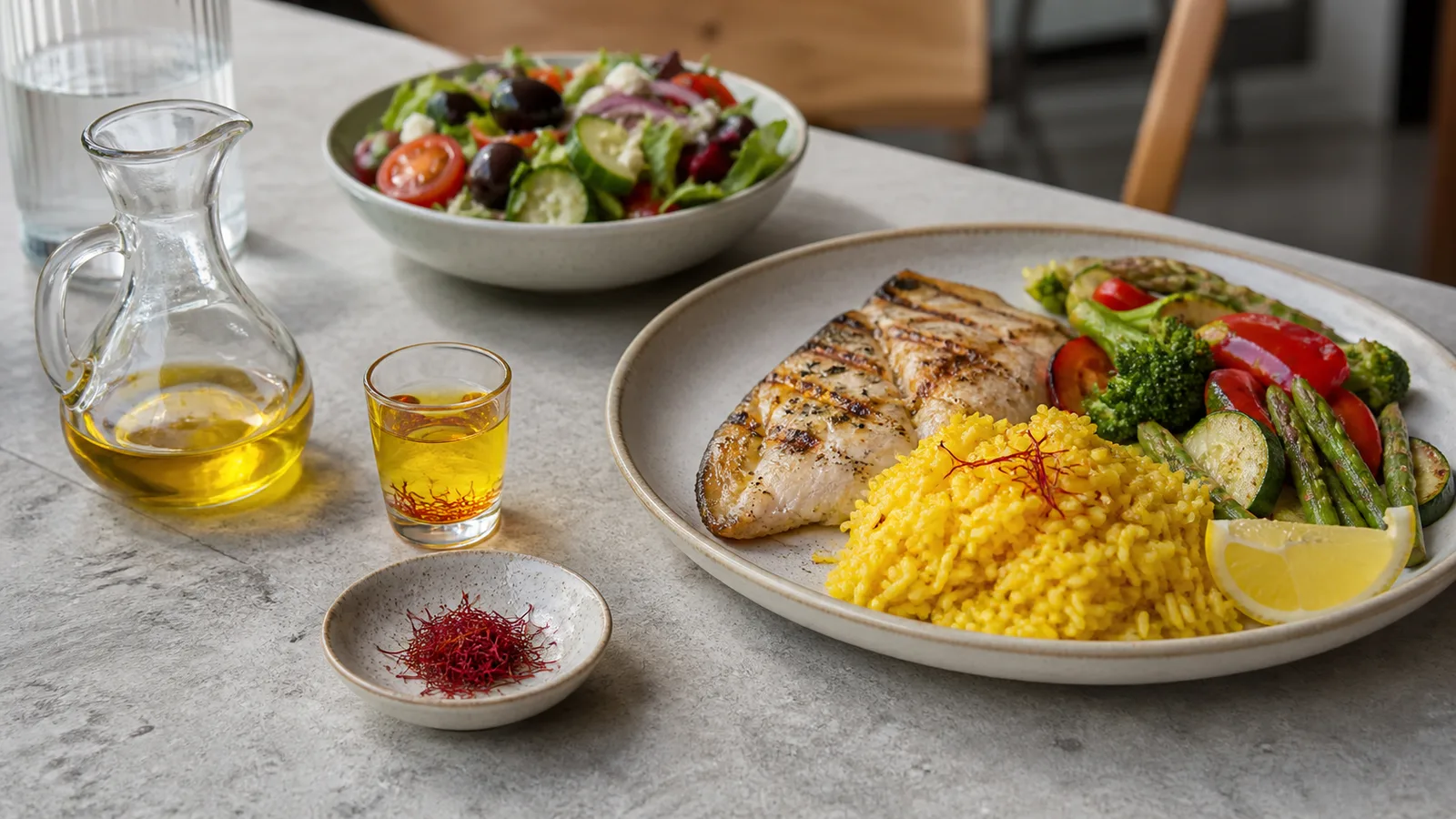
The sound benefit is simpler: saffron can make nourishing food more enjoyable without adding much sugar, salt or fat of its own. The nutritional value still comes mainly from the whole meal.
9. Mood research is promising but belongs in clinical context
Human trials have studied standardised saffron preparations for mood. A 2026 review of 34 randomised controlled trials reported improvement in some self-reported depression and anxiety measures, but not every outcome, and rated the evidence as moderate. These trials used defined preparations over planned periods; they do not show that one saffron meal treats depression.
Cooking with saffron may be comforting, and sharing a meal can be enjoyable. Neither replaces mental-health care. Anyone experiencing depression, severe anxiety or thoughts of self-harm should contact a qualified professional or local emergency service rather than self-treating with saffron.
10. Sensible use includes knowing the limits
Food-level use and a concentrated supplement are not interchangeable. A 2026 systematic review of saffron adverse events examined 102 clinical trials and found that reported effects were most often mild gastrointestinal problems, while also advising clinical monitoring for higher-dose or prolonged medicinal use.
Keep culinary use modest. Ask a clinician or pharmacist before using concentrated saffron if you are pregnant, take regular medicine, have a bleeding disorder or are managing a health condition. Stop a topical preparation if it irritates your skin.
How to evaluate a saffron skin or hair claim
- Check the form: whole threads, an extract, a capsule and a formulated cream are different products.
- Check the evidence: a laboratory result or traditional recipe is not the same as a controlled human trial.
- Check the promise: words such as “cures,” “regrows” and “prevents” require much stronger evidence than “adds aroma” or “may moisturise.”
- Check the risk: patch-test topical mixtures and do not postpone professional care for a persistent problem.
The best-supported saffron hair benefits are modest: saffron can be part of an enjoyable self-care ritual, but it has not been proven to regrow hair. For skin, limited research on formulated products is worth following, without transferring those results to every homemade recipe. That evidence-aware approach lets saffron remain interesting without asking it to do more than research supports.
Continue to Part 2 for the rest of this evidence-checked guide to saffron for skin, hair and everyday wellbeing.