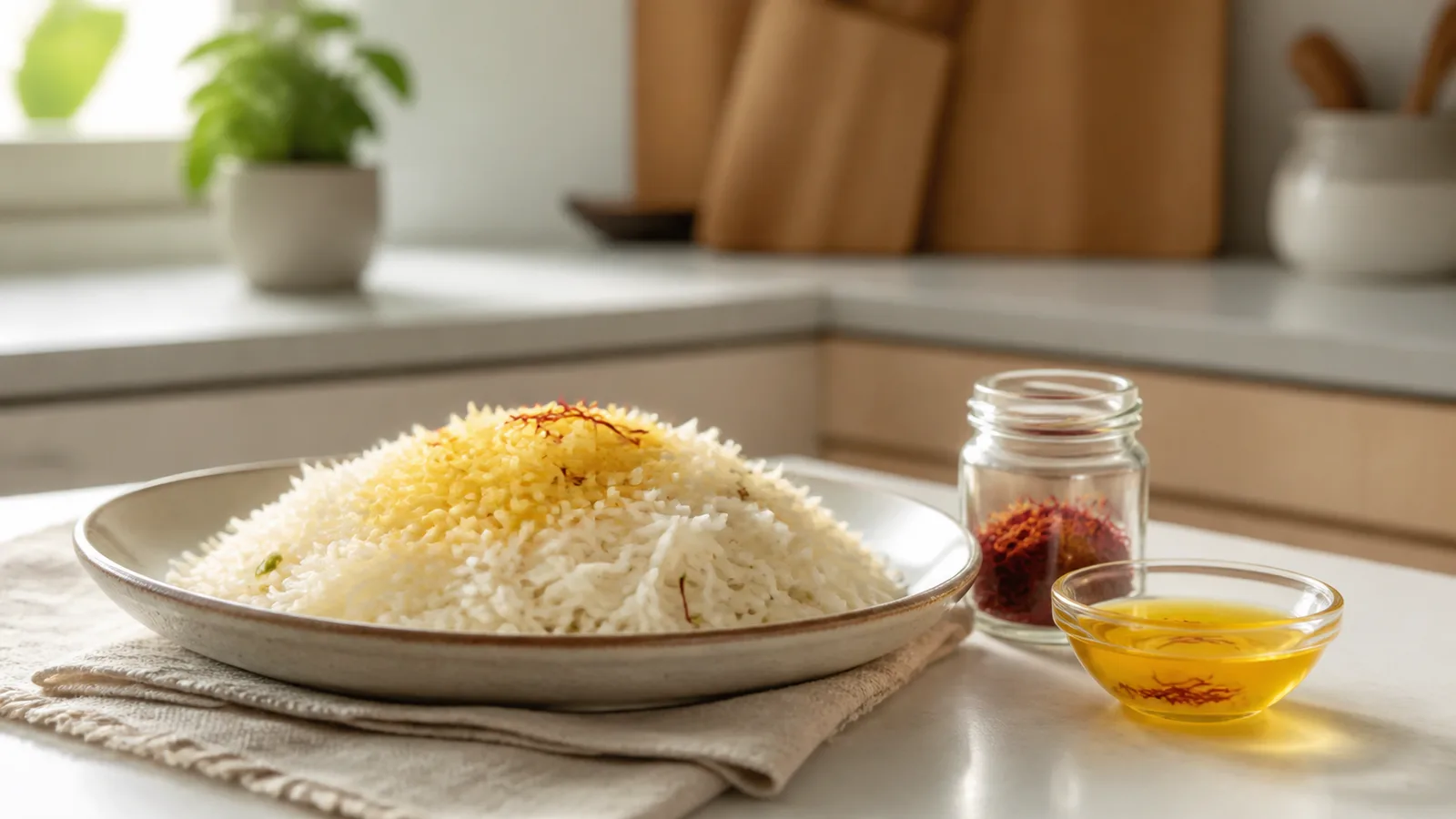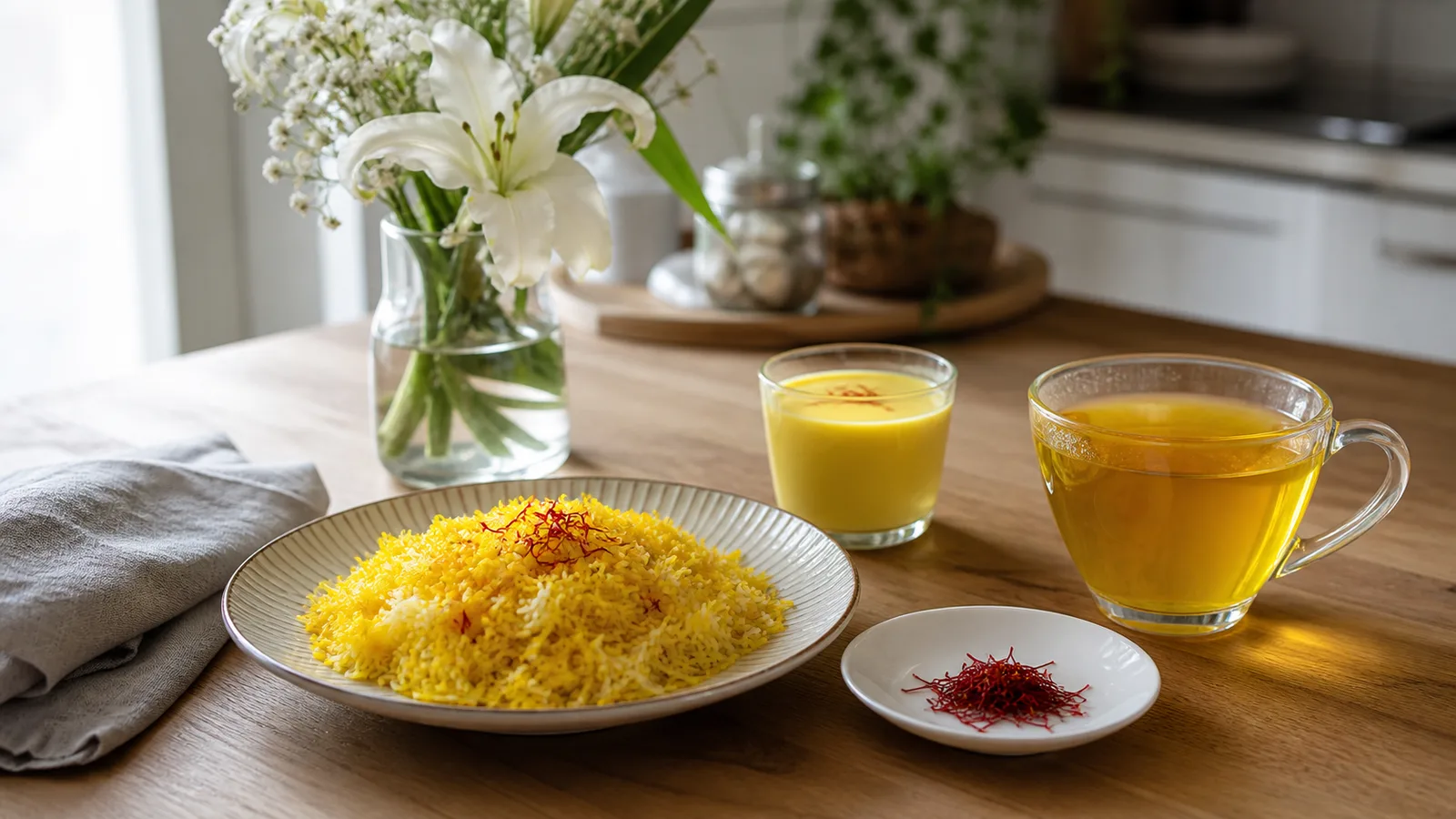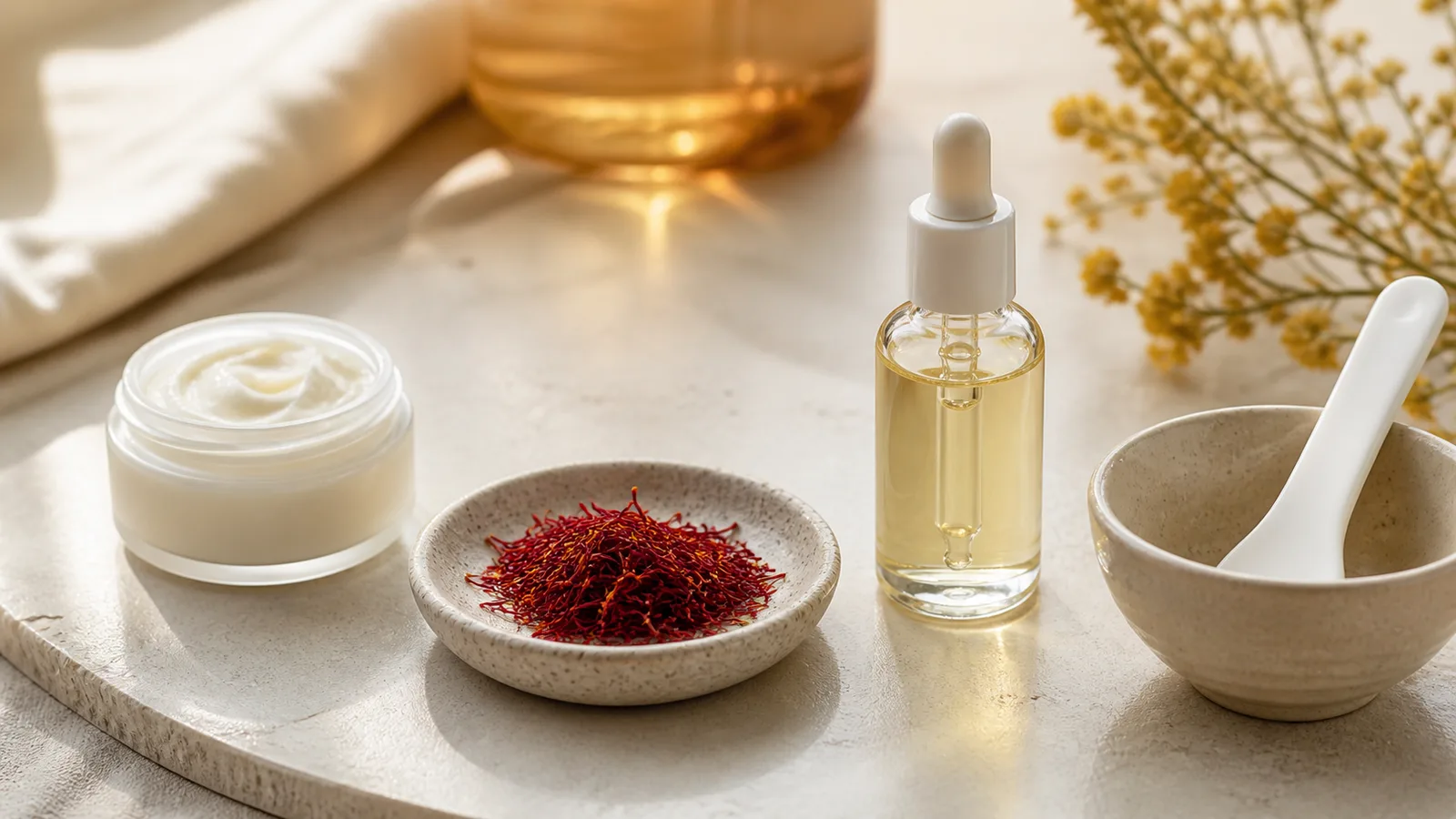
The clearest evidence for saffron skincare benefits is limited to early cosmetic research, including one small human study of a formulated 3% saffron-extract cream that reported improved moisturization. Evidence does not show that saffron threads, oil, tea, milk, honey masks, or every saffron product can clear acne, fade pigmentation, heal wounds, erase wrinkles, or protect skin from the sun.
Is saffron good for skin? It may be an interesting optional cosmetic ingredient, particularly in a suitable moisturizer. It is not a complete routine and should not replace sunscreen, proven acne care, or medical treatment.
What are the benefits of saffron for skin?
Saffron contains pigments and aromatic compounds such as crocin, crocetin, and safranal. Laboratory research has investigated their antioxidant, anti-inflammatory, antimicrobial, and pigment-related activity. Those mechanisms are promising research leads, not proof of a visible benefit on a person’s face.
A small eight-week human study compared a cream base with a cream containing 3% concentrated saffron extract. It found changes in measured skin moisture and transepidermal water loss. Because this was a specific prepared formula, its result cannot be applied automatically to a few soaked threads or to a product that merely shows saffron on its label.
For now, the potential saffron skin benefits are best described as moisturizing support from some formulations and an appealing color or aroma. Stronger claims need stronger human trials.
Saffron benefits for face and skin: claim by claim
The claimed benefits of saffron on face skin—and benefits of kesar on face—are evaluated below using the same evidence. “Saffron” and “kesar” name the same spice.
Glow and brightness
Hydrated skin reflects light more evenly and can look smoother or more radiant. That may explain a temporary “glow” from a moisturizing cream. Saffron has not been shown to permanently lighten normal skin or create a youthful complexion.
The yellow-gold pigment can also leave a short-lived tint. Color deposited on the surface is not the same as reduced melanin, treated hyperpigmentation, or repaired skin.
Dark spots and pigmentation
The benefits of saffron on skin do not include a clinically established treatment for melasma, freckles, or post-acne marks. Pigmentation has several causes. Irritating mixtures—especially those containing lemon juice or abrasive particles—can deepen discoloration rather than improve it.
Broad-spectrum, water-resistant SPF 30 or higher is a better-supported daily measure. A dermatologist can identify a changing or persistent patch and recommend treatment suited to the cause and skin tone.
Wrinkles and anti-aging
Moisturization can temporarily soften the appearance of fine surface lines. It does not prove that saffron rebuilds collagen, reverses wrinkles, or slows the biological aging process. Consistent sun protection has stronger evidence for limiting premature signs of aging.
Acne, pimples, and oily skin
Laboratory antimicrobial or anti-inflammatory activity is not enough to call saffron an acne treatment. Clinical evidence does not show that it regulates excess oil, unclogs pores, prevents pimples, or heals acne scars.
Use gentle cleansing and products labeled non-comedogenic. Established acne ingredients and prescription care are more dependable. Persistent, painful, or scarring acne deserves assessment by a dermatologist.
Wounds, burns, and skin repair
Do not put a homemade saffron mask, saffron oil, honey mixture, or food product on an open wound or burn. The claim that saffron accelerates healing is not established for home use, and an unsterile mixture can cause irritation or contamination. Use appropriate first aid and professional care.
Saffron uses for skin: compare the formats
People use saffron for skin care in several forms, but saffron for skincare is not one standardized product. Concentration, carrier ingredients, preservation, and contact time all change the result.
Formulated saffron creams and serums
A preserved cosmetic gives the manufacturer control over concentration, stability, pH, texture, and contamination. Read the full ingredient list: a saffron product may moisturize mainly because of glycerin, oils, ceramides, or other established base ingredients.
A cosmetic claim should be truthful and not misleading. Be skeptical if a serum promises to treat acne, repair burns, remove scars, or reverse sun damage simply because it contains a botanical extract.
Saffron oil on skin
“Saffron oil” can mean saffron infused into a carrier oil, an extract dispersed in oil, or a fragrance blend. These are chemically different products. Oil may reduce water loss by covering the skin, but it can feel heavy and may not suit acne-prone skin.
The benefits of saffron oil on skin have not been established independently from the carrier and formula. Never apply an undiluted fragrance or essential-oil product to the face, and stop if irritation develops.
Saffron face masks with honey or yogurt
Saffron face mask benefits are mostly based on tradition and ingredient reputation. A saffron honey mask or yogurt mixture changes the texture but does not prove that it treats acne or pigmentation. Food mixtures are unpreserved, and dairy or other ingredients can cause irritation or allergy.
If you choose to try one, use clean utensils, make a single fresh portion, avoid lemon and scrubbing, patch-test first, and rinse immediately if it burns or itches. Do not assume that leaving it on for 15 to 20 minutes is safe when your skin is reacting. Do not store leftovers or apply the mask to broken skin.
Saffron tea and saffron milk
There is no good evidence that saffron tea benefits skin directly or that drinking kesar milk fades spots, clears acne, or changes complexion. Saffron tea and milk can be enjoyable foods, but they should not be presented as targeted skincare.
The benefits of kesar milk for skin and benefits of saffron milk for skin are therefore unproven. Milk’s nutritional profile depends on the type used, while added honey or sugar still counts as added sugar.
Kesar benefits for skin
Kesar is another name for saffron, so searches for benefits of kesar for skin or kesar benefits for skin refer to the same ingredient and evidence. A different name does not create a different medical effect.
Traditional use is relevant cultural context. It cannot demonstrate that kesar on the face will brighten skin, remove acne, or heal injury. Product formulation and human trial evidence still matter.
How to choose saffron skincare products
- Look beyond the front label. Check the complete ingredient list and directions.
- Choose for your skin type. Dry skin may tolerate a richer cream; oily or acne-prone skin often benefits from non-comedogenic formulas.
- Avoid vague miracle language. “Natural,” “ancient,” and “golden spice” do not establish safety or performance.
- Prefer sensible packaging. A preserved product in a pump or protected container is less exposed than a repeatedly opened homemade jar.
- Change one product at a time. This makes benefits and reactions easier to identify.
Patch-testing and safe use
- Apply a small amount to an area such as the inner forearm.
- Repeat according to the directions for several days.
- Do not use it on broken, sunburned, or freshly treated skin.
- Stop for burning, swelling, hives, blistering, or persistent redness.
A patch test cannot guarantee facial tolerance, but it can reveal an obvious reaction before full use. Seek urgent care for trouble breathing or facial swelling. A product being natural or organic does not make it non-allergenic.
A routine that does not depend on saffron
In the morning, use a gentle cleanser if needed, a suitable moisturizer, and broad-spectrum SPF 30 or higher. At night, cleanse gently and use any evidence-based treatment as directed, followed by moisturizer. Avoid aggressive scrubbing and do not keep switching products before they have had time to work.
A tolerated saffron cream can fit into the moisturizer step. Saffron for face care should remain optional: if it adds cost, fragrance, irritation, or false expectations, a simpler product is the better choice.
The practical conclusion is narrower than the old article’s promise. Saffron skincare benefits are plausible in some formulated products, and limited human evidence suggests moisturization is worth further study. Claims about long-lasting glow, pigmentation removal, anti-aging, wound healing, oil control, acne treatment, or visible repair remain unproven.