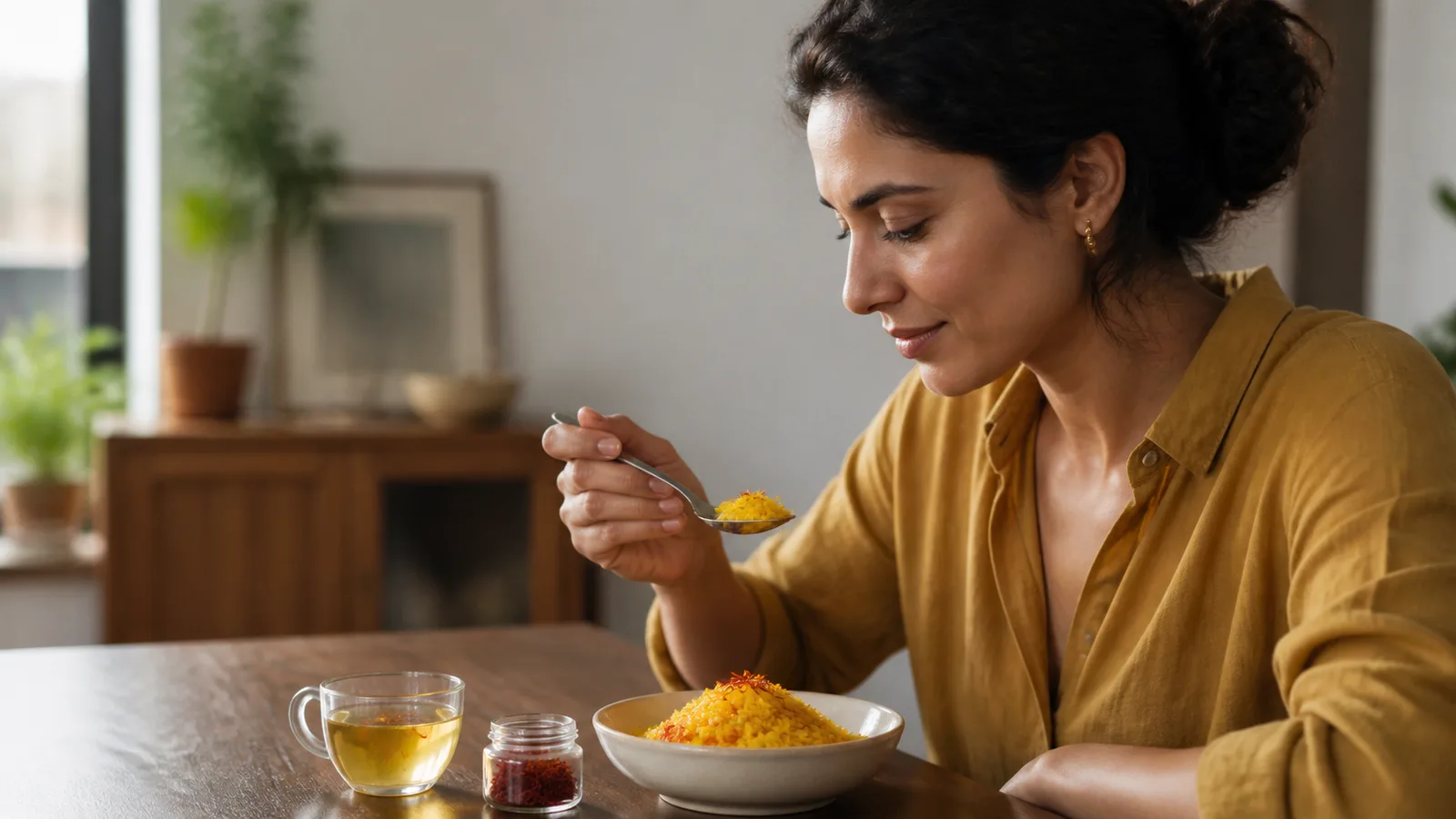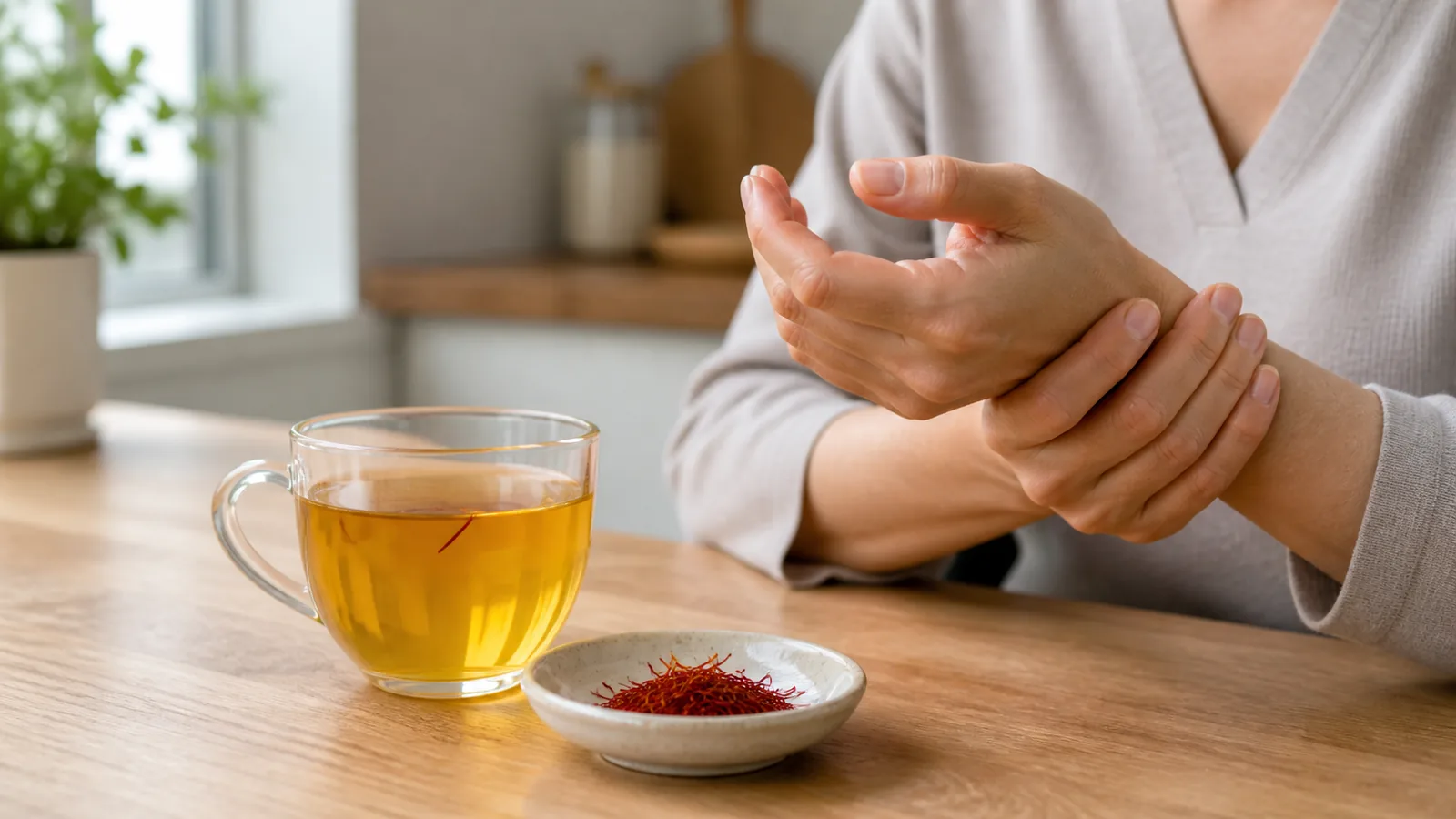
The health benefits of saffron explained responsibly begin with a distinction: what a pinch contributes to food is different from what researchers test in standardised extracts. Saffron is valuable as a spice. It also contains compounds that are being studied in people, but promising research does not make every traditional remedy a proven treatment.
This is Part 2 of our evidence-checked guide. Part 1 of the 31 benefits of saffron covers sensory value, antioxidant language, skin care and saffron hair benefits. Here, items 11 to 31 examine digestion, nutrition, mood, menstrual symptoms, fertility, pregnancy and other frequently repeated claims.
31 amazing benefits of saffron for skin, hair and health (part 2)
Plant compounds, food and digestion
11. Saffron contains identifiable antioxidant compounds
Crocin, crocetin and safranal are among the compounds that have made saffron interesting to researchers. They show antioxidant activity in experimental settings. That does not mean a saffron dish prevents disease, and “antioxidant” should never be used as a shortcut to a cancer-prevention or anti-ageing promise.
12. Traditional use is part of saffron’s history
Saffron appears in several traditional medical systems, including remedies for abdominal discomfort and muscle spasms. This history helps explain why a question is studied; it does not prove the remedy works. A traditional use should stay clearly labelled as tradition until controlled human evidence supports a specific preparation, amount and outcome.
13. A warm infusion may be pleasant after a meal
A few threads infused in warm water produce an aromatic drink that some people enjoy after eating. Warm fluid and a calm pause can feel soothing. There is not enough evidence to promise that culinary saffron treats indigestion, ulcers, reflux or persistent abdominal pain. Symptoms that recur or become severe need a medical assessment.
14. Saffron has nutrients, but serving size changes the meaning
Food-composition tables list minerals and vitamins per 100 grams or per ounce. A cook uses only a fraction of that amount. The presence of a nutrient on a laboratory table therefore does not make a pinch of saffron a meaningful source of it.
15. The iron in a culinary serving is not anaemia treatment
Iron is needed to make haemoglobin, but saffron is eaten in quantities too small to replace iron-rich foods or prescribed iron. Fatigue, shortness of breath or suspected anaemia should be investigated rather than treated with saffron tea.
16. Trace minerals do not create a cardiovascular remedy
Saffron contains trace amounts of potassium, magnesium and other minerals. Those minerals have normal roles in the body, but the spice is not a treatment for blood-pressure, heart-rhythm or circulation problems. The benefit in cooking is flavour and colour, not a therapeutic mineral dose.
Skin, mouth and everyday comfort
17. Saffron water may leave a temporary cosmetic tint
An infusion can give the skin a faint warm colour, which may be interpreted as “brightness.” It has not been shown to treat pigmentation, melasma or another skin disorder. Patch-test any topical mixture, avoid broken skin and stop if redness, itching or stinging develops.
18. Menstrual-pain research is more specific than a general pain claim
Saffron has been studied for premenstrual symptoms and dysmenorrhea. A 2026 systematic review and meta-analysis reported benefits across the included trials, but that finding concerns particular preparations and study designs. It does not show that saffron relieves every kind of pain or that an unmeasured home tea can replace care.
Severe pain, fainting, fever, possible pregnancy or unusually heavy bleeding needs prompt medical advice.
19. Saffron and honey are not proven gum treatment
Massaging saffron and honey onto the gums is a traditional home remedy, not an established treatment for gum disease, infection or tooth pain. Sweet, sticky material may also be unhelpful around teeth. Bleeding gums, swelling, a bad taste or persistent pain should be checked by a dental professional.
20. Riboflavin claims also need serving-size context
Riboflavin supports normal energy metabolism and helps maintain healthy tissue. Although analyses can detect it in saffron, culinary use contributes too little to rely on for deficiency. Cracked lips or sore mouth corners can have several causes and should not automatically be attributed to a missing spice.
21. Aroma can be calming without being a sedative
Many people find the aroma and preparation ritual relaxing. Research has also examined standardised saffron products for psychological outcomes. Neither point proves that saffron is a fast-acting sedative, and it should not be used to make someone drowsy or mixed casually with medication.
22. A warm saffron drink offers comfort, not an infection cure
A warm drink can be pleasant during a cold because it provides fluid and may soothe a dry throat. Saffron does not kill a respiratory virus, replace asthma medicine or treat pneumonia. Breathing difficulty, chest pain or worsening illness needs appropriate care.
23. Saffron is not a practical vitamin C source
Vitamin C supports normal immune function, but the trace contribution from a normal saffron serving is not nutritionally important. Fruit and vegetables are far more useful sources. Adding saffron can make those foods enjoyable; it does not “boost” immunity on its own.
24. Flavour and aroma can make a meal feel special
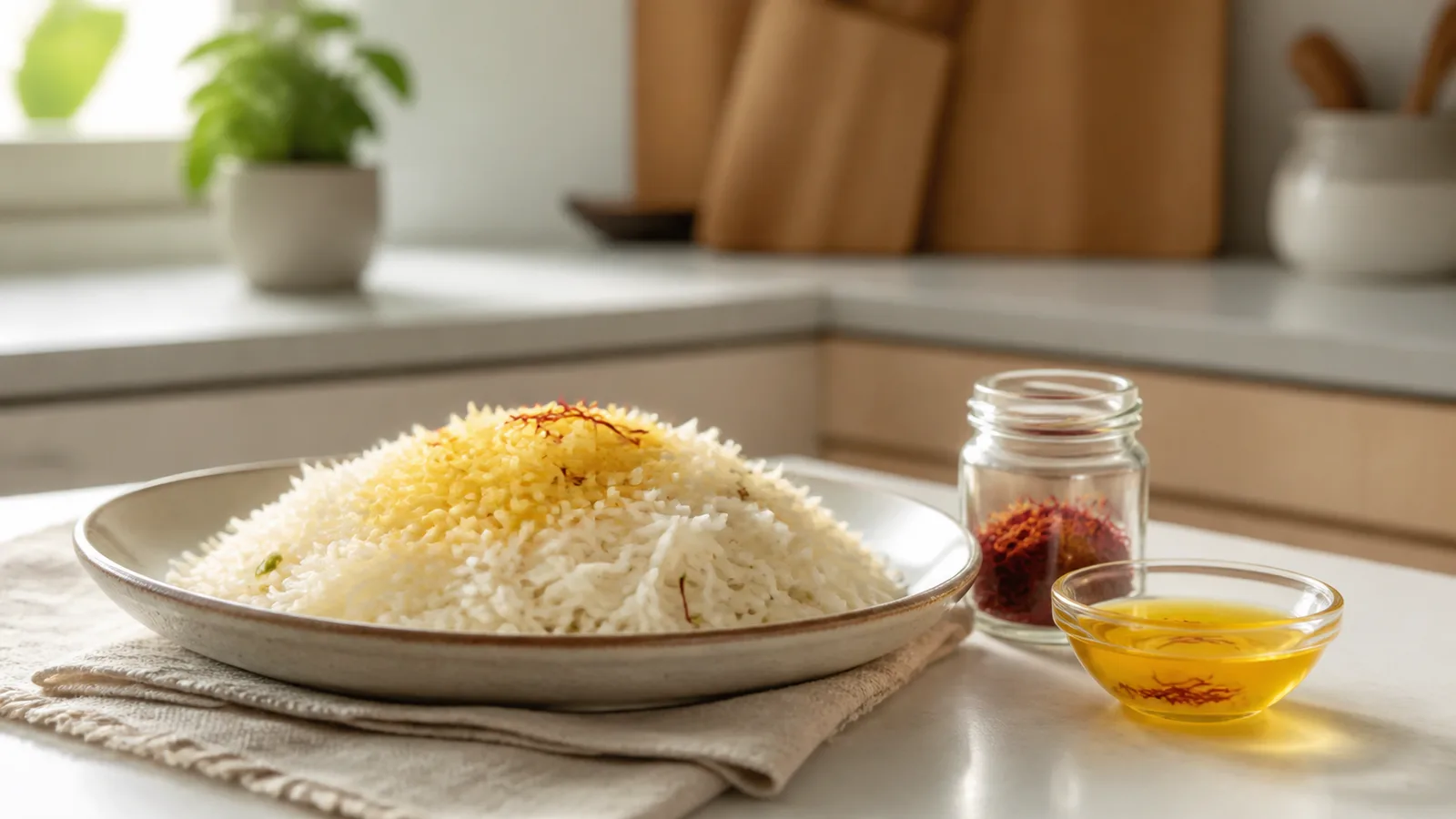
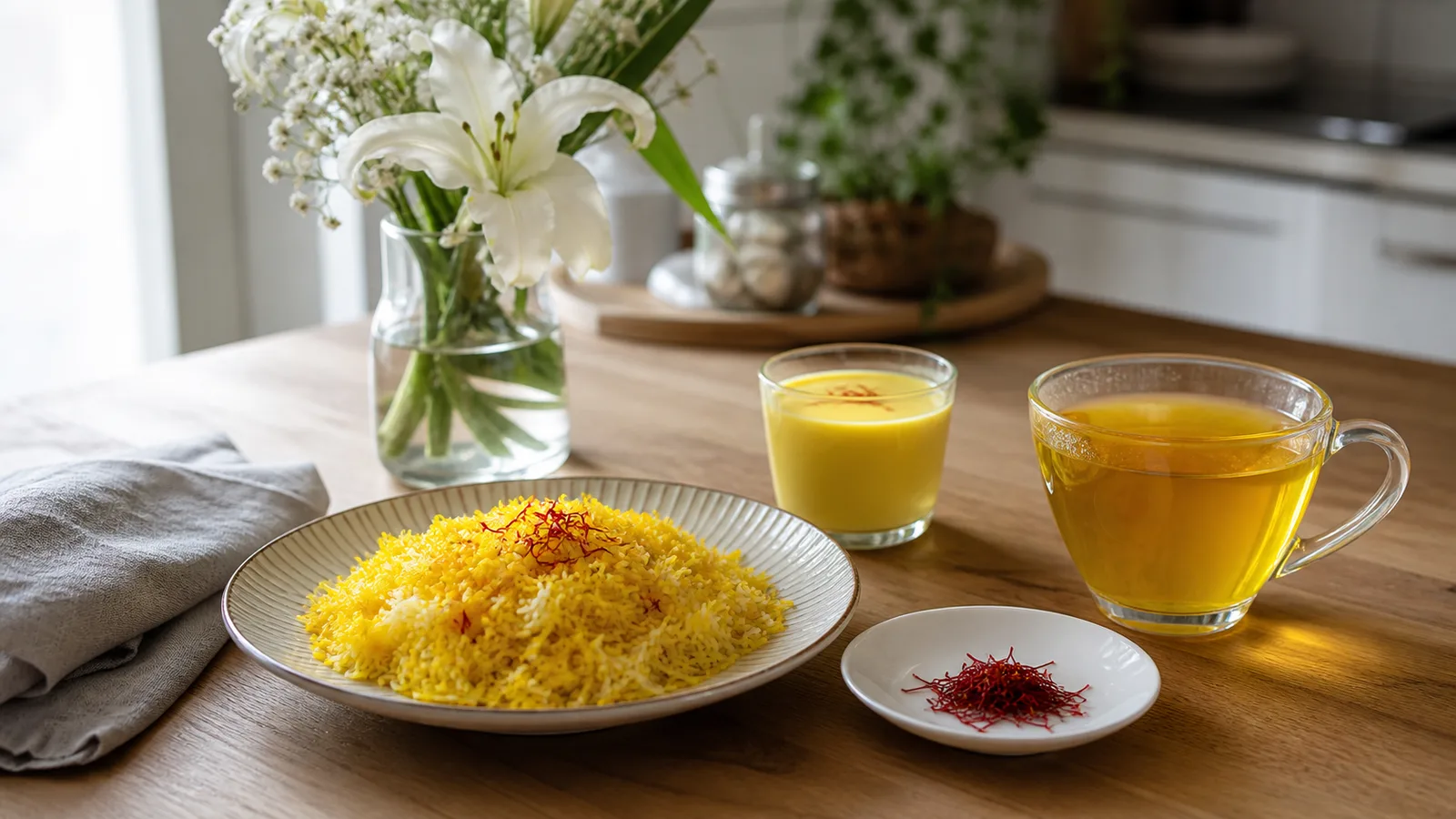
This benefit needs no medical claim. Blooming a few threads releases a distinctive fragrance and turns rice, soup, dessert or tea golden. The careful preparation itself can be a welcome pause, while a shared saffron dish can make an ordinary meal memorable.
25. Saffron adds little energy at culinary amounts
Older lists often quote calories, carbohydrate, protein and fibre for 28 grams of saffron. That is far beyond a normal recipe amount and can mislead readers about what they actually eat. A pinch contributes very little energy; the nutritional profile of the complete dish matters much more.
What human research can and cannot tell us
26. Oxidative-stress research does not prove slower ageing
Oxidative stress is involved in many biological processes, but neutralising a molecule in a laboratory is not the same as keeping a person younger. No responsible article should promise that saffron preserves muscles, reverses wrinkles or extends life. Sleep, movement, sun protection, nutrition and clinical care have clearer practical roles.
27. Fertility findings remain limited and mixed
A systematic review of six male-infertility trials reported some positive erectile-function findings but contradictory semen results, methodological weaknesses and substantial heterogeneity. Saffron is therefore not a substitute for fertility assessment, and “aphrodisiac” should not be translated into a promise of conception.
28. Mood findings are promising, but food use is not treatment
A 2026 meta-analysis of 34 randomised trials found improvements in some self-reported depression and anxiety measures, not every measured outcome, and rated the evidence as moderate. The trials used planned preparations and durations. A saffron meal may be comforting, but depression and anxiety deserve professional care.
29. Menstrual symptoms have evidence, but the product still matters
The premenstrual and dysmenorrhea evidence is stronger than an unspecific traditional claim, yet it does not establish one universal home recipe. Anyone considering a concentrated product should discuss interactions and personal risks with a clinician or pharmacist, especially when taking regular medicine.
30. Joint and breathing claims are not established treatments
Saffron appears in traditional remedies for joint discomfort and breathing complaints. Evidence is not sufficient to replace treatment for osteoarthritis, inflammatory disease or asthma. Never delay prescribed inhalers or urgent help for breathlessness while trying a tea or supplement.
31. Pregnancy calls for extra caution
Saffron milk is part of pregnancy traditions in several cultures, sometimes linked to nausea, mood or a baby’s complexion. A 2026 integrative review of saffron in pregnancy found the safety and efficacy evidence limited and inconclusive. It does not support promises about a baby’s skin colour or routine medicinal use.
Using a small amount as a normal food ingredient is different from drinking a strong infusion or taking an extract. Pregnant people should ask their maternity clinician before using saffron beyond ordinary culinary amounts.
How to use this list responsibly
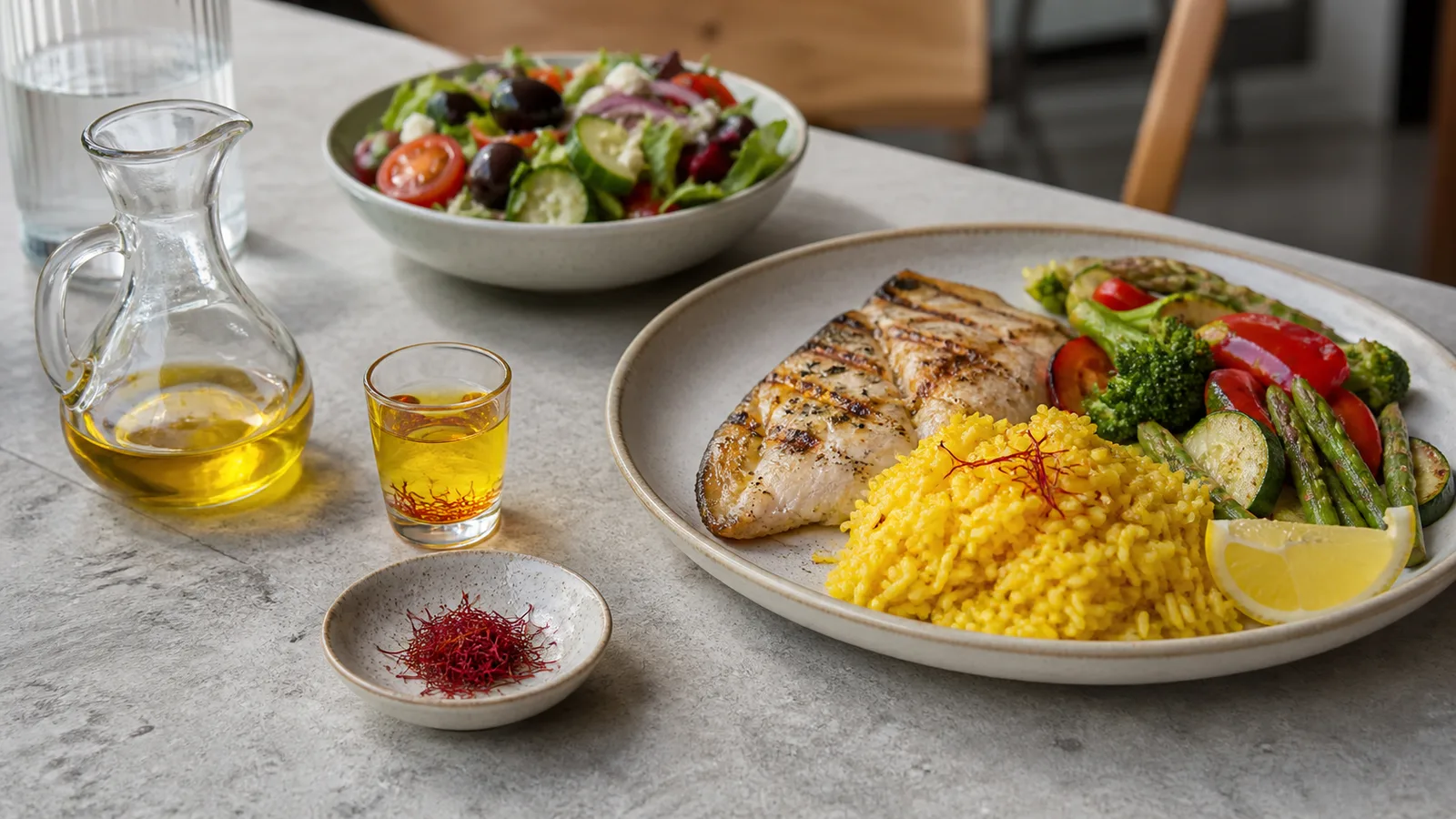
- Enjoy saffron first as a concentrated culinary spice.
- Do not convert results from an extract trial into a claim about one meal.
- Look for the number and quality of human studies, not only a biological theory.
- Keep traditional uses labelled as traditional.
- Seek professional care for persistent, severe or unexplained symptoms.
- Ask about concentrated use during pregnancy or alongside medication.
A 2026 systematic review of adverse events across 102 saffron trials found that reported effects were most often mild gastrointestinal problems, while cautioning that higher-dose or prolonged medicinal use can require clinical monitoring. That is the right closing perspective: saffron can enrich food and remains a serious research subject, but the health benefits of saffron should be described at the level the evidence supports.