There is no single maximum allowable consumption of saffron that applies to every person, product and purpose. In food, saffron is normally used by the pinch and spread through several servings. Concentrated extracts and gram-level home remedies are different exposures and should not be treated as ordinary seasoning.
The practical rule is simple: use the modest amount a recipe needs for aroma and colour, not more in search of a health effect. Anyone considering a daily capsule or medicinal amount should have the exact product reviewed by a clinician or pharmacist.
Why one “safe saffron dose” is misleading
Saffron can mean whole dried stigmas, ground spice, a strong water infusion, powdered capsules or a standardised extract. The same weight does not necessarily deliver the same amount of crocin, safranal or other constituents. Age, pregnancy, medical conditions and prescription medicines also change the risk.
Human studies often use a specified preparation for a fixed number of weeks under a research protocol. Their dose is not automatically the correct daily amount for a customer with a different product. A toxicology threshold is not a target, either: staying below a number associated with harm does not prove that a large intake is useful or safe.
How much saffron belongs in food?
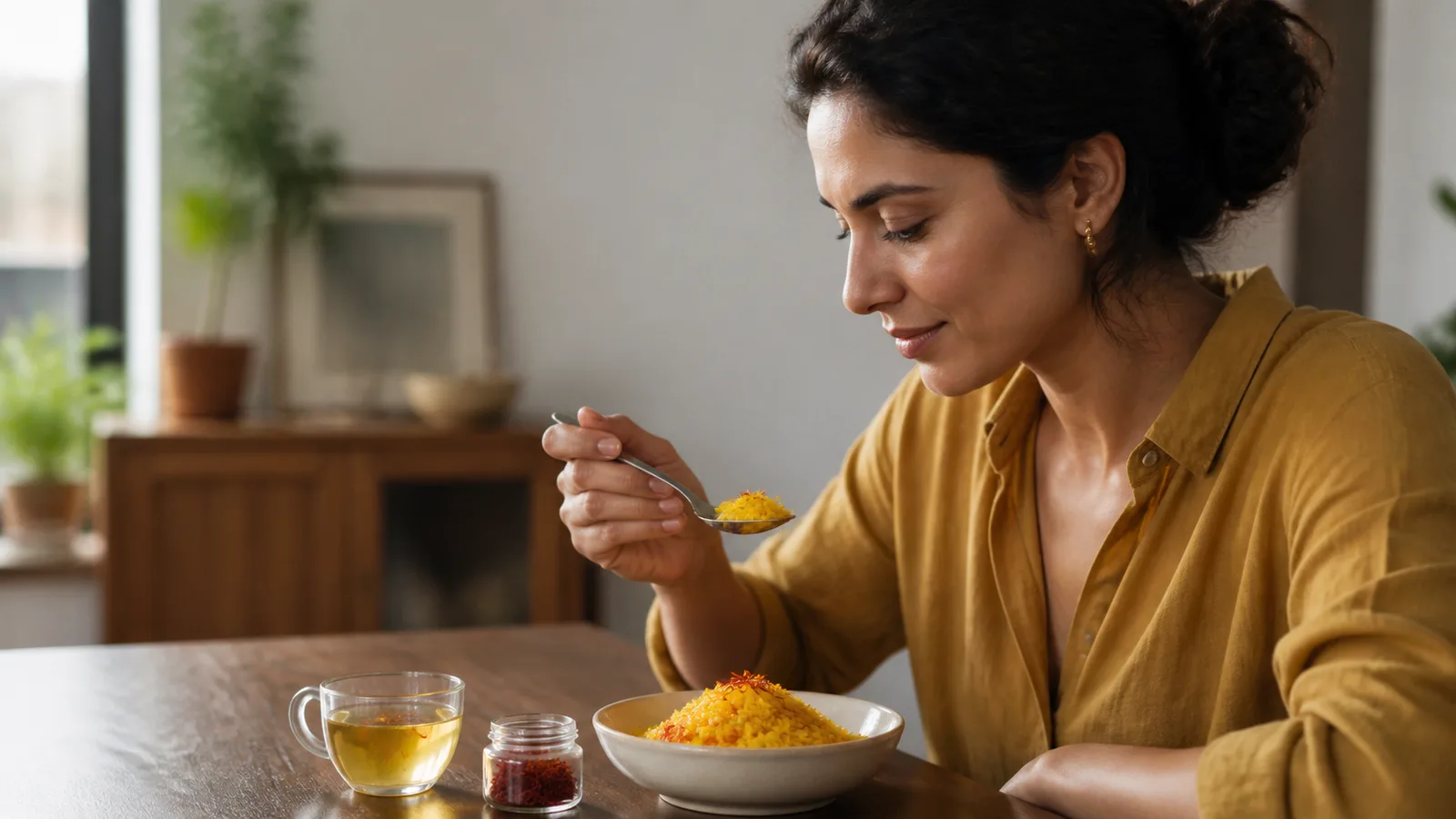
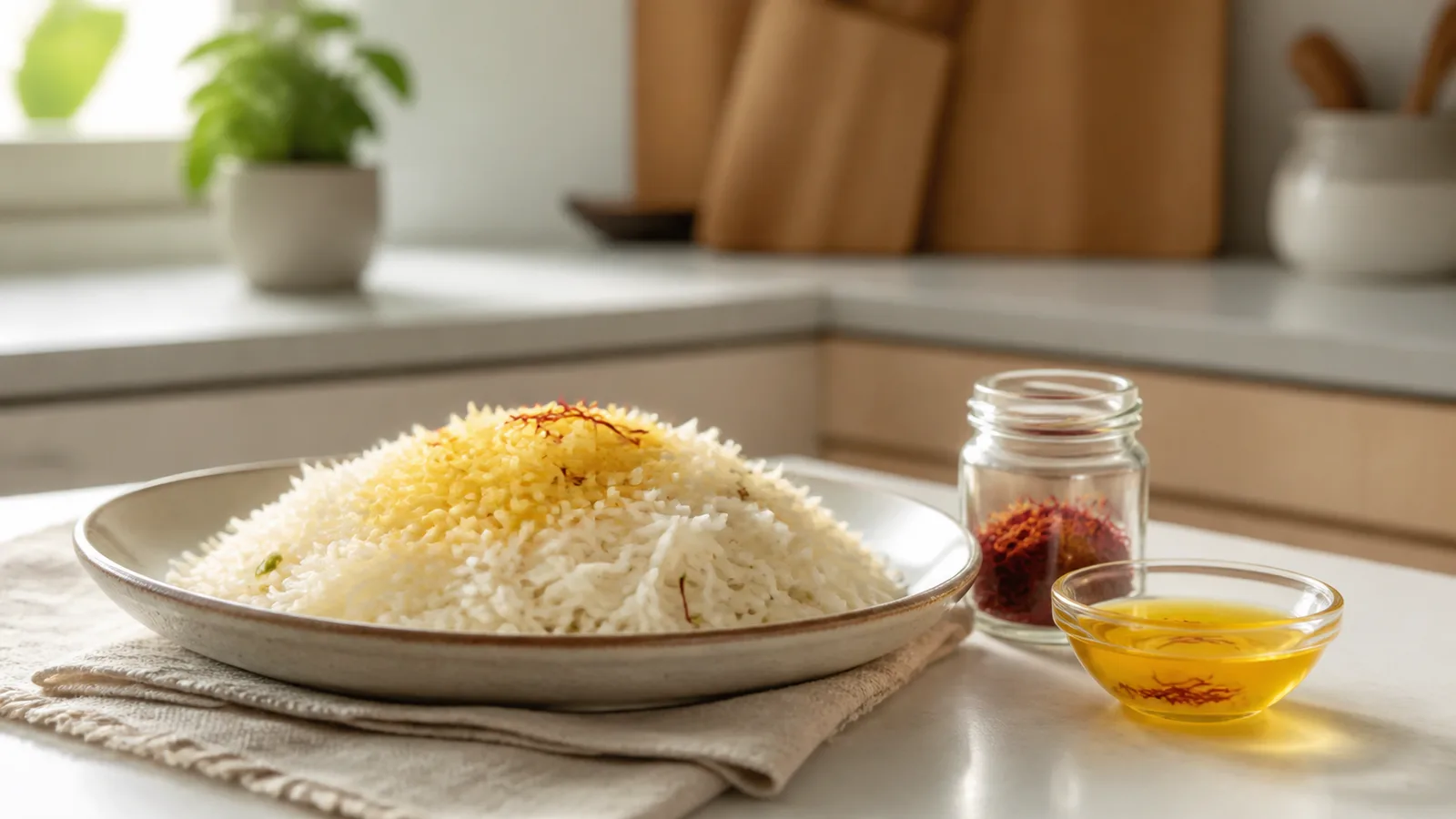
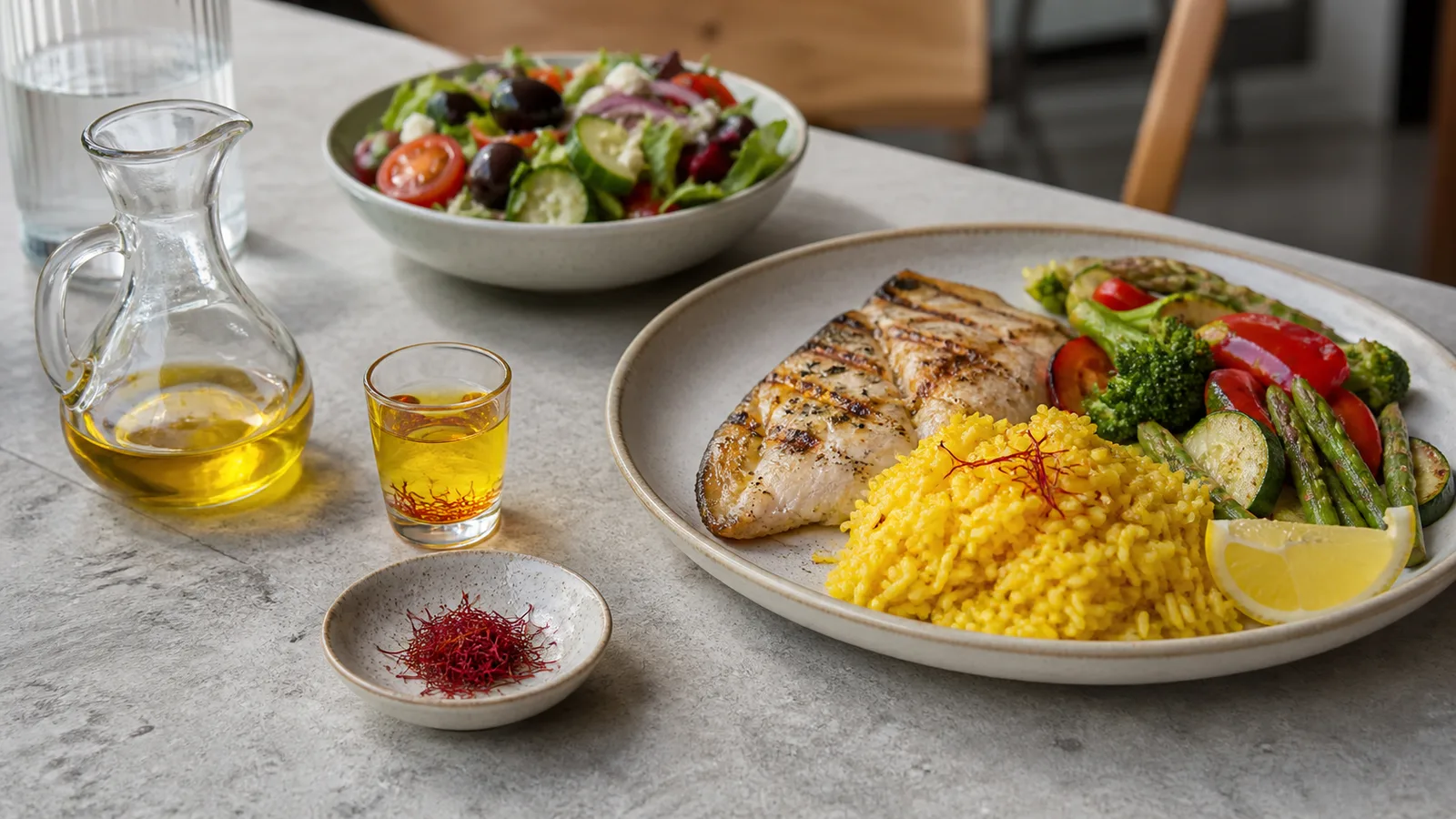
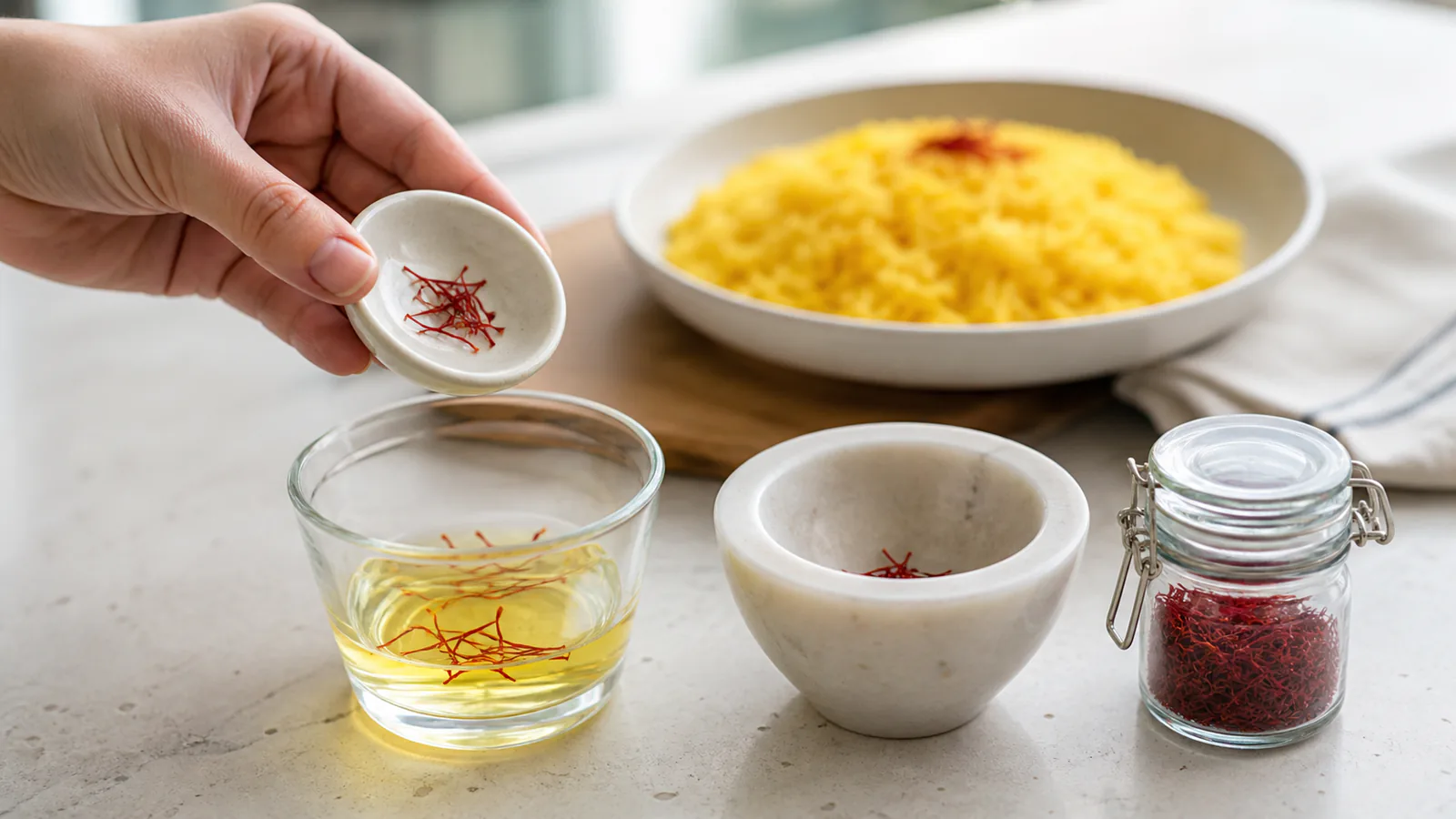
For cooking, start with the recipe rather than a medical-dose chart. A small pinch of genuine threads is usually enough for a family dish because saffron is intensely aromatic. Lightly crush the threads, steep them in a little warm water, stock or milk, then add the whole infusion. This distributes a small quantity more evenly.
Thread counts are only approximate because stigma pieces vary in length and weight. If a recipe is being standardised for a restaurant or packaged food, use an accurate scale and document the amount per batch and serving. At home, adding more after the dish is already fragrant usually wastes saffron and can produce a harsh result.
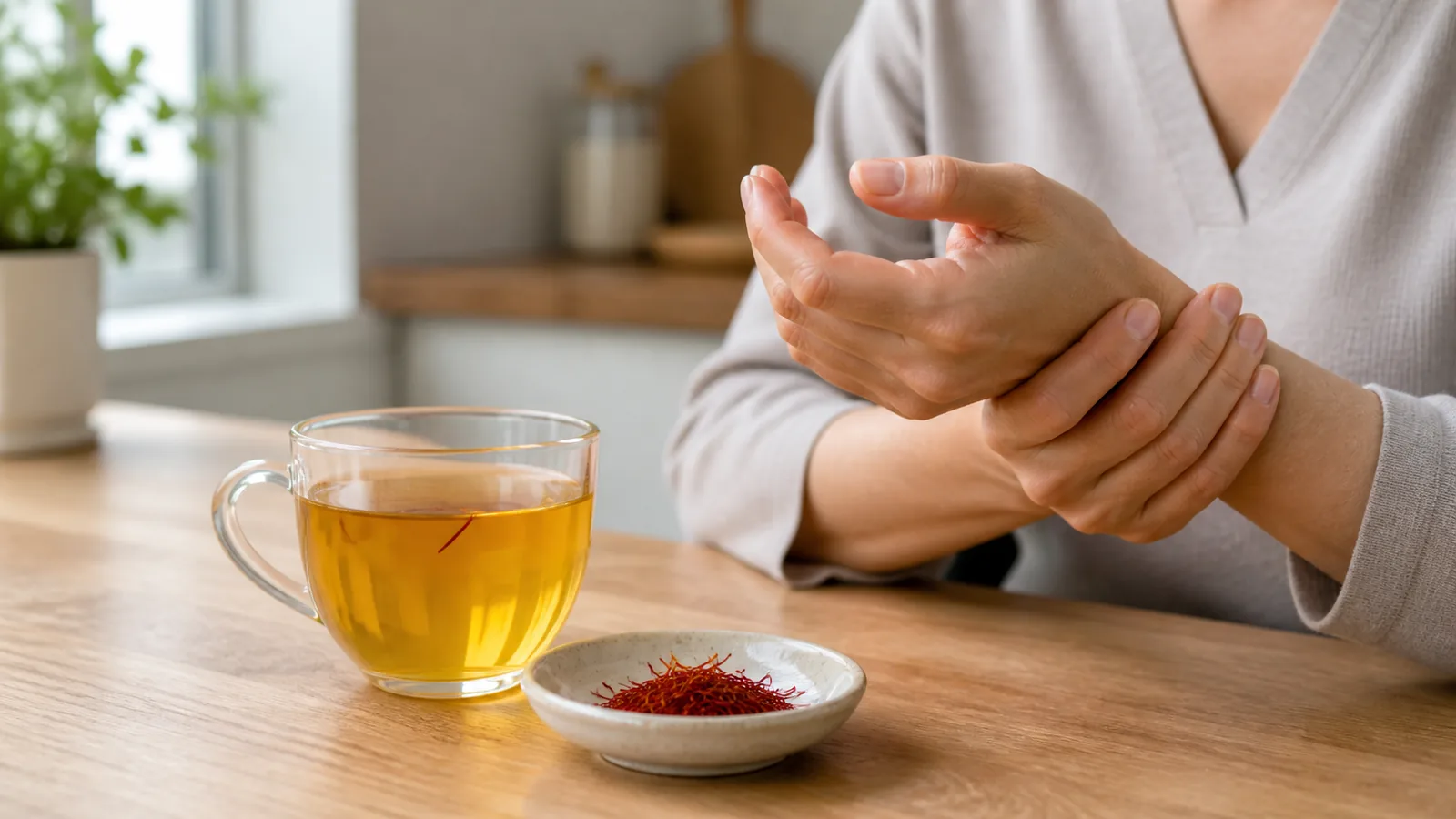
What about saffron tea or brewed saffron?
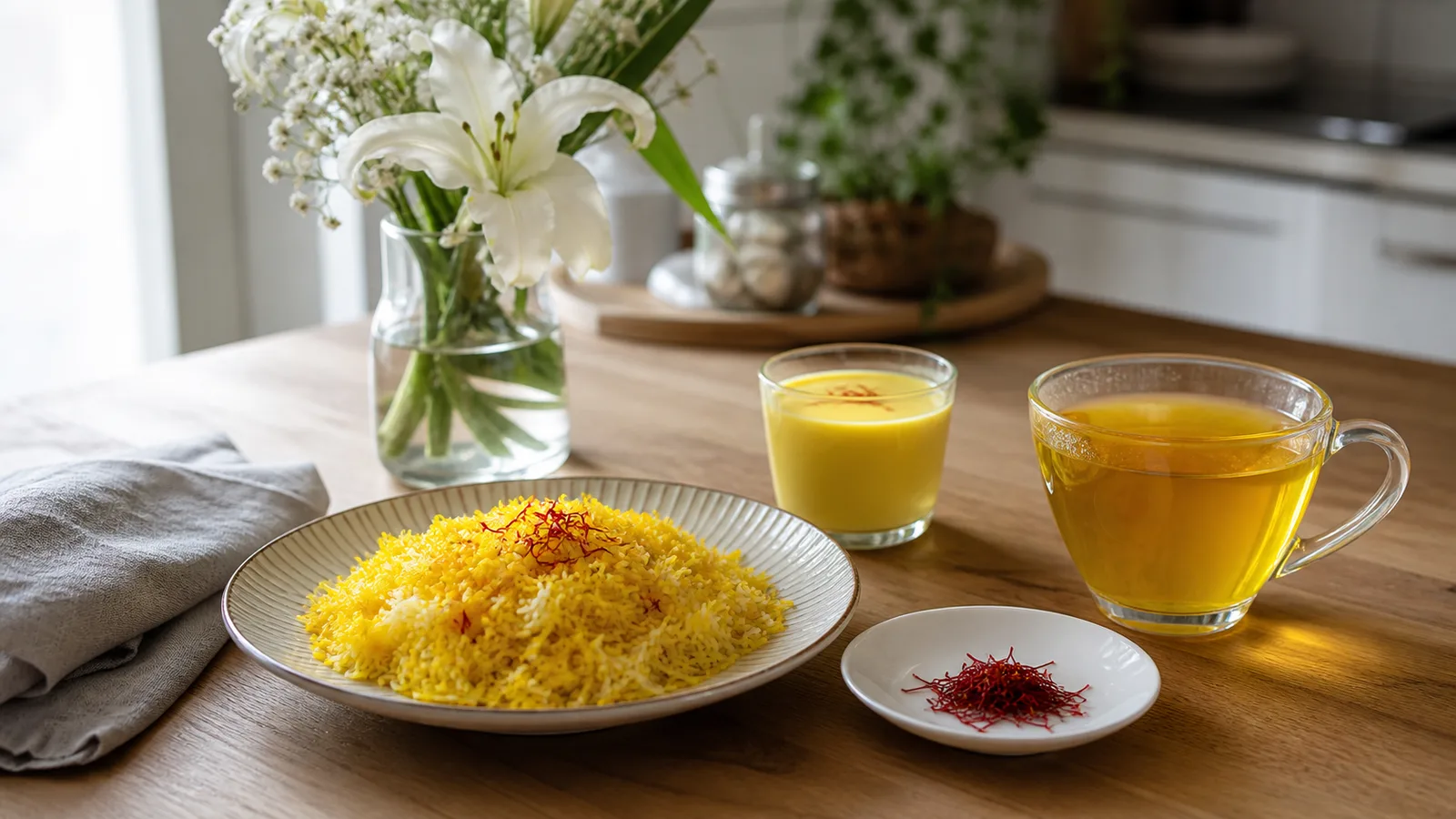
A normal food-strength infusion uses a small recipe quantity, not spoonfuls of spice. Hot but not violently boiling liquid extracts the colour and aroma; the exact steeping time can be adjusted to the drink or dish. Drinking the threads is not necessary for the infusion to work as a flavouring.
Do not assume that a stronger colour means greater health benefit. Deep colour can reflect more spice, longer extraction or an added colourant. A medicinal-strength tea can deliver a much larger and less predictable intake than culinary use.
For full side-effect, pregnancy and supplement cautions, read our evidence-based guide to the disadvantages of saffron. Seek urgent help after a large accidental intake or if there is persistent vomiting, unusual bleeding, fainting, severe dizziness, breathing difficulty or confusion.
Can brewed saffron be kept in the refrigerator?
Yes, but treat it as prepared food rather than as shelf-stable spice. Cool the infusion promptly, pour it into a clean covered container and refrigerate it. If it contains milk, stock or another perishable ingredient, the shortest safe life of any ingredient controls the mixture.
The USDA’s leftover-safety guidance uses three to four refrigerated days for cooked leftovers. That is a sensible upper boundary for a home-prepared infusion, not a guarantee: discard it sooner if it has been left warm, handled repeatedly or shows an unusual smell, cloudiness or mould. When in doubt, make a fresh small batch.
Freezing small portions can reduce waste when a recipe needs only a little. Use a clean covered tray, then move the frozen portions to a sealed food-safe container. Label the date so old and new batches are not mixed.
How to store dry saffron correctly
Keep dry saffron in a tightly closed glass or metal container, in a dark, dry cupboard away from the oven and direct sunlight. Light, oxygen, heat and moisture weaken aroma and colour over time. A transparent jar is suitable only if the jar itself is stored in darkness.
The refrigerator is usually unnecessary for dry threads and can introduce condensation each time a cold container is opened in humid air. If refrigeration is unavoidable in a very hot climate, keep the saffron completely airtight and allow the closed container to reach room temperature before opening it.
Grind only what the recipe needs. Powder has more surface area exposed to air and is harder to authenticate visually. Use a clean, dry mortar; a pinch of sugar can help separate the threads for a sweet recipe, but do not add sugar to a batch intended for long storage.
Saffron, safflower and turmeric are not interchangeable
Safflower and turmeric are genuine foods in their own right, but neither is saffron. Safflower petals may be sold as “American saffron” in some markets and can resemble red-orange threads. Turmeric can create a golden colour, yet its flavour, plant source and chemistry are different.
A 2026 systematic review of saffron fraud research identifies safflower, marigold, turmeric, extraneous plant material and synthetic dyes among documented adulterants. Visual checks can reveal obvious problems, but advanced laboratory methods are needed for confident authentication.
Do not judge authenticity by colour release alone. Ground products are particularly difficult to assess at home. Choose traceable threads in sealed packaging, with the supplier, lot and origin identified, and be cautious when the price is implausibly low. Our guide to recognising counterfeit saffron explains the useful consumer checks and their limits.
What the safety evidence actually says
A 2017 toxicology review found no important toxicity at therapeutic doses in the clinical studies it reviewed, while also describing adverse effects and laboratory changes with some higher exposures. A newer systematic review of human adverse events found that saffron was generally well tolerated, with gastrointestinal complaints the most common reported problem.
Neither review establishes one universal household maximum. The old claims that a fixed monthly amount is always healthy, or that one specific meal amount is invariably fatal, overstate the evidence. The safer conclusion is to keep food use modest and obtain individual advice for supplements.
A practical answer
The maximum allowable consumption of saffron cannot be reduced to one number on a food blog. Use a small recipe amount, distribute it through the dish and stop once the desired aroma and colour are present. Do not measure medicinal use with a kitchen spoon or copy a clinical-trial dose.
Store dry threads airtight, cool and dark. Refrigerate a prepared infusion promptly and use it like any other perishable leftover. These simple habits protect flavour, reduce waste and keep culinary saffron where it belongs: in food, not in a self-prescribed high-dose regimen.