Can saffron go bad? Yes, but “bad” can mean lost flavour or an unsafe, contaminated product. Weak aroma, faded colour and a pale infusion usually point to age or poor storage. Visible mould, moisture, insects, dirty foreign matter, a damaged pack or a distinctly chemical, rancid or musty odour are reasons to discard it.
Identifying bad saffron starts with the right distinction
“Bad” can describe three different problems, and they should not be treated as if they were the same.
- Old or weak saffron has lost much of the aroma, taste or colouring strength that makes it useful. This is mainly a quality problem.
- Spoiled or contaminated saffron shows moisture damage, mould, pest activity, an objectionable odour or other evidence that the pack is no longer wholesome. Do not use it.
- Adulterated or substituted material may be new rather than old. Uniform dyed fibres, unrelated plant matter or an artificial perfume raise an authenticity problem, not an expiry problem.
A stale batch can still contain genuine saffron threads, while a bright red newly purchased batch can still be questionable. Age, safety and authenticity need separate checks.
Does saffron expire or go bad over time?
Saffron does lose quality over time. In that sense, the answer to “does saffron go bad?” is yes. Its aromatic compounds weaken, and exposure to light, heat, air and moisture can make that decline faster. A date on the package matters, but the wording matters too: “best before” or “best if used by” generally describes peak quality rather than a moment when a dry spice suddenly becomes unsafe.
There is no single saffron expiry date that fits every package and storage history. Saffron shelf life depends on its form, packaging and treatment. As broad pantry guidance, Virginia Cooperative Extension lists whole spices for about three to four years and ground spices for about two to three years. Saffron is a delicate dried stigma rather than a hard seed, so use the packer’s date and storage instructions as the first reference, then judge the actual condition. The Virginia Tech food-storage guide also stresses that mishandling shortens the expected storage life.
If you are asking how long you can keep saffron after opening, write the opening date on the jar and reassess it regularly. A tightly sealed pack kept dry, dark and cool may retain useful quality for years; a loose bag beside a hot, steamy stove can fade much sooner. Can saffron go off before its date? It can when the seal fails or moisture and contamination enter. The printed date cannot compensate for damaged packaging.
Seven checks for saffron that may have gone off
1. Inspect the package before the threads
Look for a broken seal, punctures, water marks, condensation or signs that insects have entered. Check any batch code and seller notice if a recall or quality concern has been announced. If the inside of the container is damp, do not try to dry the saffron and return it to use.
2. Look for mould, webbing or unclean matter
Visible fuzzy growth, unusual spots, insect webbing, larvae, droppings, grit or other dirty matter is not normal. Discard the contents without tasting them. Saffron threads may include a small yellow or orange portion of the natural style, but that is different from unrelated debris.
3. Check the colour without treating it as proof
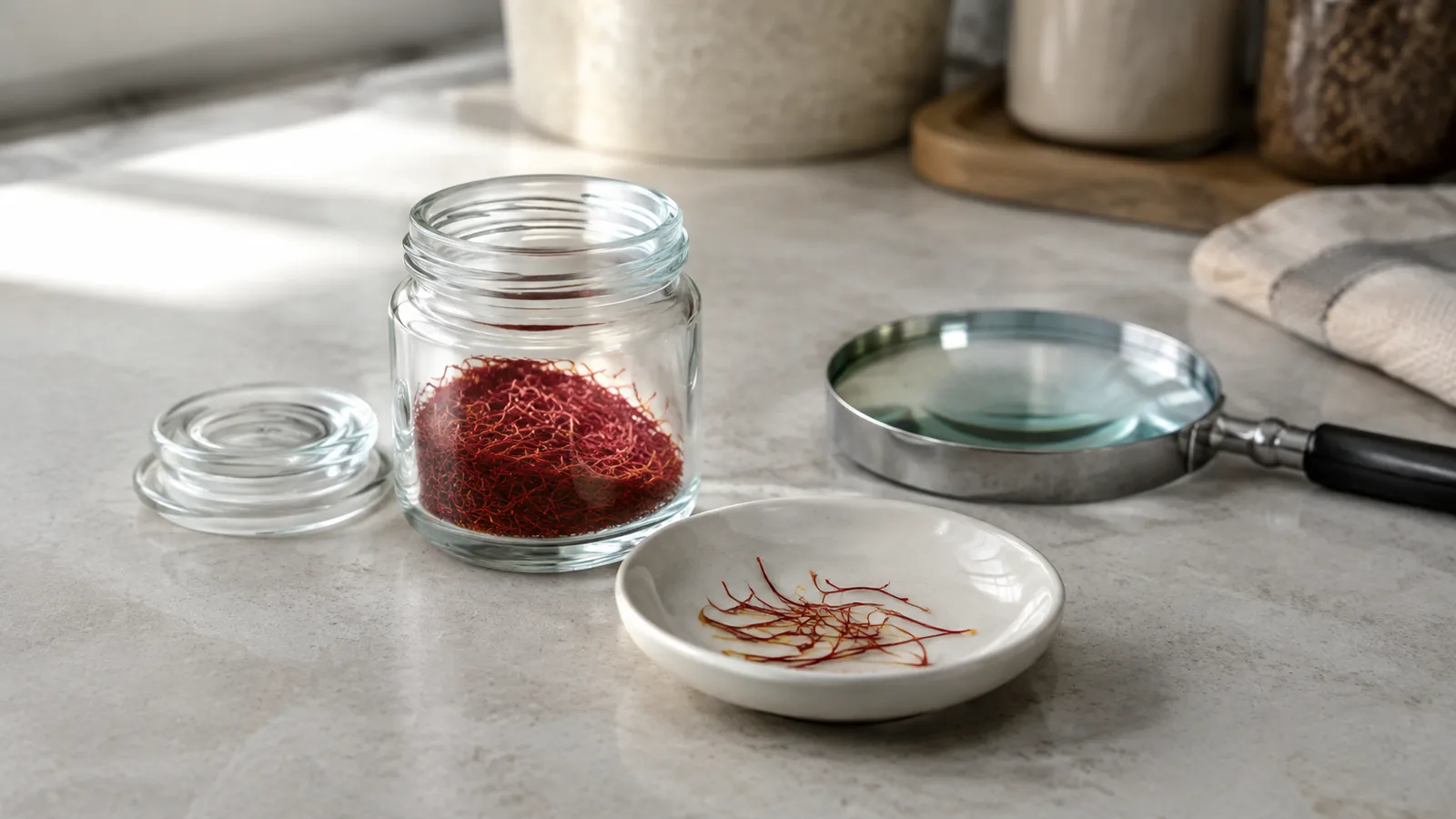
Good dried stigmas are usually deep red, sometimes with an orange or yellow end. Old saffron can become duller, yet colour alone cannot identify age or purity: dye can make substitute material look vivid. Significant fading supports a quality-loss decision only when aroma and infusion strength have also declined.
4. Understand that dry threads can be brittle
Saffron is a dried spice, so a thread snapping or crumbling under pressure does not by itself mean it has spoiled. The original claim that fresh saffron must be pliable is not a dependable test. Unexpected dampness, sticky clumps or threads softened by moisture are more concerning than ordinary dryness.
5. Smell a small amount
Open the container away from cooking steam and smell gently. A weak scent suggests lost potency. A genuinely bad saffron smell may be mouldy, musty, rancid, plastic-like, solvent-like or strongly perfumed. Do not inhale closely or taste material that smells contaminated. Our guide to fake saffron smell explains why odour is a warning signal rather than a conclusive authenticity test.
6. Make a small infusion only if it passes the safety checks
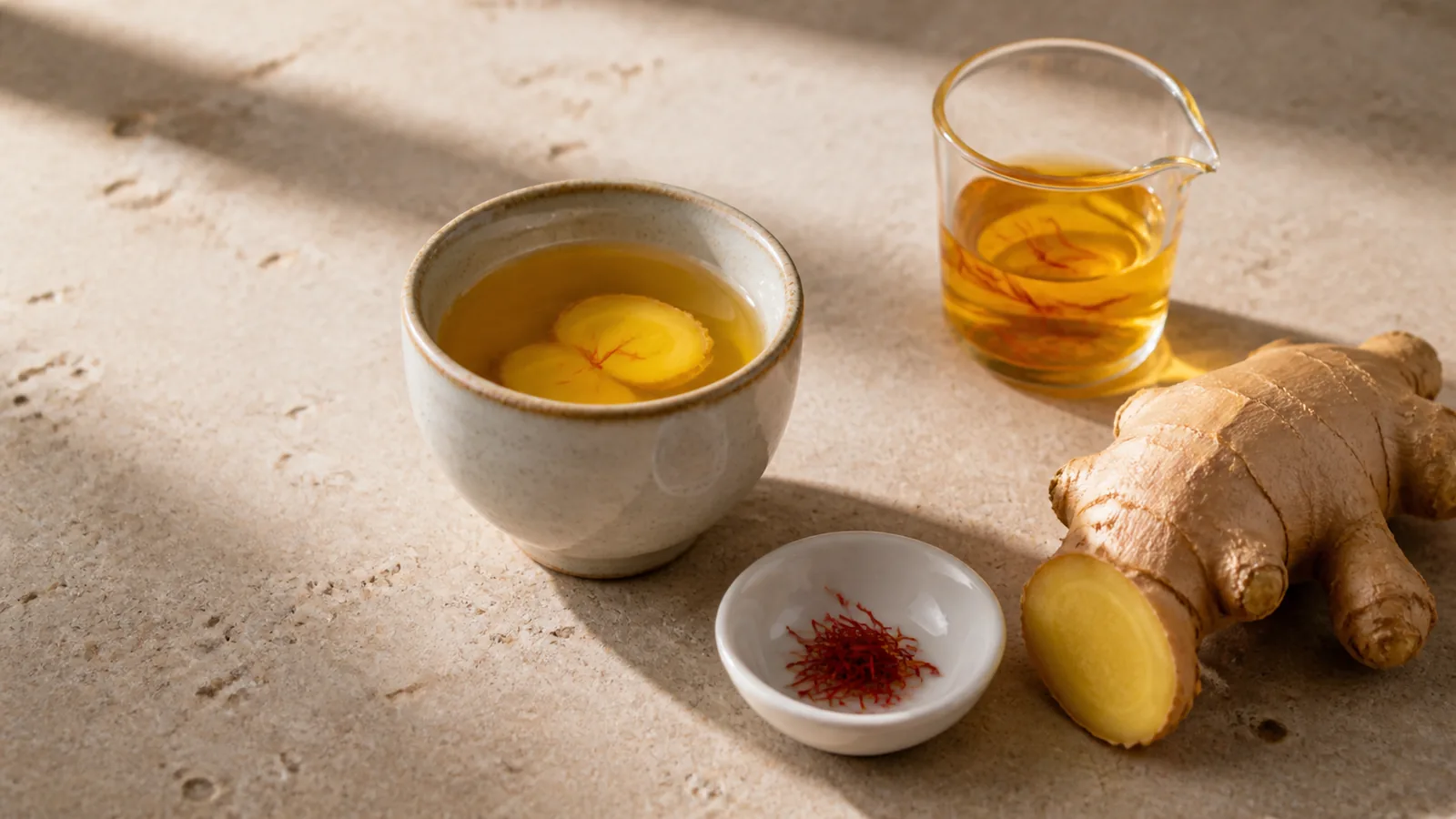
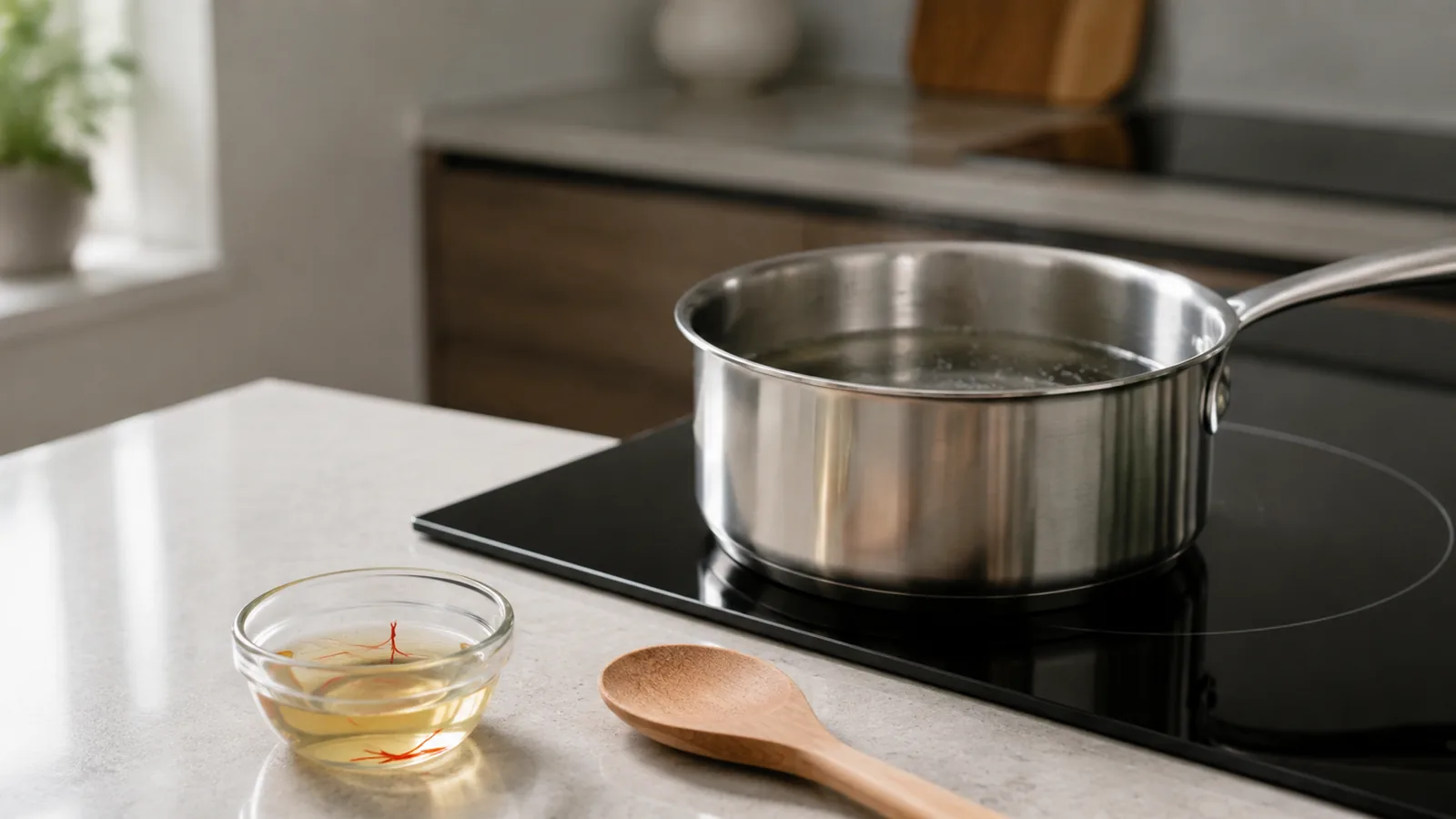
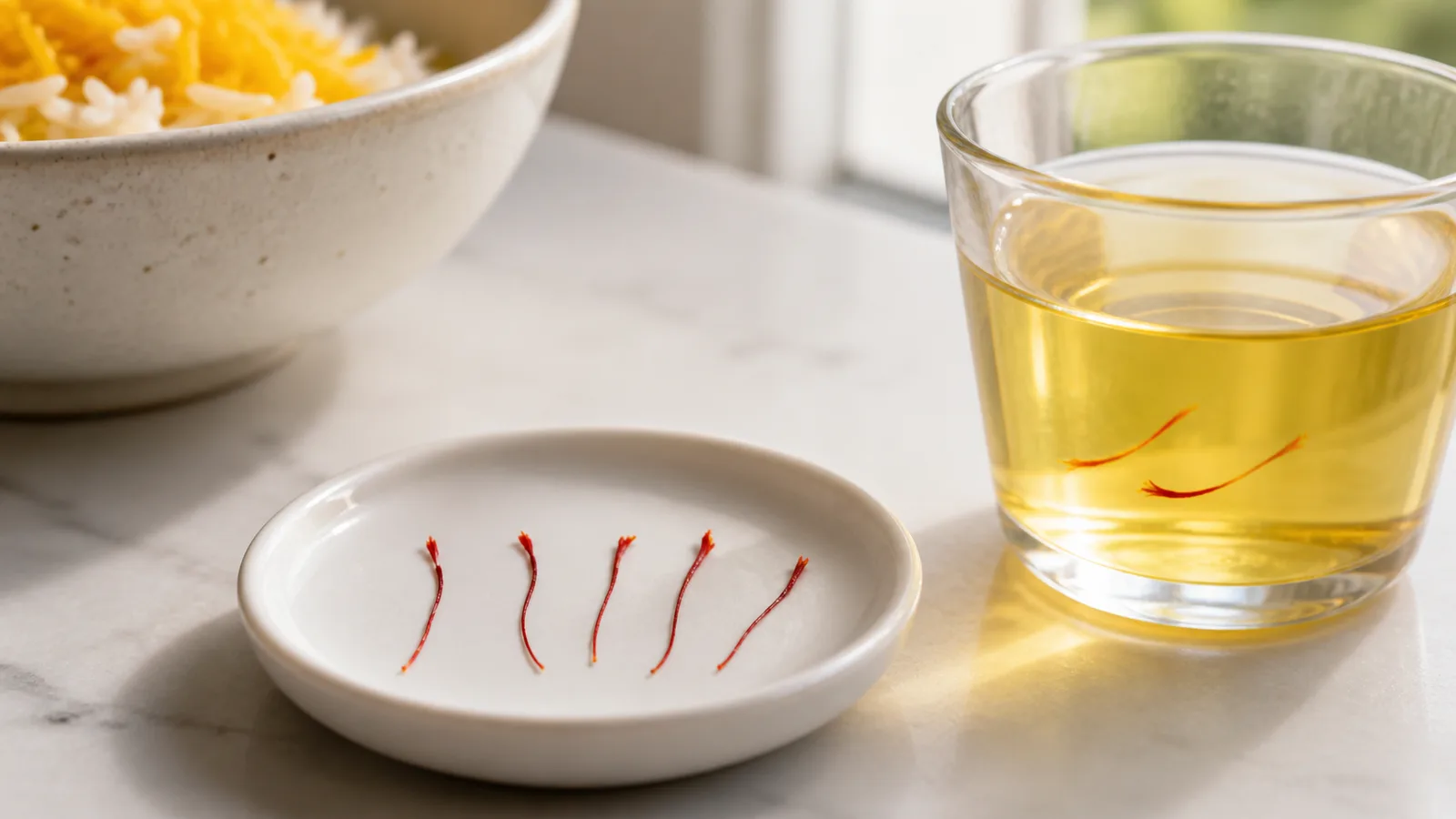
Place a few threads in clean warm water and allow time for extraction. Genuine usable saffron should gradually contribute a golden-yellow to orange colour along with recognisable aroma. A very pale result may show age, under-dosing or weak material. An immediate cloud of artificial-looking red colour is suspicious, but no home infusion proves exactly what a product contains.
7. Taste only a clean-looking, normal-smelling sample
Normal saffron has a characteristic aromatic bitterness; it is not meant to taste sweet. Harsh chemical, plastic or soapy character is not something to “cook out.” Stop using the batch, retain the package and lot details, and contact the seller. If you first need a flavour benchmark, see what saffron actually tastes like.
Is expired saffron harmful?
A passed best-before date alone does not tell you that saffron is harmful, and a date that has not passed does not guarantee that a damaged product is safe. Dry, properly stored spices often lose flavour before they show obvious spoilage. Contamination is a different matter: moisture, mould, pests, foreign matter, an off odour or a food-recall notice should override the calendar.
Do not use taste as a safety test. If the product’s origin is unknown, the seal is compromised, or anything looks or smells suspicious, discarding it is the cautious choice. For a valuable disputed lot, supplier traceability and appropriate laboratory testing are more informative than repeated home tests.
How to keep saffron good for longer
Keep the threads in a clean airtight container, in a cool, dark and dry cupboard. Use a dry spoon or clean dry fingers, close the lid promptly and keep the jar away from steam rising from a kettle or pan. Buy an amount you can use while its aroma is still lively rather than keeping a large open pack for years.
Refrigeration is not automatically better because repeated opening can introduce condensation. If local heat makes cold storage necessary, the container must be genuinely airtight and should reach room temperature before it is opened. The practical moisture trade-off is explained in our guide to storing saffron in the fridge.
When to keep it and when to discard it
Keep a batch when the packaging is sound, the threads remain dry and clean, the aroma is recognisable and a small infusion still performs well. It may be less potent than when new, so use it soon and judge the amount in the recipe rather than assuming it is unchanged.
Discard it when you find moisture, mould, pests, dirty contamination, unexplained chemical or rancid odours, or a relevant recall. If it is simply colourless, scentless and flavourless, replacement is sensible because it no longer does the job you bought it to do—even when there is no visible sign of spoilage.