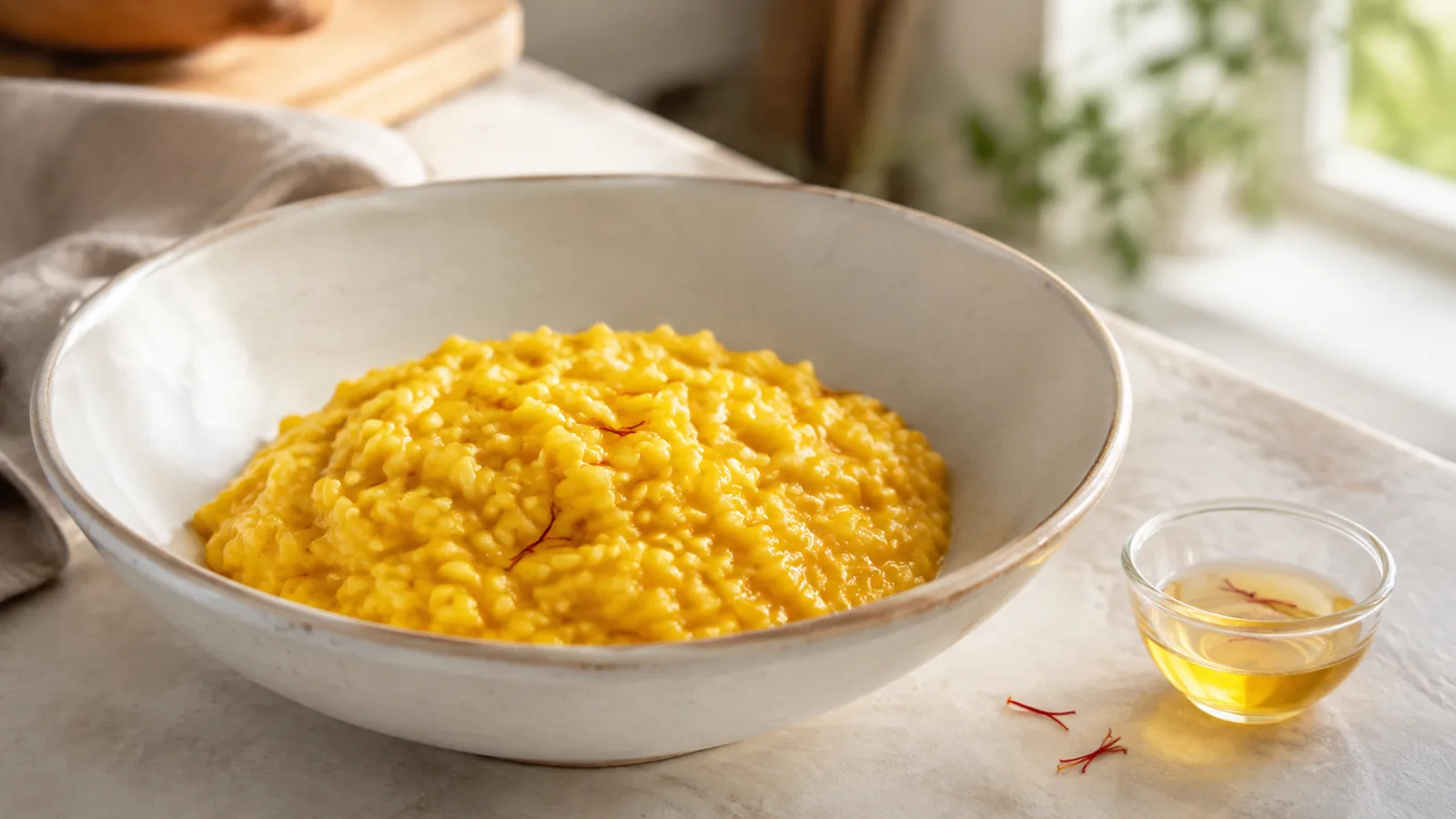
Yes, you can actually taste saffron. Its flavour is delicate rather than loud: gently bitter, aromatic and dry, with a lingering quality that people often describe as hay-like, floral or faintly honeyed. Those descriptions are comparisons, not ingredients—good saffron should not taste sugary.
Does saffron have a taste of its own?
Saffron contributes three different things to food: colour, aroma and taste. They arrive together, which is why it can be difficult to decide where the smell ends and the flavour begins. The golden colour is the easiest part to notice, but it is not the whole effect.
Picrocrocin is closely associated with saffron’s bitter taste, while volatile compounds led by safranal shape its characteristic aroma. A sensory and chemical study of saffron found that trained tasters perceived differences among samples and that bitterness was more complicated than the concentration of a single compound alone. In the kitchen, that complexity is what matters: saffron tastes like a complete spice, not like food colouring.
What does saffron taste like?
The first impression is often aromatic. Then comes a restrained bitterness and a slightly dry or astringent finish. Depending on the saffron, the food and the person tasting it, the flavour may suggest dried grass, warm earth, flowers, honey or a mild mineral note. None is a perfect substitute for saffron, and not every genuine batch displays every note.
A pleasant bitter edge
Bitterness is a normal part of saffron. It should give definition to a dish, much as a small amount of citrus zest or coffee can, without making the food harsh. Research on picrocrocin has even measured separate detection and recognition thresholds, with temperature and other constituents changing how strongly people perceive it. The controlled sensory study is a useful reminder that two people can taste the same infusion differently.
Aroma changes the flavour you perceive
Much of what we call flavour reaches us through smell. Saffron’s aroma can make its taste seem fuller than the tiny quantity in the recipe would suggest. That is also why a cold, poorly infused dish may look yellow yet offer little recognisable saffron flavour.
Why might saffron be hard to taste?
A subtle result does not automatically mean the saffron is poor. Several ordinary kitchen choices can hide it:
- Too little for the amount of food. A token thread or two may colour only part of a large dish and contribute little flavour.
- No time to infuse. Adding dry threads at the last moment gives them little opportunity to disperse.
- Strong competing ingredients. Heavy chilli, smoke, excess garlic or intense acidity can dominate a delicate saffron note.
- Age or poor storage. Heat, light, air and moisture can weaken aroma over time.
- Uneven distribution. A concentrated patch may taste bitter while the rest of the dish tastes of very little.
Warm liquid generally makes the flavour easier to distribute, but boiling saffron hard for a long time is unnecessary. The practical distinction between warm and cold extraction is covered in our guide to soaking saffron in hot or cold water.
How to taste saffron without a recipe masking it
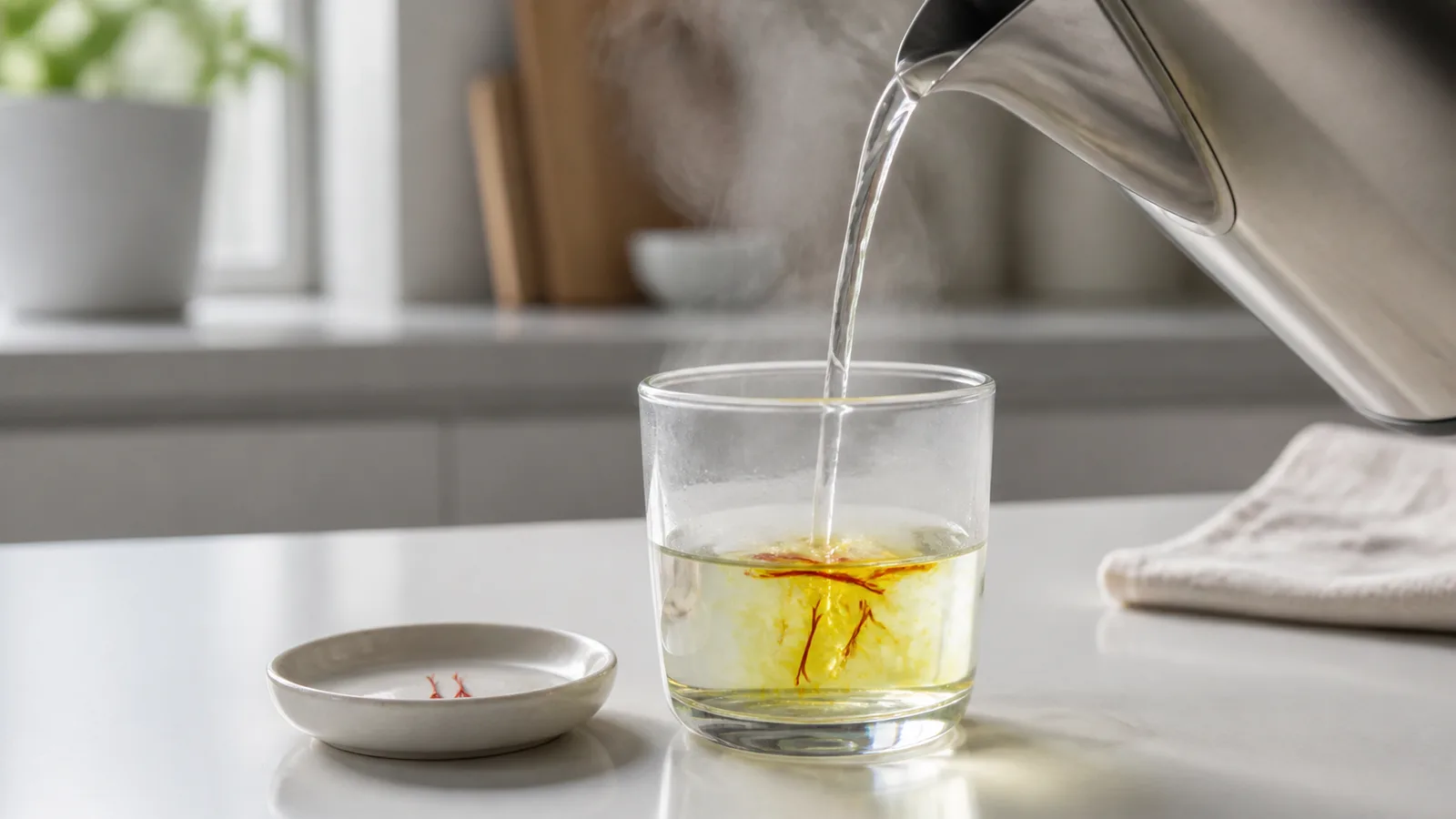
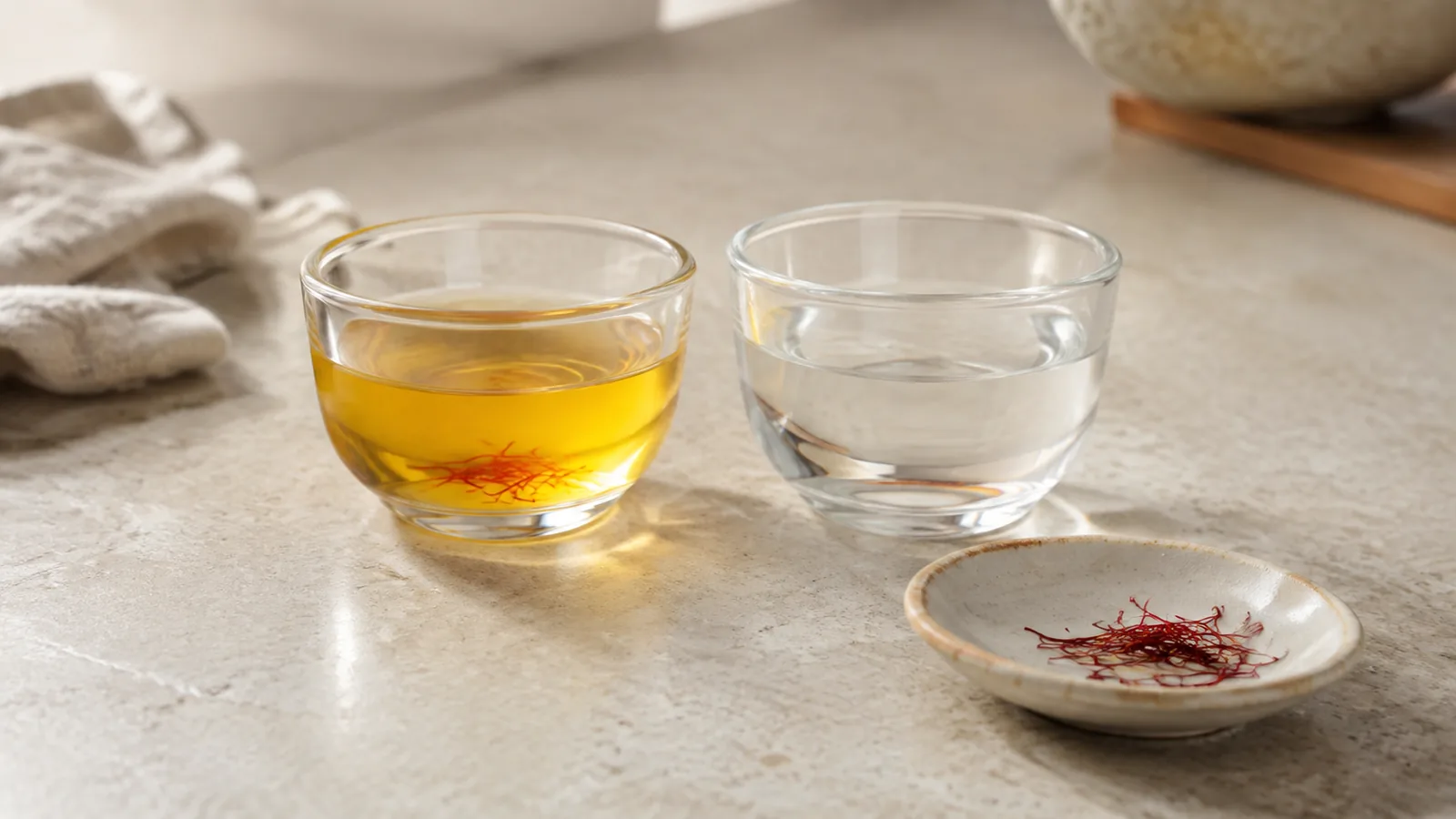
A plain infusion is the simplest way to learn the flavour. Use a clean, odour-free cup and water that is hot but no longer at a rolling boil.
- Lightly crush a small pinch of saffron threads.
- Pour over about half a cup of hot water.
- Cover the cup and leave it for 10 to 15 minutes.
- Let a spoonful cool enough to taste comfortably.
- Smell first, then take a small sip and notice the aroma, bitterness and finish.
Keep a second cup of plain water beside it. Moving between the two makes a quiet flavour easier to recognise. The infusion should develop a clear golden-yellow to orange tone rather than behave like an instant red dye.
What saffron does to a finished dish
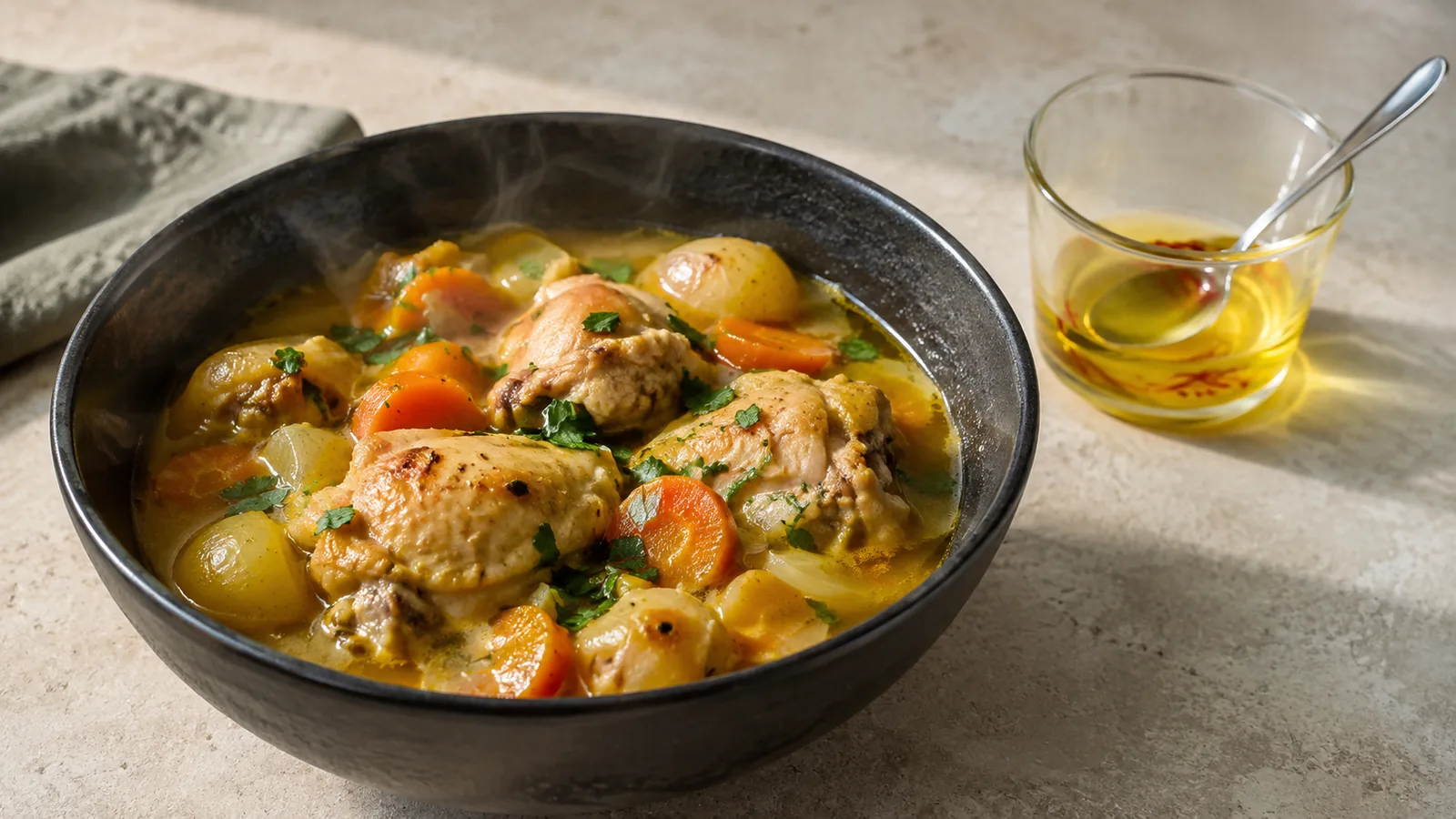
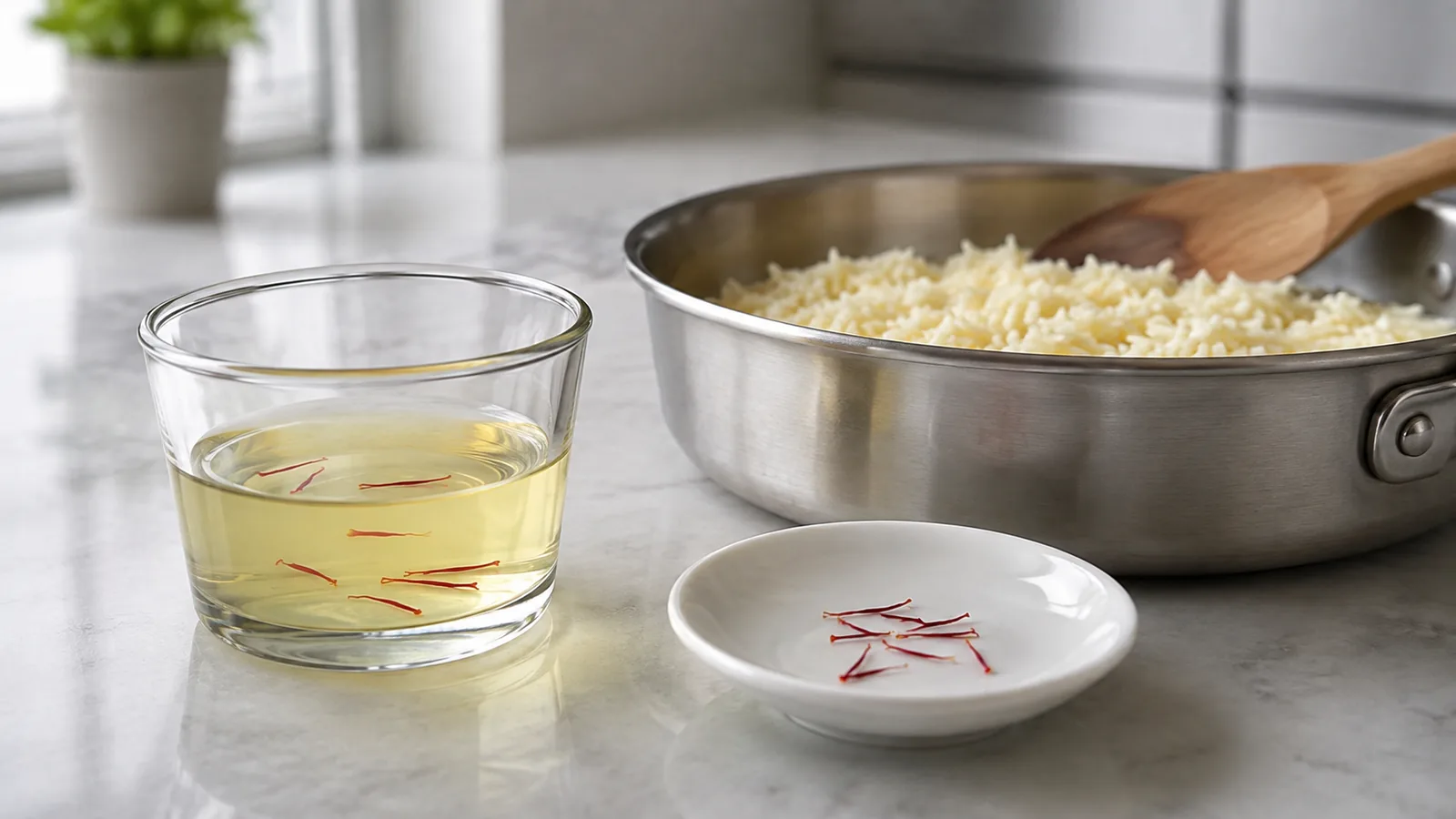
In rice, saffron provides an aromatic top note and a gentle bitter counterpoint to butter, stock or caramelised ingredients. That is part of what makes it recognisable in risotto and paella. In milk-based desserts, its dry floral character keeps sweetness from feeling flat. In seafood, soups and stews, it becomes part of the broth rather than sitting on top of it.
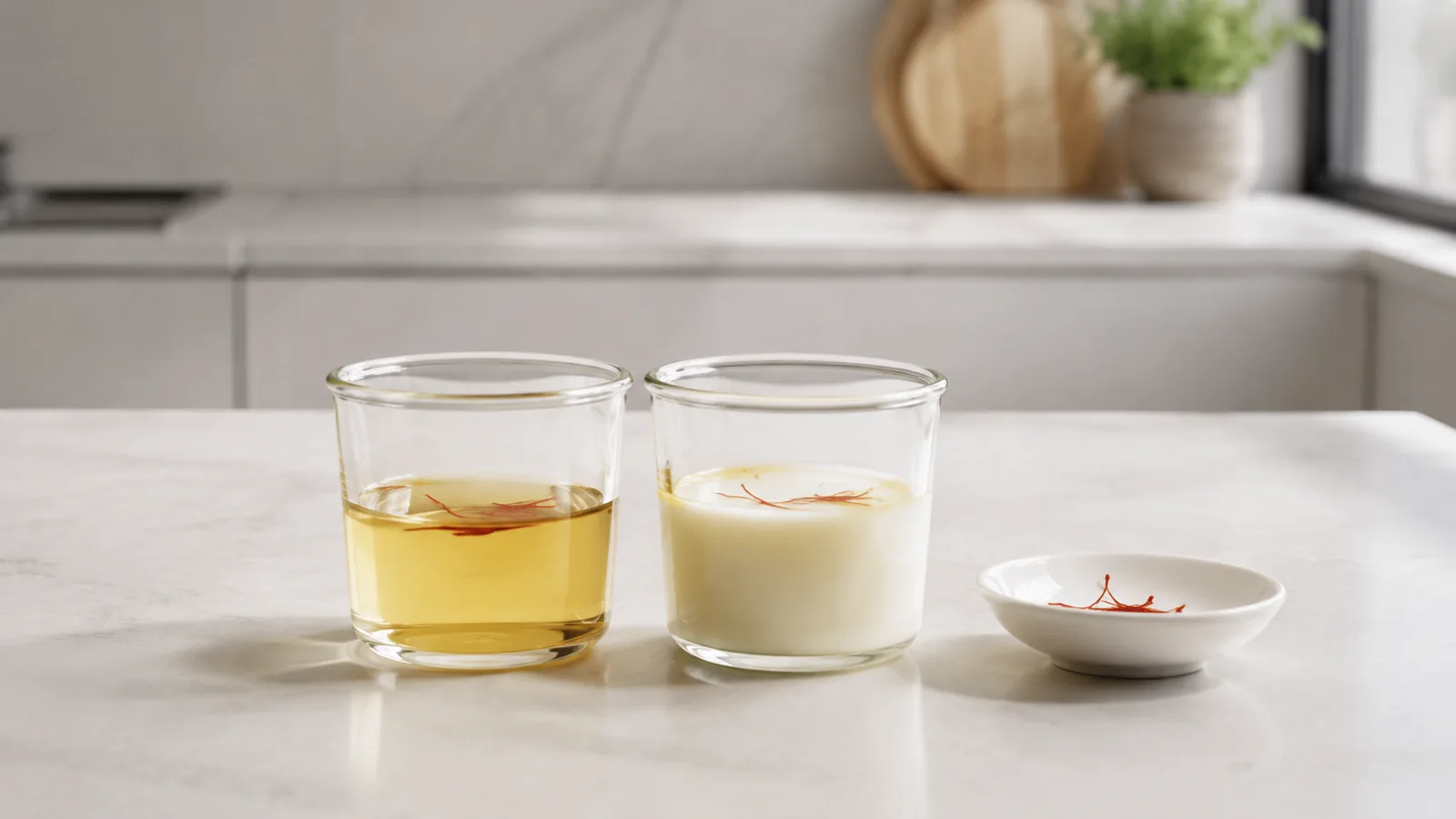
The best way to notice it is to make two small portions of the same simple food, adding saffron to only one. Plain rice, a light broth or warm milk works better for this comparison than a heavily spiced sauce. Taste side by side once the food has cooled slightly; very hot food can make fine differences harder to judge.
Can too much saffron spoil the taste?
Yes. More saffron does not create a more elegant result indefinitely. An excessive amount can make food aggressively bitter, medicinal or drying. Start modestly, infuse it evenly and taste the dish before adding more. The right quantity depends on the recipe, batch strength and number of servings, so a fixed thread count is less useful than gradual adjustment.
Saffron should also not taste plainly sweet. “Honeyed” describes part of the aroma some people perceive; it does not mean the threads contain enough sugar to sweeten food. A sweet coating or an artificial perfume deserves a closer authenticity check.
What if your saffron has no noticeable flavour?
First rule out the preparation: make a fresh, covered infusion and taste it away from strong ingredients. If it still provides neither characteristic aroma nor gentle bitterness, examine its age, storage and traceability. Weakness may reflect an old or poorly handled batch, while unusual material may require a broader quality check.
For a more detailed benchmark, our article on the taste of pure, good-quality saffron explains how taste fits with aroma, thread appearance and colour release. No single home observation proves origin or purity, but several consistent signs give a much better picture than colour alone.
So, can you actually taste saffron? You can—especially when it is fresh, infused evenly and given room in the recipe. Expect a refined aromatic bitterness, not a punch of sweetness and not a flavour that overwhelms everything beside it.