


Iranian saffron health benefits are often described with the same certainty as its colour and aroma. The culinary qualities are easy to experience; the health evidence is more specific. Human trials have tested particular saffron powders and extracts for limited periods, while many traditional uses and laboratory findings still lack strong clinical confirmation.
That does not make the research unimportant. It means readers need to know which plant part, preparation and dose was studied. A pinch of threads in rice, a cup of saffron tea and a standardised supplement are not interchangeable.
Why Iranian saffron is called red gold
Iranian growers produce saffron by harvesting the flowers of Crocus sativus and separating three red stigmas from each bloom. The work is concentrated into a short season and much of it is done by hand. Careful drying then preserves the threads for cooking and trade.
“Red gold” refers to the crop’s value and the intense red stigmas. It is not a medical grade or a guarantee that every Iranian lot has the same quality. Grade, moisture, age, storage and laboratory results still matter.
The plant parts behind the spice
- Corm: the underground storage organ from which leaves and flowers emerge.
- Leaves: narrow green blades that support the plant’s seasonal growth.
- Tepals: six purple, petal-like segments around the centre of the flower.
- Stamens: three yellow pollen-bearing structures; they are not saffron spice.
- Stigmas: three red branches that are collected and dried as saffron.
The distinction is important in research. Petal extracts and stigma preparations contain different profiles, so a result from one should not be used to advertise the other. Our separate guide explains the evidence and practical uses for saffron petals.
Colour, aroma and flavour
Crocin-related compounds are chiefly responsible for saffron’s strong yellow colour in water and food. Picrocrocin contributes bitterness, while safranal is closely associated with aroma. Their proportions can change with cultivation, drying and storage.
These names also appear in health research, but finding a compound in the spice does not prove a clinical effect. Bioavailability, preparation and dose influence what reaches the body.
What research says about mood
Depression is the most studied health topic associated with saffron. Reviews of randomised trials report promising short-term changes in depressive symptoms for some standardised preparations. The evidence base still has limitations: many studies are small, treatment periods are short, products vary and much of the research comes from a limited number of settings.
A meta-research review of 19 published meta-analyses found signals across several outcomes but also said the methodological quality of the reviews needed improvement and called for larger, higher-quality trials in multiple countries.
Saffron is not a replacement for an assessment, psychotherapy or prescribed antidepressant treatment. Anyone with persistent symptoms or thoughts of self-harm should seek professional help rather than trying to select a dose from a food article.
Sleep and a calming evening drink
A warm, fragrant drink can be part of a comfortable evening routine. Trials of standardised saffron extracts have also examined sleep, but their findings cannot automatically be assigned to homemade tea. Product composition, dose and duration are different.
It is reasonable to enjoy a lightly brewed cup for flavour. It is not reasonable to promise that it treats insomnia. Ongoing sleep problems can have many causes and deserve medical assessment when they persist.
Heart, cholesterol and blood pressure claims
A 2022 systematic review and dose-response meta-analysis included 32 randomised trials of saffron supplementation and examined lipids, blood glucose, blood pressure, inflammation and other cardiovascular risk measures. It reported changes in some outcomes, but the included populations, preparations and doses varied.
A separate 2021 meta-analysis of eight randomised trials found small average reductions in systolic and diastolic blood pressure. These were supplement studies; they do not establish saffron tea as a treatment for hypertension or heart disease.
Do not reduce or stop cholesterol or blood-pressure medicine because of saffron. People using cardiovascular, blood-pressure or blood-clotting medication should discuss concentrated supplements with a clinician.
Menstrual discomfort and abnormal bleeding
Saffron has a history of use for menstrual discomfort, and a 2024 systematic review found some clinical evidence across dysmenorrhoea and other reproductive-health outcomes. Preparations and study quality differed, so the result is not a general instruction to self-treat.
Heavy, unusual or persistent bleeding needs medical attention. It should never be described as something saffron tea can regulate at home. Pregnancy requires particular caution: culinary use and medicinal-dose supplements are different exposures, and a pregnant or breastfeeding person should ask their clinician before using a concentrated saffron product.
Digestion and other traditional uses
Persian and other traditional practices have used saffron for appetite, digestion and general wellbeing. Those uses are part of the spice’s cultural history, not proof that it treats a digestive disorder. Claims about preventing cancer, curing eye disease, strengthening immunity or treating diabetes require clinical evidence for the exact preparation and should not be inferred from antioxidant laboratory tests.
How to bloom Iranian saffron for cooking
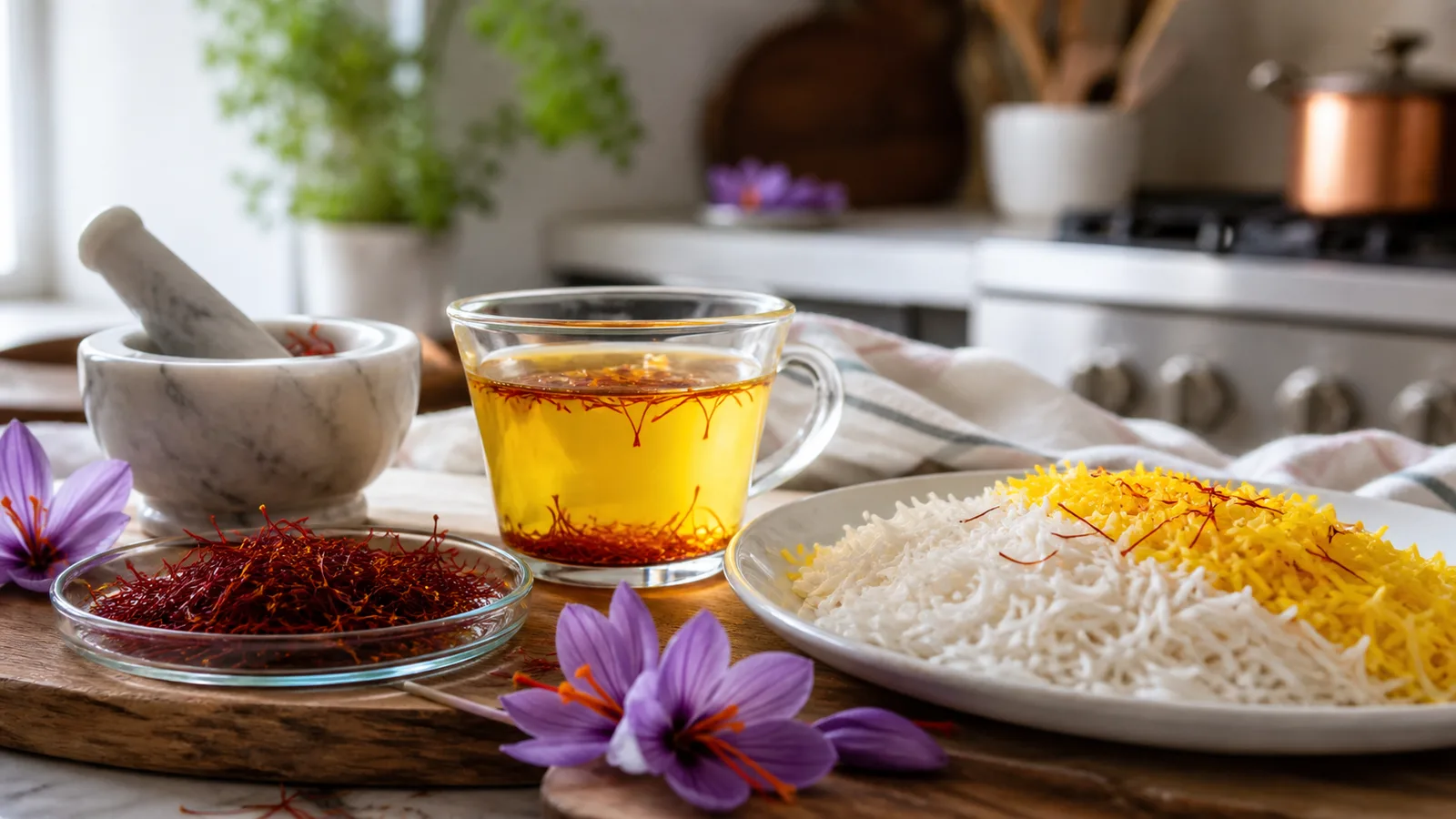
For rice, desserts or drinks, gently crush a small culinary amount of threads. One method is to add warm—not aggressively boiling—water, cover the cup and allow the colour and aroma to develop for several minutes. Another is to sprinkle the ground threads over a clean ice cube in a covered bowl and let it melt slowly in the refrigerator.
Use the concentrate promptly and keep it chilled if it is not added to the dish immediately. A microwave can overheat a small quantity and is not needed. Clean, dry utensils help protect both flavour and food safety.
A simple saffron tea
Place a small pinch of genuine threads in a cup, add hot water and steep for about five to ten minutes. Honey or a slice of lemon can be added for taste. The drink should remain a culinary serving, not a concentrated medicinal preparation.
Buy threads from a source that can identify the lot and keep the saffron sealed away from light, heat and moisture. The page on what Iranian saffron is explains how the spice differs from other parts of the flower.
Safety, side effects and moderation
A 2026 systematic review of human safety data found saffron generally well tolerated but reported adverse events, most often minor gastrointestinal problems. It advised clinical monitoring for medicinal use at higher doses or for longer periods because potentially significant events can occur.
Nausea, headache, dizziness, appetite changes or an allergic reaction are reasons to stop and obtain advice. Supplement labels are not a substitute for individual medical guidance. Children, pregnant or breastfeeding people and anyone with a medical condition or regular medication need extra caution.
The previous version quoted gram-level “safe” and “toxic” thresholds as if they were everyday serving instructions. Those figures come through toxicology reviews and should not be used to plan self-dosing. Culinary saffron is normally measured as a small pinch; medicinal use belongs with a qualified professional.
Putting Iranian saffron health benefits in perspective
Iranian saffron brings unmistakable colour, aroma and cultural value to food. Clinical research on mood and several metabolic or reproductive outcomes is promising in places, yet preparation differences and study quality limit broad conclusions.
The safest summary is also the most useful: enjoy genuine saffron as a spice, treat supplement claims cautiously, and do not turn preliminary evidence into a promise of treatment. That keeps the conversation about Iranian saffron health benefits interesting without making it misleading.

![Exporting Saffron to Turkey + Price Guide [Complete 0 to 100]](https://img.rowhanisaffron.com/20260827003933/saffron-export-turkey-quality-inspection.webp)



