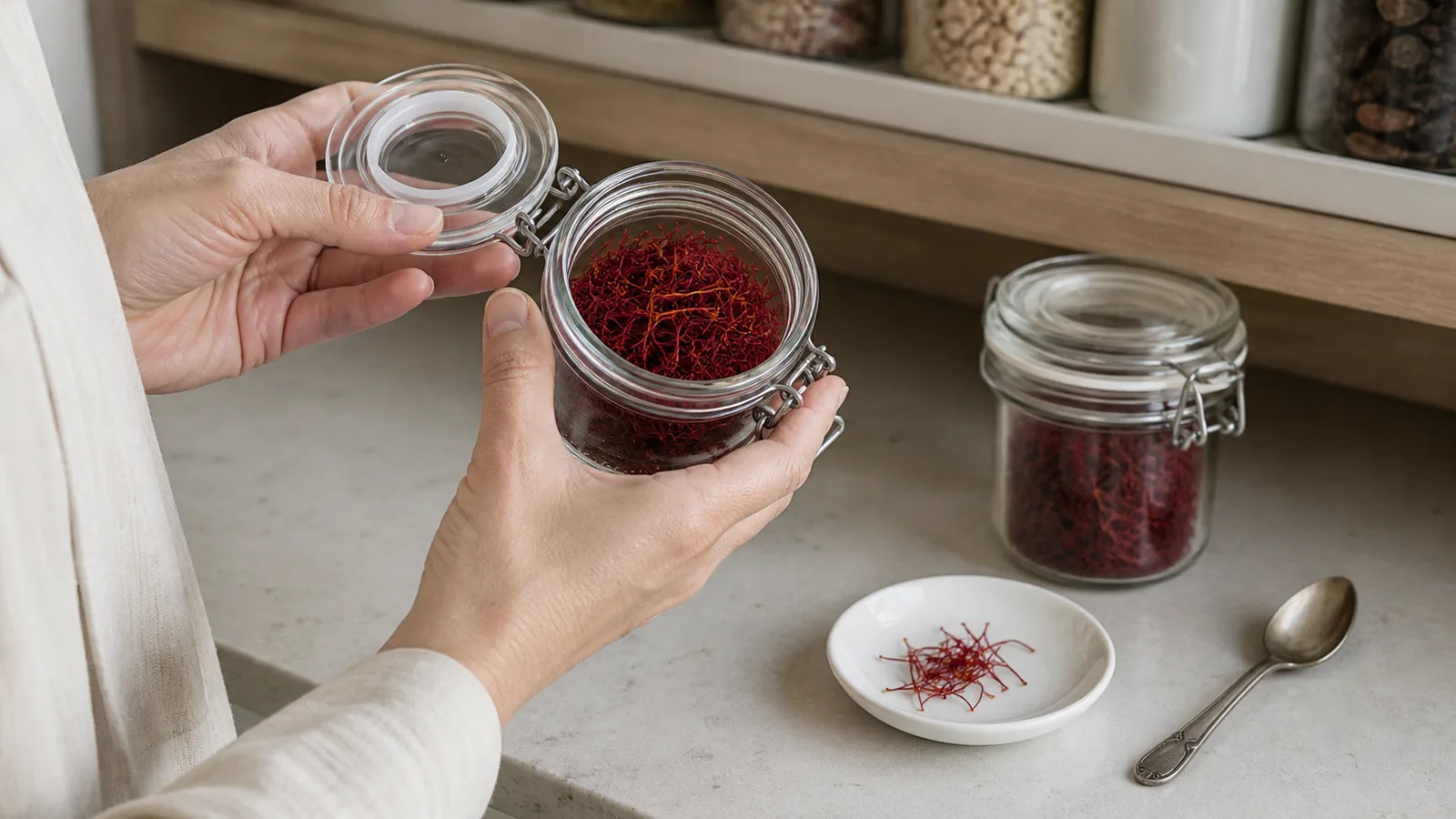
Is it safe to eat expired saffron? A date that has just passed does not automatically make a dry, properly stored spice harmful. With saffron, the first loss is usually quality: weaker aroma, colour and flavour. Do not use it if it is damp, mouldy, infested, contaminated, or has an off smell.
The wording on the package matters. A “best before” or “best if used by” date normally concerns peak quality, while local rules and manufacturer instructions may differ. If the label specifically directs you to discard the product after a date, follow it.
Does kesar expire? Kesar is another name for saffron, so the same answer applies. Can saffron go bad, and does saffron go bad over time? Yes, through contamination or poor storage, while clean dry threads more often lose quality gradually.
Eating Expired Saffron: Is It Safe and What to Consider
What Happens When Saffron Expires?
Does saffron expire in the way fresh food does? Dry saffron has little available moisture, so an unopened, sound product does not suddenly spoil at midnight on its printed date. Its volatile aroma compounds and colour can fade gradually, especially after exposure to air, heat or light.
The USDA’s food-date guidance explains that “Best if Used By/Before” indicates best flavour or quality rather than a purchase or safety deadline. A separate USDA answer about spices gives general quality ranges of two to four years for whole spices and two to three years for ground spices. Those ranges are not a guarantee for an opened saffron jar: packaging and storage history still decide its condition.
The shelf life of saffron therefore has no single exact number. A sealed product kept cool and dry can hold its character far longer than an opened jar stored beside a steamy cooker.
Risks of Consuming Expired Saffron
The side effect of expired saffron is not a special form of saffron poisoning caused by the calendar. The realistic concerns are contamination and spoilage. Moisture can support mould; a dirty spoon can introduce material; damaged packaging can admit insects, dust or kitchen vapour. Powder also gives you fewer visual clues than intact threads.
Is expired saffron harmful when it remains clean, dry and aromatic? It may simply be disappointing. By contrast, visible mould, damp clumps, insects, an unfamiliar musty or chemical odour, or a broken seal are reasons to discard it without tasting. Cooking does not make mouldy spice acceptable.
How to Store Saffron Properly
Keep saffron in a small airtight container in a cool, dry, dark cupboard. Close it promptly after use and handle the threads with clean, dry fingers or a dry spoon. Avoid the warm shelf above a cooker, direct sun, refrigerator condensation and a container so large that fresh air enters at every opening.
If the original package carries the batch, origin and best-before information, keep it or record those details. They are useful if the product is recalled or you need to ask the seller about its saffron expiry date.
Signs That Your Saffron Has Gone Bad
- Moisture or clumping: dry threads should not feel damp, sticky or unusually soft.
- Mould or insects: discard the whole pack; do not pick out the affected part.
- An off odour: musty, sour or chemical smells are not normal saffron aroma.
- Damaged packaging: a broken seal, water damage or unknown storage history lowers confidence.
- Faded colour and aroma: these usually indicate age and quality loss, not danger by themselves.
A strong bitter taste is normal in concentrated saffron, so tasting an uncertain product is a poor safety test. Inspect it dry, check its history and discard it when there is doubt.
Can We Use Saffron After the Expiry Date?
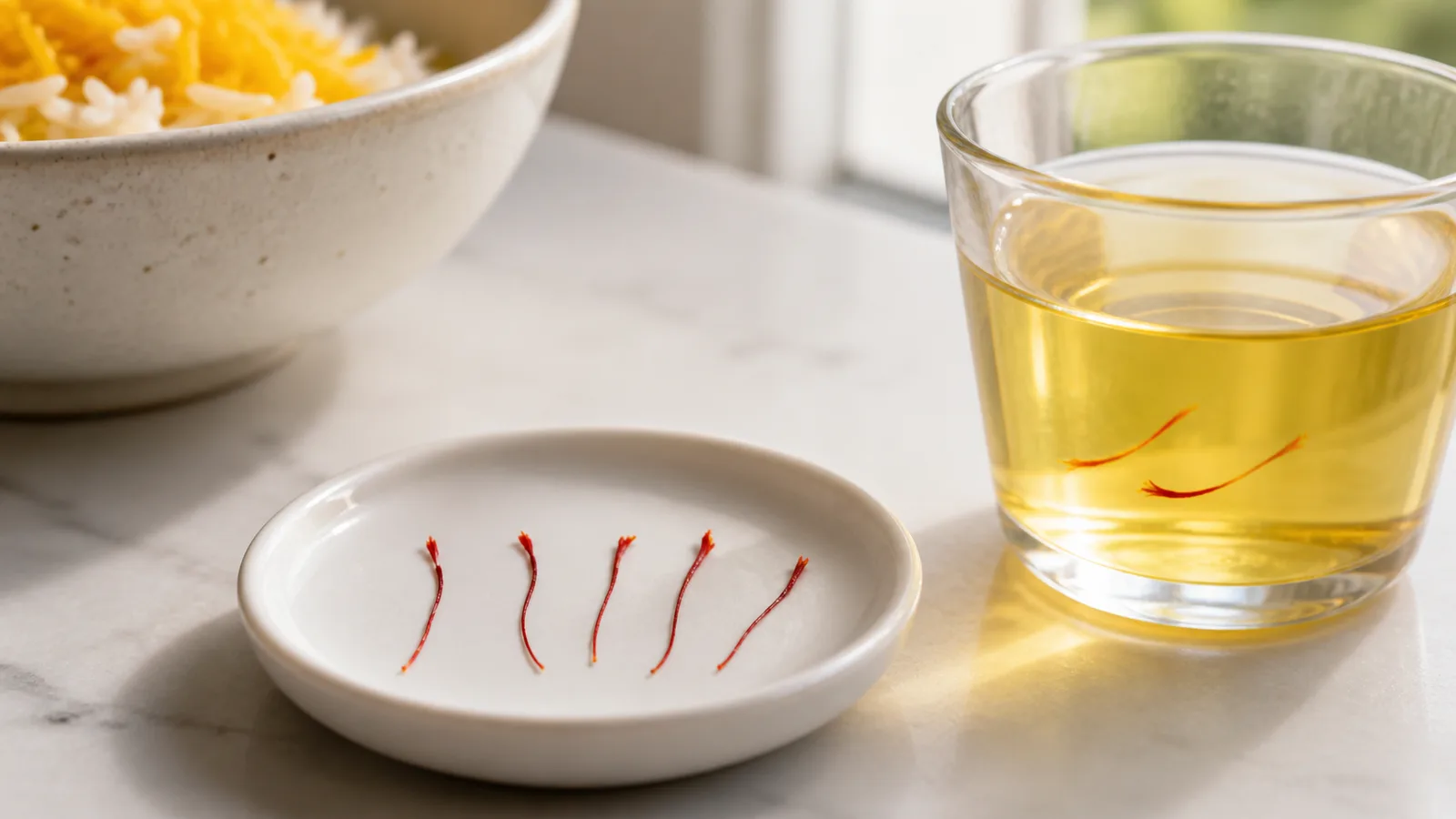
Can we use expired saffron, or can I use expired saffron in a recipe? If the date is quality-based, the container is sound and the spice remains dry, clean and normal-smelling, it may still be usable, though less vivid. Bloom a small recipe amount and judge its aroma and colour before committing it to a large dish.
Do not give questionable spice to someone at higher risk from foodborne illness. When the storage history is unknown, the package is damaged or any spoilage sign is present, replacing a tiny amount of saffron is the sensible choice.
Conclusion
Saffron can go bad, but a printed quality date and actual spoilage are not the same thing. Check the label, storage history, seal, dryness, aroma and visible condition. Old but sound saffron may only be weak; damp, mouldy, contaminated or suspicious saffron belongs in the bin.
For a closer look at storage time, read the lifespan of saffron, or replace uncertain stock from our saffron products.