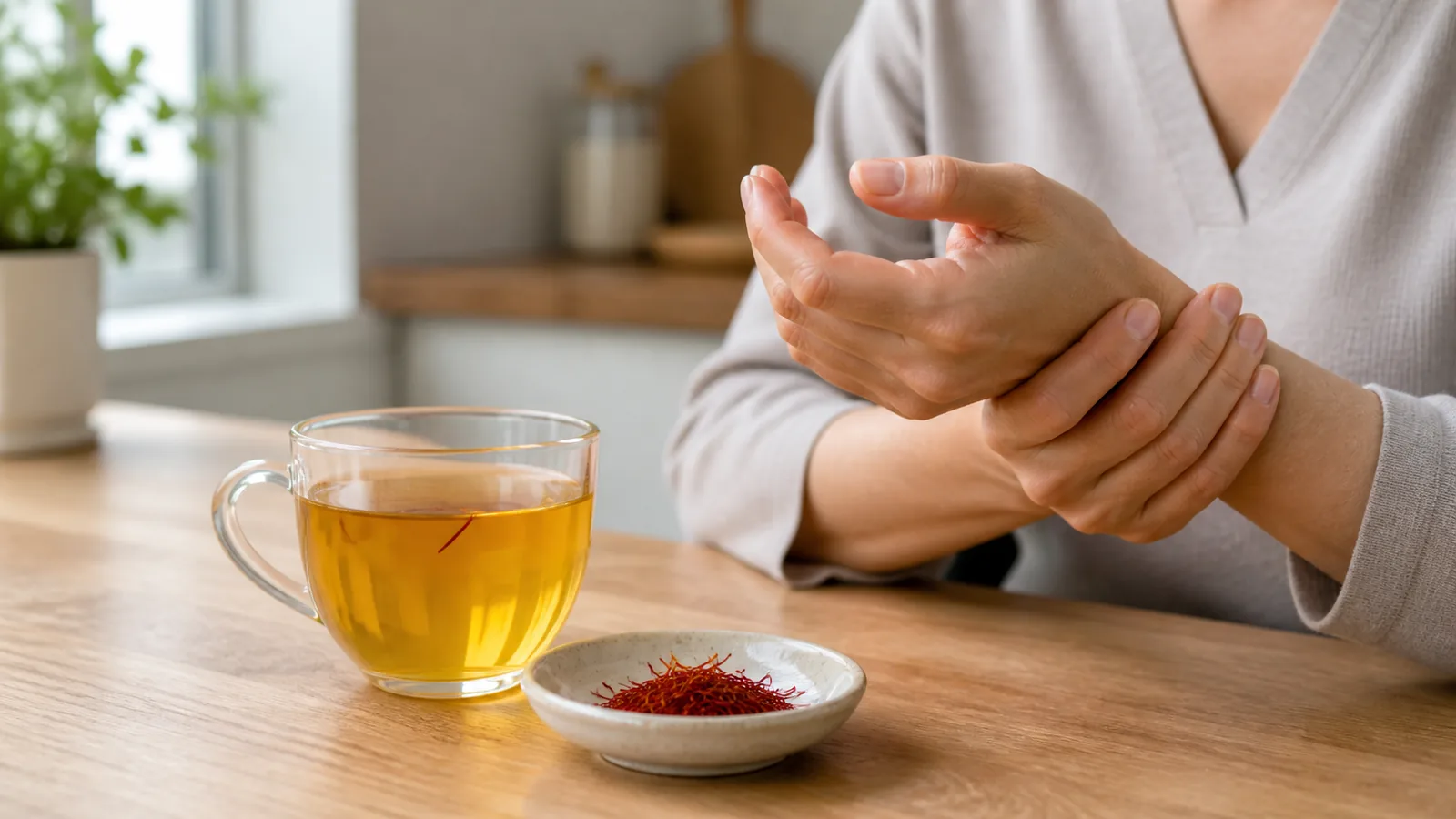
Saffron petals are the purple, petal-like tepals that surround the three red stigmas of Crocus sativus. The stigmas become the familiar culinary spice; the much larger mass of purple floral material is usually separated during harvest. Researchers are studying that by-product as a source of pigments and plant compounds, but it should not be confused with saffron threads or promoted as a cure.
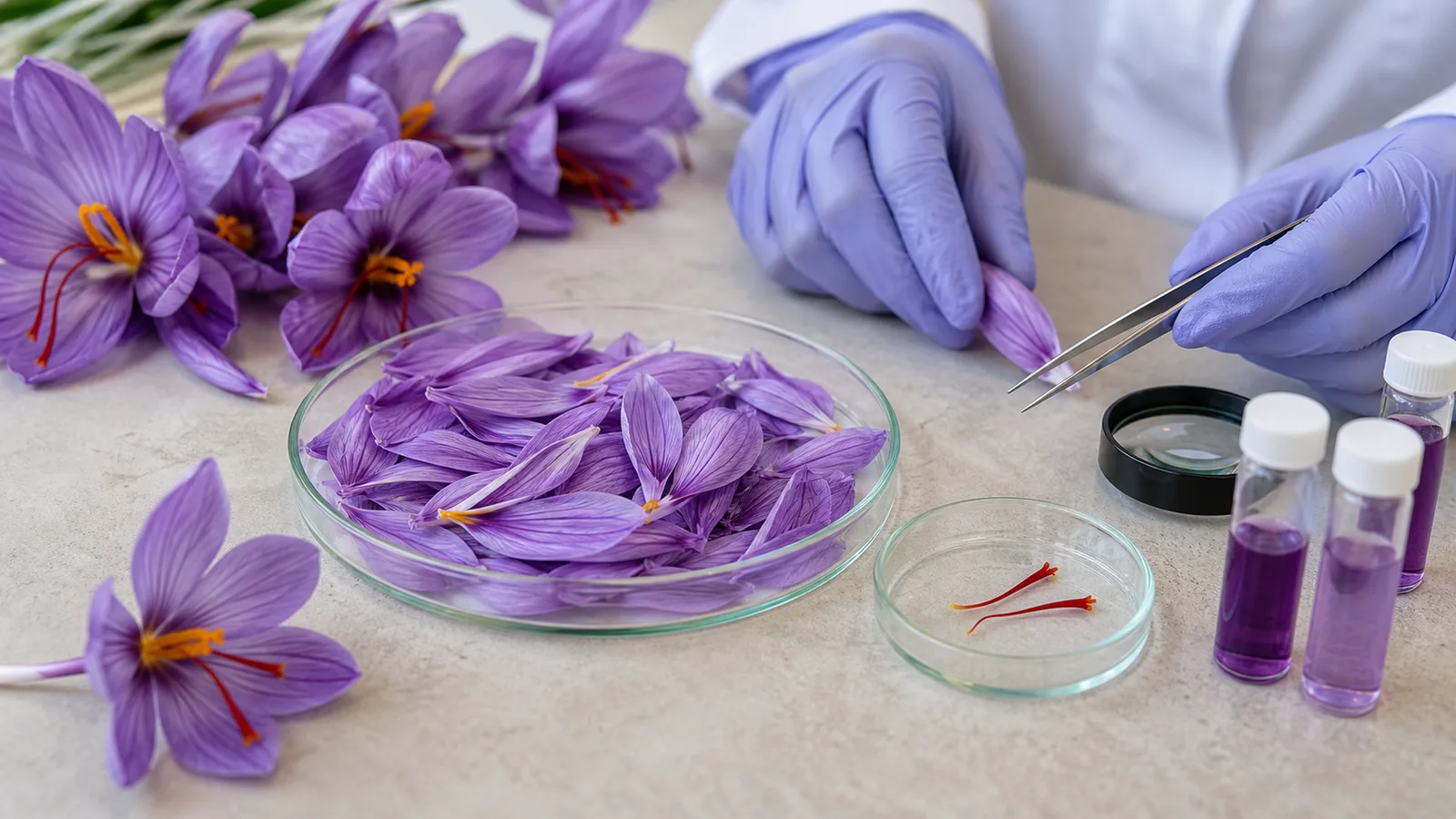
That distinction changes how their benefits and uses should be discussed. Chemical analysis can show that petals contain anthocyanins and flavonoids. It cannot, by itself, prove that a cup of petal tea prevents disease or produces the effects seen with a standardised extract in a clinical trial.
Petals, stigmas and the whole saffron flower
A saffron flower has six purple tepals, yellow stamens and a style that divides into three red stigmas. Only the dried red stigmas are saffron spice. Online articles sometimes use “saffron,” “saffron flower” and “saffron petals” as though they were the same ingredient, which makes health claims difficult to interpret.
When reading a study or product label, check the plant part, extraction method and dose. A hydroalcoholic petal extract in a capsule is not equivalent to stigma powder, a mixed flower product or petals steeped in hot water. Results from one preparation should not be transferred to another without evidence.
What compounds have researchers found?
Laboratory studies report flavonoids and anthocyanins in the tepals, including glycosides related to kaempferol, quercetin and isorhamnetin. These compounds help produce the purple colour and can show antioxidant activity in chemical assays.
A 2023 review and chemical-characterisation paper described saffron tepals as a substantial floral by-product and a potential source of flavonoids and anthocyanins. Earlier analytical work isolated crocin- and kaempferol-related compounds and measured antioxidant activity in test systems.
“Antioxidant” is not a clinical outcome. A compound reacting in a laboratory assay does not establish that eating the petals prevents cancer, heart disease, blindness, diabetes or ageing. Those strong promises appeared in the old article and have been removed.
What do human studies actually show?
Most human research people encounter concerns saffron stigma or proprietary extracts, not an ordinary petal infusion. A small group of older trials studied standardised petal preparations for mild-to-moderate depression. A systematic review found promising results, but the evidence came from few, short studies and does not make petal tea a substitute for diagnosis, psychotherapy or prescribed medicine.
A 2023 double-blind trial tested a hydroalcoholic petal-extract pill in 40 patients with abnormal blood lipids. The reported changes are a reason for further research, not proof that loose petals treat cardiovascular disease. The sample was small, the intervention was standardised, and the result cannot establish a safe household dose.
Research on blood pressure, cancer cells, inflammation and other proposed effects is largely preclinical or concerns preparations different from petals used as food. Petal compounds may be scientifically interesting while the claimed treatment remains unproven.
Saffron petals and mood claims
The previous article said distilled petal essence boosts mood, memory and happiness and acts as an antidepressant. It did not identify a reliable product specification, dose or source for those statements. Distillation can also collect a different set of compounds from those present in a water or hydroalcoholic extract.
Anyone experiencing persistent low mood, loss of interest or thoughts of self-harm needs appropriate clinical support. A botanical product should not replace prescribed treatment or be added without checking interactions. The limited petal-extract trials are research findings, not a self-treatment protocol.
Can saffron petals be used as tea?
Petals have been used in herbal infusions, but food suitability cannot be assumed from colour or plant identity alone. Material intended for consumption should be correctly identified, handled hygienically, dried promptly and tested where required. Flowers exposed to unsuitable pesticides, road dust, mould or mixed plant matter should not be brewed.
There is no well-established household dose that turns petal tea into a treatment. Concentrated extracts differ from a mild infusion, and a stronger preparation is not necessarily better. Pregnant or breastfeeding people, children, people taking medicine or anyone with a medical condition should ask a qualified clinician before using a concentrated saffron-flower product.
If a reaction such as rash, dizziness, digestive upset or unusual bleeding occurs, stop using the product and seek medical advice. A tea should be treated as a food choice, not a way to manage depression, blood pressure, menstrual bleeding or cancer.
Natural colour and material uses
The purple colour makes petals interesting for natural-pigment research. Anthocyanin-rich extracts may have potential in textiles, food-development experiments or cosmetic formulations, although stability, extraction conditions, safety and regulation vary by use.
Colour can fade with light, heat and changes in acidity. A successful laboratory extract is therefore not automatically ready for a lipstick, moisturiser or food. Manufacturers need validated processing, contamination controls, ingredient assessment and compliant claims.
Petals may also be explored in compost, biodegradable materials or extraction streams before remaining biomass is returned to the soil. The best option depends on local equipment, energy use and whether the recovered product has a real buyer.
Why petal recovery matters to growers
Each flower supplies only three stigmas, so harvest produces far more floral biomass than saleable spice. Petals deteriorate quickly because they contain moisture. Collecting them for another purpose requires clean separation and rapid stabilisation without interrupting the time-sensitive stigma work.
A 2024 drying study described stabilisation as a critical step before extracting bioactive compounds. That practical constraint matters: a theoretical high-value use can lose money if drying, storage and transport cost more than the recovered material.
Value-added petal work is most credible when a processor has a defined specification and market. It should not depend on unsupported medicinal advertising.
How to evaluate a saffron-petal product
Look for the botanical name, plant part, batch identification, intended use, extraction ratio where relevant, testing and responsible manufacturer. Be cautious when a product cites research on saffron stigmas to sell petals, or quotes a cell study as proof of treating people.
For the culinary ingredient, see our guide to what Iranian saffron is. Genuine spice should consist of the dried stigmas rather than purple petals used to add weight.
The realistic benefits of saffron petals
The clearest current benefit is resource use: a large harvest by-product contains recoverable pigments and plant compounds that may support research and carefully designed products. Early clinical work on standardised extracts is interesting but limited.
That evidence does not support claims that saffron petals cure cancer, control blood pressure, prevent blindness, regulate menstruation or replace antidepressants. A useful introduction should make the possibilities visible while keeping laboratory potential, clinical evidence and everyday use clearly separated.