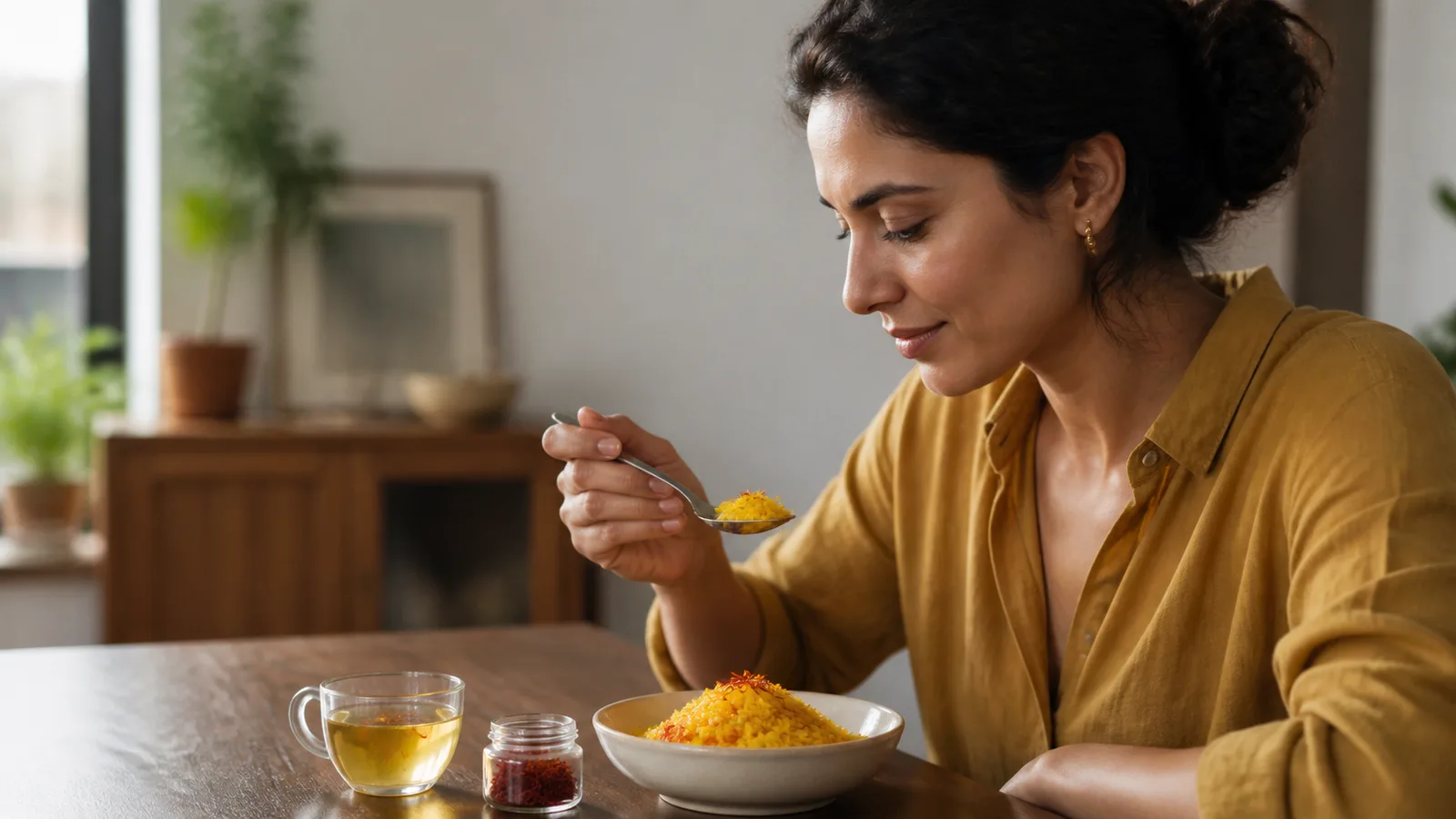
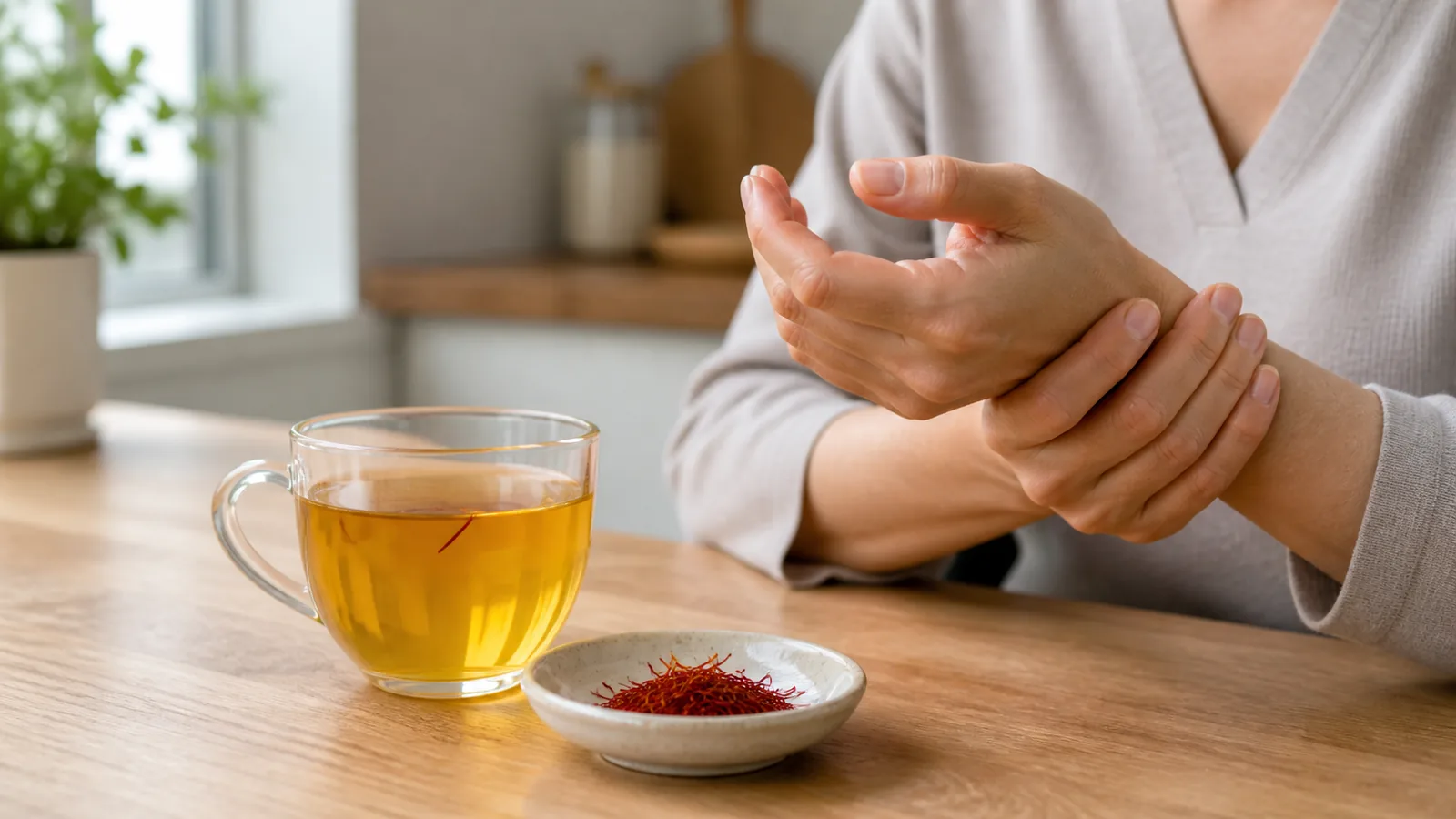
The Health Benefits of Saffron sit on a wide evidence spectrum. Its value as a culinary spice is established. Some standardised saffron preparations have produced promising results in randomised trials, particularly for mood. Other popular claims come only from cell or animal research, and several have no credible support at all.
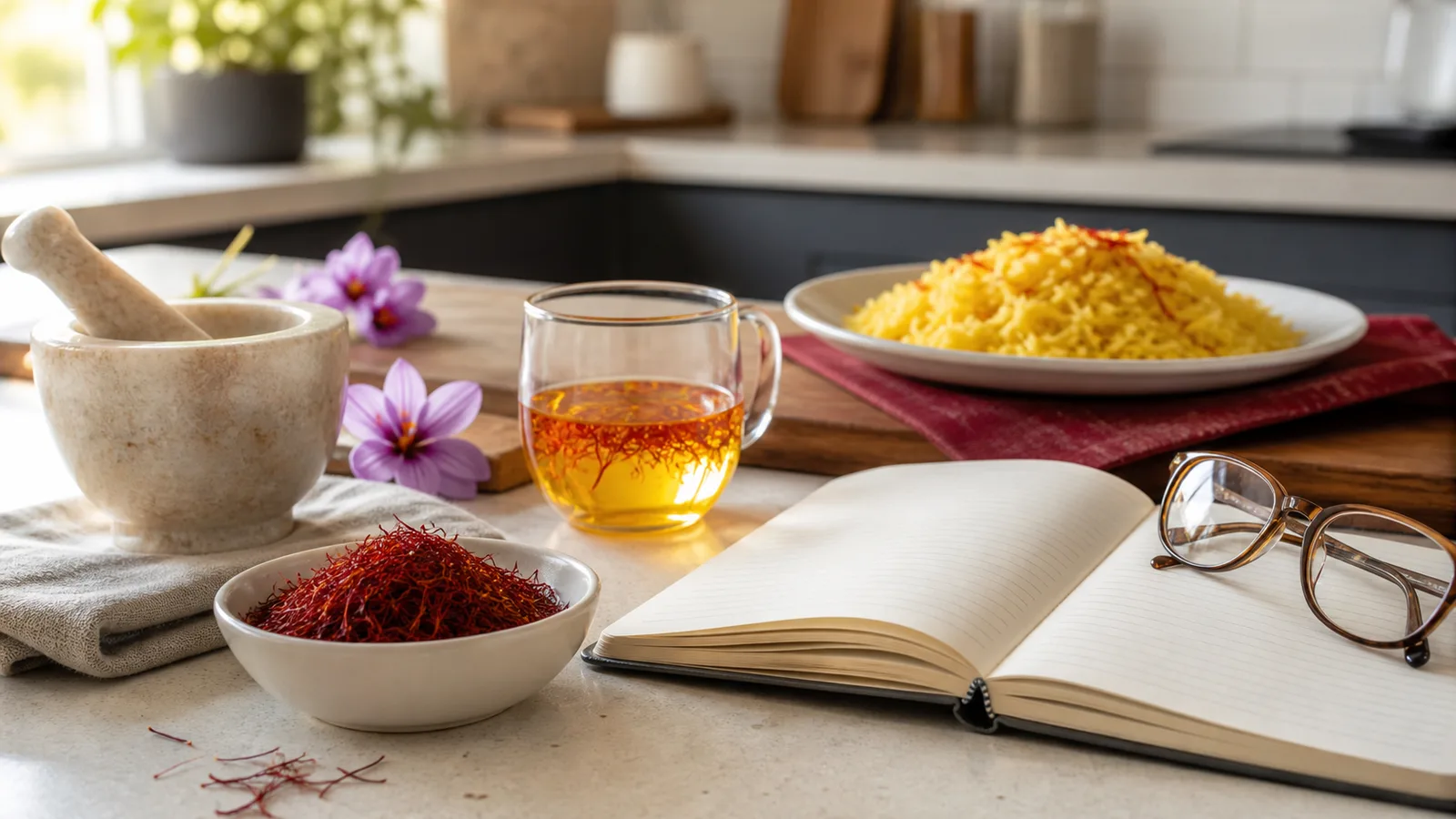
This guide sorts those categories instead of presenting every possible effect as a fact. It also explains why a laboratory extract, a supplement and a pinch used in cooking cannot share the same health promise.
What saffron is
Saffron consists of the dried red stigmas of Crocus sativus. Three stigmas are collected from each flower and dried to develop the spice’s aroma and storage stability. The labour involved and the small yield per flower help explain its price.
Crocin-related compounds contribute colour, picrocrocin contributes bitterness and safranal is associated with aroma. These compounds are studied for biological activity, but their presence is not evidence that a food serving treats a disease.
Where the human evidence is most developed
Mood and depressive symptoms have received the most clinical attention. A 2026 GRADE-assessed meta-analysis included 34 randomised controlled trials and found improvement on some self-reported depression and anxiety scales, while clinician-rated scales did not show the same clear effect. The authors rated the certainty as moderate and called for stronger trials.
That is a useful signal, not a reason to replace professional care. The studies used defined interventions for weeks, often in selected adults. A person with persistent depression, severe anxiety or thoughts of self-harm needs appropriate clinical support.
Memory and cognitive function
A 2020 systematic review found five randomised studies involving 325 people, mostly participants with mild cognitive impairment or Alzheimer’s disease. Results were promising, but the reviewers warned that the studies could have a high risk of bias and said larger, lower-risk trials were needed.
This does not support the old article’s claim that saffron is an established treatment for Parkinson’s disease or ordinary age-related memory loss. It also does not show that adding saffron to food will prevent dementia. Anyone noticing cognitive changes should seek assessment rather than self-treat with a spice or supplement.
Sexual function
A 2019 systematic review and meta-analysis pooled five small studies with 173 participants and reported improvement in sexual-function measures, with meaningful variation between studies. Some trials examined dysfunction associated with antidepressant use rather than sexual health in the general population.
Sexual difficulties can have medical, psychological, relationship and medication-related causes. Saffron should not be presented as a general cure, and prescribed medicine should not be changed without the prescriber.
Cardiovascular and metabolic markers
Reviews have examined blood pressure, cholesterol, blood glucose and inflammatory markers. Average changes in some analyses are small, studies use different products and participants, and results do not establish saffron as a treatment for hypertension, diabetes or heart disease.
The difference between a statistical change and a meaningful clinical benefit matters. A person taking blood-pressure, diabetes, cholesterol or blood-clotting medication should discuss concentrated saffron products with a clinician.
Can saffron prevent or treat cancer?
Crocin, crocetin and saffron extracts have been studied in cancer cells and animal models. Researchers may measure effects on cell growth or apoptosis under controlled laboratory conditions. Those experiments can help identify possible research directions.
They do not prove prevention or treatment in people. The old article named several cancers and said saffron inhibited malignant cells while stimulating normal cells; it offered no human trial demonstrating that outcome. Saffron must not replace screening, oncology care or prescribed treatment.
Claims without a sound basis
There is no reliable basis here for saying saffron extends life, triggers delayed puberty, cures patchy hair loss when mixed with milk and liquorice, or lowers a fever when placed on the forehead. Those claims have been removed rather than softened into vague wellness language.
Traditional use can be worth documenting, but it must be labelled as tradition. It does not become a clinical result through repetition.
Saffron as a natural food colour and flavour
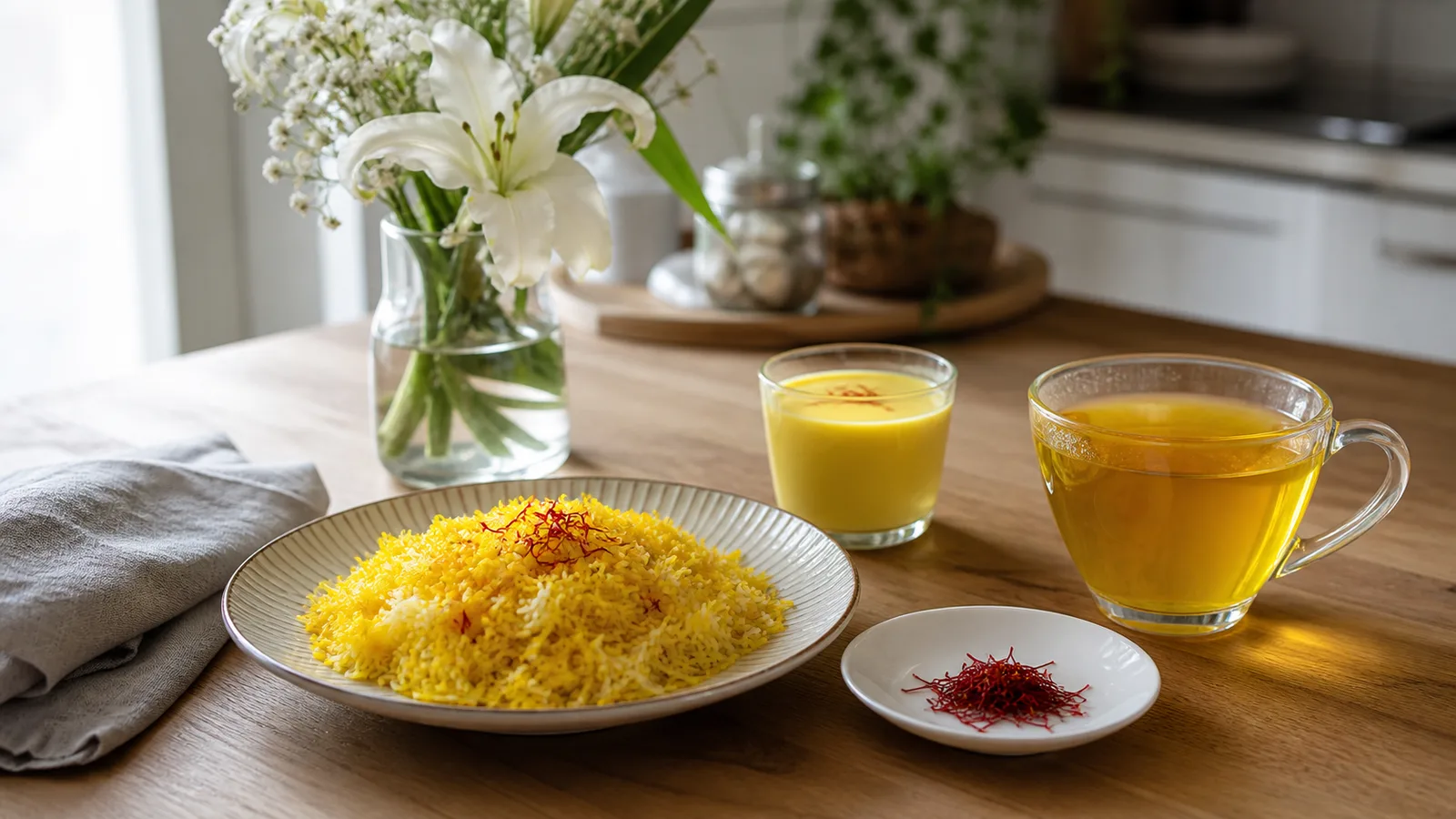
Saffron can give rice, sauces, bread, desserts and drinks a strong yellow-gold colour with a distinctive aroma. This is a practical culinary benefit. It can replace a synthetic colour in a recipe when its flavour and cost suit the dish, but “natural” does not automatically mean healthier or allergy-free.
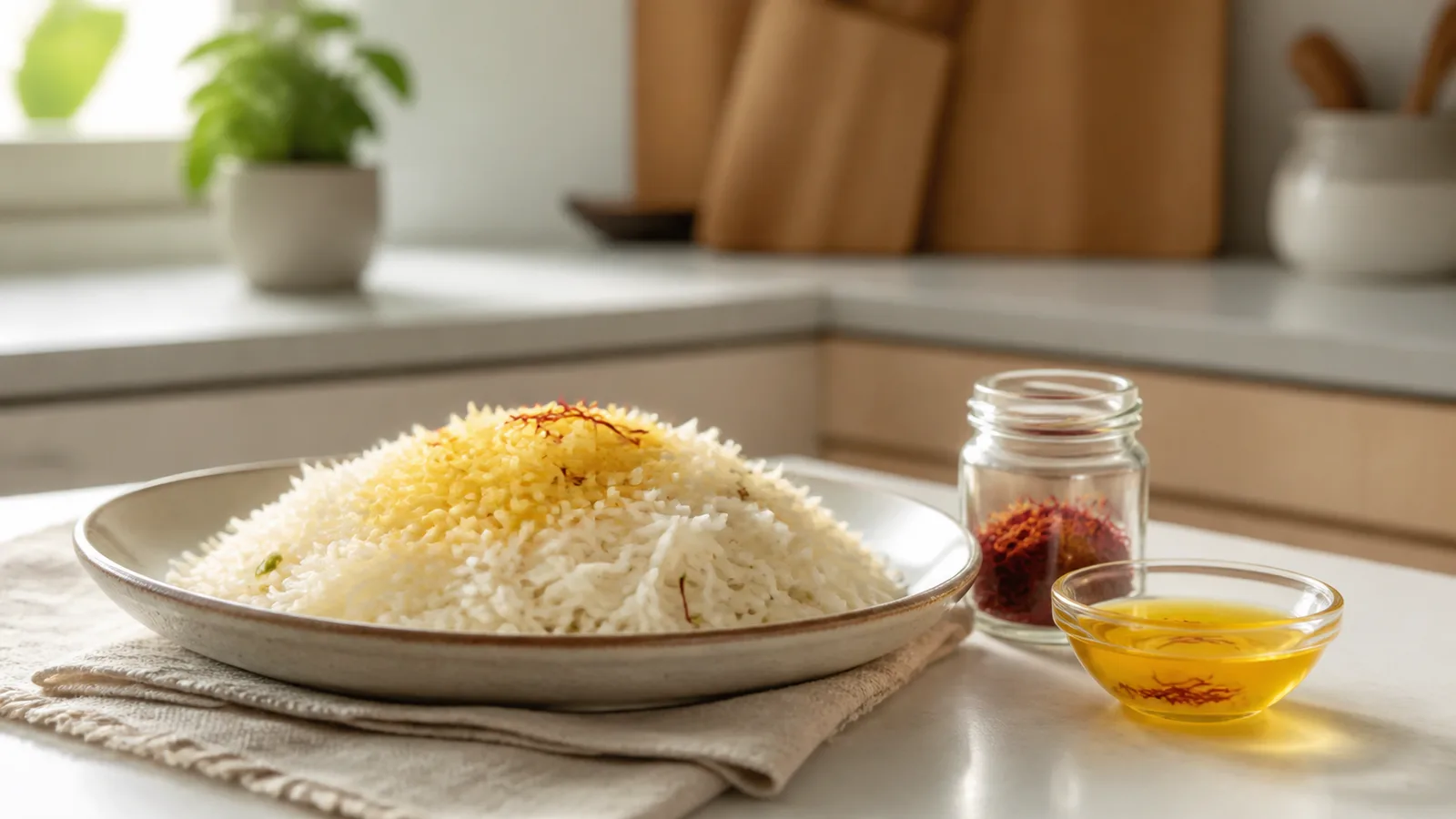
A small amount goes a long way. Gently crush the threads, steep them in warm water and add the infusion to the dish. Buying whole threads also makes it easier to inspect the product than buying an anonymous coloured powder.
Three useful ways to cook with saffron
- Bloom a pinch and add it to rice near the end of cooking for colour and aroma.
- Use a restrained infusion in cakes, biscuits, custards or milk-based desserts.
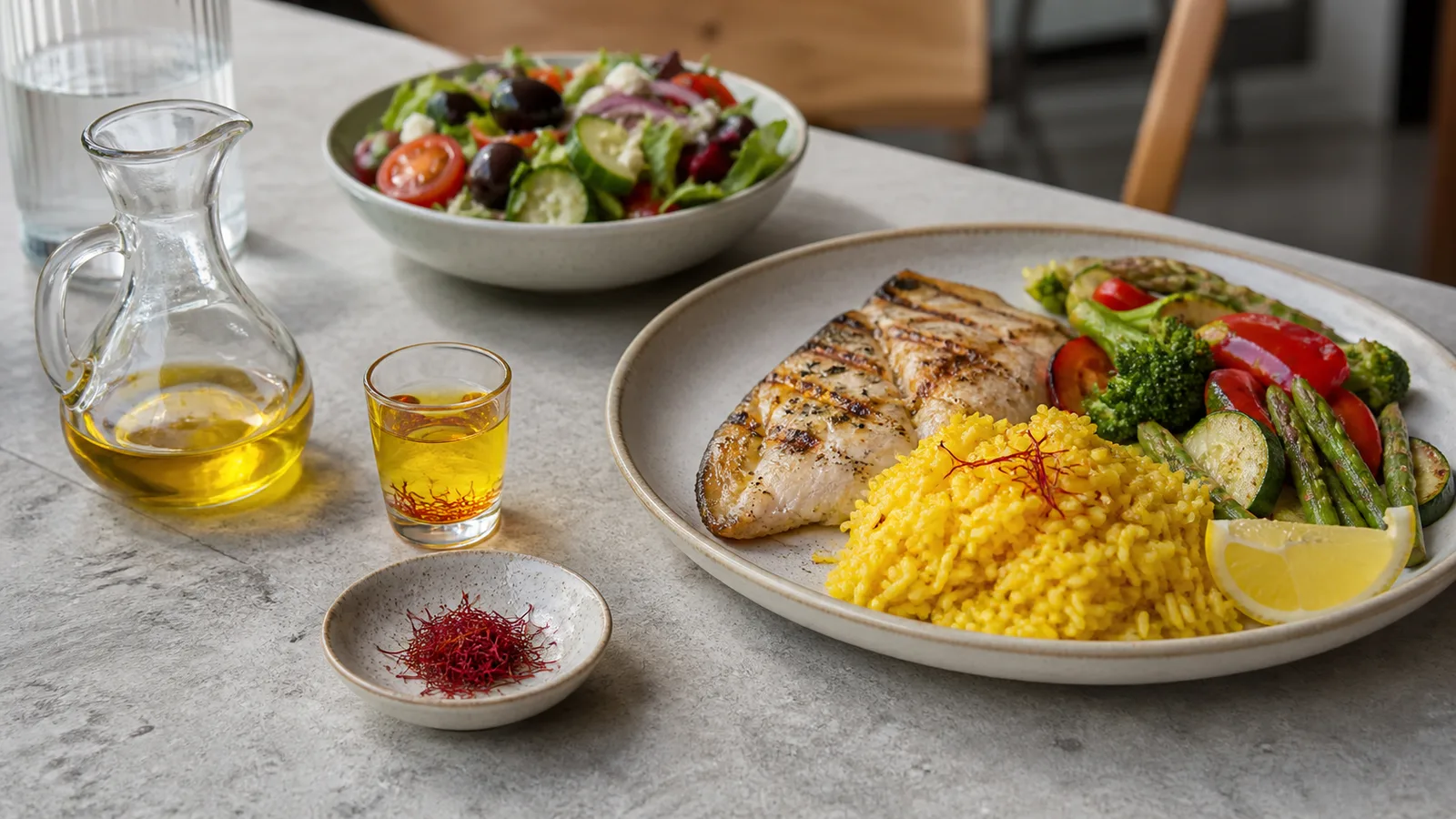
- Combine saffron with garlic, herbs and an acidic ingredient for a fish or vegetable marinade.
Saffron also pairs with cardamom, cinnamon and citrus. A pleasant drink can be relaxing as a routine, but coffee or tea containing saffron should not be advertised as a heart treatment.
Safety and pregnancy
A 2026 systematic review covering human saffron preparations found them generally well tolerated, while noting adverse events—most often gastrointestinal—and the possibility of more significant problems with higher-dose or prolonged medicinal use.
Culinary and supplement exposures are different. Pregnant or breastfeeding people should ask their clinician before using a concentrated saffron product. Children, people with a medical condition and anyone taking regular medicine need the same caution. Stop use and seek advice if symptoms such as rash, dizziness, unusual bleeding or persistent digestive upset occur.
Household spoon measures are not a safe way to set a supplement dose. The right amount in a recipe is a small culinary pinch; medical use requires product-specific, individual guidance.
How to judge a saffron benefit claim
Ask five questions: Was the research done in people? Was it randomised and controlled? Which plant part and preparation was used? How many participants were studied and for how long? Did the outcome matter clinically, or only in a laboratory assay?
Also check whether the seller is using research on a standardised extract to promote an unstandardised tea or food. The detailed article on Iranian saffron health benefits covers brewing, traditional use and major safety boundaries.
A balanced view of the Health Benefits of Saffron
Saffron is a remarkable spice, and parts of its clinical evidence are genuinely interesting. Mood research is the most developed; cognitive, sexual and metabolic findings remain areas where preparation, sample size and study quality matter.
Its culinary role needs no medical exaggeration. Enjoy saffron for its colour, flavour and aroma, and treat therapeutic claims according to the evidence behind the exact product—not the reputation of the spice.