To buy good-quality saffron, choose a clearly identified Crocus sativus product with a defined origin and grade, current batch information, protective packaging and realistic claims. Inspect the seller before the threads: a dramatic red photo or premium price cannot replace traceability.
Buy Quality Saffron by Deciding What You Need
A small household jar, a restaurant pack and a wholesale order need different checks. Start with the recipe, expected use and storage time. Buying more than you can keep fresh is poor value, even when the price per gram looks attractive.
For a first purchase, whole threads are easier to examine than powder. Powder can be genuine and useful for production, but it removes the natural stigma structure that helps a buyer spot obvious substitutes. If you need powder, choose a supplier with stronger batch documentation.
Understand the Grade Before Comparing Prices
Negin and Sargol are all-red presentations with a high proportion of red stigma. Pushal retains a small orange-yellow part of the style, while Dasteh or Bunch includes more of the whole stigma-and-style structure. These cuts have different compositions, so compare like with like.
A trade grade does not guarantee chemical quality. The name may also be used differently between sellers. Ask what the grade means, which flower parts it contains and whether any test report belongs to the exact lot being offered.
Check the Product Listing
A useful online or printed listing should give more than adjectives. Look for:
- The ingredient name Crocus sativus stigma.
- Country or region of cultivation, not only the place of packing.
- A clear thread cut or grade description.
- Net weight in a standard unit.
- Batch, lot, harvest or packing information where available.
- Storage instructions and packaging details.
- A real business identity, contact route and understandable return policy.
Be cautious when every sentence says “best,” “premium” or “pure” but the listing never explains the origin, grade or batch. Health and cure promises are not evidence of saffron quality.
Choose the Origin Without Relying on Stereotypes
Iran offers the broadest supply and a wide range of familiar grades. Kashmir offers a scarce protected regional product. Spain has protected saffron traditions linked with regional cooking. Afghanistan, Greece and Morocco also produce genuine saffron.
Origin can influence availability, price and style, but it does not make every batch from one country superior. The buyer’s guide to choosing saffron by country explains how to separate cultivation origin from packing location.
How to Assess Saffron Suppliers
Reliable saffron suppliers should be able to answer ordinary product questions without hiding behind marketing language. Ask where the flowers were grown, who packed the product, what the grade means, how it was stored and whether a named certificate matches the current lot.
When comparing Persian saffron suppliers, remember that “Persian” is commonly used for Iranian origin but is not a grade. A search for the best Iranian saffron brand should lead to a batch comparison, not a permanent winner. Brands can sell several grades and change suppliers over time.
For a large order, begin with a sample from the same lot whenever possible. Evaluate the sample before committing to the full quantity, and document the specification both sides agreed to.
Inspect the Threads When They Arrive
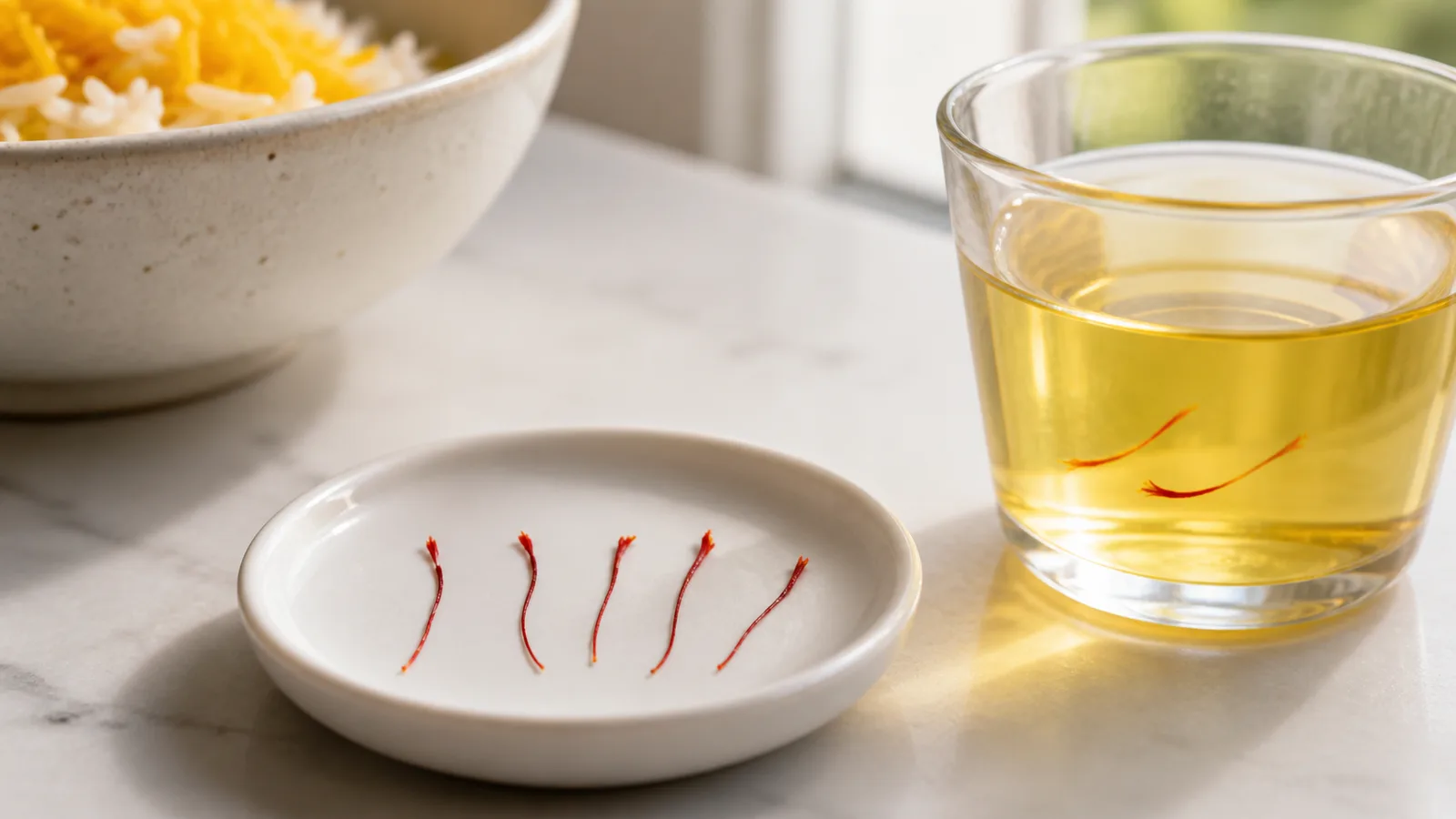
Genuine whole stigmas vary naturally. They usually have a slender red body and a widened or flared end rather than looking like uniformly cut fibers. Broken pieces are not automatically bad, but unexplained flat petals, fuzzy dyed material, damp clumps or debris need attention.
Deep crimson color can be a positive sign, yet appearance is not conclusive. Photography and added color can mislead. Yellow or orange style may be intentional in Pushal or Bunch, so judge the contents against the grade promised rather than treating every pale section as fake.
Check Aroma and Flavor Without Overstating a Home Test
Good saffron has a clean complex aroma often described as floral, hay-like, honeyed or earthy. Its taste is characteristically bitter in a restrained way. Mustiness, dampness, a flat smell or a simple added perfume can indicate poor condition.
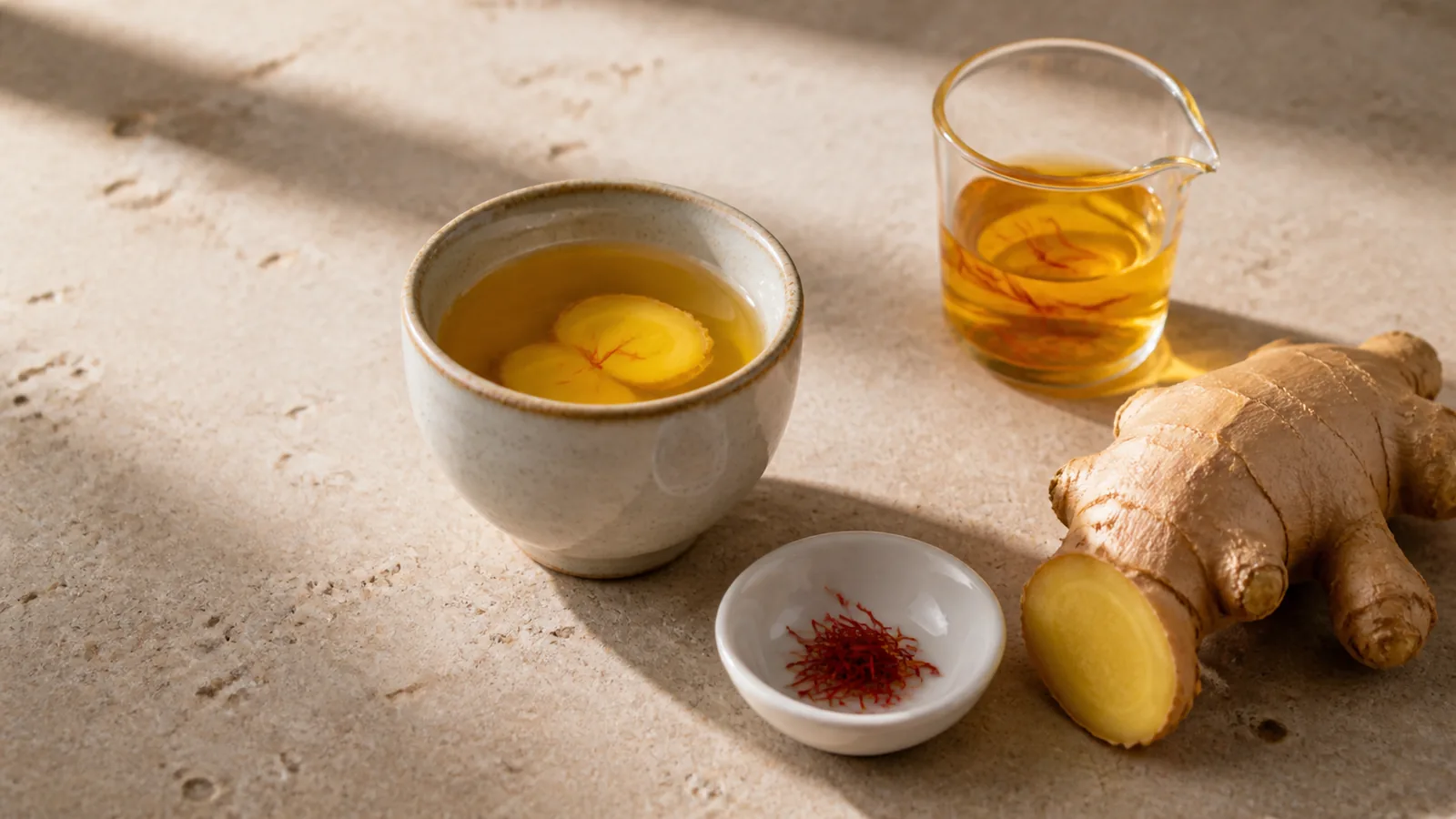
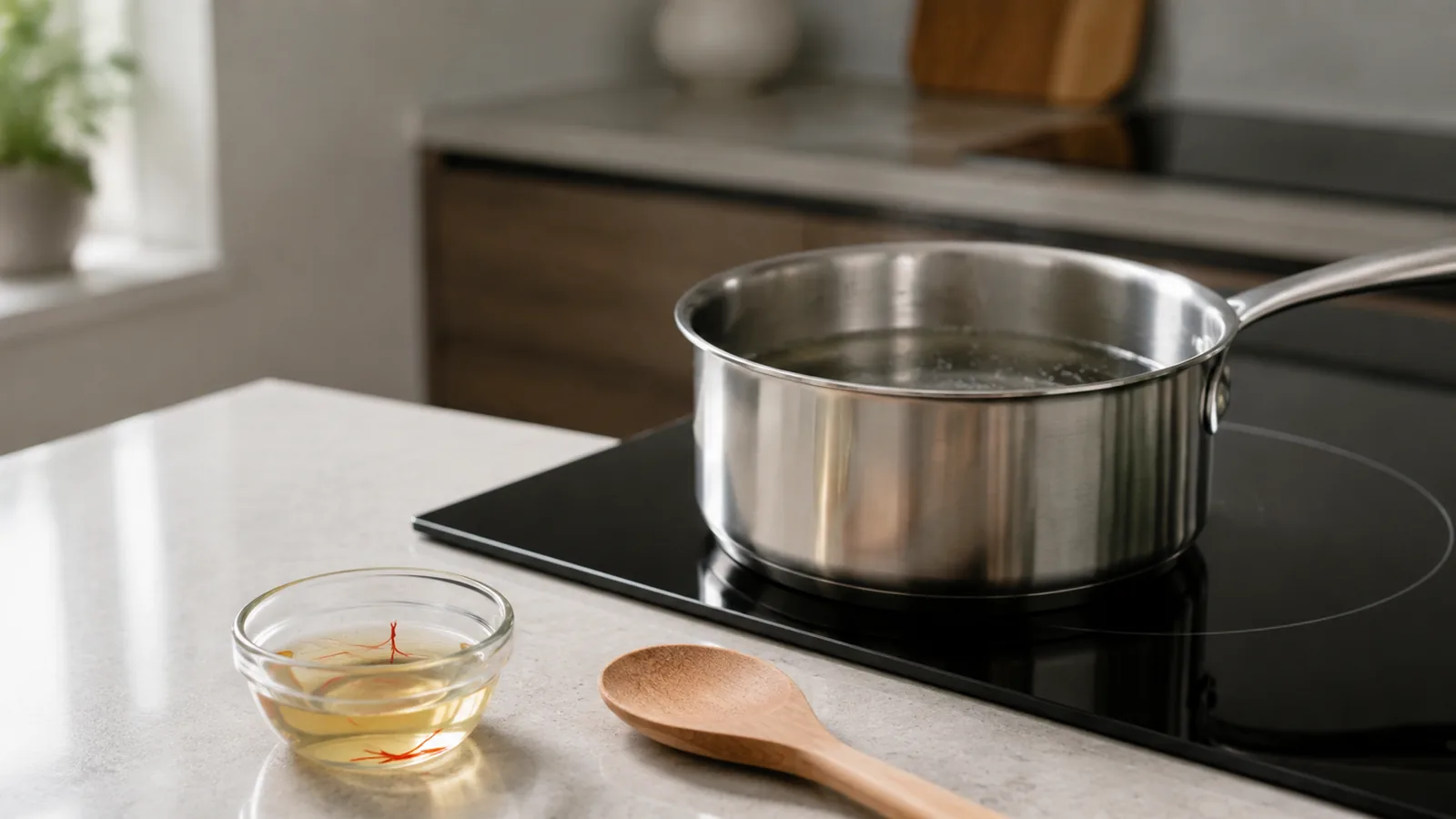
Place a few threads in warm water. A clear golden-yellow color should develop gradually, and the aroma should open as the stigmas hydrate. Immediate opaque red dye is a warning. This test can expose an obvious problem, but it cannot certify purity, grade or country.
The fuller guide to identifying high-quality saffron covers thread structure, aroma and infusion checks. For adulteration warnings and the limits of common kitchen tests, see how to identify pure saffron.
What a Laboratory Report Can Tell You
A peer-reviewed review of saffron quality assessment describes measurements related to color, bitterness, aroma, moisture and other characteristics. These are more informative than a seller’s claim of “maximum potency.”
Check the lot number and date on any report. A generic certificate may describe a different harvest or grade. Testing also has limits: good results at packing do not prevent later damage from heat, moisture or prolonged exposure to air.
Compare the Real Cost
Calculate price per gram at the same grade and level of documentation. A large box can contain a tiny jar, while a small plain package may hold the better value. Shipping, import costs, protected origin and testing can reasonably affect price.
An unusually low price deserves scrutiny because saffron harvesting and separation require substantial manual work. A very high price is not proof either; elaborate packaging and brand positioning can cost more without improving the spice.
The current saffron price page provides market context, but compare a live quote with the product’s grade, origin, quantity and terms rather than relying on an old fixed number.
Store the Purchase Properly
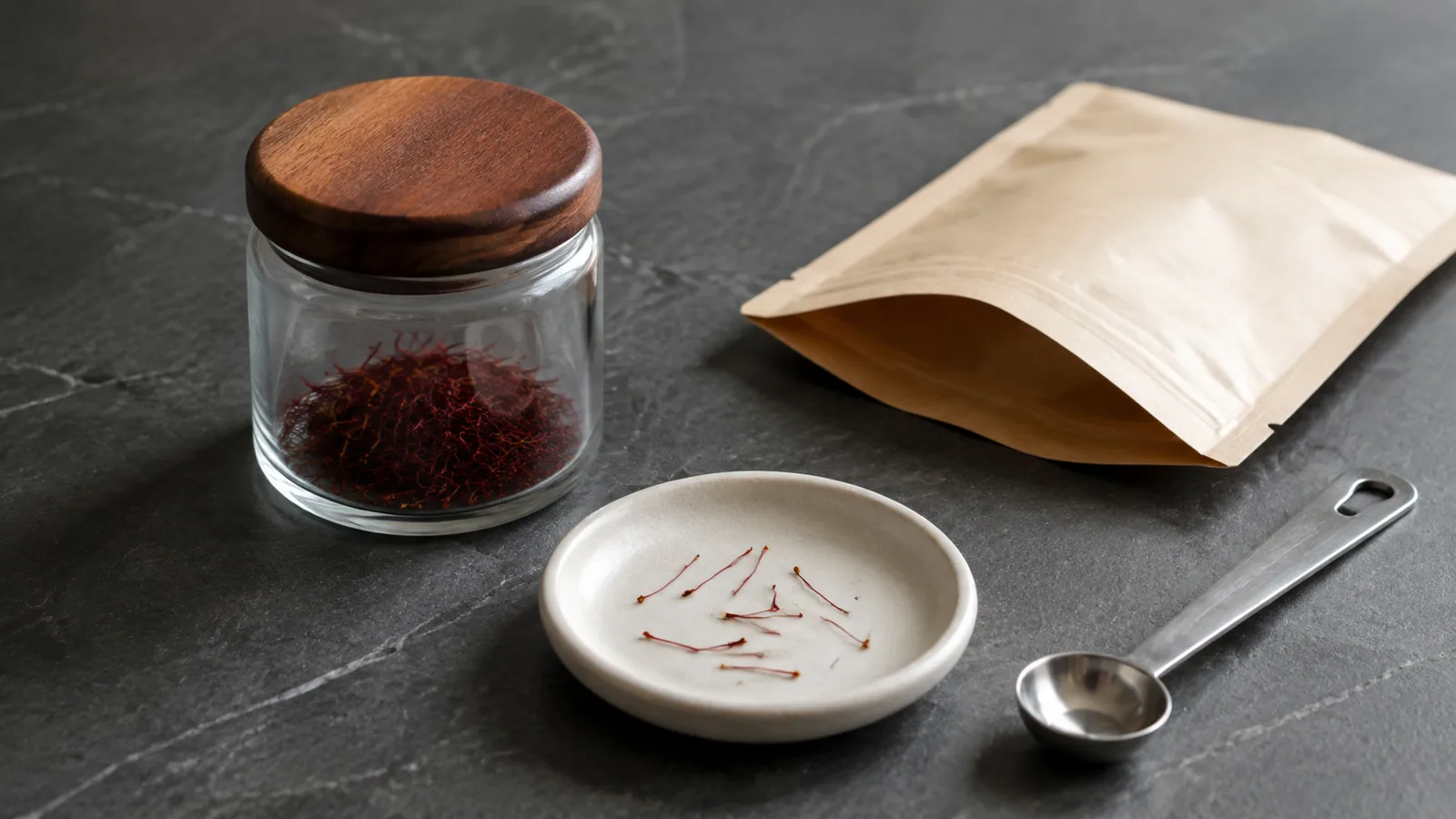
Quality can decline after delivery. Keep saffron tightly sealed, dry, cool and protected from light and strong neighboring odors. Do not leave the jar open beside steam. For commercial quantities, divide working stock from reserve stock so the full supply is not repeatedly exposed.
The University of Vermont’s harvesting and processing guidance explains why drying and storage are part of saffron quality, not an afterthought.
A Practical Buying Checklist
- Choose threads or powder according to the evidence you can verify.
- Confirm origin, grade, net weight and seller identity.
- Compare prices only across equivalent products.
- Ask for batch-specific documentation on important orders.
- Inspect the delivered threads and prepare a small controlled infusion.
- Raise any mismatch promptly and retain the package and lot details.
- Store the accepted saffron away from light, moisture, heat and air.
You can apply that checklist to the available saffron products or any other supplier. To buy quality saffron confidently, combine seller evidence, product inspection and equal-dose performance instead of trusting one visual trick or brand claim.