Saffron can give a cosmetic product a warm golden colour, but there is not strong clinical evidence that saffron itself lightens, whitens or permanently brightens human skin. Research on its antioxidant compounds is interesting; it does not prove that saffron water, milk or a homemade mask will fade dark spots or make a person’s natural complexion fairer.
So, does saffron really brighten skin? It may make dry skin look temporarily more luminous when it is part of a well-formulated moisturising product. That surface effect is different from reducing melanin or treating hyperpigmentation.
What “saffron skin brightening” can mean
Brightening is a loose cosmetic term. It may describe skin that looks less dry or dull, a more even-looking tone, or a reduction in visible pigmentation. Those are separate outcomes, and a colourful botanical ingredient does not automatically achieve all three.
Saffron contains crocin, safranal, kaempferol and other compounds studied for antioxidant and anti-inflammatory activity. Work involving free radicals and oxidative stress helps researchers explore mechanisms under controlled conditions. It does not establish how much reaches living skin from a homemade infusion, whether it remains stable in a product, or whether it changes a dark spot in a person.
Can saffron make skin fair, lighten or whiten skin?
No good human evidence shows that saffron makes a person’s natural skin colour fair or white. Phrases such as “saffron for skin whitening,” “kesar for skin whitening” and “saffron benefits for skin whitening” promise more than the evidence supports. Healthy skin comes in every natural tone; whitening should not be the measure of whether it is healthy.
Does saffron darken skin?
Saffron’s red-gold pigment can briefly stain the surface yellow, especially when a concentrated paste is used. That is not melanin reduction. It also explains why saffron does not truly darken skin, even though a fresh stain may temporarily alter its appearance.
Does drinking saffron water lighten skin?
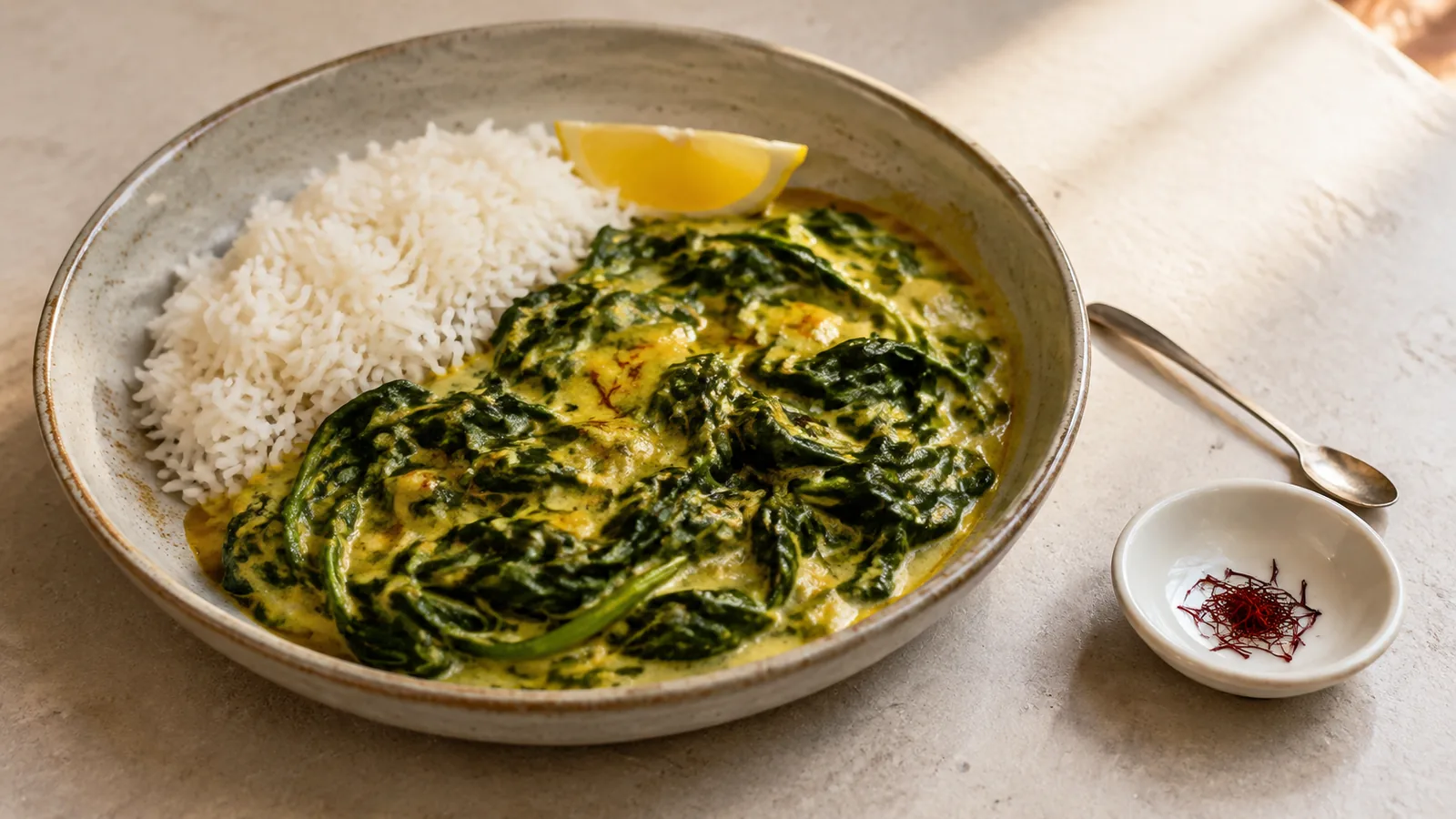
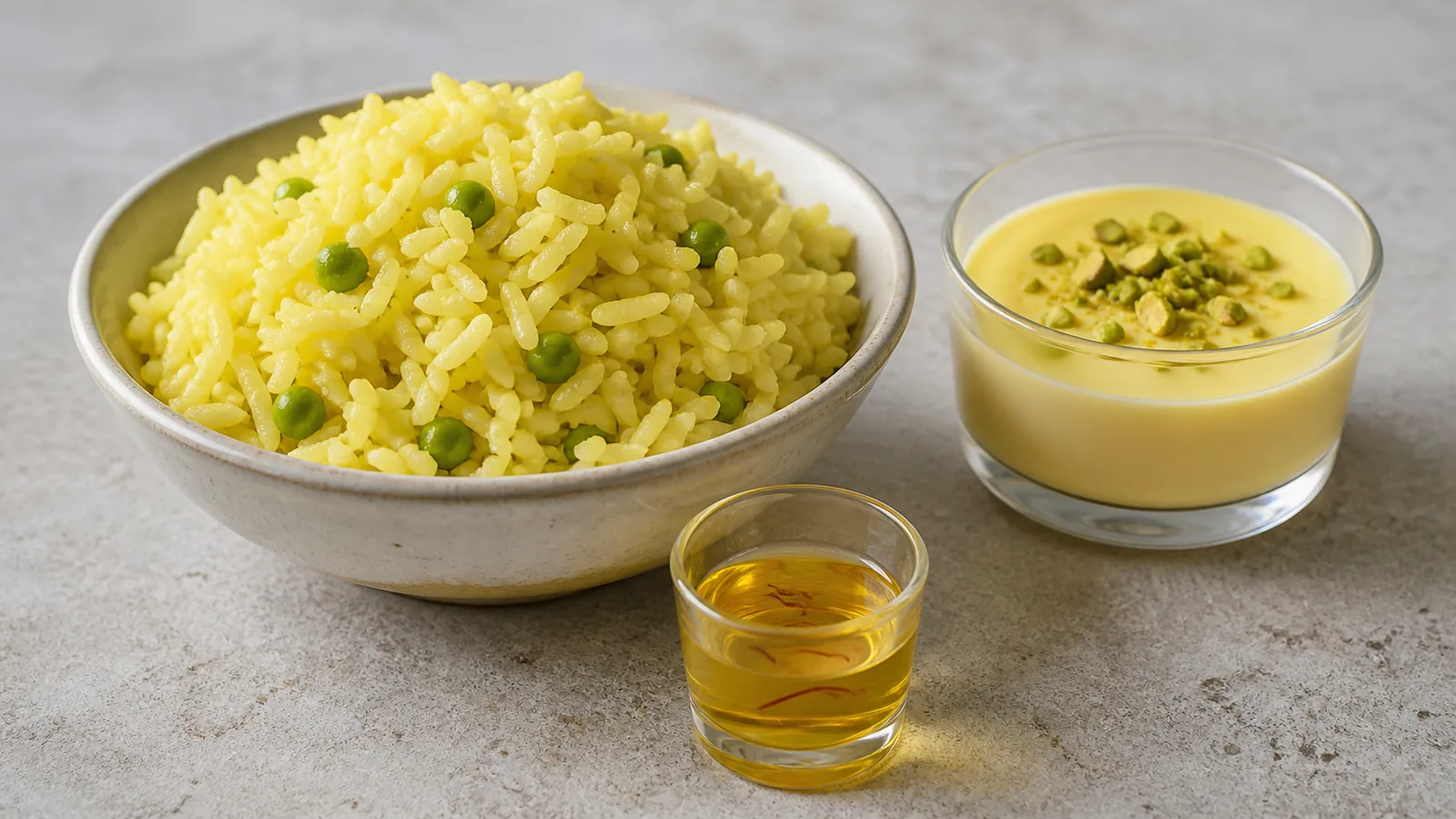
There is no established evidence that drinking saffron water lightens skin, removes pigmentation or improves fairness. The same applies to saffron milk and other saffron drinks marketed for skin whitening. They can be enjoyed as foods, but digestion does not direct saffron pigments to dark spots on the face.
Can saffron reduce dark spots and pigmentation?
Dark spots can follow acne, eczema, a burn or another source of inflammation. Sun exposure, hormones and some medications can also contribute. Different causes need different care, so “pigmentation” is not one condition with one botanical remedy.
The original claim that saffron directly inhibits melanin production and fades hyperpigmentation, sun spots and acne scars is not established for homemade topical use. Saffron for skin pigmentation remains an unproven DIY treatment; antioxidant activity alone cannot supply the missing clinical evidence. Our deeper review of saffron for dark spots and skin pigmentation explains the distinction.
The American Academy of Dermatology’s dark-spot guidance puts sun protection first and discusses ingredients with clinical use for pigmentation. It also notes that removing the cause of irritation matters. That is especially relevant because a harsh DIY mask can create inflammation and make post-inflammatory pigmentation worse.
How to use saffron on the face more safely
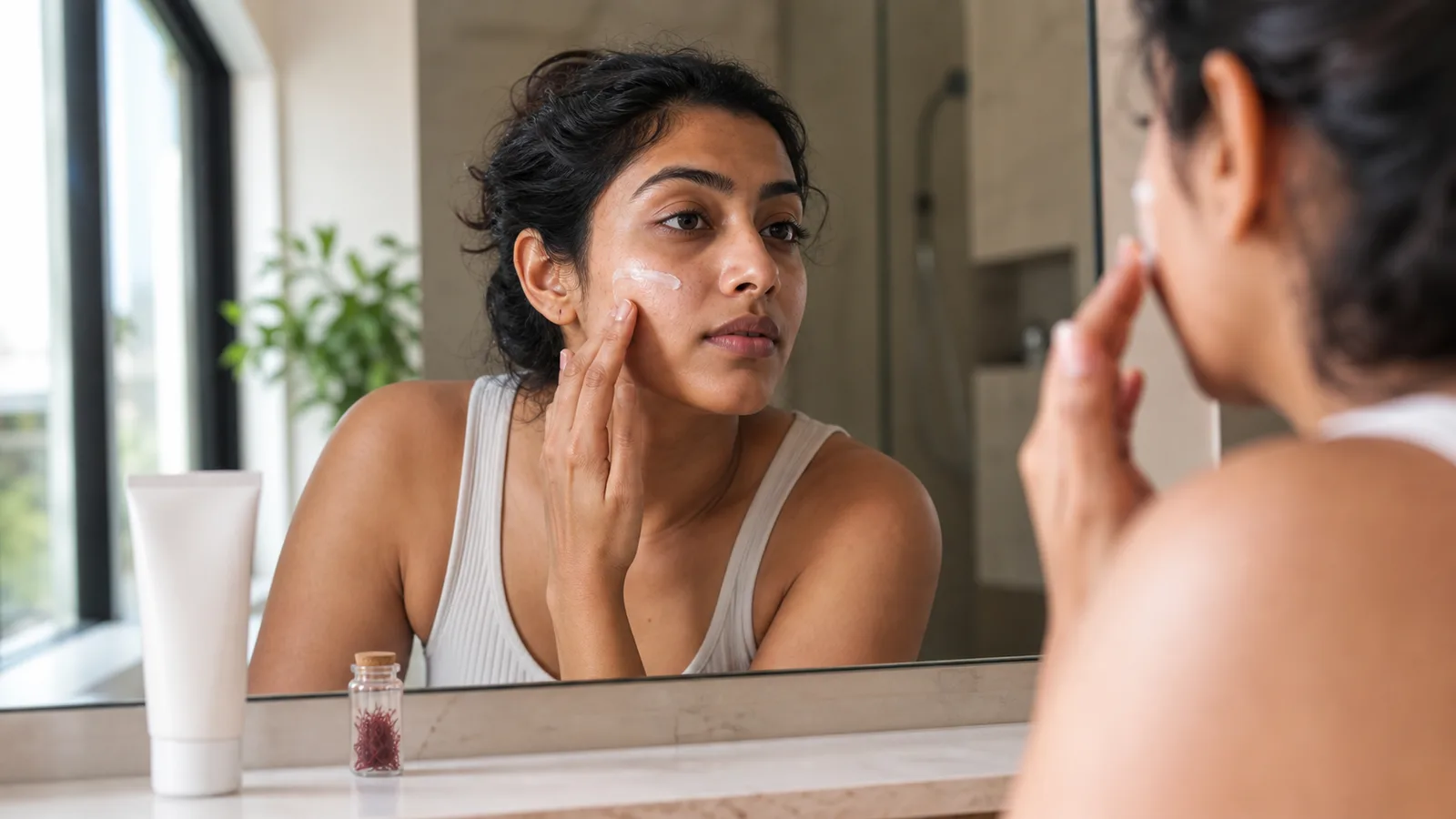
If you still want to try saffron on your face, the most predictable choice is a properly formulated cosmetic with a full ingredient list, usage directions and a preservation system. Using saffron on skin is not automatically gentle merely because the ingredient is botanical. Assess the complete formula and whether it suits your skin.
Patch-test a new product before broad use. The American Academy of Dermatology recommends applying a skin-care product to a small test area twice daily for seven to ten days. Stop if redness, itching, swelling, burning or another reaction appears.
Keep saffron products away from the eyes, lips and broken skin. Do not scrub with strands or try to make a paste stronger when results do not appear. Irritation is not evidence that the product is working.
Water, milk, masks, serums and toners
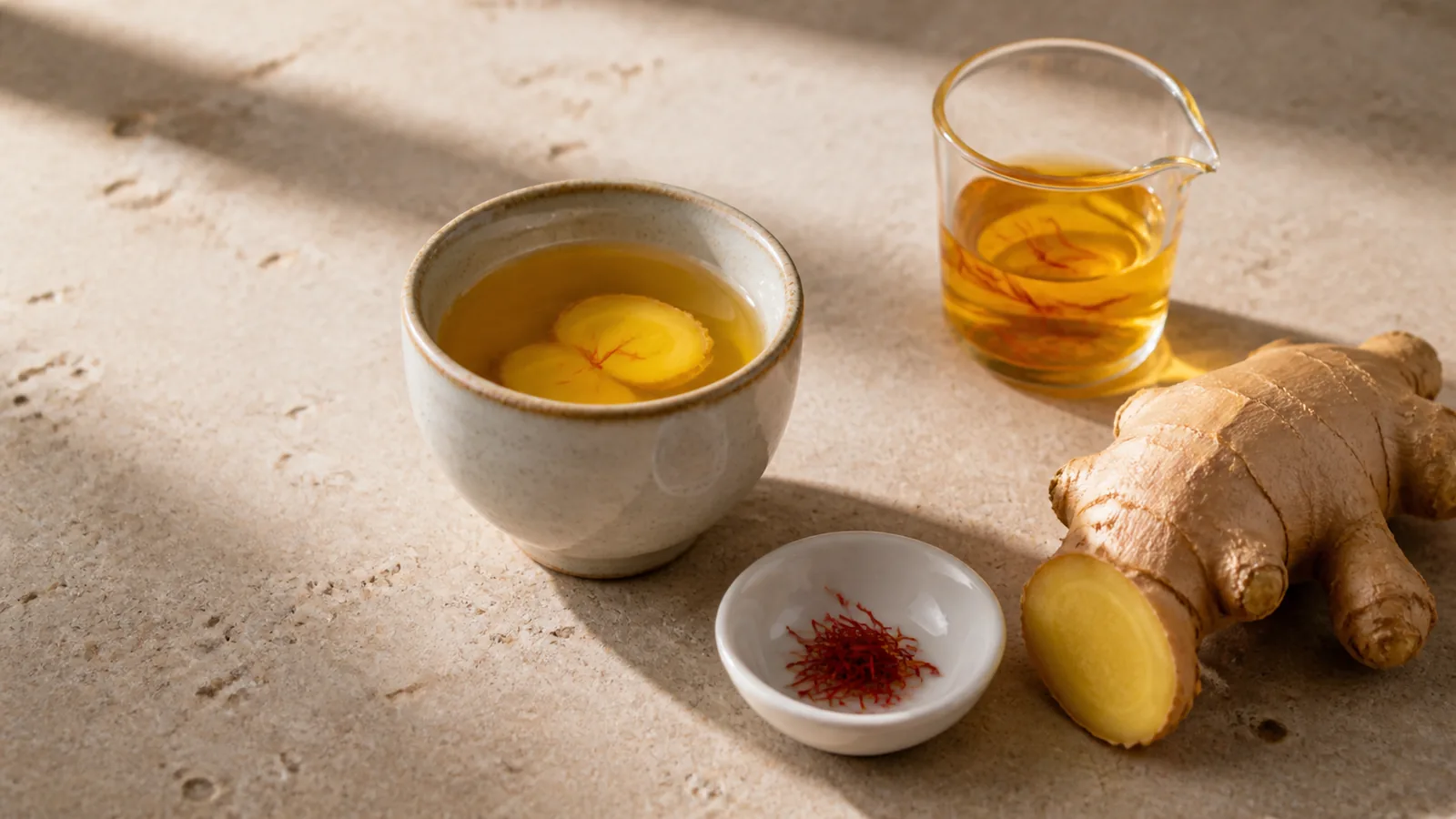
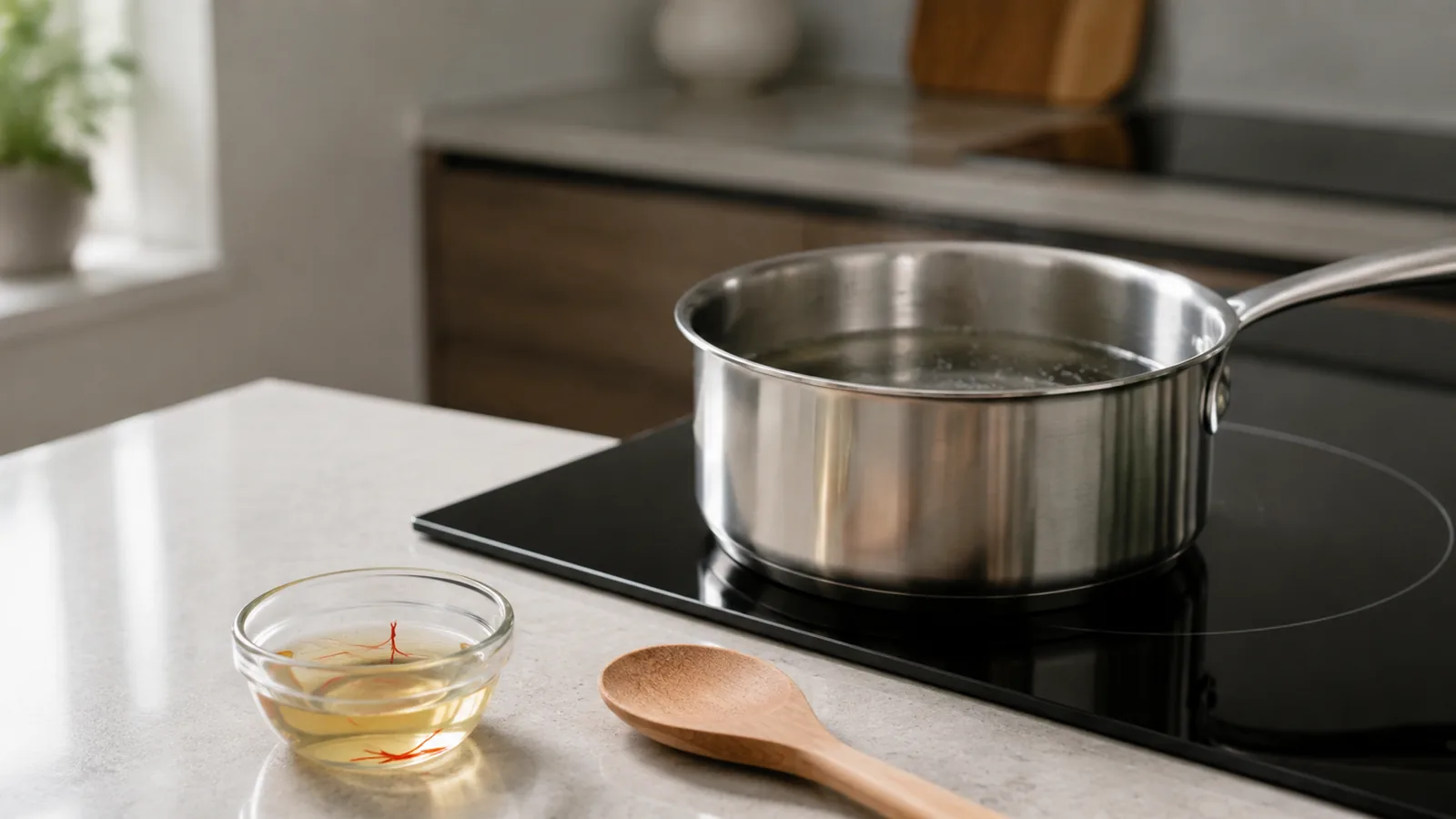
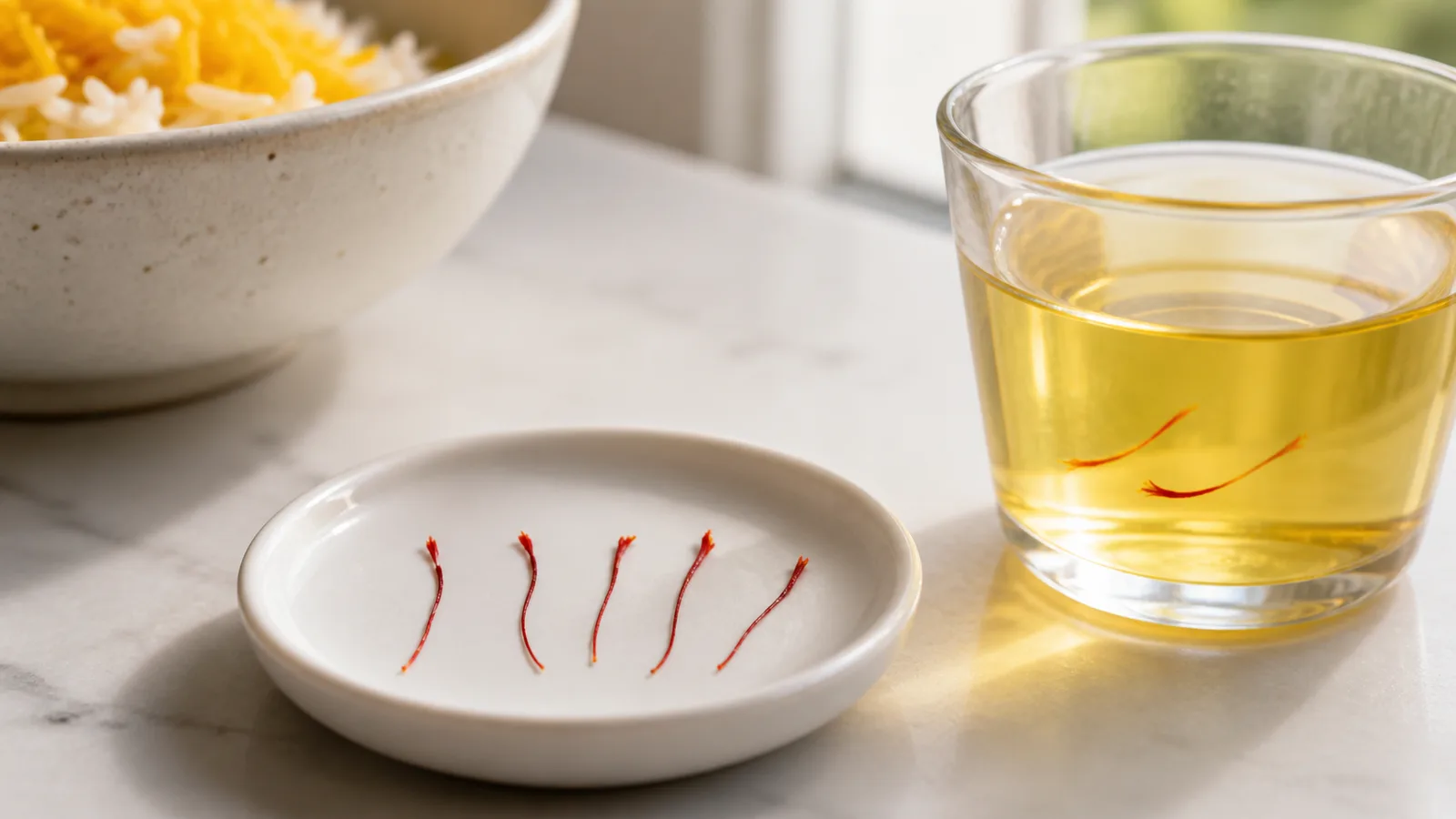
Soaking saffron strands in water or milk is common in DIY advice, as are face masks, serums and toners. Each has limits:
- Water or milk: neither is a treatment for pigmentation, and stored unpreserved mixtures can become contaminated.
- Face masks: food ingredients may irritate, and a brief mask has not been shown to fade acne scars or sun spots.
- Serums and toners: judge the full formulation, packaging and preservation rather than assuming the saffron makes it effective.
- Eating or drinking saffron: enjoy it for flavour; do not expect it to target skin tone or dark circles.
For practical application options and their safety limits, see our guide to using saffron on the face.
What does help a brighter, more even-looking complexion?
Protecting skin from ultraviolet and visible light helps keep existing pigmentation from becoming darker. Choose a broad-spectrum, water-resistant sunscreen with SPF 30 or higher; for people prone to dark spots, the AAD explains that a tinted sunscreen containing iron oxide can add protection from visible light.
A gentle cleanser and a moisturiser suited to your skin can reduce dryness and the dull look that comes with it, creating a more even skin tone or natural glow without claiming to alter pigment. For persistent hyperpigmentation, a dermatologist can identify the cause and discuss suitable options. Saffron for dark circles is not an established treatment because shadowing, thin skin, allergies and pigmentation can look similar and need different care.
The evidence-based answer
Saffron is not proven to whiten skin, improve fairness or erase pigmentation. Its colour and a moisturising formula may make skin look briefly more radiant, but that is not the same as a lasting biological change. Use saffron as an optional cosmetic ingredient, patch-test it, protect your skin from the sun and choose evidence-based care when dark spots are the real concern.
If you use saffron in food or a carefully chosen cosmetic, start with genuine saffron threads and keep expectations grounded.