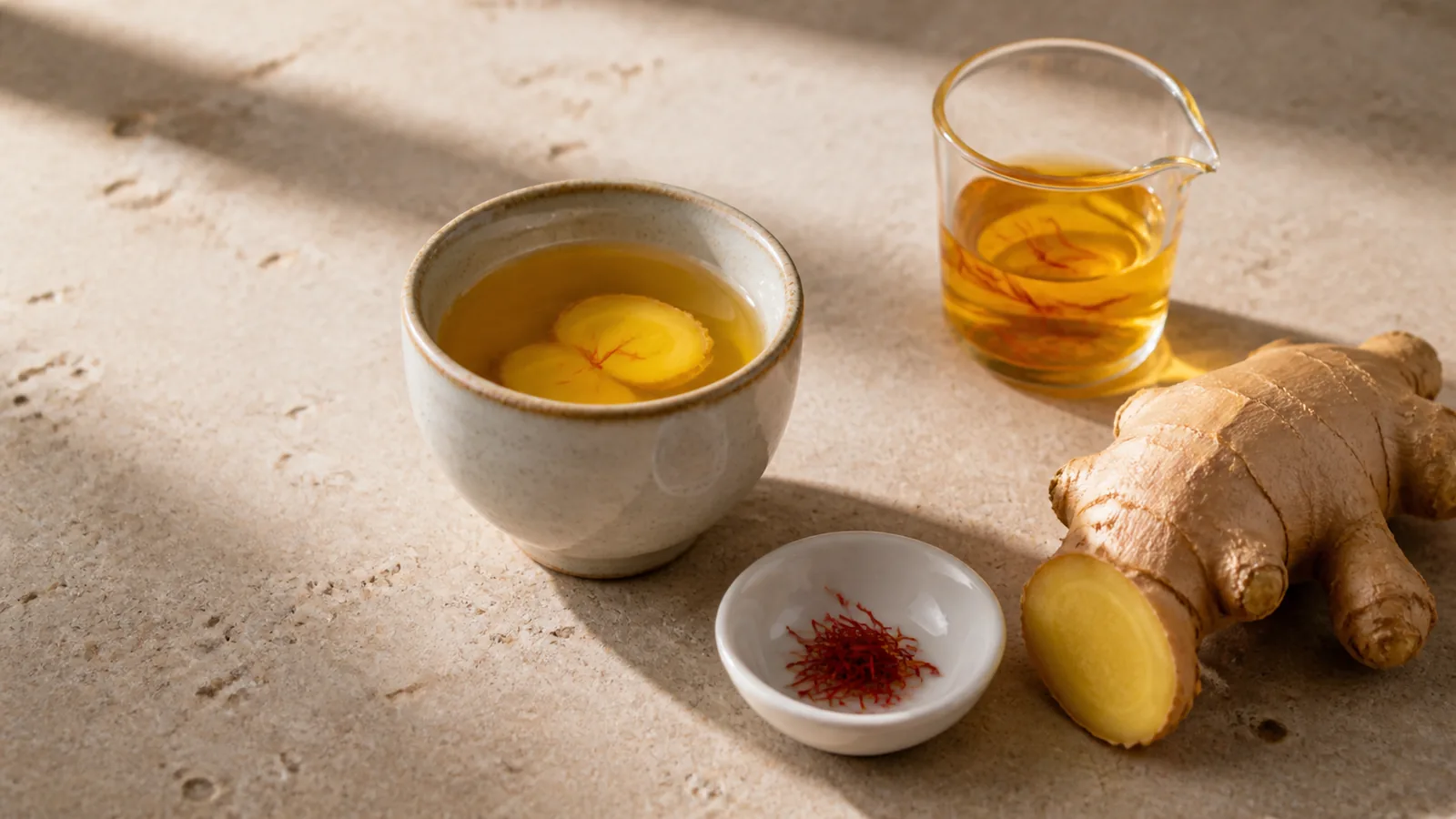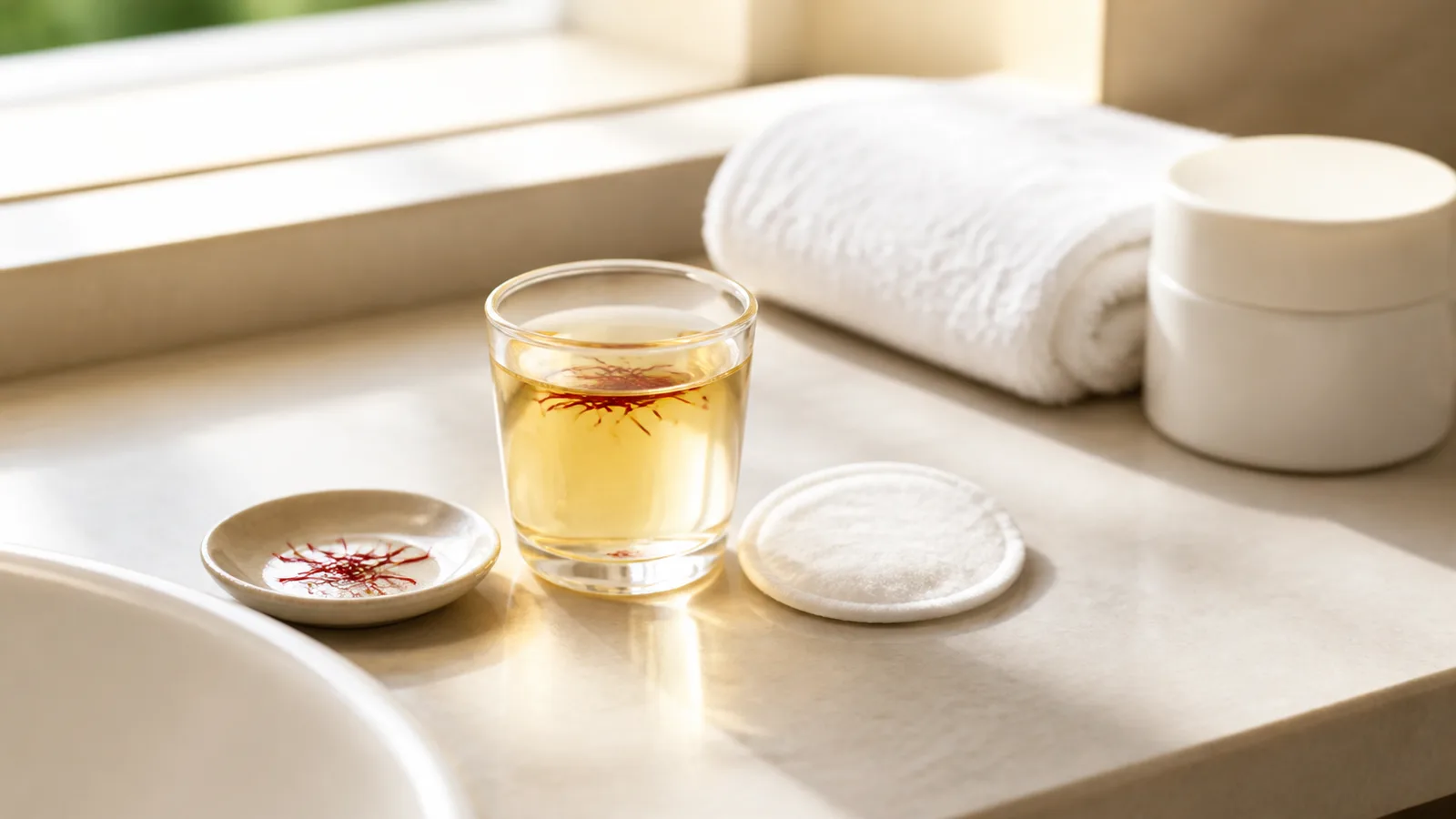
You can make saffron toner at home, but the safest version is a fresh, single-use infusion—not a bottle kept in the refrigerator for a week. Water-based cosmetics can support microbial growth when they do not have a tested preservative system. A tiny batch made with clean tools, used once and discarded avoids promising a shelf life that a kitchen recipe cannot establish.
This saffron toner recipe keeps the appealing part of the idea—a cool, lightly coloured infusion—while treating it as an occasional cosmetic step rather than a treatment for dark spots, acne or another skin condition.
How to make saffron toner at home
Ingredients for one use
- 1 tablespoon freshly boiled water
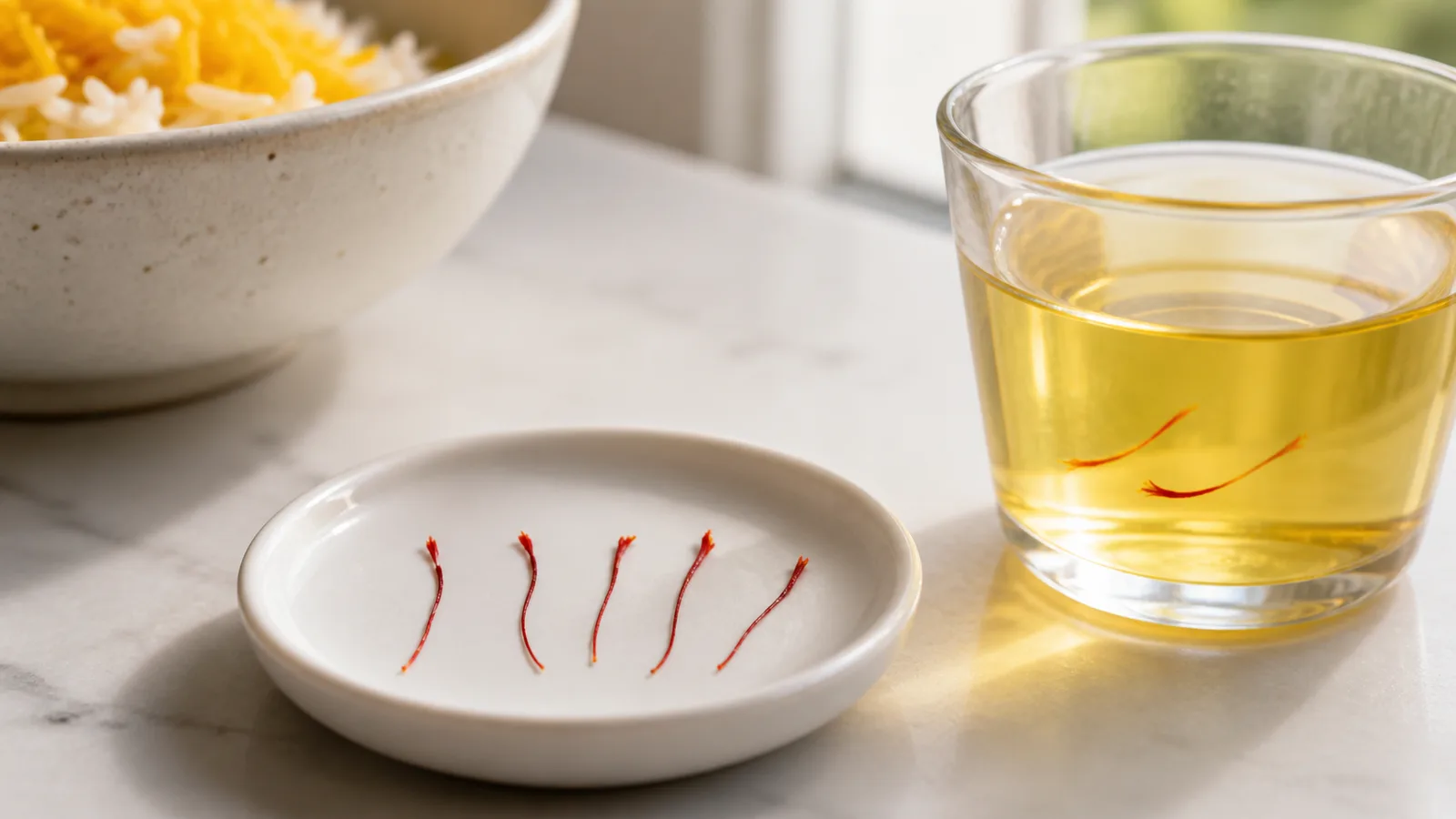
- 2 to 3 dry saffron strands
- One clean, heat-safe cup
- One clean cotton pad or clean fingertips
Use plain water and saffron the first time. A teaspoon of strands is far more than a one-use toner needs. Rose water adds fragrance compounds that may irritate some skin, while glycerin needs to be formulated at an appropriate concentration. Adding either one does not preserve the mixture.
Method
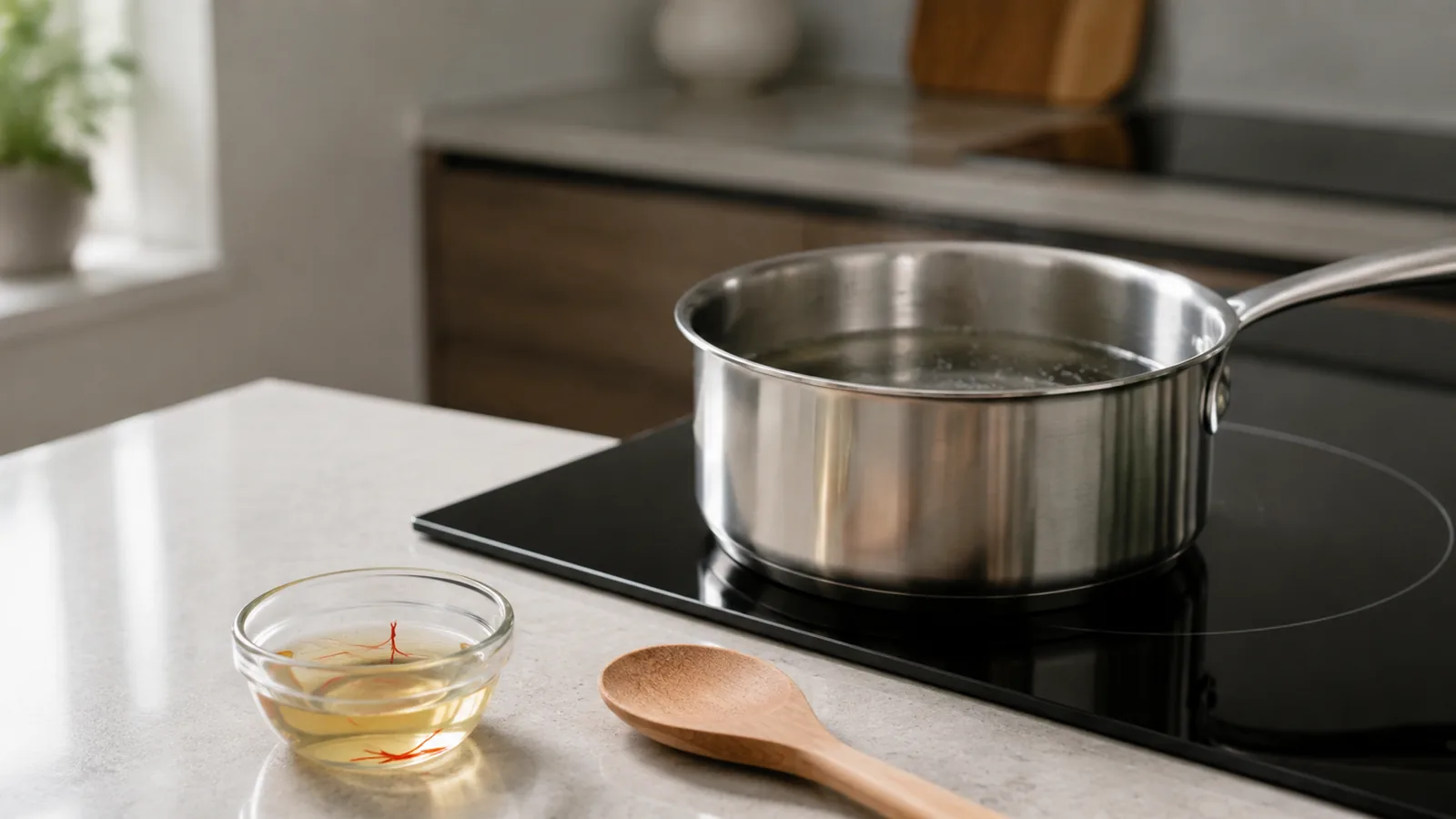
- Wash your hands and clean the cup and spoon.
- Put two or three saffron threads in the cup and pour over one tablespoon of freshly boiled water.
- Cover the cup and allow the infusion to steep for 10 to 15 minutes.
- Wait until it is completely cool before it touches your skin.
- Use the infusion once. Pour away anything left; do not transfer it to a bottle or spray container for later.
The saffron releases colour quickly, so the liquid may turn gold. A deeper colour does not mean a stronger or more effective skin-care product, and increasing the number of threads can make staining more likely.
Why this homemade toner should not be stored
A mixture of distilled water, saffron, rose water and glycerin is still a water-based cosmetic. Refrigeration slows some microbial growth but is not a preservative system, and a cold bottle is not proof that the mixture remains safe. The common instruction to refrigerate it for up to a week is not supported by preservation testing.
The US Food and Drug Administration’s microbiological-safety guidance identifies contaminated water, ineffective preservation and consumer handling as routes by which cosmetics can become contaminated. The FDA also advises consumers not to add water to finished cosmetics. A reusable DIY toner would need formulation expertise, suitable packaging, an effective preservative and testing; a recipe cannot replace those controls.
If you want a product containing rose water or glycerin, choose a properly formulated commercial toner and follow its label. For an oil-only option, our guide to making homemade saffron serum explains why it leaves water out of the stored bottle.
How to patch-test and use saffron toner
Botanical ingredients can irritate or trigger an allergic reaction even when they are described as natural. Before applying the infusion across your face and neck, test it on a small area. The American Academy of Dermatology recommends testing a skin-care product on a small spot twice daily for seven to ten days and stopping if redness, itching or swelling develops.
Once the test causes no reaction, use the toner after cleansing: let it cool, then pat a little onto the face and neck with a clean cotton pad or clean fingertips. Keep it away from the eyes, lips and broken or irritated skin. Let it dry, then follow with a fragrance-free moisturiser. Sunscreen remains the important daytime step.
Do not spray the mixture toward your face, and do not use it once or twice a day merely because an online recipe says to. Start with occasional use. Wash it off and stop if it stings, burns, itches or leaves persistent red or yellow staining.
Benefits of saffron toner for the skin: what is realistic?
The immediate effect is likely to be sensory: cool water can feel refreshing, and saffron gives the liquid colour and aroma. Saffron contains compounds studied for antioxidant and anti-inflammatory activity, but laboratory activity does not establish skin-brightening properties in this recipe. A one-use homemade toner cannot be promised to tighten pores, reduce inflammation or redness, rejuvenate skin or create a youthful appearance.
Can saffron toner brighten skin or reduce dark spots?
There is not good clinical evidence that this DIY saffron toner reduces pigmentation, evens skin tone or removes dark spots. Its yellow pigment can briefly change how the surface looks, which is not the same as changing melanin. Dramatic “glowing complexion” or “healthy glow” claims therefore go beyond what this recipe can promise.
Dark spots have different causes, and irritation itself can worsen post-inflammatory pigmentation. Daily broad-spectrum sunscreen and dermatology advice for persistent or changing marks are more dependable than increasing saffron, rose water or soaking time.
Does it hydrate?
Water temporarily wets the skin, but a simple infusion is not a complete moisturiser. If your goal is hydration or extra moisture, a tested fragrance-free product is more predictable. Glycerin is a humectant used in professional formulations, yet mixing half a teaspoon into an improvised toner is not necessary and may feel sticky or irritate. Having oily skin does not make an arbitrary DIY concentration safer. Apply a moisturiser you already tolerate after the toner if dryness is the concern.
A safer saffron toner recipe is a smaller one
The best way to make saffron toner at home is to prepare only enough for one use: two or three strands, one tablespoon of hot water, clean tools and no storage. Patch-test first, keep expectations modest and discard the remainder. For skincare, “fresh” should mean freshly made and used—not a week-old unpreserved bottle.
If you decide to try it, use genuine saffron threads sparingly; quality matters more than making the infusion dark.