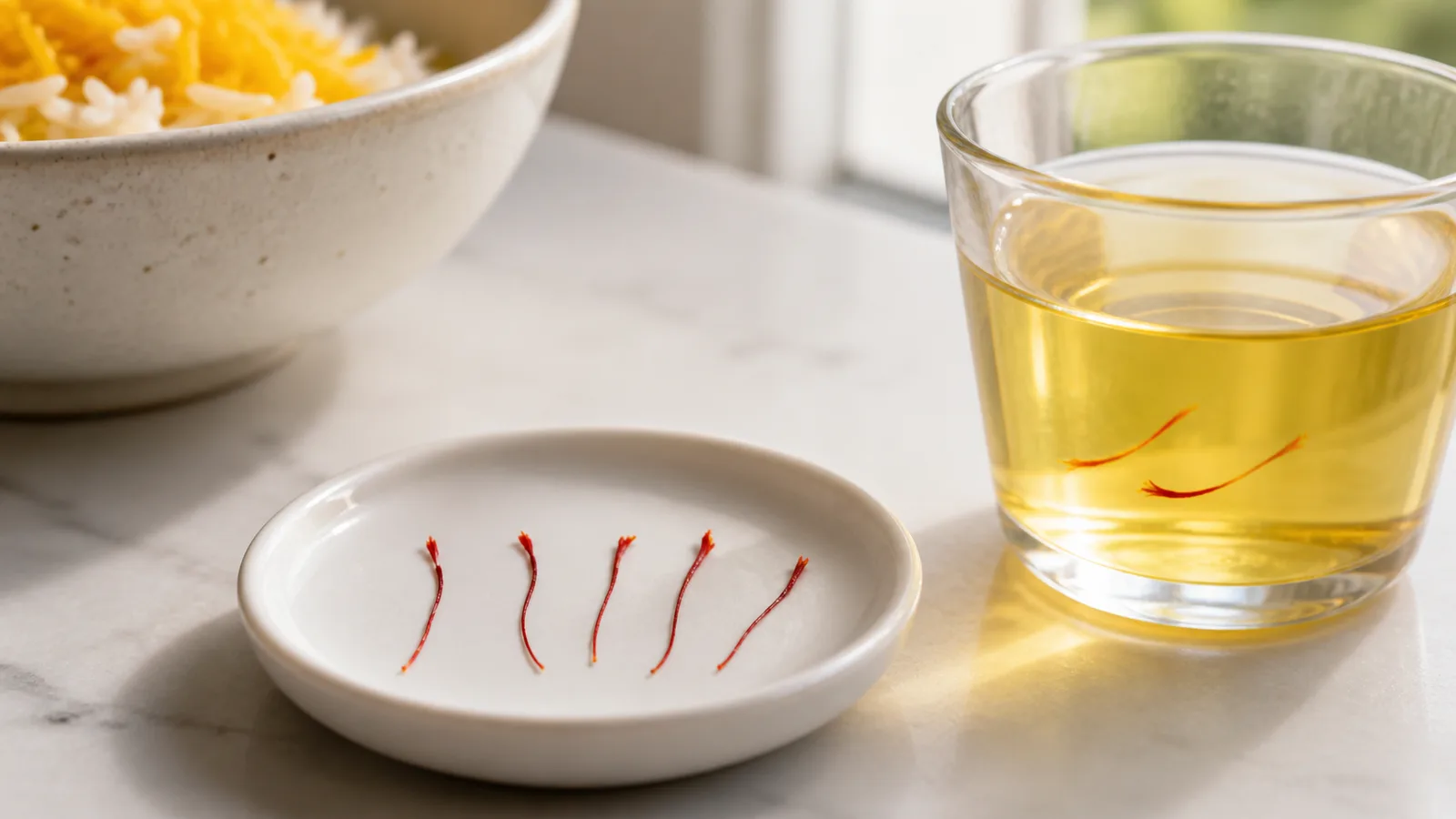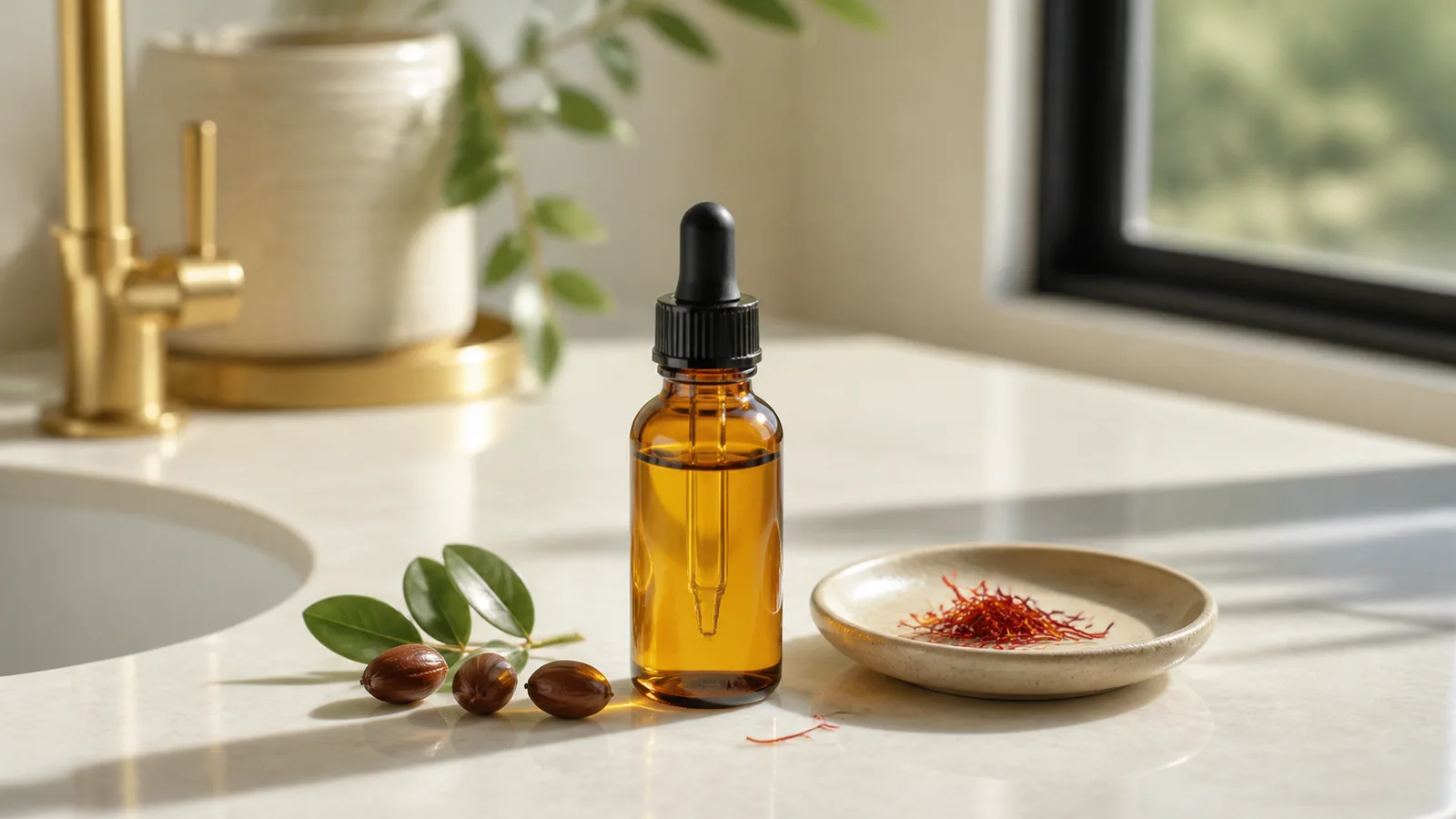
A homemade saffron serum can be kept simple, but one ingredient should stay out of the bottle: water. Water and oil separate, and a water-based cosmetic needs a properly designed preservative system and microbial testing. For a small home batch, the more sensible option is an anhydrous saffron facial oil—often called an oil serum—made with dry saffron and a lightweight cosmetic oil.
Below is a practical method for making saffron serum at home, followed by the safety details that matter before it goes on your face.
How to make saffron serum at home
Ingredients and equipment
- 5 ml (1 teaspoon) plain jojoba oil sold for cosmetic use
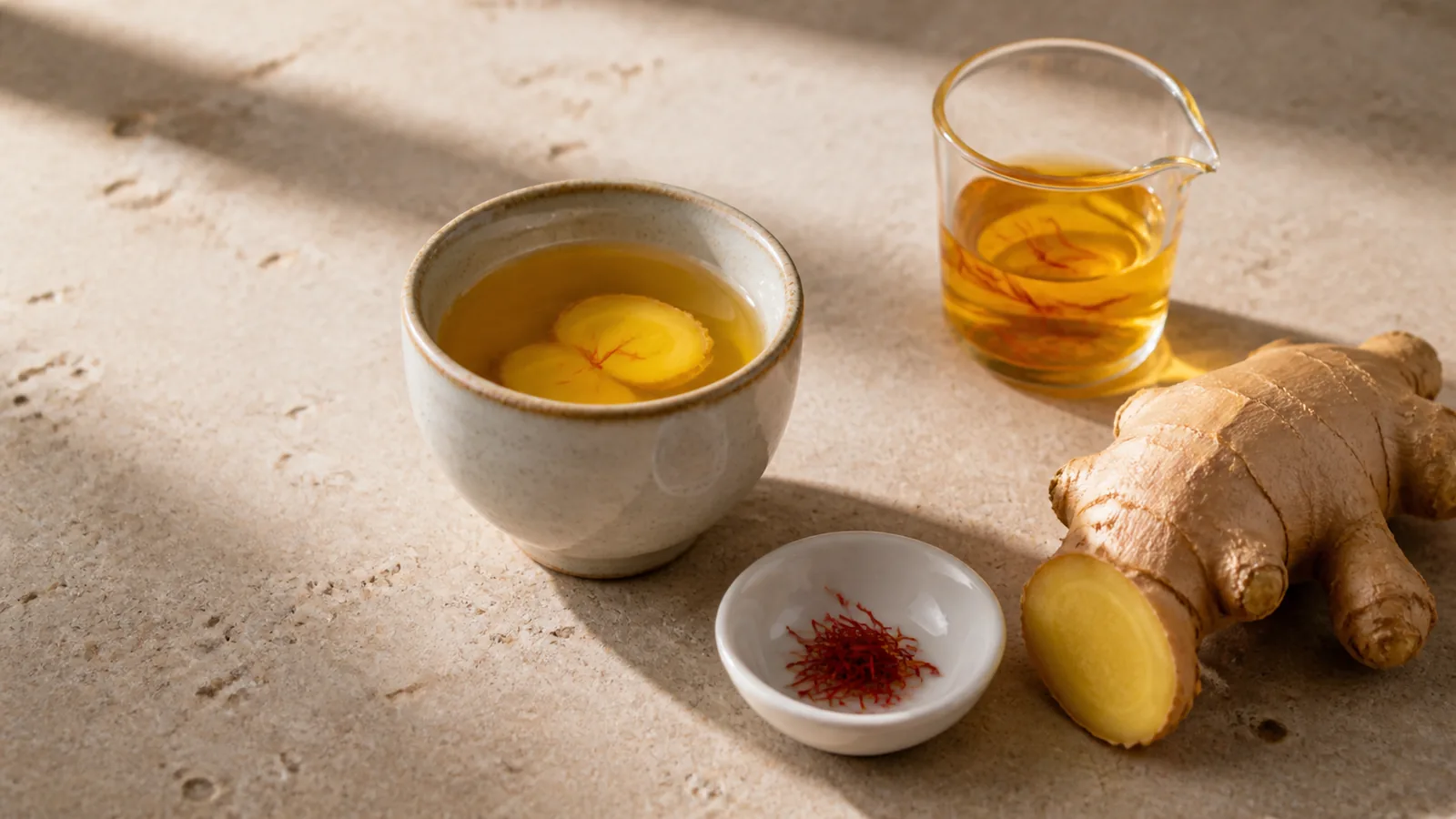
- 4 to 6 dry saffron strands
- One small, clean and completely dry glass bottle
- A clean spoon or small funnel
- An optional fine filter, such as an unused paper coffee filter
Jojoba oil has a light feel and avoids the nut-allergy concern associated with sweet almond oil. In this formula it is the carrier oil: it dilutes and spreads the saffron infusion across the skin. If you already use another fragrance-free facial oil without irritation, you can use that instead. Do not add distilled water, rose water, aloe gel, milk or fresh plant material to this recipe.
Method
- Wash your hands. Clean the bottle and tools, then allow them to dry fully. Even a few drops of water change the safety of the mixture.
- Gently crush the saffron strands with the back of a clean, dry spoon. They do not need to become powder.
- Put the saffron in the bottle, add the jojoba oil and close it tightly.
- Leave the bottle in a cool, dark cupboard for 12 to 24 hours, turning it gently a few times. The oil may take on a warm golden tint.
- Filter out the strands if you prefer a smoother serum, then return the oil to a clean, dry bottle. Label it with the date.
This is a deliberately small batch. A home mixture has not been stability-tested or challenge-tested, so do not assume it has the shelf life of a commercial serum. Keep the bottle away from heat, light and moisture, avoid touching the dropper to your skin, and discard the mixture if its smell, colour or texture changes.
Why this recipe does not contain water
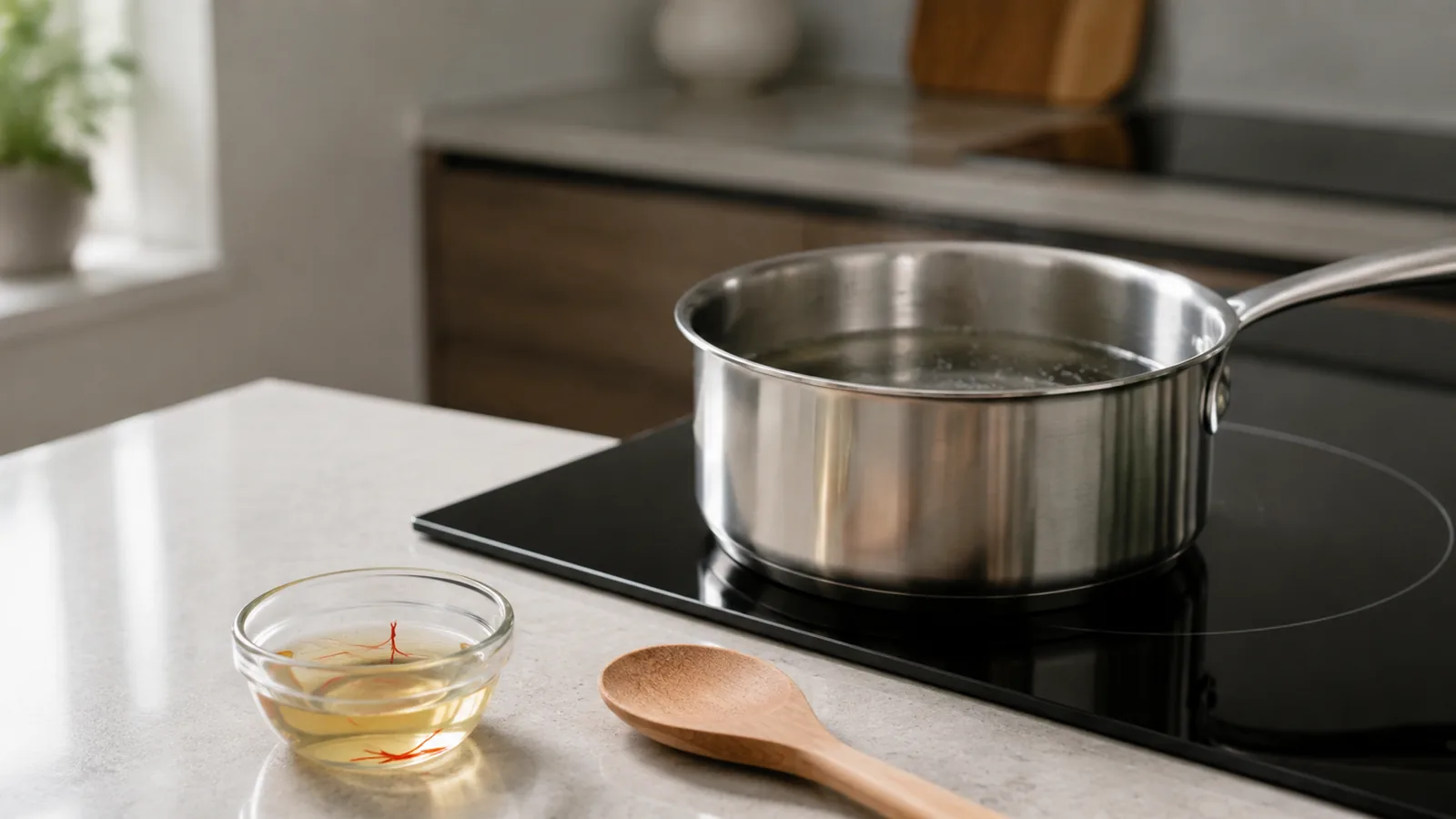
The common DIY instruction to soak saffron in distilled water and pour that liquid into oil creates two separate phases. Shaking makes them look combined for a moment, but it does not make a stable serum. More importantly, the water phase can support microbial growth unless the full formula has an effective preservative system. For a small untested home batch, do not add water.
The US Food and Drug Administration’s guidance on microbiological safety identifies contaminated water, ineffective preservation and consumer handling as routes by which cosmetics can become contaminated. This microbial-safety issue is also why the FDA advises consumers not to add water to cosmetics. The homemade saffron serum here uses only dry tools, dry saffron and oil.
How to patch-test and use homemade saffron serum
Patch-test the finished blend before using it on your face. The American Academy of Dermatology recommends testing a skin-care product on a small area twice daily for seven to ten days. Stop if you notice redness, itching, swelling, burning or another reaction.
If the patch test causes no reaction, apply one or two drops to slightly damp skin after cleansing. Keep it away from the eyes, lips and broken or irritated skin. A facial oil usually works best as the last hydrating or moisturising step at night, although the oil itself does not add water to the skin. Start with two or three uses per week rather than applying it several times a day.
Saffron has a strong natural pigment, so use a small amount and let it absorb before it touches pale clothing or bedding. Anyone with very sensitive skin, eczema, a known saffron allergy or an active skin condition should ask a dermatologist before trying a botanical DIY product. For other ways people use saffron topically, see our careful guide to applying saffron on the face.
What can homemade saffron serum realistically do?
The jojoba oil in this recipe acts as an emollient, so the immediate effect is likely to be softer-feeling skin and less surface dryness. Saffron contains compounds studied for antioxidant and anti-inflammatory activity, but that does not establish that a kitchen-made infusion will remove dark spots, treat acne, erase wrinkles, smooth skin texture or reverse signs of ageing.
Descriptions such as “glowing skin,” “youthful glow” and “more even skin tone” are cosmetic impressions, not guaranteed biological results. The oil may temporarily make a dry surface look more luminous, but that should not be confused with reducing pigmentation or correcting an uneven skin tone.
It is more accurate to think of homemade saffron serum as a simple cosmetic facial oil, not a treatment. Results depend on the formulation, concentration, stability and a person’s skin. Persistent pigmentation, acne, redness or irritation deserves evidence-based care from a dermatologist; increasing the number of saffron strands is not a substitute.
Common mistakes to avoid
- Mixing water and oil in one bottle: the blend separates and introduces a microbial-safety problem.
- Adding essential oils or fragrance: these are not necessary and can irritate sensitive skin.
- Making a large batch: a small amount limits how long an untested home mixture sits in storage.
- Using wet fingers or tools: moisture and repeated handling increase contamination risk.
- Expecting a medical result: this recipe is not a treatment for acne, pigmentation, eczema or another skin condition.
A simple homemade serum, with sensible limits
To make saffron serum at home, keep the formula anhydrous: a few dry saffron strands, a small amount of a facial oil you already tolerate, dry equipment and careful handling. The result is easy to prepare and pleasant to use, while avoiding the unstable water-and-oil mixture found in many DIY recipes. Patch-test first, use it sparingly and treat any dramatic brightening or anti-ageing promise with caution.