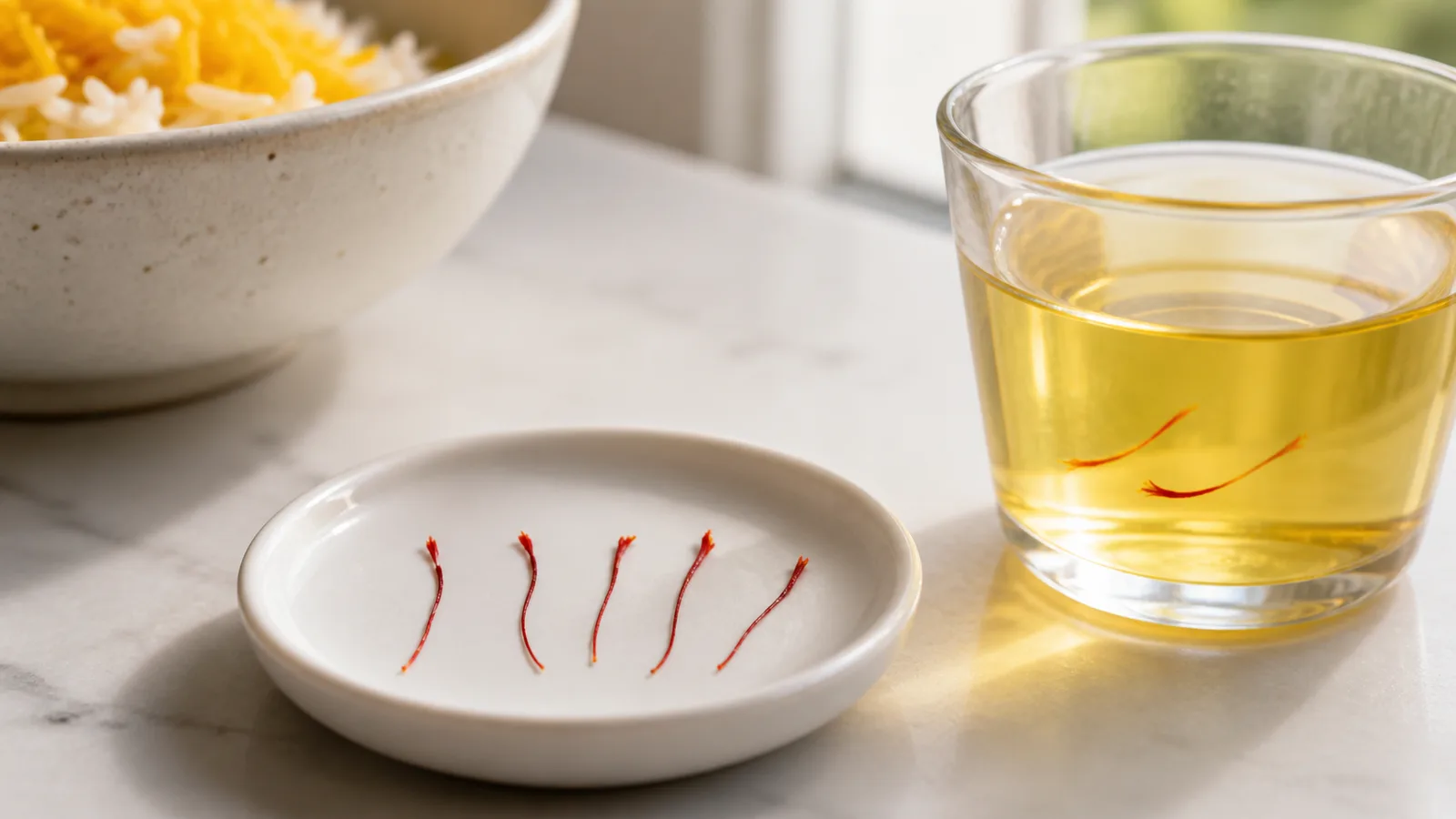
There is no official number of saffron strands everyone should take per day. For ordinary food or drink, use the amount the recipe needs rather than treating threads as a supplement dose. A few threads can flavour one cup of tea or milk; a larger shared dish may use 10 to 15. People trying to reproduce a 30 mg research dose should weigh saffron, because strand size varies too much for an exact count.
That distinction matters on this page: “how many strands of saffron per day?” is a culinary question, while “30 mg of saffron” is a measured-dose question. They should not be answered as though they are the same.
Whether the search is “how many saffron threads per day,” “how many saffron pieces per day” or “how much saffron per day,” the practical answer starts with purpose. Count a modest amount for flavour; weigh a specified mass; and ask a healthcare professional about a supplement dose.
How many saffron strands are in 30 mg?
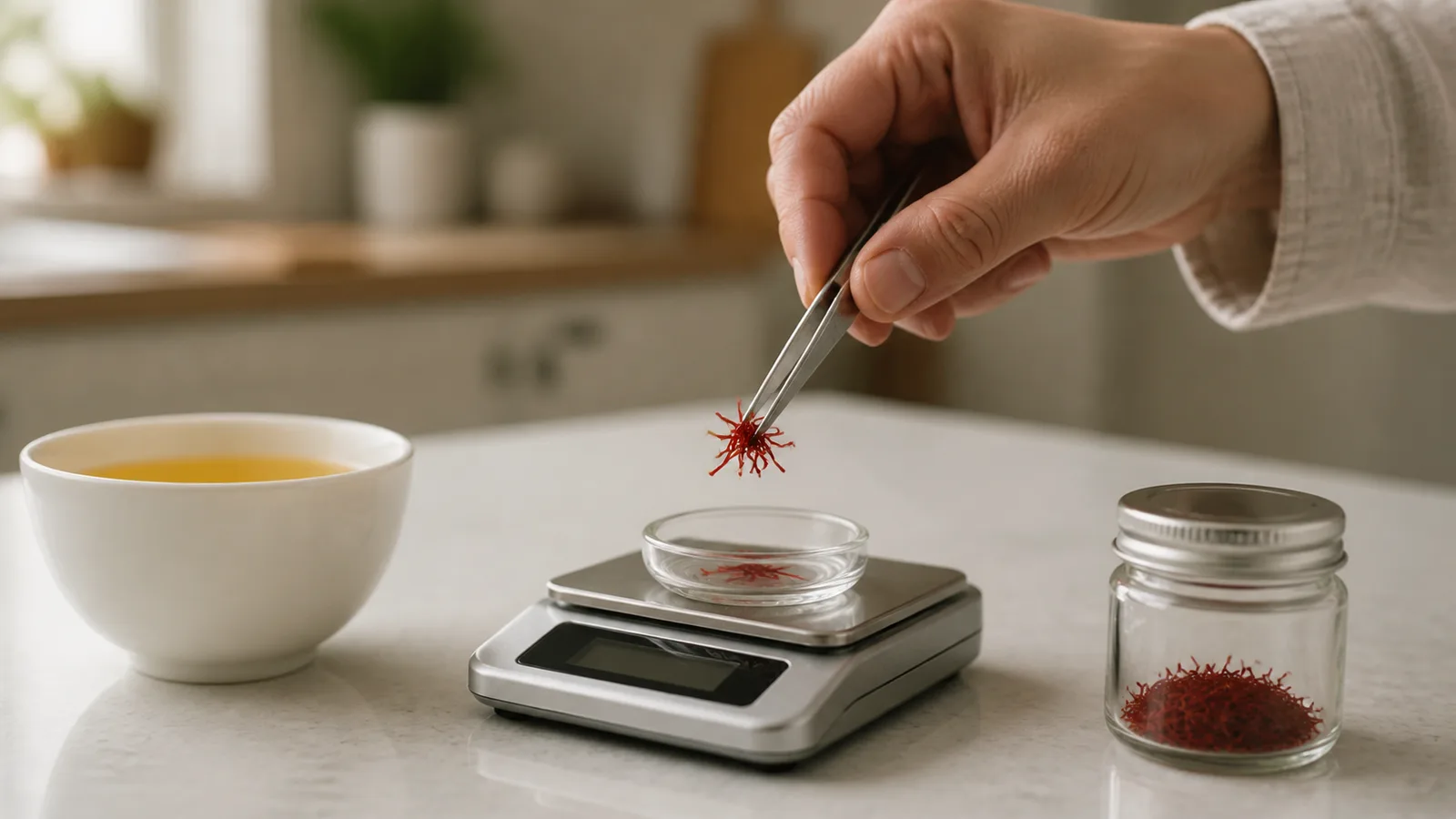
As a rough visual estimate, 30 mg of dried saffron may be around 10 to 15 complete threads. It is not a dependable conversion. Published crop research reports roughly 6 to 9 mg of dried stigma from one flower, and a flower has three stigma branches. That suggests approximately 2 to 3 mg for one intact thread, but origin, drying, trimming, moisture and breakage all alter the result.
So, if you are asking “how many saffron strands in 30 mg?” or “30 mg of saffron is how many threads?”, the honest answer is: roughly 10 to 15 intact threads, but use a milligram scale when 30 mg actually matters. Ten long, thick threads and ten short fragments do not weigh the same.
The same estimate answers the related question “how many saffron threads are in 30 mg?”—with the same warning that a count cannot replace a scale.
The underlying flower-yield figures can be seen in this peer-reviewed saffron cultivation study. They are useful for estimating, not for prescribing a daily dose.
A practical strand count for food, tea and milk
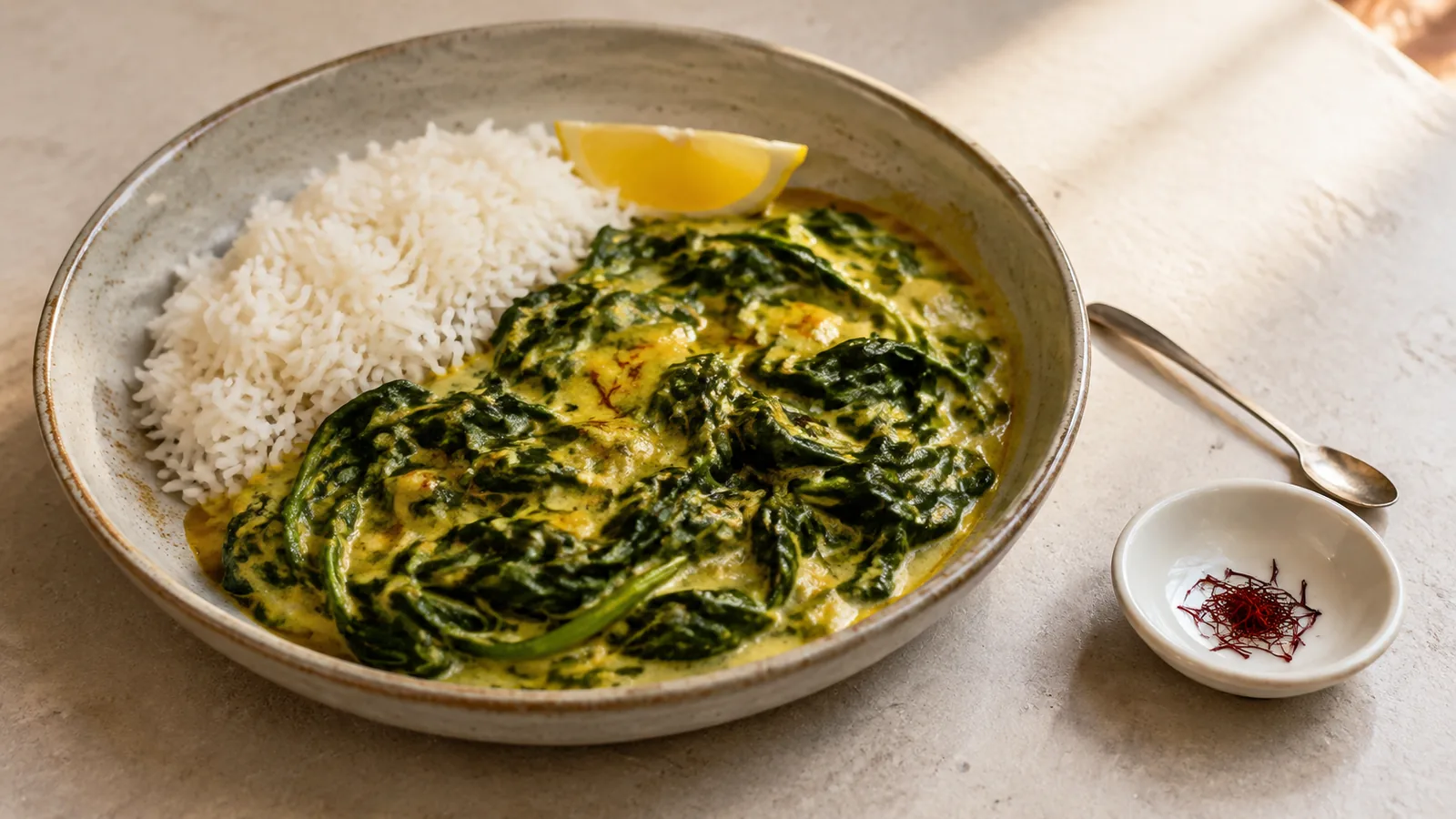
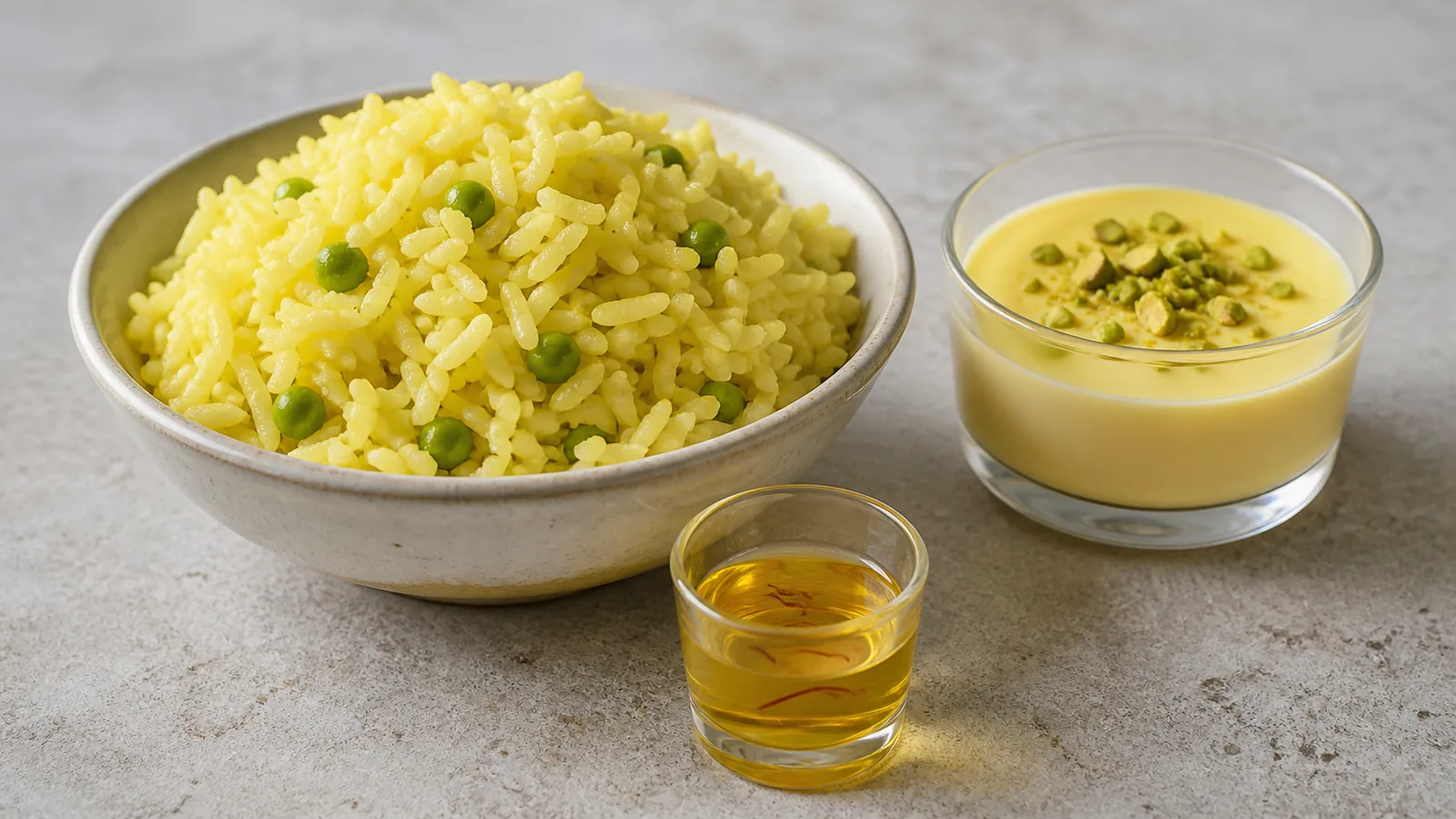
For flavour and colour, start small. Three to six threads are usually enough to introduce saffron to one cup of warm milk or tea. Ten to 15 threads can suit a pot or shared dish, depending on its size and how pronounced you want the saffron to taste. These are kitchen amounts, not targets that must be consumed every day.
If you use saffron daily, count the total across food and drinks. There is no benefit in adding 15 strands to a dish and then automatically putting another 15 into tea. Taste is a better guide for culinary use; medicinal goals require a different conversation.
How to prepare the threads
- Count the threads needed for your recipe.
- Gently crush them with a clean spoon or mortar.
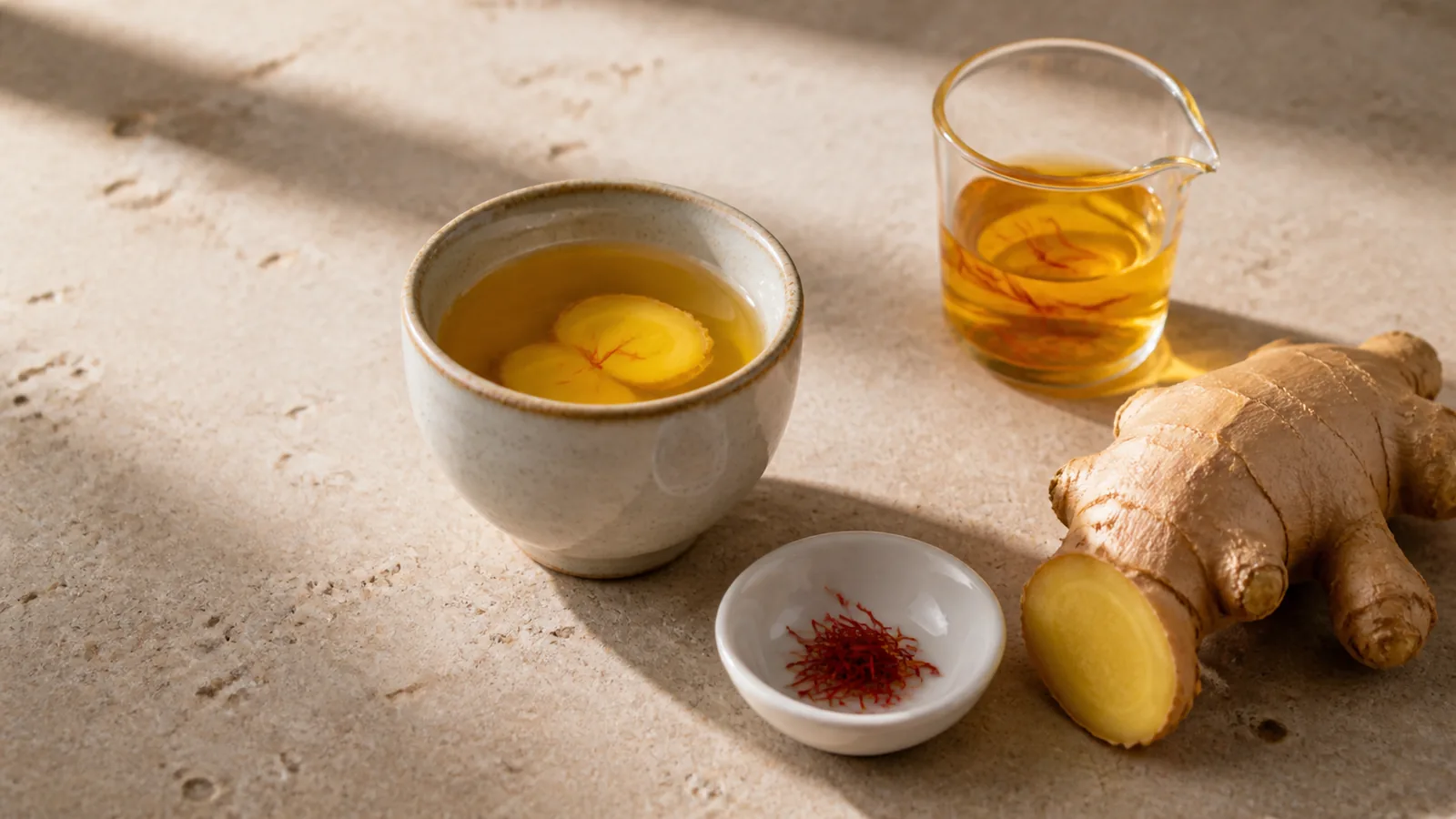
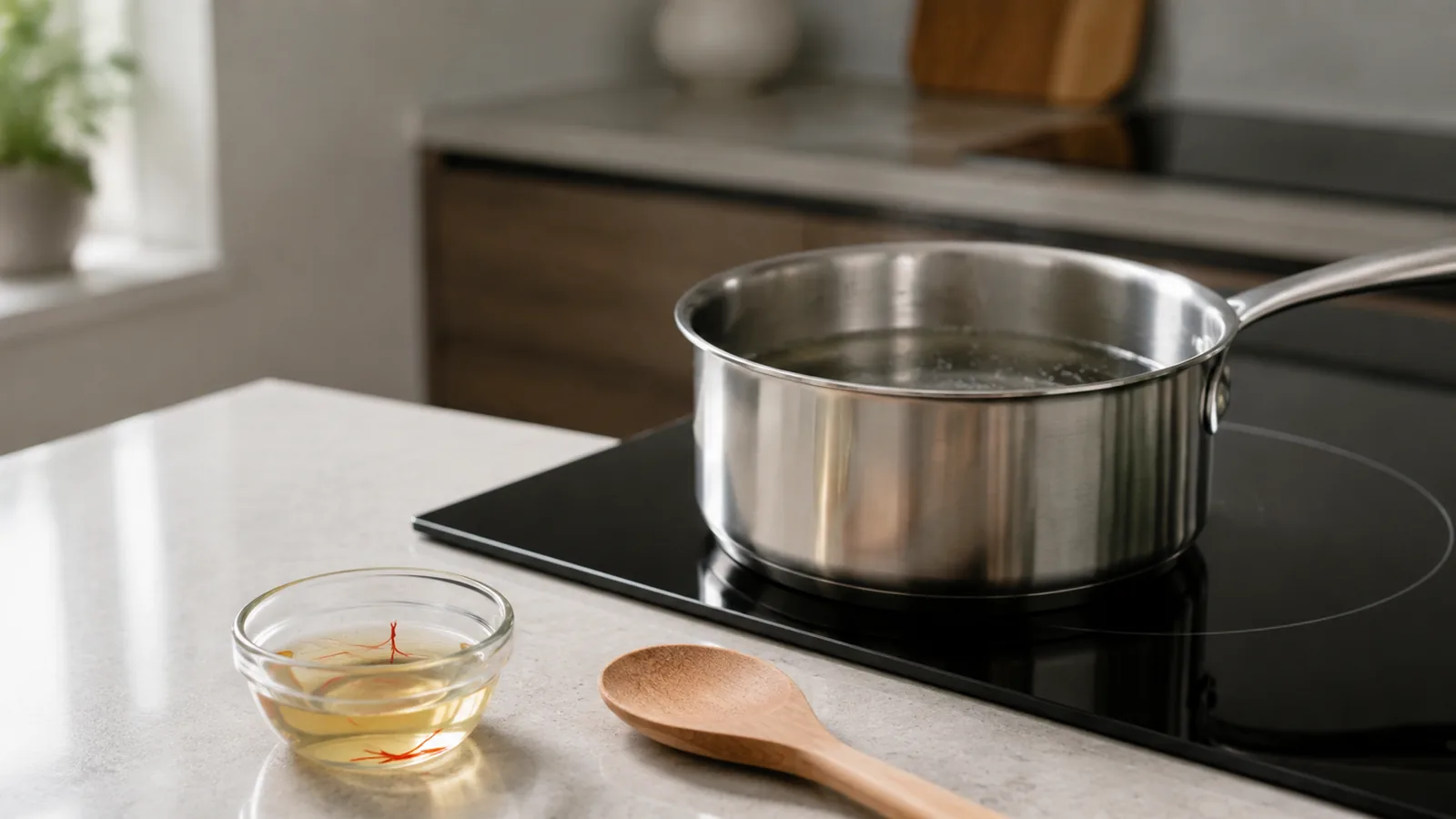
- Steep them in a small amount of warm water or milk for 10 to 15 minutes.
- Add the coloured infusion and the threads to the dish or drink.
Steeping helps distribute saffron’s colour and aroma. It does not convert a culinary serving into a standardised supplement or guarantee a health effect.
Why strands, milligrams and extracts are not interchangeable
A strand is a physical piece of dried stigma. Its weight and chemical composition naturally vary. A saffron extract is processed and may be standardised to particular compounds; 30 mg of one extract is not necessarily equivalent to 30 mg of whole threads or another brand’s extract.
Do not use a strand estimate to decide how much saffron extract per day to take. For a commercial supplement, follow its label and a healthcare professional’s advice rather than converting the capsule’s milligrams into saffron pieces.
In other words, saffron dosage, saffron supplement dosage and saffron daily intake are not interchangeable labels for the number of threads in a recipe. The preparation and reason for taking it matter.
Some clinical trials have studied 30 mg per day of a defined saffron preparation. For example, a small randomised pilot trial used 30 mg per day of saffron capsules for adults with depression under a research protocol. That number is often repeated online, but it is not a universal recommended daily intake and it does not mean everyone should count out the equivalent threads at home.
The same caution applies to mood, anxiety, cognitive function, relaxation, skin health and antioxidant claims. Research on a measured preparation in a selected group cannot promise that a pinch of saffron will produce those outcomes in every person. Culinary saffron can be enjoyed as food without turning dinner into self-treatment.
How to measure saffron when accuracy matters
A kitchen scale that reads only whole grams cannot measure 30 mg. You need a calibrated scale with 0.001 g resolution: 30 mg equals 0.030 g. Place a weighing paper or small container on the scale, tare it to zero, then add saffron slowly.
Do not use a teaspoon conversion for such a small mass. Loose and ground saffron settle differently, and spoon shapes vary. Counting pieces is acceptable for flavouring a cup or recipe; weighing is the better method for a specified mass.
Daily use and safety
Saffron used sparingly in food is different from taking a concentrated product every day. There is no established Daily Value or one strand count proven right for every adult. A recent systematic review of saffron adverse events found it was generally well tolerated in trials, but gastrointestinal effects were the most frequently reported and monitoring may be appropriate for higher-dose or prolonged medicinal use.
How much saffron is too much?
There is no single evidence-based cutoff that can be translated into a safe number of threads for every person. Nausea, stomach upset, dizziness or another new symptom is a reason to stop rather than keep increasing a saffron dose. Do not use internet toxicity figures as a personal target or experiment with large quantities.
Stop and seek medical advice if saffron causes a concerning reaction. Before using a saffron supplement—or using weighed amounts for a health goal—speak with a doctor or pharmacist if you take medication, have a medical condition, are preparing for surgery, or are pregnant or breastfeeding. The FDA advises discussing supplement benefits, risks and possible interactions with a healthcare professional.
For a broader look at the distinction between normal food use and medicinal daily use, read our guide to saffron’s daily limits and risks.
How to store saffron threads
Store saffron threads in an airtight container away from light, heat, moisture and strong odours. Take out only what you need with a dry utensil. Good storage protects the aroma and makes future strand counts easier than working with damp or crumbled saffron.
The short answer
For one cup of saffron tea or milk, three to six threads are a reasonable culinary starting point; a shared dish may use 10 to 15. There is no required number of saffron threads per day. If you need 30 mg, expect roughly 10 to 15 intact threads but weigh 0.030 g instead of relying on the estimate. Most importantly, do not translate a supplement study into a personal treatment dose without professional advice.