


Is saffron safe to take daily? For most adults, the small amount used routinely in food is a different and usually lower-risk exposure than a capsule or concentrated drink. Daily supplement use cannot be judged from the spice’s culinary history alone: the preparation, serving, duration, medicines and individual health risks all matter.
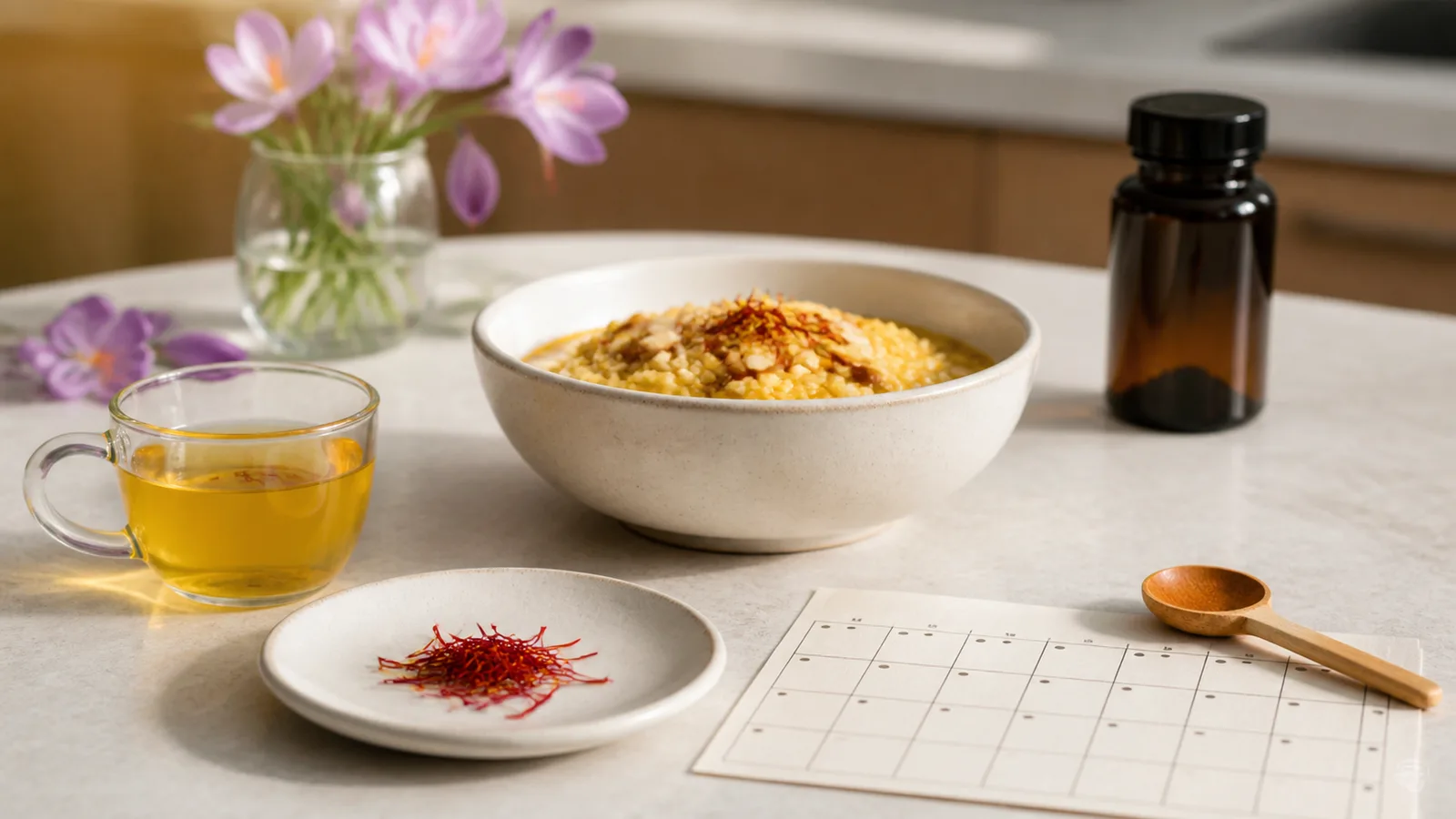
There is no official recommended daily allowance for saffron, and “30 mg per day” is not a universal prescription. It is an amount used in several short clinical trials of particular preparations. That is useful research context, but it does not make every 30 mg product appropriate for every person.
Are saffron supplements safe for daily use?
A few threads bloomed for rice, soup or another shared dish are used for colour, aroma and flavour. The US Food and Drug Administration lists Crocus sativus as a flavouring and colouring food substance. This does not establish a medicinal dose, but it does explain why normal food use should not be discussed as if it were a capsule trial.
A supplement may contain ground stigma, a standardised extract, isolated compounds or several active ingredients. Two bottles that both say “saffron” can differ in concentration and composition. Tea also varies: a measured pinch in a cup is not equivalent to an unmeasured handful simmered into a strong concentrate.
How much saffron is safe to take daily?
The safest answer depends on the form. For cooking, use the modest amount needed by the recipe. Counting how many saffron threads per day is imprecise because threads differ in size and moisture, and a serving shared across a dish is not the same as swallowing the same material alone.
Questions about how many mg of saffron a day usually concern supplements. Trials have tested different products, participants and outcomes. For example, one small six-week depression trial used 30 mg per day, while a larger 2025 low-mood trial used 28 mg of a specific extract for 12 weeks. Those figures describe the studies. They are not a regulator’s recommended saffron daily dose and cannot be transferred blindly to another extract.
Do not use old internet thresholds such as “anything below 1.5 grams is safe” or “toxicity begins at exactly 5 grams” as home dosing rules. Product strength and personal vulnerability differ, and a large or unknown ingestion needs advice from a local poison centre or urgent medical service rather than arithmetic from a blog.
What benefits have been studied with daily use?
Defined saffron preparations have been studied for mood, sleep, premenstrual symptoms and metabolic outcomes. A review mapping saffron meta-analyses found encouraging signals across several outcomes, but also found weaknesses in review and trial quality and called for larger, better trials in more countries.
That means a daily supplement may resemble a tested product, but resemblance is not proof. The study population, extract chemistry, outcome and duration must match before a result can be applied. Saffron should not replace treatment for depression, severe sleep trouble, PMS or another condition, and an early memory finding is not evidence that routine use prevents cognitive decline.
When should you take saffron?
There is no research-backed best clock time for everyone. If a clinician has recommended a particular product, follow that plan. Otherwise, use the label’s serving instructions and do not combine several saffron products simply because their timings differ.
Food use can follow the meal. Tea or milk can fit a person’s normal routine, but the other ingredients still count: black or green tea adds caffeine, sweeteners add sugar, and a blended powder may contain more than saffron. Taking a supplement with food may be easier on a sensitive stomach, unless its label or a pharmacist says otherwise.
How long can you take saffron?
Many saffron trials last four to 12 weeks. That tells us what happened during those study periods; it does not prove that everyone must stop at six weeks, and it does not establish lifelong safety. The current evidence is much thinner for uninterrupted, long-term medicinal use than for short trials.
A 2026 systematic review of reported adverse events found saffron generally well tolerated. Gastrointestinal problems were reported most often and were usually mild, but the authors advised considering clinical monitoring with higher or prolonged medicinal use. Review daily supplements periodically rather than continuing by habit after the original reason has passed.
Saffron pills, tablets and capsules: possible side effects
Saffron pills side effects can include nausea, stomach discomfort, diarrhoea, headache, dizziness, dry mouth, reduced appetite and allergic symptoms. The same applies to searches for saffron tablets side effects or saffron supplements side effects: the complete ingredient panel matters, because fillers, sweeteners and other extracts may be responsible.
Stop a suspect product and seek advice if symptoms persist. Facial, lip, tongue or throat swelling, wheezing, difficulty breathing, fainting, severe repeated vomiting or diarrhoea, unusual bleeding, confusion, chest pain or another rapidly worsening reaction needs urgent care. Our saffron side-effects and overdose guide covers warning signs in more detail.
Who should not take saffron without professional advice?
Pregnant readers should not start a saffron supplement or strong medicinal preparation on their own. A 2026 pregnancy review found limited and inconclusive evidence and described dose-related concerns, including uterine stimulation and associations between higher or occupational exposure and miscarriage risk. A few threads in food are not the same exposure as a capsule, but the distinction should be discussed with the obstetric clinician.
Breastfeeding safety data are also limited. Ask a pharmacist or clinician before concentrated daily use if you have a saffron allergy, take prescription medicine, use several supplements, are preparing for surgery or manage a bleeding, blood-pressure, glucose, liver, kidney or mental-health condition. Do not stop or reduce prescribed medicine because a saffron study measured a related outcome.
How to choose a daily saffron supplement
A trustworthy label should identify the botanical species, the amount per serving, the plant part or extract, all additional ingredients and the responsible manufacturer. Prefer traceable batch information and credible independent testing where available. “Clinically studied” on the front does not prove that the bottle contains the same formulation used in the cited trial.
The FDA’s consumer guidance on dietary supplements advises discussing supplements with a healthcare professional, following the label and not substituting them for prescribed treatment. Check serving size carefully: two capsules may constitute one serving, while two gummies may double it.
A practical daily-use check
- Identify whether the exposure is food, tea, whole-thread powder or a concentrated extract.
- Read the full serving and ingredient list, not only the word “saffron.”
- Keep culinary amounts modest and do not convert a trial dose into a thread count.
- Check pregnancy, medicines, surgery and existing conditions before supplement use.
- Notice new symptoms and keep the packaging if a reaction occurs.
- Reassess why you are taking it and whether continued use still makes sense.
Is it good to take saffron daily?
It can be reasonable to use saffron regularly in food. A daily supplement is a more individual decision, and the right answer depends on the exact product and purpose. The evidence does not support one daily dose, one treatment length or one schedule for everybody.
For a wider benefits-versus-risks view, read our balanced saffron safety guide. The sensible daily approach is simple: keep food use culinary, treat extracts as supplements rather than spices, and get qualified advice when personal risk or long-term use makes the answer uncertain.

![Exporting Saffron to Turkey + Price Guide [Complete 0 to 100]](https://img.rowhanisaffron.com/20260827003933/saffron-export-turkey-quality-inspection.webp)



