Saffron has real culinary value and a growing research record, but that does not make every product or dose harmless. Most people tolerate the small amount used to flavour food. Saffron side effects become more relevant with concentrated extracts, supplements, frequent strong infusions, uncertain products or an individual health risk.
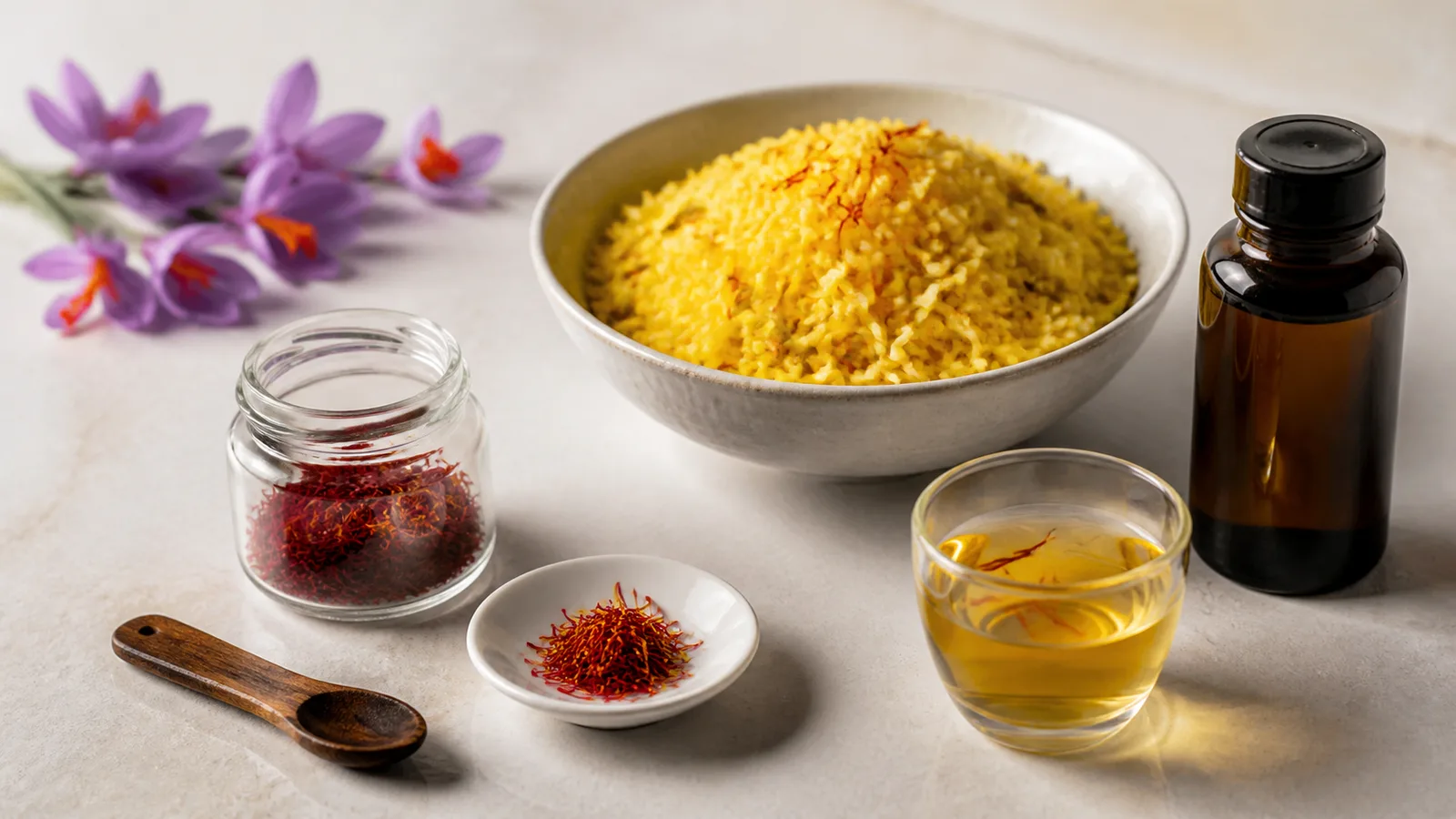
So, is saffron harmful? Is saffron dangerous for everyone? The honest answer is no, but it can cause harm in the wrong circumstances. The form, amount, reason for taking it and the person using it all matter. This guide weighs saffron’s advantages and disadvantages without turning a valuable spice into either a cure-all or a poison.
The practical benefits of saffron
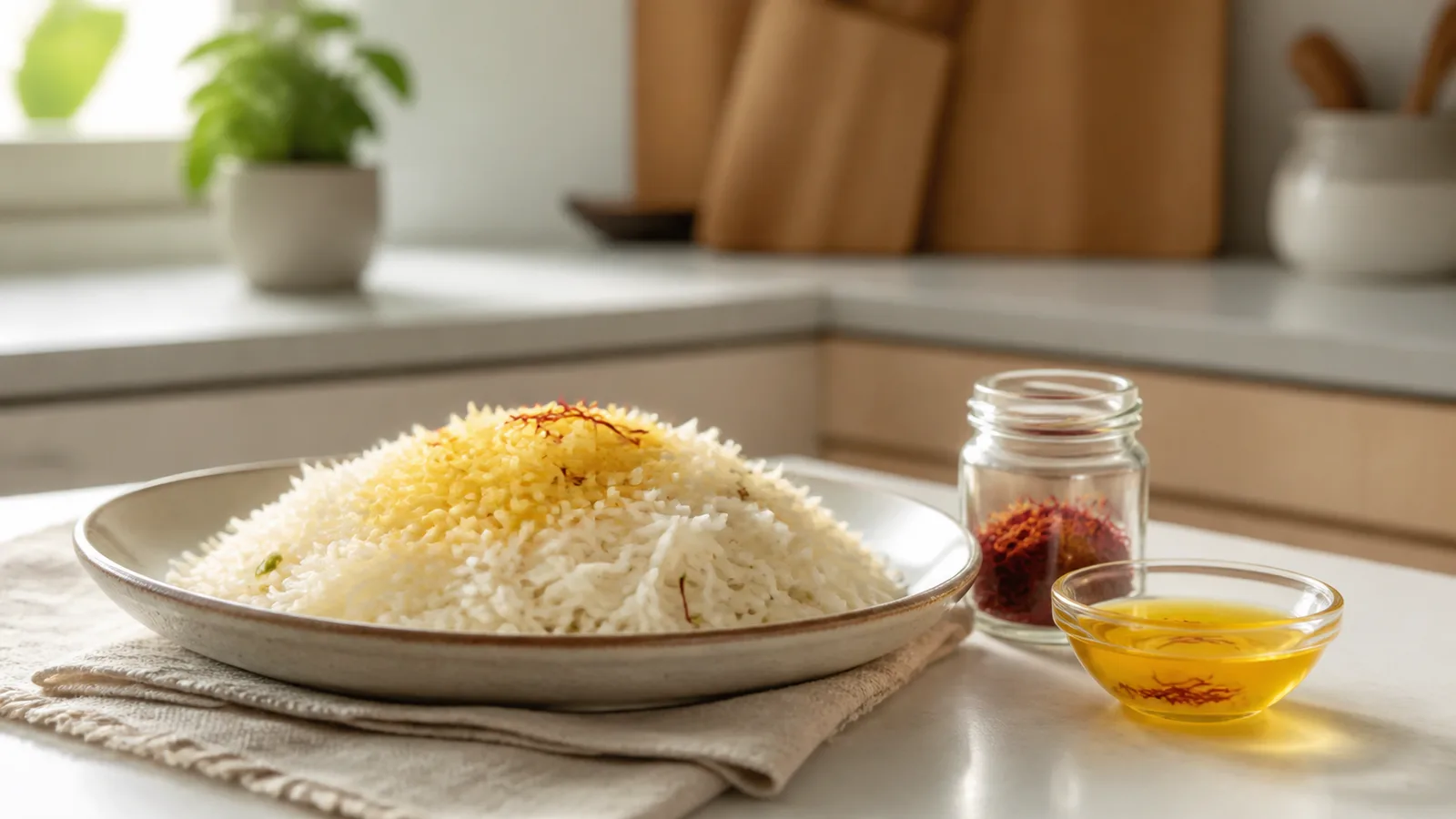
In the kitchen, saffron earns its place through colour, aroma and flavour. Properly bloomed threads can season a pot of rice or a dessert with a modest quantity. Its distinctive value does not depend on a medical claim.
Researchers have also studied defined saffron preparations for mood, sleep and metabolic outcomes. A broad evidence-mapping review of saffron meta-analyses found signals across several health outcomes, but also concluded that the quality of the reviews and trials needs improvement. A result obtained with a measured extract cannot automatically be transferred to tea, food, gummies or an untested powder.
That distinction is central to any fair list of saffron benefits and drawbacks. Research may justify further study. It does not justify replacing diagnosis, medicine or a clinician’s advice.
What are the disadvantages of saffron?
The first of the practical saffron disadvantages is price: genuine saffron is expensive and frequently imitated. Powder is harder to inspect than intact threads, while colour added to safflower, corn silk or other plant material can make a convincing-looking substitute. An unknown mixture brings contamination and allergy risks that do not belong to true Crocus sativus.
Saffron is also potent in a culinary sense. Too much can make food bitter, stain porous surfaces and overpower a recipe. For supplements, the drawbacks are different: strength varies, labels may not identify the preparation clearly, and blends can contain sweeteners, stimulants or other active ingredients.
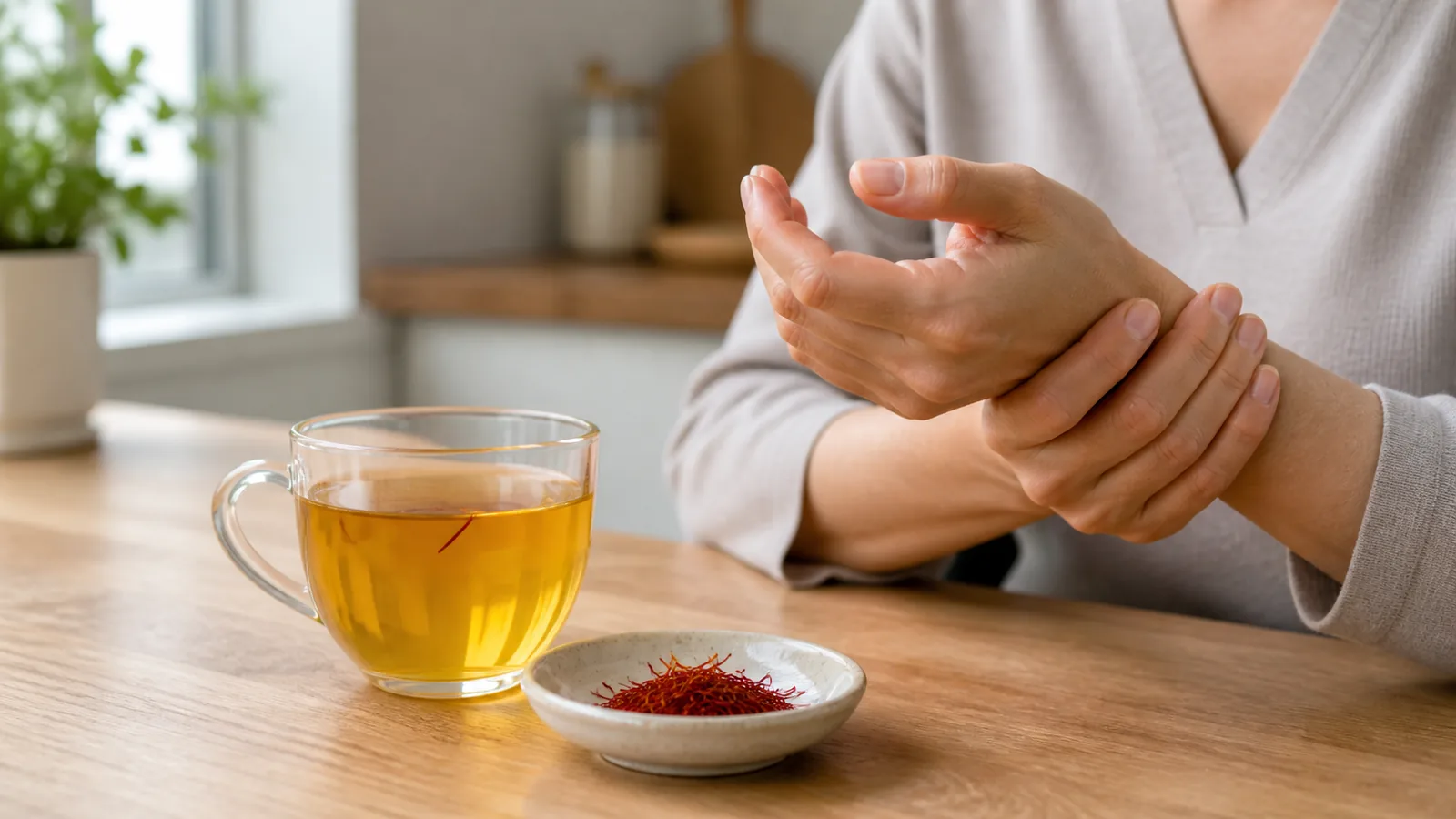
The health disadvantages of saffron include possible nausea, stomach discomfort, diarrhoea, headache, dizziness, dry mouth, reduced appetite and allergic symptoms. A 2026 systematic review of adverse events in human studies found saffron generally well tolerated, with gastrointestinal problems reported most often and usually described as mild. It also found that monitoring may be appropriate with higher or prolonged medicinal use.
Is saffron safe, and how much is too much?
For most adults, a modest culinary amount spread through a dish is a different proposition from swallowing an extract. The US Food and Drug Administration lists Crocus sativus as a flavouring and colouring food substance. That food-use context should not be used as a safety certificate for every supplement concentration.
There is no useful universal answer to “how much saffron is too much” without knowing the product, frequency, body size, medicines, pregnancy status and health history. Old rules such as a fixed monthly allowance or a six-week limit for everyone sound reassuringly precise, but they do not fit all preparations.
Use the small quantity a recipe needs. With a packaged supplement, follow the serving directions and ask a pharmacist or clinician whether its ingredients suit you; do not increase the serving because the first dose felt uneventful. After a large or unknown ingestion, contact a local poison centre or urgent medical service instead of relying on an online dose calculation.
Are saffron supplements safe?
Saffron extract side effects depend on what was extracted, how concentrated it is and what else is in the capsule. A gummy may add sugar alcohols that themselves cause gas or diarrhoea. Products promoted for mood, sleep or weight may combine several ingredients, making the front-label word “saffron” a poor explanation for a reaction.
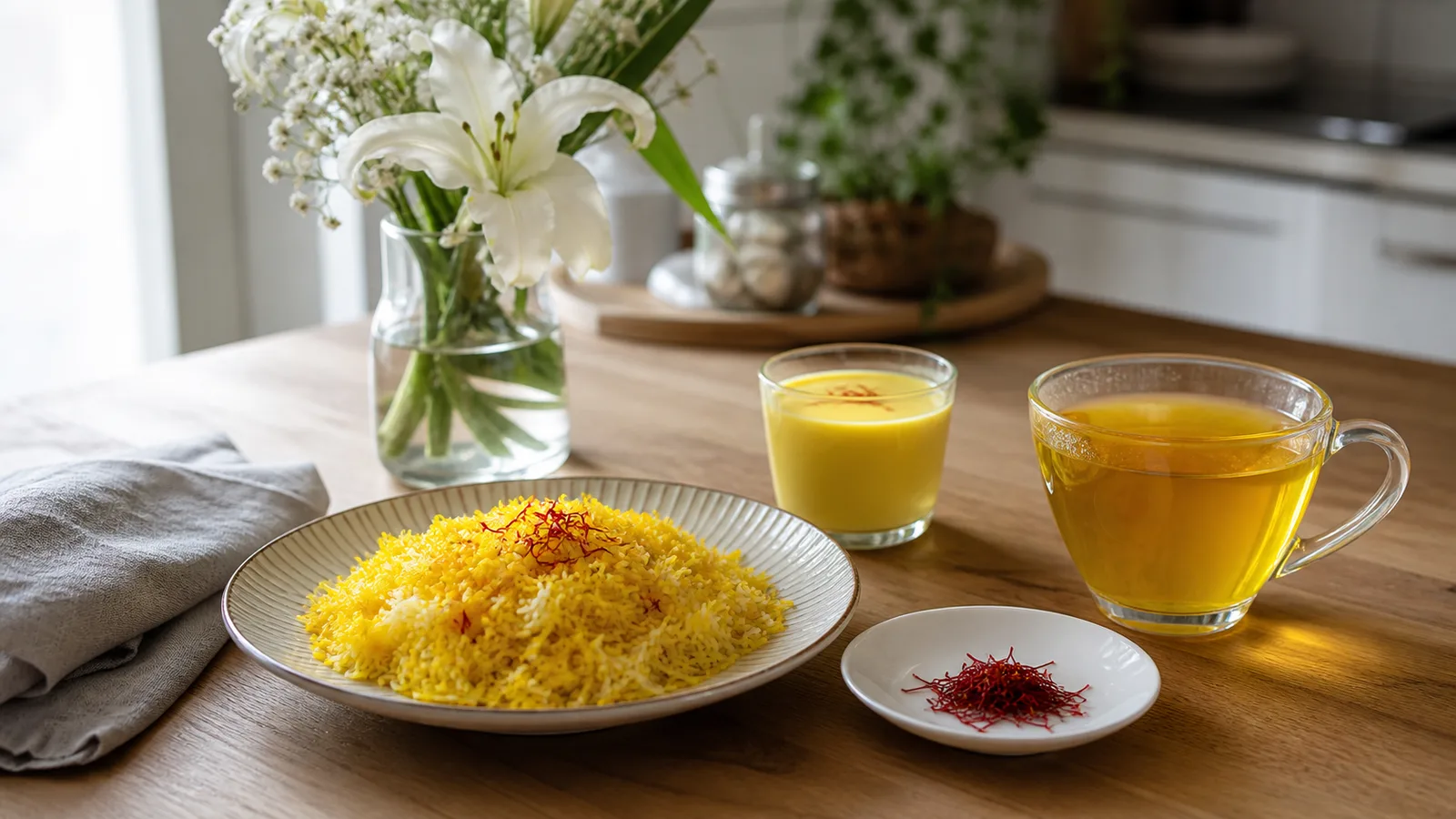
Saffron tea side effects depend on the recipe as well. Black or green tea contributes caffeine, sweeteners change the drink’s nutritional profile, and an unmeasured handful of threads makes a very different infusion from a few strands. The same caution applies to strong saffron water.
For a product-by-product comparison, see our guide to the risks of saffron in tea, gummies and supplements. If symptoms are severe or the amount is unknown, use the saffron overdose and warning-sign guide.
Can saffron help with appetite or weight loss?
Small trials have examined appetite and weight, but the findings do not turn saffron into a proven weight-loss treatment. An eight-week trial of 60 mildly overweight women reported less snacking and a greater weight reduction with a particular branded extract than with placebo. A later trial used a different capsule in overweight women with depression. These are product-specific results from narrow groups, not evidence that saffron desserts cause weight loss.
The broader evidence is mixed and preparation-dependent. Some studies report less appetite, while another trial in people with atherosclerosis reported improved appetite. Adding saffron to a sugary dessert does not cancel the dessert’s energy content. Anyone investigating unexplained appetite or weight change needs medical assessment rather than a spice-based shortcut.
Who should not use saffron supplements without advice?
A 2026 review of saffron during pregnancy described limited and inconclusive evidence, alongside dose-related concerns including uterine stimulation and associations between higher or occupational exposure and miscarriage risk. That does not mean a few threads in a shared meal are equivalent to a strong drink or capsule. It does mean medicinal use during pregnancy should be left to the obstetric clinician.
Evidence during breastfeeding is too limited to assume that every extract is safe. Concentrated saffron also deserves a professional interaction check if you take prescription medicine, use several supplements, are preparing for surgery or have a bleeding, blood-pressure, glucose, liver, kidney or mental-health condition. Bring the complete product label to the conversation.
Allergy and warning signs
A saffron allergy is possible, although not every headache or upset stomach is an allergy. Stop the suspect product and seek advice for a reproducible reaction. Facial, lip, tongue or throat swelling, wheezing, breathing difficulty, fainting, severe repeated vomiting or diarrhoea, unusual bleeding, confusion or chest pain requires urgent care.
Names can add dangerous confusion. Kesar and zafran generally refer to true saffron, Crocus sativus. Safflower is another plant, and “meadow saffron” or “autumn crocus” is Colchicum autumnale, which contains the poison colchicine. Check the botanical name rather than relying on a common name.
Mixing saffron with other ingredients
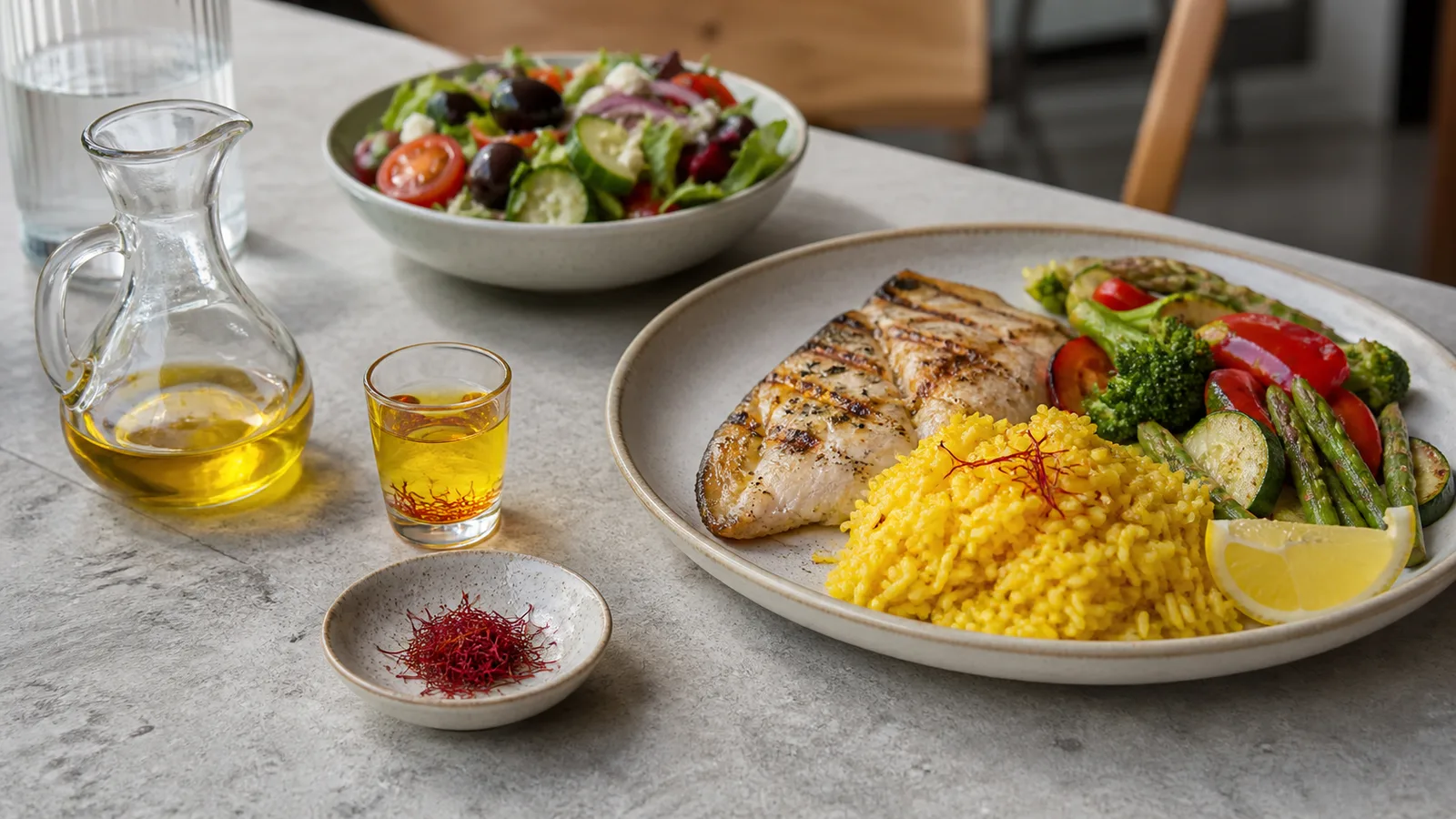
Combining saffron with cinnamon, barberry or honey in food does not automatically create a harmful chemical reaction. These are familiar culinary combinations. The sensible question is whether each ingredient is suitable for the person and the amount being used.
A supplement blend needs more scrutiny because several concentrated ingredients can overlap with medicines or produce similar side effects. Honey is also unsuitable for infants under 12 months. Treat a mixture as the sum of its real ingredients, not as a new remedy with properties the label has not proved.
Can you smoke saffron?
Do not smoke saffron. There is no established health benefit from burning and inhaling it, and combustion exposes the lungs to smoke and fine particles. Saffron smoking is not a safe-use method: a spice being safe in food says nothing about breathing its fumes. If saffron has been mixed with tobacco, cannabis or another substance, the risks of those materials still apply.
Storage and counterfeit saffron
Keep dried threads sealed, dry and away from light and heat. Poor storage mainly costs aroma, colour and flavour; damp, mouldy, infested or oddly scented material should be discarded. Saffron does not accumulate mysterious toxins simply because a properly stored culinary jar has been used over time.
Buy from a seller who identifies the species and provides traceable batch information. Be cautious with very cheap powder, material that releases colour instantly like dye, or a supplement that hides quantities in a proprietary blend. Home tests can reveal obvious problems, but they cannot certify identity, purity or contaminant levels.
Saffron benefits and drawbacks in perspective
Saffron is useful in food and interesting in research. These saffron advantages and disadvantages depend heavily on context: problems are most likely when identity is uncertain, exposure is concentrated, a blend obscures the ingredients or personal risks are ignored. Culinary use and supplement use should never be treated as interchangeable.
If you enjoy saffron in cooking, use enough for the dish rather than chasing a medicinal dose. If you are considering an extract for a health goal, judge the exact product, evidence and your own circumstances first. That is a more reliable safety test than either “natural means harmless” or “any saffron is dangerous.”