This Saffron Moghat Recipe makes a soft, spoonable saffron-and-rosewater dessert for four, with a dairy-free water version and a creamier milk version. Both rely on a smooth starch slurry, low heat and steady stirring rather than complicated equipment.
A useful note about the name “moghat”
The recipe historically published on this page is a starch-set Persian-style dessert, closer in method to masghati. It does not contain moghat root. That distinction matters because botanical research describes moghat as the dried root of Glossostemon bruguieri, traditionally prepared as a hot drink.
We have kept “Saffron Moghat Recipe” here because it is the established name of this particular page, but the recipes below describe exactly what is in each bowl. If you are looking for the Egyptian root drink, these starch puddings are not a substitute.
Choose the water or milk version
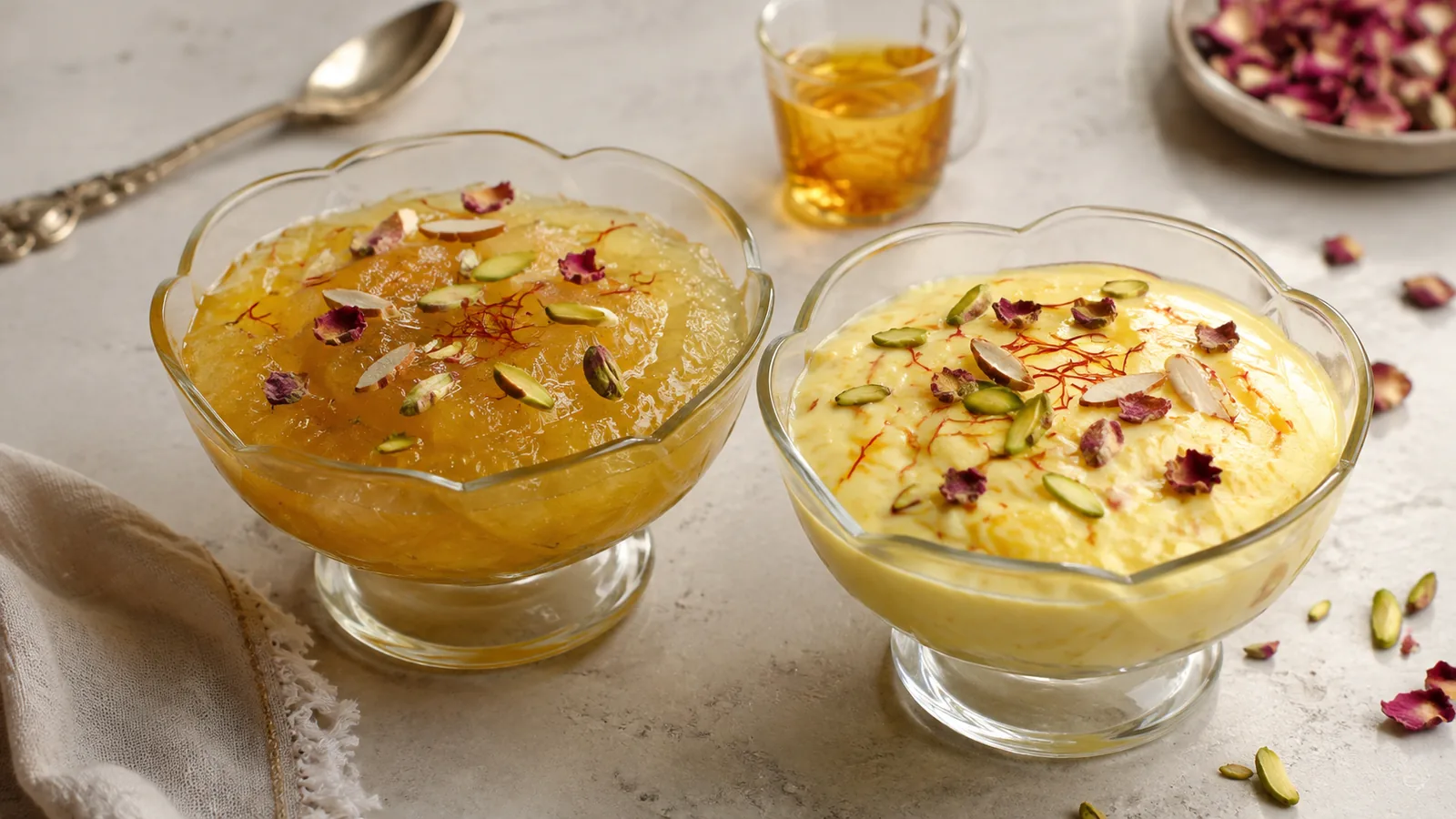
- Water-based saffron dessert: translucent, light and clearly scented with rosewater; a good dairy-free choice for Ramadan or an after-dinner sweet.
- Saffron dessert with milk: opaque, creamy and a little richer, with a texture between a soft pudding and a tender starch gel.
Neither version needs gelatin. Starch provides the structure, but it must first be dispersed in cold liquid and then cooked long enough to lose its raw taste.
Water-based saffron Moghat dessert
This version serves four in small dessert dishes.
Ingredients
- 3 cups water, divided
- 1/3 cup wheat starch or cornstarch
- 5 tablespoons sugar, or to taste
- 1 teaspoon saffron threads, finely ground
- 1/2 cup rosewater
- 1/2 teaspoon vanilla, optional
- Slivered almonds, pistachios and dried rose petals, for garnish
1. Bloom the saffron
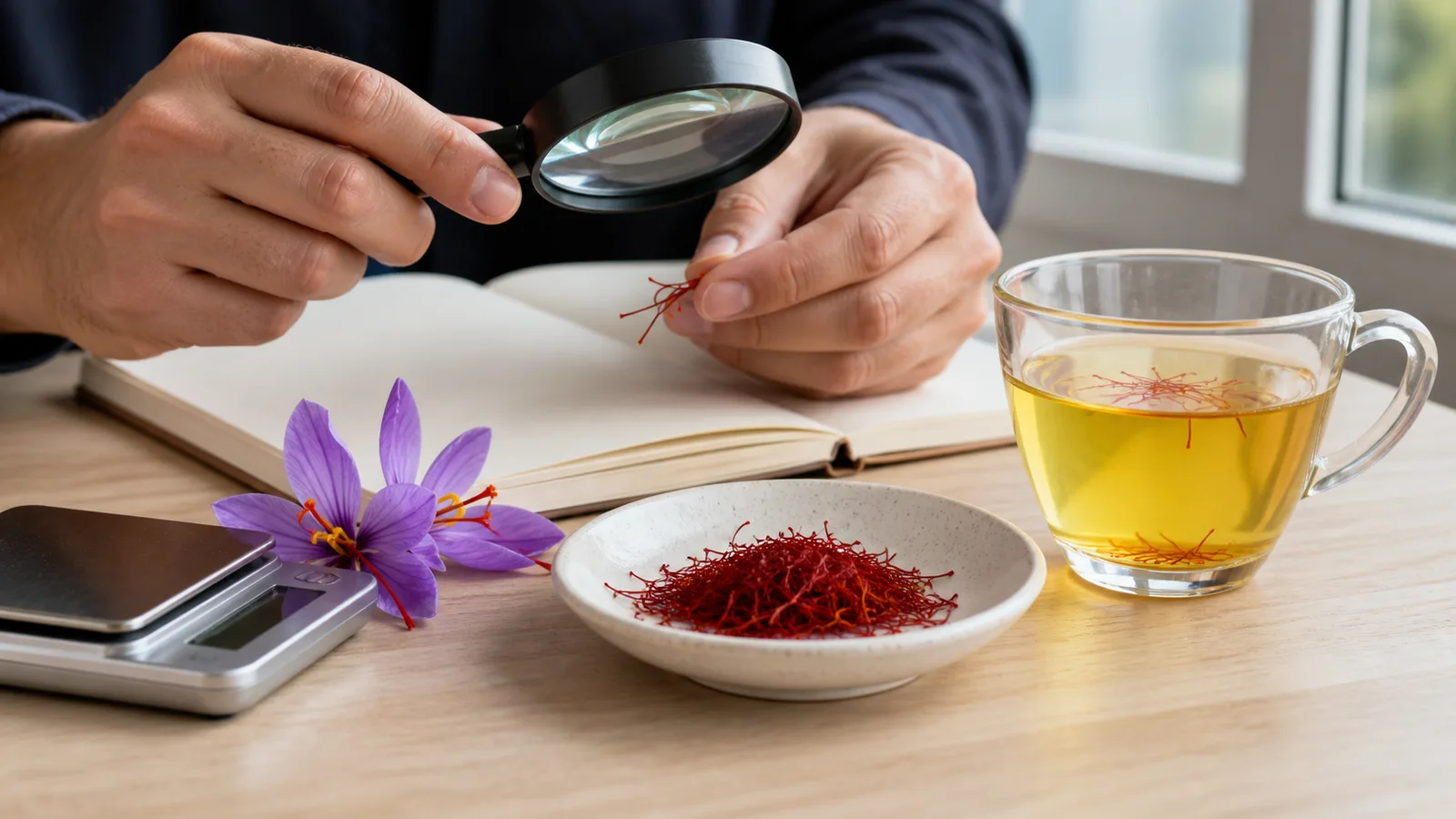
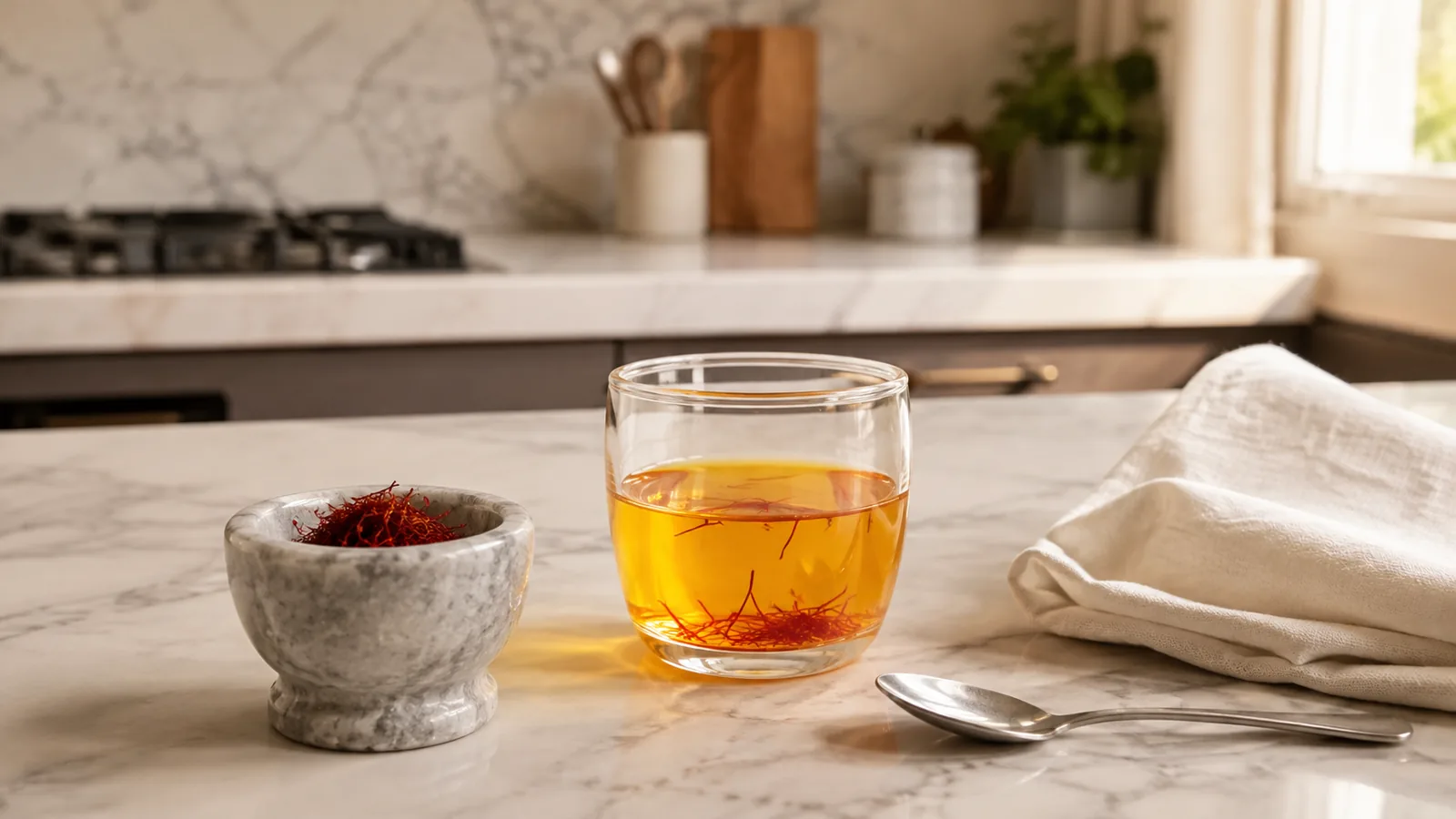
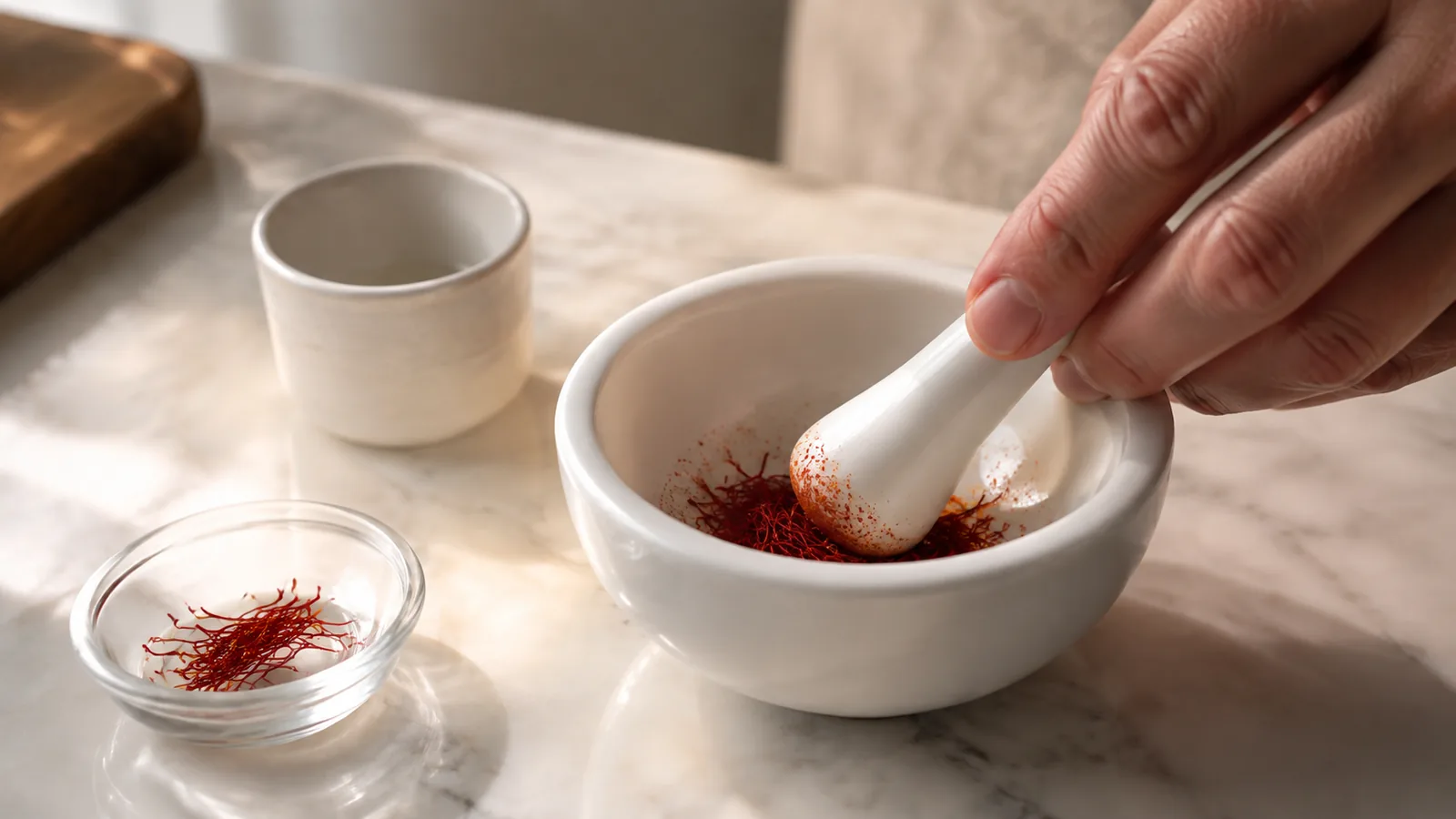
Put the ground saffron in a small covered cup with 3 tablespoons of hot water. Leave it for 10 minutes. This concentrated infusion spreads through the dessert evenly and lets you add the aroma late in cooking.
2. Make a cold starch slurry
Whisk the starch with 1 cup of the cold water until no dry pockets remain. If the starch feels gritty or forms small beads, pass the mixture through a fine sieve before it goes into the saucepan.
3. Cook the base slowly
Pour the remaining 2 cups of water into a heavy saucepan. Add the sugar and starch slurry, then set the pan over low to medium-low heat. Stir continuously with a silicone spatula, sweeping the base and corners of the pan.
The mixture will look cloudy at first. As it heats, it becomes glossy and begins to thicken. Keep it at a gentle bubble for 12–18 minutes; rushing with high heat can leave a raw starch flavour or scorch the bottom.
The older Saffron Moghat Dessert method specified about 40 minutes of stirring from start to finish. Pan width and heat level change that timing considerably, so use the glossy texture and ribbon test below as the deciding cues rather than forcing every batch to cook for exactly 40 minutes.
4. Add saffron and rosewater
When the spoon leaves a brief trail across the bottom, stir in the bloomed saffron, rosewater and optional vanilla. Continue cooking gently for 5–8 minutes. The finished mixture should fall from the spoon in a broad ribbon rather than run like water.
5. Portion and cool
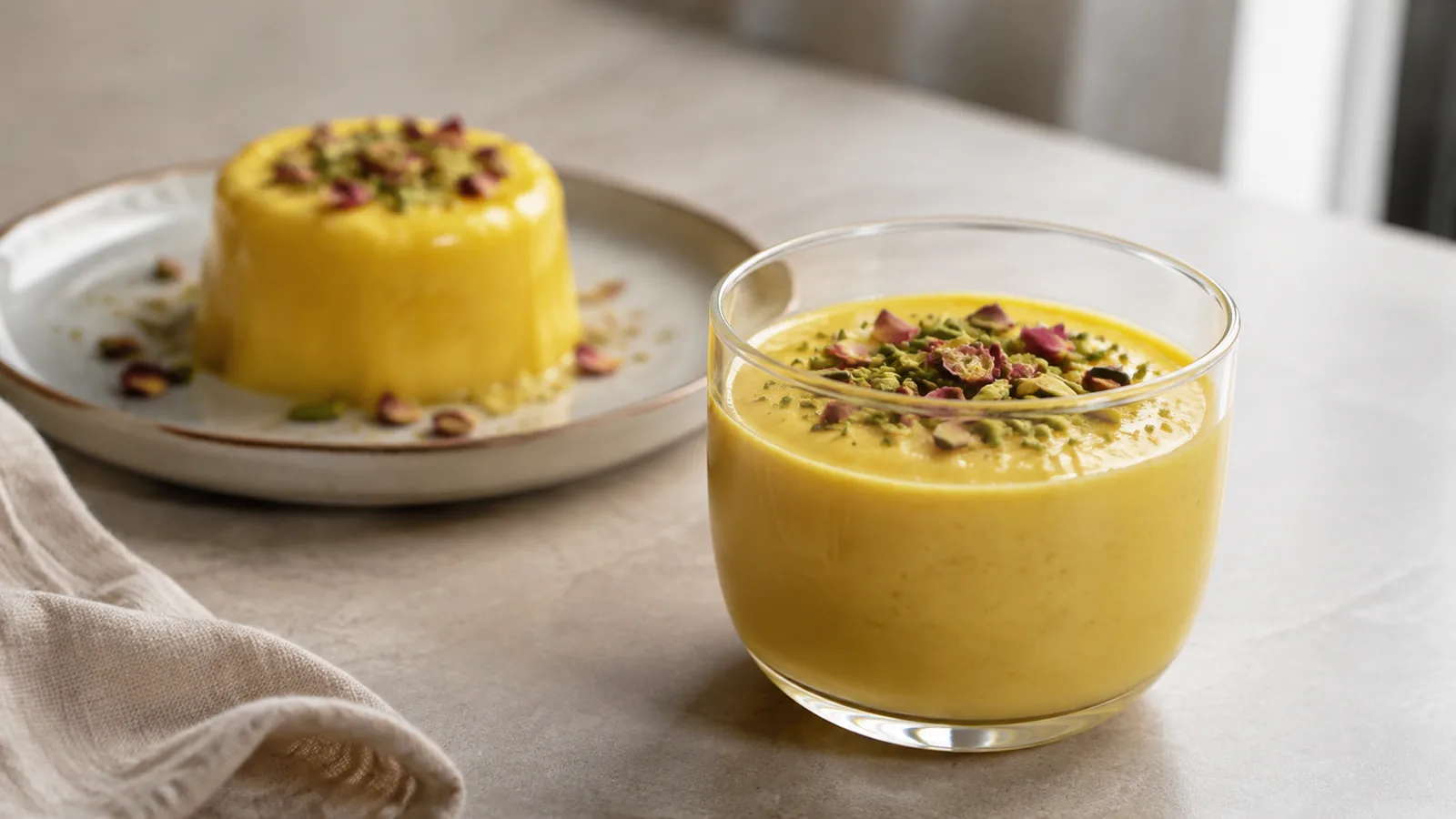
Pour the dessert into four small bowls while it is still warm. Tap each dish lightly on the counter to level the surface. Cool at room temperature for 20 minutes, then refrigerate until set and cold, about 2 hours. Garnish just before serving so the nuts remain crisp.
Saffron Moghat with milk
The milk method also serves four. It needs especially gentle heat because milk can catch on the bottom of the pan.
Ingredients
- 3 cups full-fat milk, divided
- 1/3 cup cold water
- 1/3 cup wheat starch or cornstarch
- 7 tablespoons sugar, or to taste
- 1 teaspoon saffron threads, finely ground
- 1/2 cup rosewater
- 1/2 teaspoon vanilla, optional
- Slivered almonds and pistachios, optional
1. Dissolve the starch
Whisk the starch into the 1/3 cup cold water. In a separate jug, stir the sugar into the cold milk. Combine both in a heavy saucepan only when the slurry is completely smooth.
2. Thicken over gentle heat
Set the pan over low to medium-low heat and stir without stopping. It may take 15–20 minutes to thicken. Do not let the milk boil hard: steady, modest heat produces a smoother pudding and gives the starch time to cook.
3. Finish the flavour
When the mixture coats the back of the spoon, add the bloomed saffron and optional vanilla. Cook for another 4–5 minutes, then stir in the rosewater for the final minute. Taste carefully; if you prefer a less floral dessert, begin with 1/4 cup rosewater and add more only if needed.
Fold in a spoonful of slivered almonds or pistachios if you want nuts inside the pudding. Keep most of the garnish for the surface, where its texture is easier to appreciate.
4. Chill before serving
Divide among four glasses or bowls. Press reusable covers or small pieces of baking paper directly onto the surface if you want to prevent a skin. Refrigerate for at least 2 hours.
How to make a two-tone saffron and cocoa dessert
For the cocoa variation from the original recipe, divide either hot cooked base into two portions before adding all the saffron. Leave one portion saffron-yellow. Whisk 1 tablespoon of unsweetened cocoa powder with 1 tablespoon of hot milk or water, then stir it into the second portion.
Spoon the two colours into clear glasses in alternating layers. Let each layer stand for a minute or two before adding the next so the boundary remains visible. Cocoa is strong, so a small amount is enough; too much will hide both the saffron aroma and the delicate rosewater.
Troubleshooting the texture
The dessert is lumpy
The starch was probably added to warm liquid or the pan was left unstirred. Blend the hot mixture carefully with an immersion blender, or press it through a fine sieve, then return it to low heat.
It did not set
A soft set usually means the mixture did not cook long enough after thickening. Return it to the pan and simmer gently until the spoon leaves a clear trail. Remember that it will become firmer as it chills.
It became rubbery
Too much starch or prolonged high heat can make the dessert bouncy. Check that the 1/3 cup measure was level, and stop cooking once the mixture is glossy, fully cooked and ribboning from the spoon.
Serving and storage
Serve either version cold, with a restrained pattern of pistachio, almond and rose petals. The garnish should frame the saffron colour rather than cover the whole surface.
Keep the dessert covered in the refrigerator and eat it within 3 days. Freezing is not recommended: starch gels can release water and turn grainy after thawing.