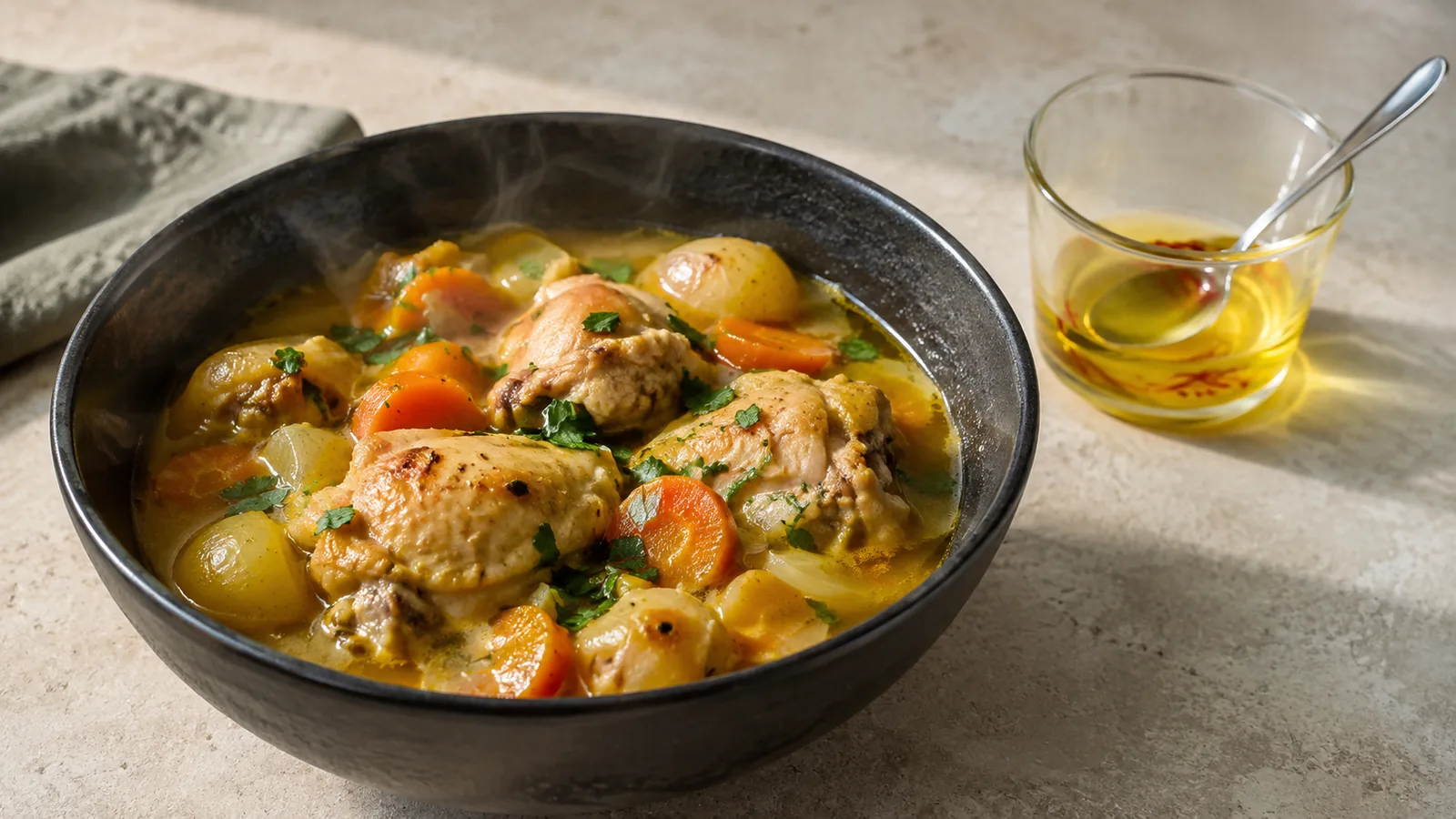
This Saffron Barley Soup Recipe makes four generous bowls of warm, gently tangy soup with chicken, carrots, parsley and a fragrant saffron finish. It suits a cold evening or a Ramadan iftar table, and the method below keeps the barley tender without muting the saffron.
What kind of barley works best?
Pearled barley is the practical choice when you want soup on the table in about an hour. It has had more of its outer layer removed, so it softens faster and releases enough starch to give the broth a light body. Hulled barley is chewier and takes considerably longer.
For this four-person pot, use either 1 cup dry pearled barley or about 2 cups already-cooked hulled barley. If you begin with 2 cups of dry hulled barley, as some versions of the recipe suggest, you will have far more than this quantity of broth can comfortably hold.
Ingredients for four people
- 1 cup dry pearled barley, rinsed, or 2 cups cooked hulled barley
- Half a skinless chicken breast, about 200–250 g
- 2 small onions
- 3 medium carrots
- 2 cups unsalted or low-salt chicken broth
- 3 tablespoons tomato paste
- 1/3 cup finely chopped flat-leaf parsley
- 1/2 teaspoon saffron threads
- 1/3 cup fresh lemon juice, added gradually to taste
- 1 teaspoon fine salt to begin, plus more if needed
- 1/2 teaspoon black pepper
- 4–5 cups water, as needed
The older ingredient list called for 2 tablespoons of salt. That is far too much for most four-serving pots, especially when the chicken broth is already seasoned. Starting with 1 teaspoon protects the balance; taste only after the soup has reduced.
Prepare the saffron and vegetables
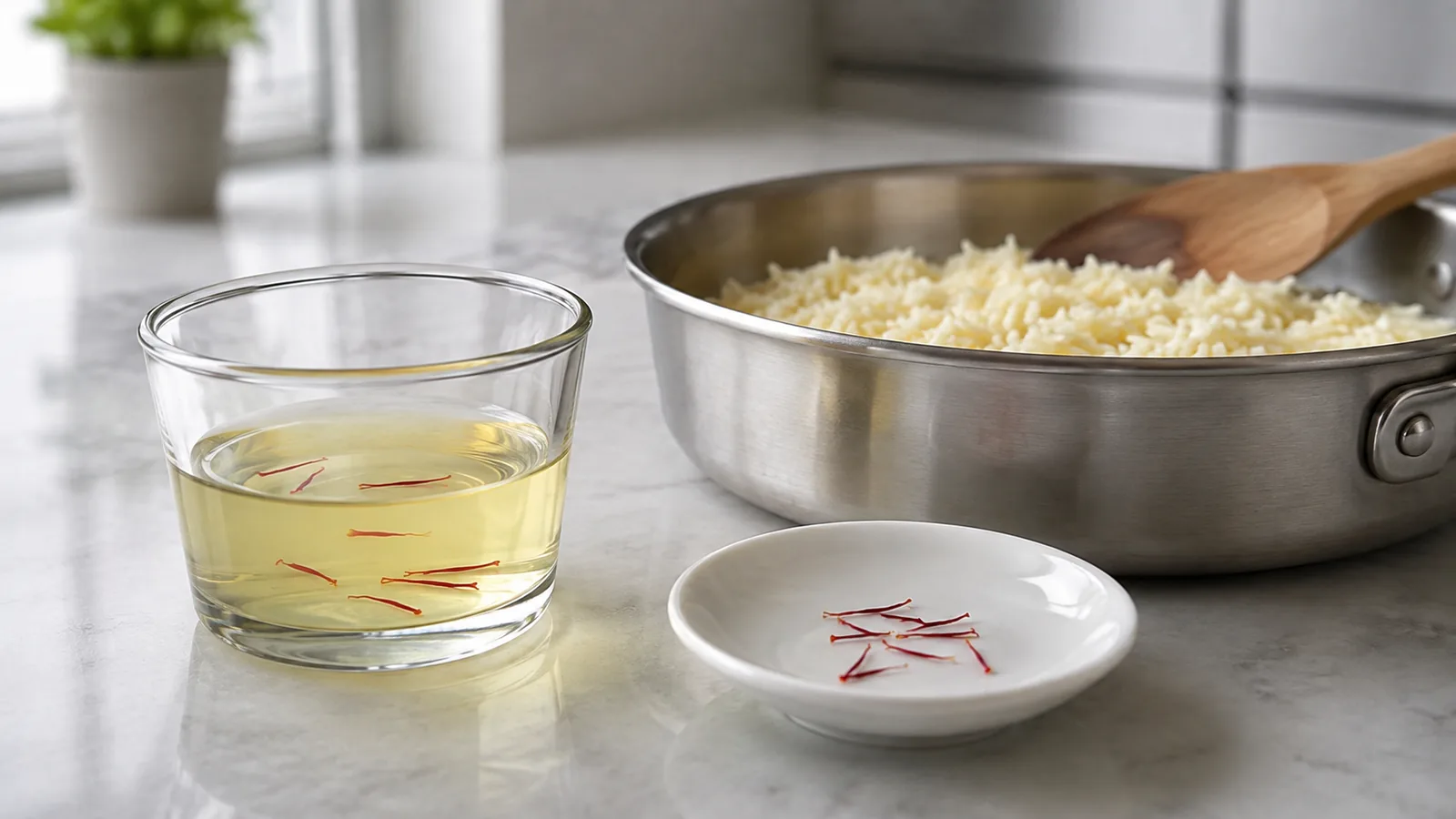
Grind the saffron threads to a coarse powder. Put them in a small cup with 2 tablespoons of hot water, cover and leave for 10 minutes. The earlier ice-blooming method also works: scatter one small ice cube over the ground threads and let it melt slowly. Either approach is better than dropping dry threads straight into a large pot.
Peel the carrots and grate them on the large holes of a box grater. Finely dice one onion for the soup. Leave the second onion in large pieces for cooking the chicken, so it is easy to remove later. Wash, dry and chop the parsley; keep it refrigerated until the last part of cooking.
How to make saffron barley soup
1. Cook and shred the chicken
Put the half chicken breast and the roughly cut onion in a small saucepan. Add enough water to cover, bring it just to a simmer and skim away any foam. Cook gently for 15–20 minutes, until the thickest part is opaque and reaches 74°C. Transfer the chicken to a plate, strain the cooking liquid and shred the meat when it is cool enough to handle.
2. Start the barley
Place the rinsed pearled barley in a large, heavy saucepan with 4 cups of water. Bring it to a boil, then lower the heat and simmer partly covered for about 25 minutes. Stir from the bottom every few minutes because barley can settle and catch as it swells.
If you are using cooked hulled barley, skip this first simmer. Add it with the broth in the next step and allow a little extra time for its firmer grains to take on the soup’s flavour.
3. Build the savoury base
While the barley cooks, warm 1 tablespoon of oil in a small frying pan. Add the finely diced onion and cook over medium-low heat until soft and lightly golden. Stir in the tomato paste and cook for 2 minutes, just until it darkens slightly and loses its raw edge.
Scrape this mixture into the barley pot. Add the 2 cups of chicken broth, 1 cup of the reserved chicken cooking liquid, the grated carrots, black pepper and 1 teaspoon of salt.
4. Simmer until the barley is tender
Cook at a gentle simmer for another 20–30 minutes, stirring regularly. Add a splash of hot water whenever the soup becomes thicker than you like. The grains should be tender but still distinct, and the carrots should have softened into the broth.
5. Add chicken, parsley and saffron
Fold in the shredded chicken and half of the parsley. Pour in the bloomed saffron, rinse its cup with a spoonful of hot broth and add that too. Simmer for 8–10 minutes. Adding saffron near the end keeps its aroma clearer than boiling it for the entire hour.
6. Balance with lemon
Lower the heat and add half of the lemon juice. Taste, then add more a tablespoon at a time. Different lemons vary sharply in acidity, and the full 1/3 cup may be right for one batch but too assertive for another. Adjust the salt only now, once the broth has reduced.
Stir in the remaining parsley just before serving. Let the pot stand off the heat for 5 minutes so the texture settles.
How thick should the soup be?
Saffron barley soup should be spoonable, not stiff. Barley continues absorbing liquid after the heat is turned off, so stop cooking while the broth is a little looser than your final preference. If it tightens during the rest, stir in hot water or unsalted broth a little at a time.
For a creamier body without dairy, press a spoonful of cooked barley against the side of the pot and stir it back in. Soup noodles are optional, but use only a small handful and add extra broth; otherwise they compete with the barley and make the pot heavy.
Useful substitutions
- Vegetarian version: omit the chicken and use vegetable stock. Add cooked chickpeas near the end if you want a more substantial bowl.
- Fresh herbs: coriander can replace part of the parsley, but keep the quantity modest so saffron remains noticeable.
- Tomato level: use 2 tablespoons of paste for a paler, more saffron-forward soup, or the full 3 tablespoons for the familiar tomato-rich version.
- Whole hulled barley: soak it overnight, cook separately until nearly tender, then measure 2 cups into the soup.
Serving and storage
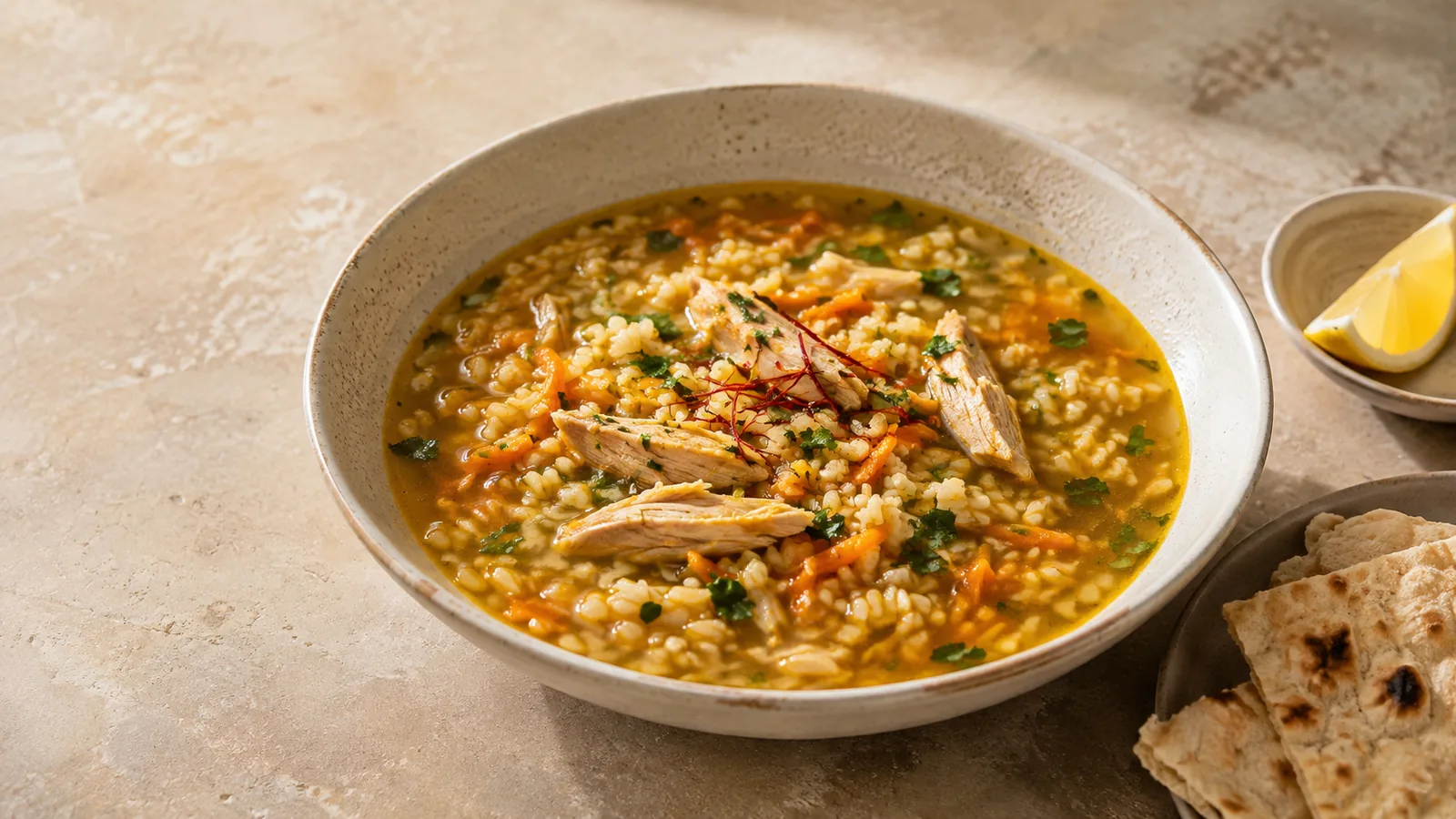
Serve the soup hot with lemon wedges and a little fresh parsley. Flatbread and a crisp herb salad make it a complete light meal. The saffron should be aromatic rather than dominant, with tomato, lemon and chicken still easy to recognise.
Cool leftovers promptly and refrigerate them in a covered container for up to 3 days. The barley will thicken the broth overnight. Reheat gently with a little water or stock, stirring often, until the chicken and soup are steaming throughout. Freeze for up to 2 months if needed, allowing room in the container for expansion.