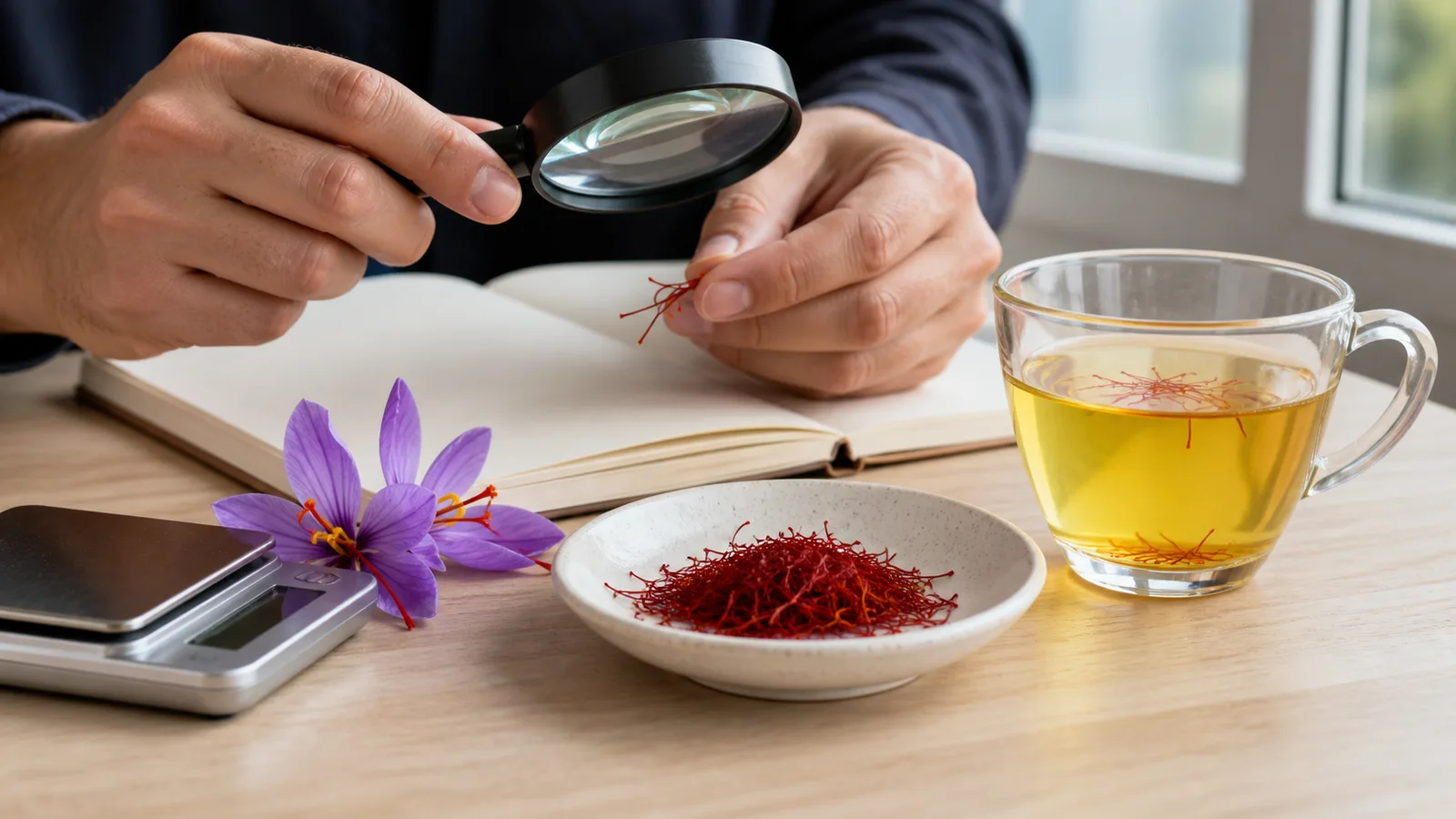
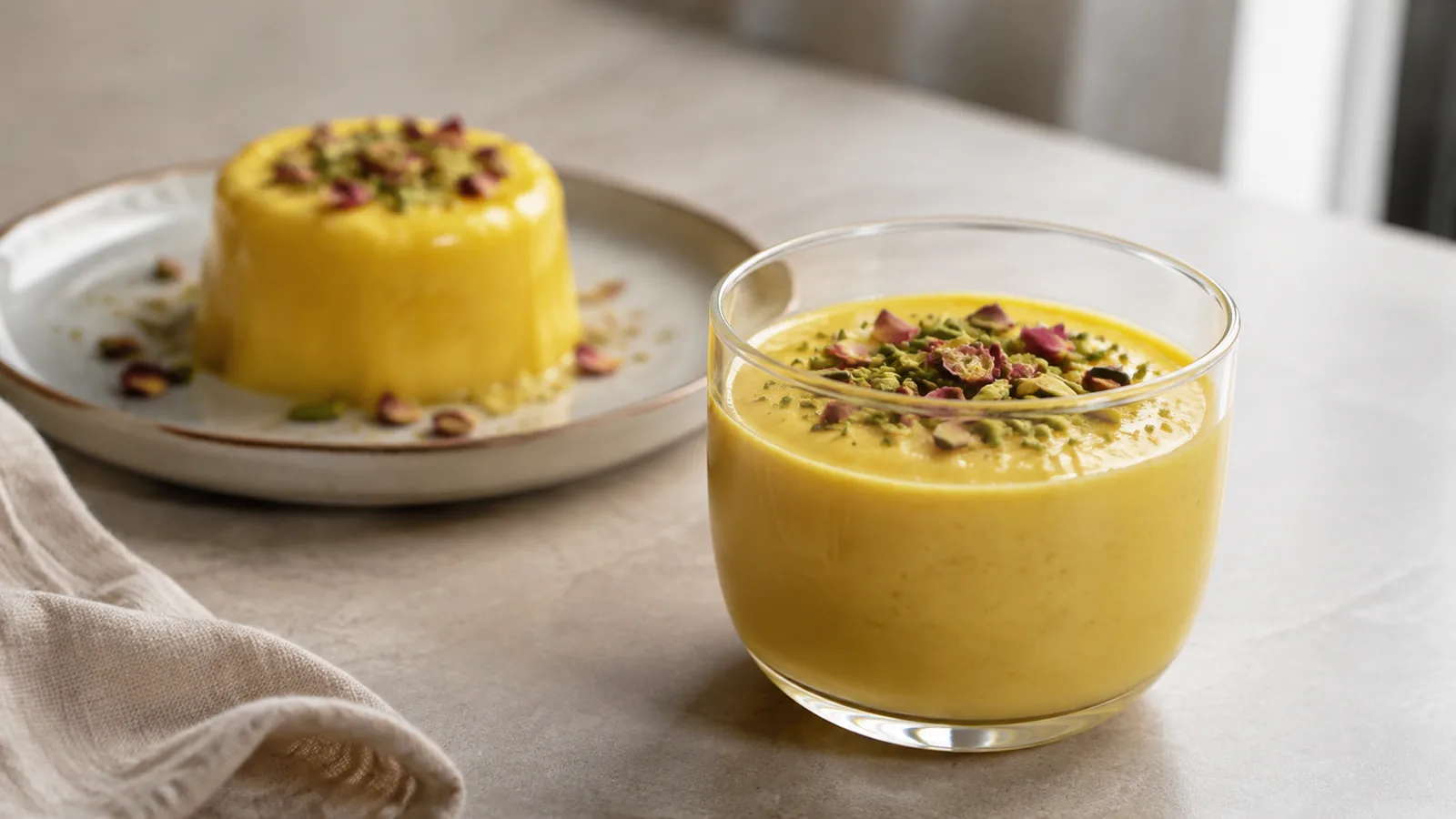
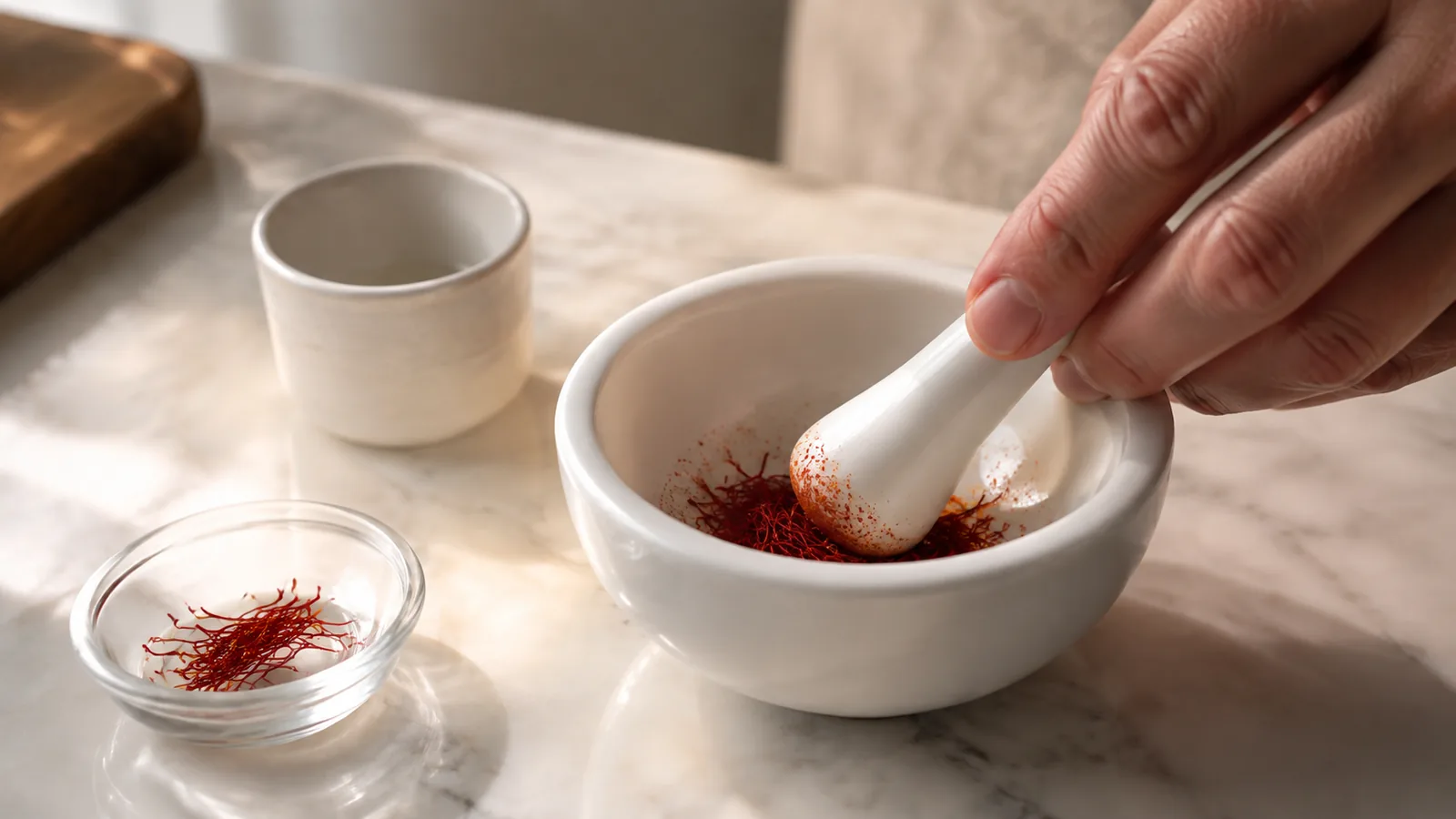
This Saffron Danette Recipe makes a cool, creamy milk dessert scented with saffron and rosewater. You can set it firmly with gelatin for clean moulded portions or cook it with cornstarch for a softer spoonable pudding; both methods are complete below.
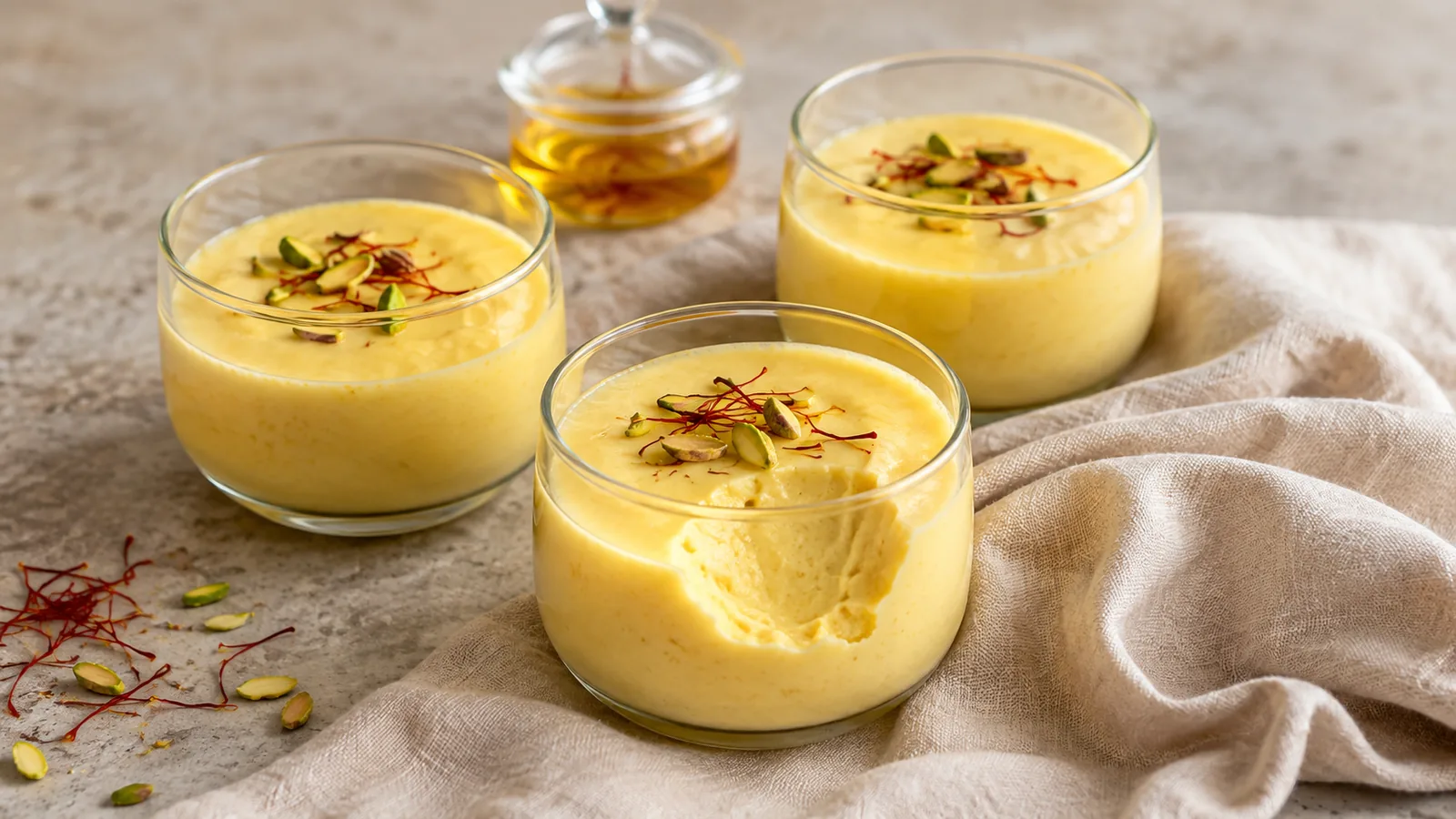
What is saffron Danette dessert?
Danette is commonly used as a shorthand for a smooth chilled dairy dessert. This homemade saffron version is closer to a set milk pudding than to custard: it contains no eggs, and its texture comes from either gelatin or cornstarch.
The flavour should remain balanced. Saffron supplies a warm aroma and golden colour, rosewater adds a floral note, and cream rounds the texture. None of them needs to dominate the bowl.
Choose the texture before you begin
- Gelatin version: serves 3 and sets firmly enough for a mould or neat dessert glass.
- Cornstarch version: serves 3–4 and has a softer pudding texture best eaten with a spoon.
- Chilling time: at least 3 hours for either version.
- Best approach: make one method rather than combining both thickeners.
Gelatin and cornstarch do different jobs. Adding both “for insurance” can produce a rubbery, pasty dessert. Decide whether you want a clean unmoulded shape or a creamy cup, then follow that version from start to finish.
Saffron Danette with gelatin
Ingredients for 3 servings
- 2 tablespoons unflavoured gelatin powder
- 1/2 cup cold water
- 3 cups full-fat milk
- 1 cup granulated sugar
- 150 g breakfast cream or whipping cream
- 1/2 teaspoon saffron threads, lightly ground
- 1/3 cup rosewater
- a pinch of vanilla powder
Two tablespoons of gelatin give this relatively large milk mixture a firm set. If you plan to serve it only in glasses and prefer a softer spoonful, reduce the gelatin to 1 1/2 tablespoons. Do not reduce it for a freestanding mould unless you are comfortable with a gentler set.
1. Bloom the gelatin
Pour the cold water into a heatproof bowl and sprinkle the gelatin evenly over the surface. Leave it undisturbed for 5 minutes. The powder should absorb the water and swell rather than forming dry islands.
Set the bowl over a saucepan containing barely simmering water. Stir gently until the gelatin becomes clear and fluid, then remove it from the steam. Do not let the gelatin boil.
2. Warm the milk, sugar and saffron
Combine the milk and sugar in a heavy saucepan. Warm over medium-low heat, stirring until the sugar dissolves. Add the ground saffron and keep the mixture below a hard boil. A gentle steam is enough.
Take the pan off the heat and leave it for 2 minutes. This short pause protects the gelatin and gives the saffron time to disperse through the milk.
3. Smooth and temper the cream
Whisk the cream in a bowl until smooth. Add one ladle of warm saffron milk and whisk again. Repeat once, then pour the loosened cream back into the saucepan in a slow stream.
This tempering step is more reliable than folding cold cream into a cooling pan. It keeps small lumps of thick breakfast cream from floating through the finished dessert.
4. Add the gelatin, rosewater and vanilla
Whisk the dissolved gelatin into the warm milk mixture. Add the rosewater and vanilla. Stir for a full minute, scraping the base and corners of the pan, but do not return it to a boil.
Taste a cooled teaspoon. Rosewater smells weaker over hot steam than it tastes once chilled, so resist the urge to add more immediately.
5. Portion and chill
For serving glasses, pour the mixture through a fine sieve and divide it evenly. If you lightly grease a mould, wipe its inside with the thinnest possible film of neutral oil before filling; visible oil will spoil the surface.
Cover and refrigerate for at least 3 hours. To release a mould, dip its outside in warm—not hot—water for 5–8 seconds, loosen the top edge and invert onto a chilled plate. Tapping hard can crack the set dessert without releasing the base.
Saffron Danette with cornstarch
This alternative keeps the original shorter ingredient list and gives a softer result. It is easier to adjust while cooking because you can see the pudding thicken in the saucepan.
Ingredients for 3–4 servings
- 5 tablespoons granulated sugar
- 1/2 teaspoon saffron threads, lightly ground
- 2 cups full-fat milk, divided
- 2 heaping tablespoons cornstarch
- 50 g breakfast cream, replacing the ambiguous “1/4 pack” measure
- 1 tablespoon rosewater
- a pinch of vanilla powder, optional
1. Prepare the saffron
For the ice-blooming method in the original recipe, place the ground saffron over one small ice cube and let it melt completely. Prepare it first so a half-frozen centre does not cool the cooked pudding unevenly.
If you prefer a quicker method, cover the saffron with one tablespoon of hot water and leave it covered for 15 minutes. Either method should produce a concentrated liquid without dry saffron clumps.
2. Make a cold cornstarch slurry
Whisk the cornstarch with half a cup of the cold milk until completely smooth. Sifting dry cornstarch directly into hot milk invites lumps; dissolving it cold is the important step.
3. Cook the pudding base
Warm the remaining milk and sugar over medium heat. When it is steaming, whisk the slurry once more and pour it in slowly. Continue whisking as the mixture approaches a gentle bubble.
Cook for 1–2 minutes after the first bubbles appear. The whisk should leave tracks that close slowly, but the pudding should still pour. Cornstarch thickens further as it cools.
4. Finish with cream, saffron and rosewater
Remove the pan from the heat. Whisk the cream smooth with two spoonfuls of the hot pudding, then return it to the pan. Stir in the saffron liquid, rosewater and optional vanilla.
Pour into dessert glasses and press a piece of reusable food wrap or baking paper directly onto the surface if you do not want a skin. Cool briefly, then cover and refrigerate for at least 3 hours.
How to garnish without burying the flavour
A small amount of garnish is enough. Try slivered pistachios, two or three saffron threads, a few dried rose petals sold for food, or a spoonful of unsweetened whipped cream. Add crisp garnishes just before serving.
Fresh fruit can release water onto the surface, so dry it well and place it on the dessert at the table. Strong chocolate sauce or citrus syrup will compete with the saffron and rosewater rather than improve them.
Troubleshooting saffron Danette
The gelatin layer separated
The mixture may have been too hot when the gelatin was added, or it may not have been stirred through the full volume. Dissolve the gelatin completely, remove the milk from the heat and whisk from the bottom before portioning.
The cornstarch pudding is lumpy
The starch probably met hot liquid before being dispersed. Push a mildly lumpy mixture through a fine sieve while it is still warm. Next time, make the slurry with genuinely cold milk.
The dessert did not set
Check the chilling time first. A deep mould takes longer than small glasses. With gelatin, boiling can weaken the set; with cornstarch, the mixture must reach a gentle bubble long enough to activate the starch.
The saffron colour is uneven
Bloom the saffron separately and strain the final mixture if necessary. Dry powder added at the end can form orange specks without flavouring the rest of the dessert evenly.
Calories in saffron Danette
The former figure of 64 calories per 100 g cannot be supported for both recipes. The gelatin version alone contains one cup of sugar and 150 g cream, so its value depends heavily on the cream’s fat content, the final cooked weight and portion size.
For an accurate estimate, use the nutrition labels from the milk, sugar, cream and gelatin actually used. Add the calories for the full batch, weigh the finished dessert, then divide by either total grams or the number of equal portions. Do the calculation again for the cornstarch version rather than borrowing one number for two different formulas.
Is this the same as saffron jelly?
No. The gelatin Danette is a creamy milk dessert, while a jelly is usually clear or translucent and contains no cream. If that lighter texture is what you want, use a dedicated saffron jelly recipe instead of removing ingredients from this one.
Storage and serving
Keep the dessert covered and refrigerated. Return it to the fridge after serving rather than letting dairy cups sit through a long gathering. Use a clean spoon for each glass and discard a portion that develops an off smell, leakage or unexpected bubbles.
Serve it properly chilled, when the saffron and rosewater have settled into the milk. The gelatin version gives a neat shape; the cornstarch version gives a softer spoonful. Neither needs exaggerated colour or sweetness to make a memorable saffron dessert.