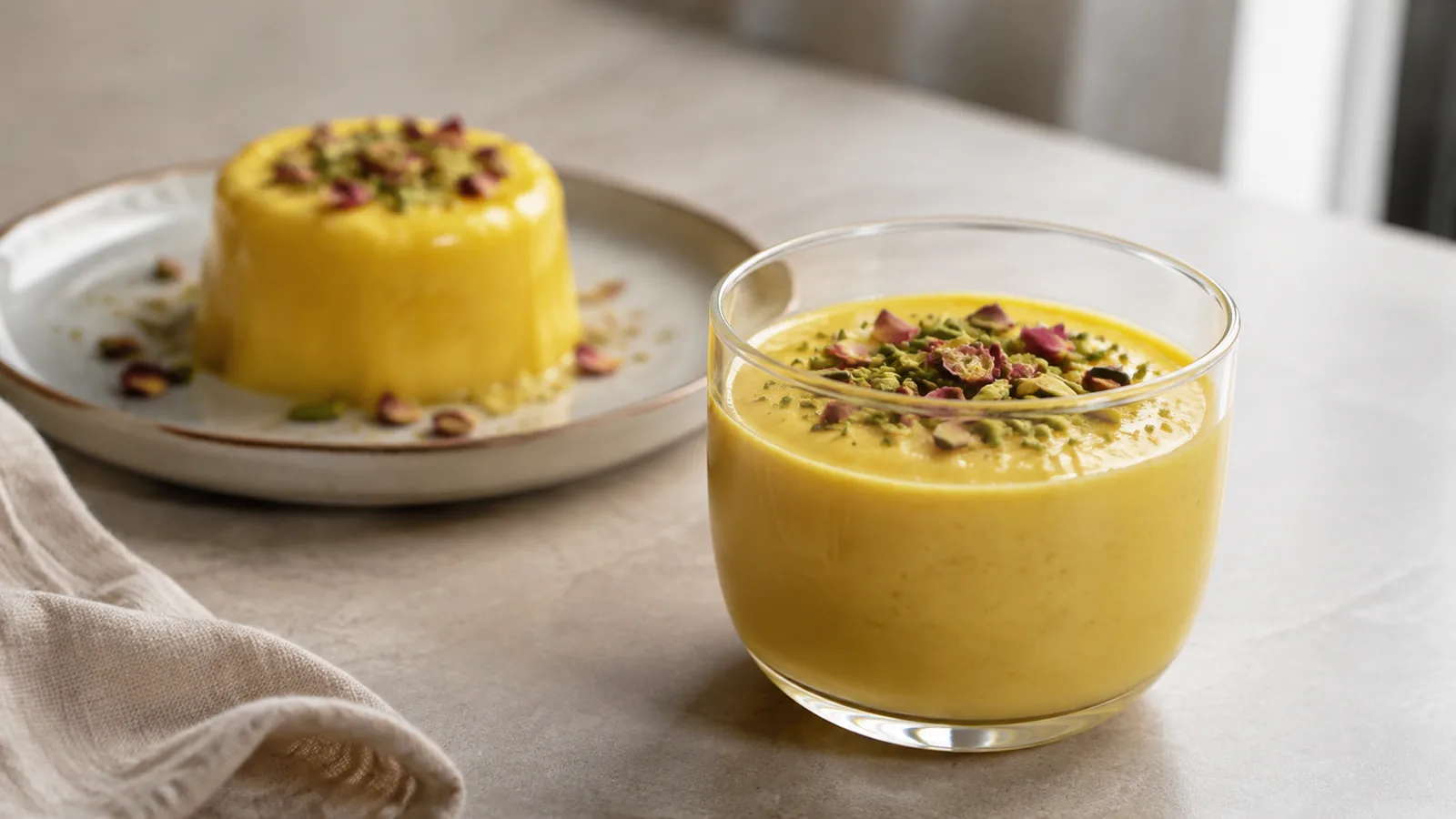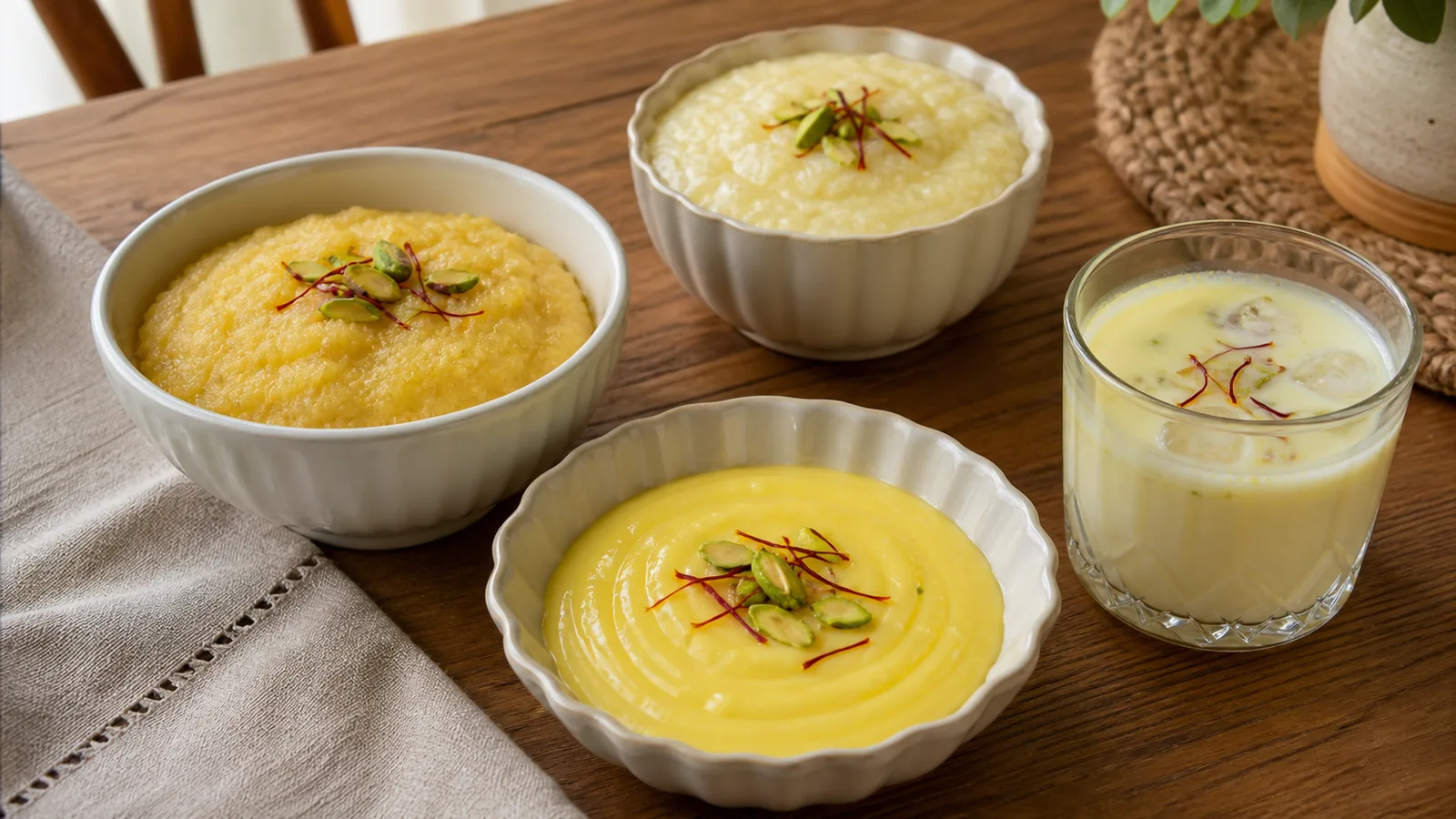
A saffron semolina dessert should be smooth, fragrant, and thick enough to hold a soft spoonful after cooling. The same flavour profile can be made with fine semolina, rice flour, or cornstarch, but those thickeners do not behave alike. Choosing one method and using the matching ratio prevents lumps and an overly stiff pudding.
The Persian rice-flour version is commonly called fereni or ferni. Cornstarch makes a silkier milk pudding, while semolina gives a gently grainy texture. This guide includes all three, plus the absorbed source recipe for a cold saffron-yogurt drink to serve alongside.
Bloom the saffron first
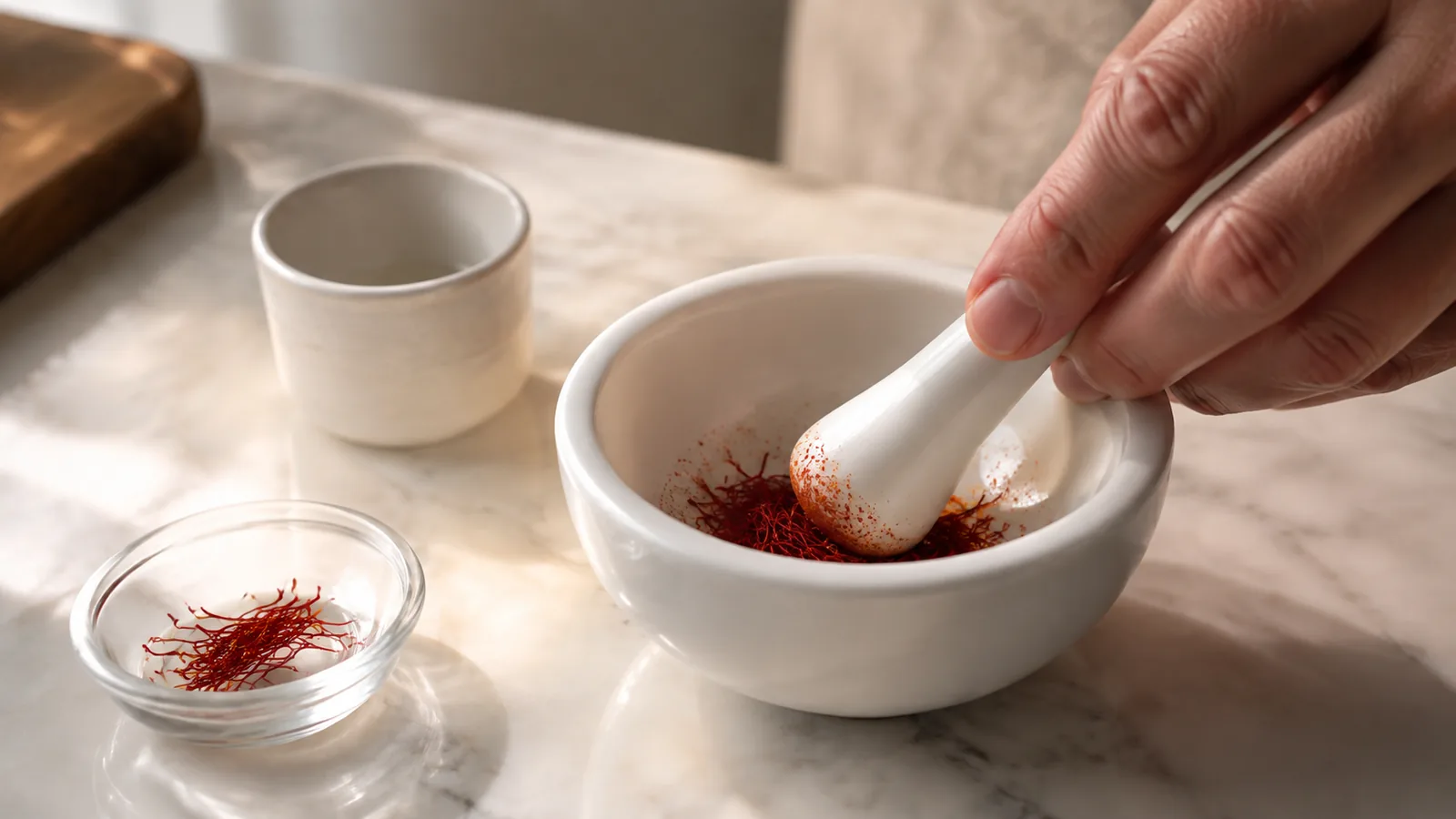
For any of the pudding methods, lightly crush about ¼ teaspoon of saffron threads. Put them in a small cup with two tablespoons of warm water and leave them for ten minutes. Warm water releases colour and aroma predictably without adding ice to the dairy mixture.
The infusion should smell clean and look golden-red. A larger quantity is not necessarily better: too much can make a delicate milk dessert bitter. Keep the bloomed saffron ready and add it near the end of cooking so its aroma remains distinct.
Cornstarch saffron pudding
This version sets cleanly and has the smoothest texture. It makes four to six small portions.
Ingredients
- 4 cups (960 ml) cold milk;
- ¼ cup (about 32 g) cornstarch;
- ⅓ cup (65 g) sugar, or to taste;
- the bloomed saffron;
- 2 tablespoons culinary rosewater;
- ½ teaspoon vanilla, optional;
- a small pinch of salt;
- chopped unsalted pistachios for serving, optional.
Method
- Whisk the cold milk and cornstarch in a heavy saucepan until no dry pockets remain. Starting cold matters; starch added to hot milk forms stubborn lumps.
- Add the sugar and salt. Cook over medium-low heat, whisking across the base and into the corners of the pan.
- When the mixture reaches its first gentle bubbles and coats the back of a spoon, continue cooking for one to two minutes to remove the raw starch taste.
- Take the pan off the heat. Stir in the saffron infusion, rosewater, and vanilla.
- Divide among small bowls. Serve warm, or cool briefly before covering and refrigerating until set.
Rice-flour saffron fereni
Rice flour thickens more gradually and produces the soft, comforting texture associated with Persian fereni. It must be rice flour, not whole rice grains or ordinary wheat flour.
Ingredients
- 3 cups (720 ml) cold milk;
- 4 tablespoons rice flour;
- 4 tablespoons sugar, adjusted to taste;
- the bloomed saffron;
- 2 tablespoons culinary rosewater;
- a small pinch of ground cardamom, optional;
- chopped pistachios or almonds, optional.
Method
- Whisk the rice flour into the cold milk until smooth. Add the sugar and cardamom.
- Set the pan over medium-low heat and stir continuously as it approaches a simmer. Scrape the bottom so the milk does not scorch.
- Cook gently until the mixture thickens, usually 20–30 minutes. It will continue to firm as it cools, so stop while it still flows slowly from the spoon.
- Stir in the saffron infusion and rosewater during the final two minutes.
- Pour into bowls and serve warm or chilled.
The rice-flour-to-milk ratio follows a tested Persian fereni contribution in the UC Berkeley community cookbook. The former page used one cup of rice flour for four cups of milk, which would produce a much denser paste rather than a spoonable pudding.
True saffron semolina pudding
The title “saffron semolina” is sometimes used loosely for all of these puddings. A true semolina version contains milled durum wheat and has a more noticeable grain.
Ingredients
- 4 cups (960 ml) milk;
- ½ cup (85 g) fine semolina;
- ⅓ cup (65 g) sugar, or to taste;
- the bloomed saffron;
- 2 tablespoons culinary rosewater;
- a pinch of salt;
- ¼ teaspoon ground cardamom, optional.
Method
- Warm the milk, sugar, and salt over medium heat until steaming but not boiling hard.
- Sprinkle in the semolina in a thin stream while whisking. Adding it all at once encourages clumps.
- Lower the heat and cook for about 8–10 minutes, stirring, until the grains are tender and the pudding coats the spoon.
- Remove from the heat and mix in the saffron infusion, rosewater, and cardamom.
- Serve warm for the softest texture, or chill for a firmer dessert.
Semolina is made from wheat and contains gluten. The rice-flour and cornstarch methods can be gluten-free only when every packaged ingredient is labelled accordingly and cross-contact is avoided.
How to make the cream variation
Cream is an enrichment, not a separate thickener. Make the rice-flour or cornstarch pudding first. Once the pan is off the heat, whisk two tablespoons of warm pudding into ¼ cup (60 ml) of cream. Stir that tempered mixture back into the pan.
Tempering keeps cold cream from cooling one area abruptly or separating. Do not boil the pudding after adding it. This version tastes richer and sets slightly softer.
How to avoid lumps, scorching, and rubbery texture
- Start starches in cold milk. Cornstarch and rice flour disperse before heat activates them.
- Use moderate heat. High heat scorches milk before the centre thickens evenly.
- Stir the base and corners. A flexible whisk or spatula reaches the places where solids collect.
- Stop before it looks fully set. Every version thickens as it cools.
- Add rosewater with restraint. It should support the saffron rather than make the pudding taste perfumed.
If cornstarch pudding is lumpy before it sets, take the pan off the heat and whisk vigorously. A fine-mesh strainer can rescue a few remaining lumps. If a pudding is too thick, whisk in warm milk a tablespoon at a time. If it is too thin, cook it a little longer; do not add dry starch directly to the hot pan.
A cold saffron-yogurt drink to serve alongside
The absorbed source promised a chilled sweet yogurt drink for summer or after iftar. Its word “squash” was a translation error; the intended spice is cardamom. This corrected version makes four small glasses.
Ingredients
- 2 cups plain yogurt;
- 1 cup ice-cold water;
- 1–2 tablespoons sugar, adjusted to the yogurt’s tartness;
- ¼ teaspoon ground green cardamom;
- a small pinch of saffron bloomed in 1 tablespoon warm water;
- ice cubes.
Method
- Whisk the yogurt until smooth.
- Gradually whisk in the cold water, sugar, cardamom, and saffron infusion.
- Taste and adjust the water for a drinkable consistency.
- Pour over ice and serve immediately.
This is a sweet, lassi-style yogurt drink rather than traditional salty doogh. Keep the yogurt and finished drink refrigerated. The USDA two-hour rule says perishable food should not remain unrefrigerated for more than two hours, or more than one hour when the temperature is above 90°F (32°C).
Serving and storage
Let hot pudding cool briefly before covering it, then refrigerate. A piece of parchment or reusable food-safe cover placed directly on the surface prevents a skin if you prefer a completely smooth top. Garnish only when serving so nuts remain crisp.
All versions contain milk unless you deliberately test a suitable alternative, and the drink contains yogurt. Pistachios and almonds are optional tree-nut garnishes. Label these ingredients clearly when serving guests.
Use genuine threads with a clean aroma and bloom them before cooking. Our saffron collection provides culinary options for the pudding or yogurt drink; the measured thickener and patient stirring are what give each recipe its proper shape.