If you want to use saffron on your face, begin with a patch test and keep the mixture simple. A weak water infusion can leave a temporary yellow tint, so try it on a small area before applying it more widely. Saffron is a potent natural pigment, but evidence for homemade saffron masks treating acne, dark spots, sunburn, or wrinkles is limited.
This guide explains how to use saffron on your face cautiously, what the available research actually supports, and why several familiar kitchen-mask recipes deserve more care than they usually receive.
How to use saffron on your face
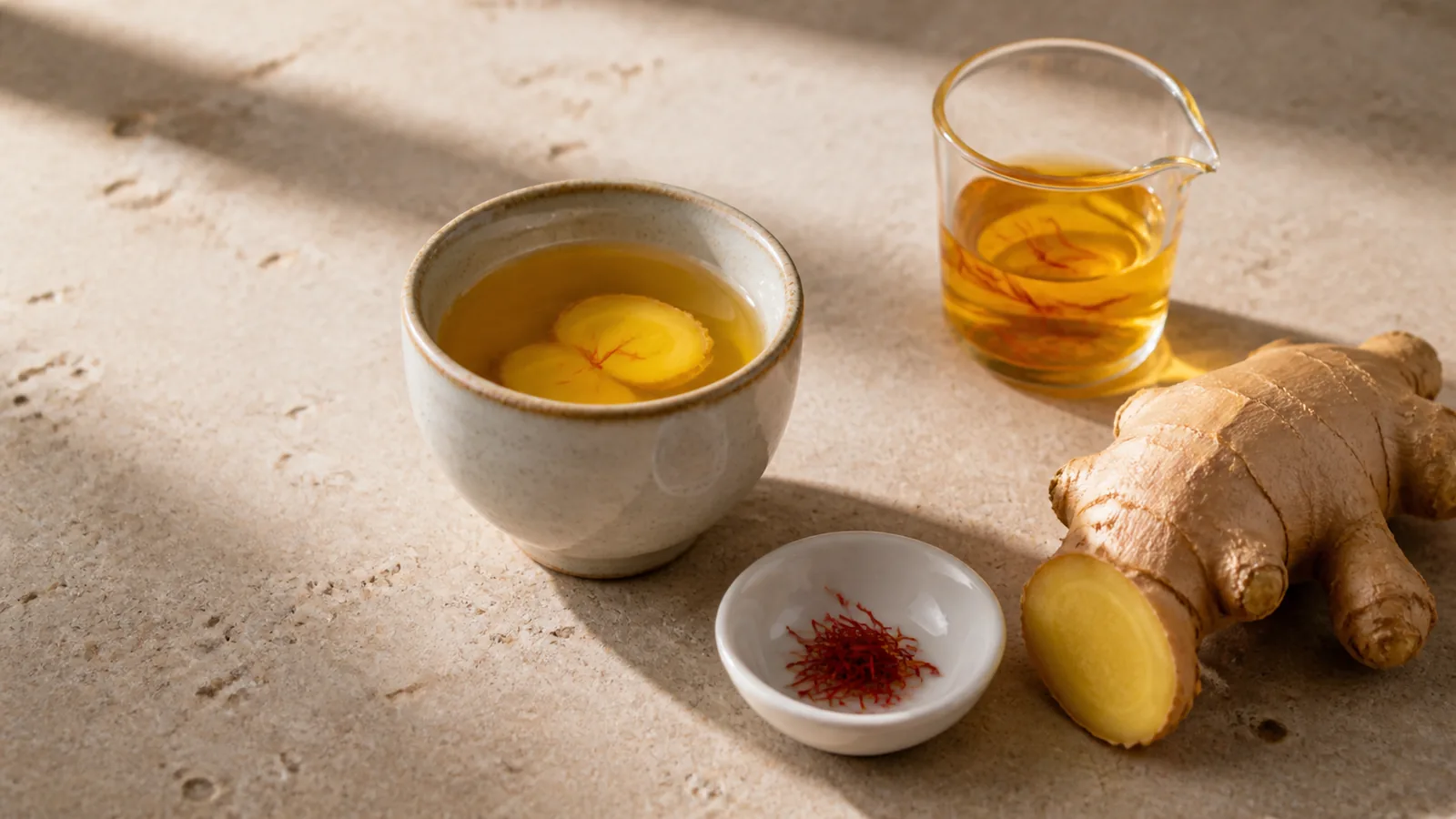
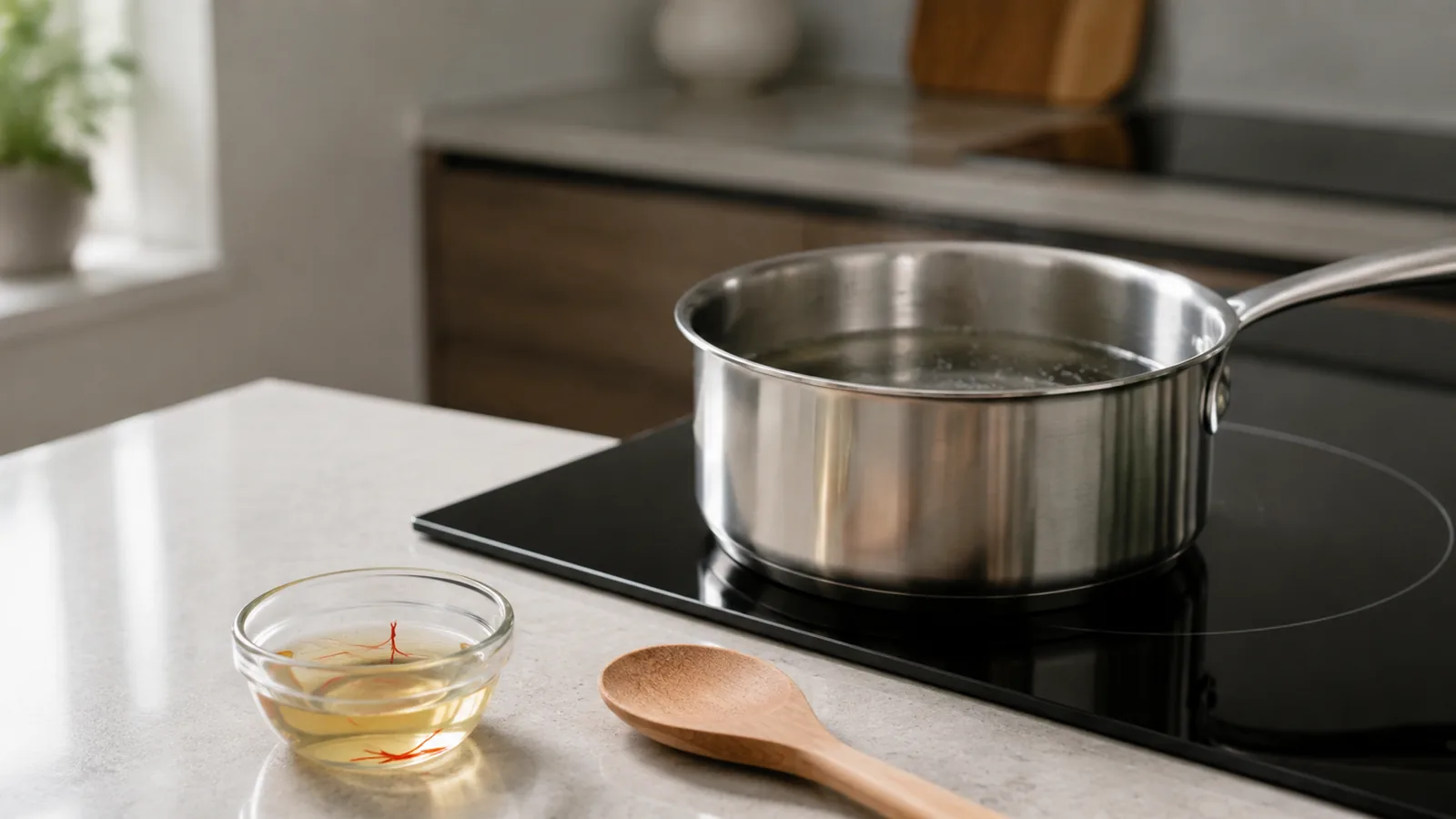
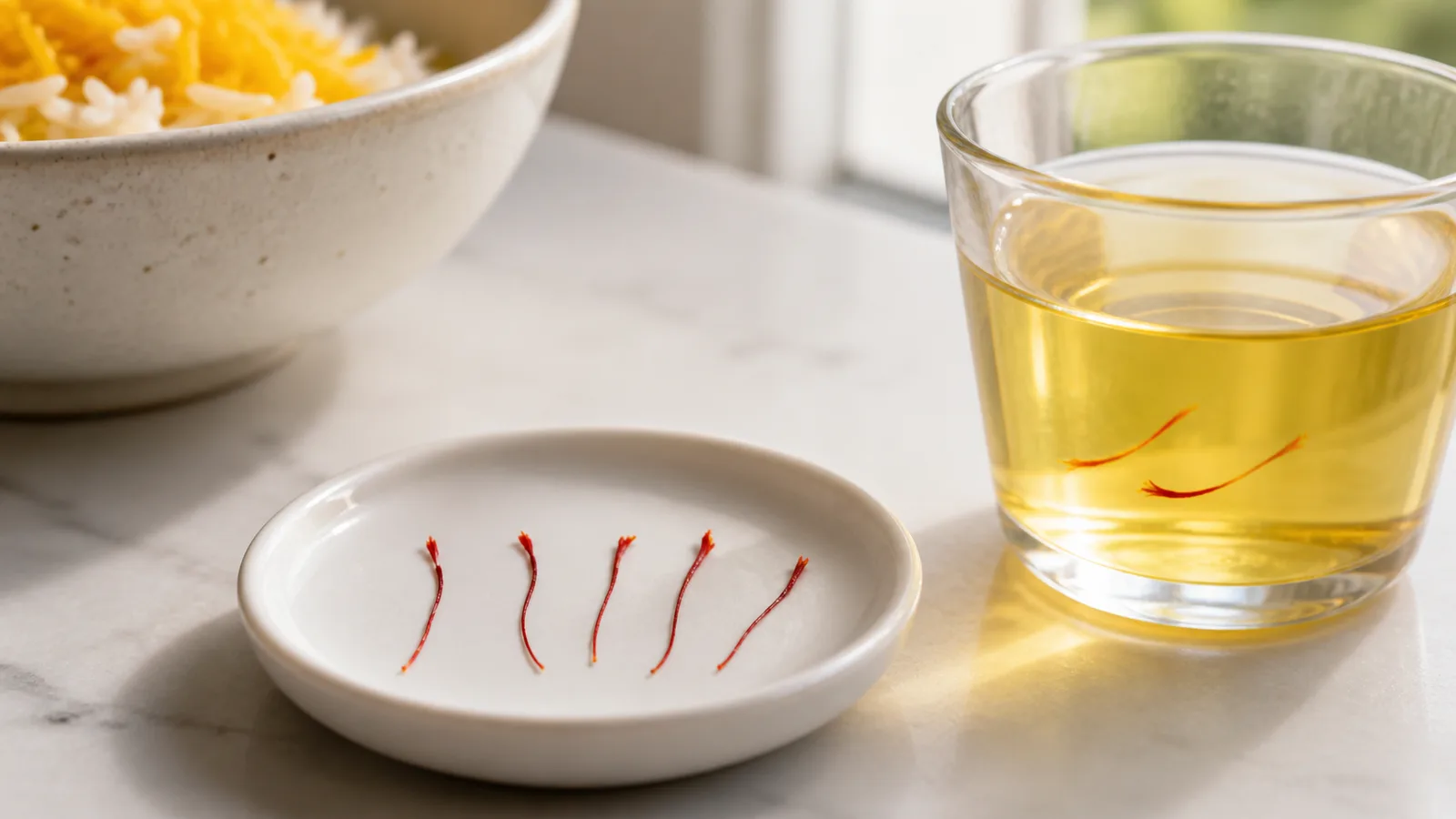
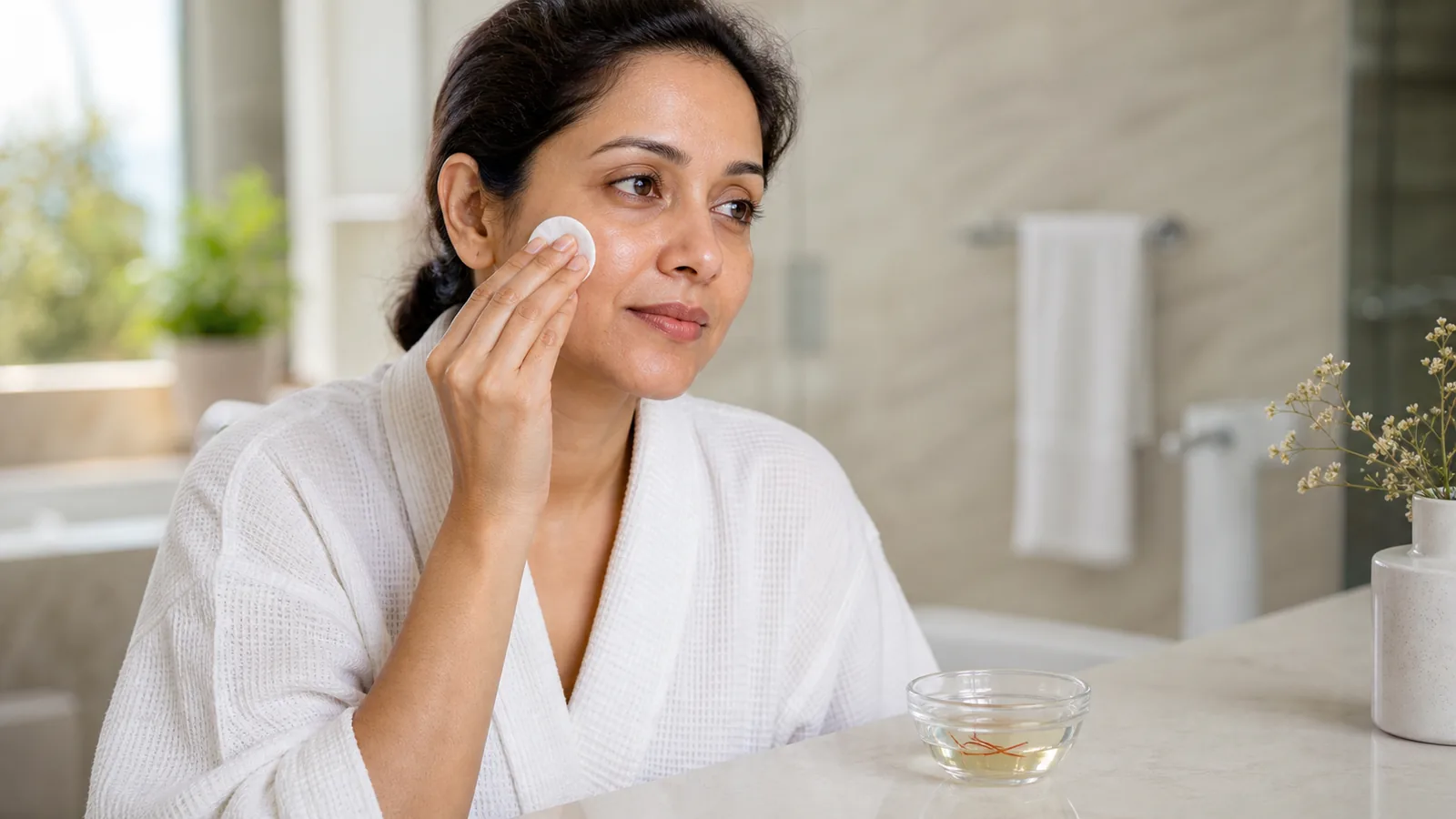
For the simplest short-contact application, place one or two genuine saffron threads in one tablespoon of warm water. Let them steep for about ten minutes, then allow the liquid to cool completely. Dab a little onto clean, intact skin with clean fingertips or a cotton pad. Keep it away from your eyes and lips. Rinse with lukewarm water after five to ten minutes and pat your skin dry.
This is a cosmetic trial, not a treatment. More saffron does not make it safer or more effective; it mainly makes the colour stronger and staining more likely. Make a fresh, small quantity, use it immediately, and discard what remains rather than storing a homemade water mixture.
Patch-test saffron before facial use
A quick test on the wrist for 24 hours can miss a delayed reaction. The American Academy of Dermatology’s home-testing guidance recommends applying a product to a quarter-sized spot on the underside of the arm or inside the elbow twice daily for seven to ten days. A wash-off product should stay on only as long as it would during normal use.
Use the same diluted mixture and contact time you intend to use on your face. Do not test on broken, inflamed, freshly shaved, or sunburned skin. If redness, itching, swelling, blistering, or persistent burning develops, wash it off and stop. A severe or lasting reaction needs medical advice.
Does saffron turn skin yellow?
It can leave a light, temporary yellow stain. Crocin and related water-soluble pigments are responsible for saffron’s intense colour. A concentrated infusion, too many threads, or a long contact time can colour the outer skin surface more noticeably.
That surface stain should fade with gentle washing and normal skin turnover; it is not a permanent change in skin tone. Do not scrub aggressively or use harsh acids to remove it. Rinse with a mild cleanser and give it time. Reducing the concentration and contact time during the next use lowers the chance of staining.
Yellowing that appears without topical saffron, particularly in the whites of the eyes, is not a cosmetic stain and should be assessed by a healthcare professional.
What research says about saffron for skin
Saffron contains crocin, crocetin, and other compounds studied for antioxidant and anti-inflammatory activity. Much of that work comes from laboratory experiments rather than well-controlled trials of homemade facial preparations. A promising mechanism is not proof that a kitchen mask will lighten pigmentation, clear acne, or slow skin ageing.
One small formulation study tested saffron lotions for ultraviolet absorption and measured skin moisture in six volunteers. Its sun-protection result was based on an in-vitro method, and the saffron lotion did not improve moisture compared with its lotion base. The published study does not validate saffron water, milk, honey, oil, or spice powder as sunscreen. Use a broad-spectrum, water-resistant SPF 30 or higher instead of relying on saffron for sun protection.
Formulated cosmetics containing a defined saffron extract are also different from soaking culinary threads at home. Their concentration, preservation, stability, and complete ingredient list can be evaluated; a homemade mixture has none of those controls.
Can saffron brighten skin or fade dark spots?
The yellow pigment may give skin a short-lived warm cast, but that is not the same as reducing melanin or treating hyperpigmentation. Claims that saffron permanently brightens the complexion or removes dark spots go beyond the clinical evidence available for homemade use.
Daily sun protection is the most useful first step for preventing dark marks from becoming more pronounced. Persistent or changing pigmentation has several possible causes, so a dermatologist can help identify it before treatment. Do not put an increasingly concentrated saffron mixture on a mark in the hope of faster results.
Is a saffron mask an acne treatment?
No reliable clinical evidence shows that a saffron-and-basil paste, saffron milk, or another homemade mask treats acne. These mixtures can add fragrance compounds, fats, proteins, or particles to already inflamed skin, making the cause of irritation harder to identify.
For mild acne, evidence-based topical options include adapalene, benzoyl peroxide, salicylic acid, and azelaic acid. The American Academy of Dermatology’s acne guidance explains what each ingredient does and when dermatologic care may be needed. Deep, painful, scarring, or persistent acne deserves professional treatment rather than repeated experiments with kitchen ingredients.
Should saffron be put on sunburn?
Do not apply saffron, milk, rosewater, essential oil, or a fragranced mask to freshly sunburned skin. The damaged barrier is more likely to sting or react, and a homemade treatment can delay appropriate care.
For a mild sunburn, get out of the sun, cool the skin with a bath, shower, or damp cloth, and apply a suitable moisturiser. The AAD’s sunburn advice recommends aloe- or soy-containing moisturiser, extra water, and leaving blisters intact. Extensive blistering, fever, chills, dizziness, confusion, severe pain, or signs of infection need medical attention.
What about popular saffron face-mask ingredients?
Older saffron beauty recipes often combine many ingredients at once. That makes a reaction more likely and makes it difficult to know which ingredient caused it.
- Milk or yogurt: these do not turn culinary saffron into a tested moisturiser or pigmentation treatment. Raw milk is unnecessary; do not use it on the face.
- Honey: it changes texture and may feel emollient, but it does not establish saffron as a treatment. Anyone sensitive to bee products should avoid it.
- Sandalwood, basil, or rosewater: plant-derived does not mean non-irritating. Each additional botanical introduces another possible fragrance or contact-allergy trigger.
- “Saffron oil”: the name may describe infused carrier oil, fragrance oil, or an essential-oil blend. Do not apply an unidentified oil directly or leave it on overnight.
- Raw egg white: it offers no established saffron benefit and is difficult to use hygienically.
- Baking soda: its alkalinity can disturb the skin barrier, so it does not belong in a facial mask.
If you choose a commercial saffron cosmetic, read the entire ingredient list, follow its labelled directions, and patch-test the finished product. “Natural” and “organic” are not substitutes for a formula designed for skin.
How much saffron should you use?
There is no clinically established dose of culinary saffron for a homemade face mask. One or two threads in a tablespoon of water are enough for a cautious colour test. Instructions suggesting several grams, daily use for weeks, or combining topical use with an oral daily limit are not evidence-based skincare guidance.
Topical use and eating saffron are different questions. Putting a diluted infusion on the skin does not create a meaningful rule about how much saffron a person may eat that day, and sweaty palms are not a reason to set a special topical saffron dose.
When to avoid saffron on the face
Skip a homemade saffron application if you have an active rash, eczema flare, broken skin, sunburn, an eye-area condition, or a known reaction to saffron or another ingredient in the mixture. Ask a dermatologist before adding it when you are already using prescription facial treatment or when your skin reacts easily.
Stop immediately if the application causes more than brief mild tingling. Swelling of the lips or face, trouble breathing, or widespread hives can indicate a serious allergic reaction and require urgent care.
A practical bottom line
The safest answer to how to use saffron on your face is modest: patch-test it properly, use a weak water infusion for a short time, rinse gently, and expect colour rather than a medical result. Temporary yellow staining is possible and usually preventable with a lower concentration and shorter contact.
Do not substitute saffron for sunscreen, acne medication, treatment for pigmentation, or sunburn care. If you want culinary threads for a cautious cosmetic trial, choose a product with clear origin and storage information from our saffron collection; the quality of the spice does not turn an unproven home recipe into a clinical treatment.