The best way to use saffron for beauty is as an optional ingredient in a well-formulated skin or hair product—not as a promise of whitening, hair growth or younger skin. Saffron brings colour, aroma and compounds studied for antioxidant activity, but a homemade mask or oil has not been shown to erase pigmentation, rebuild collagen or stimulate hair follicles.
If you enjoy botanical skincare, keep the routine simple: choose a suitable finished product, patch-test it and protect your skin from irritation. For DIY use, make only a small, fresh preparation and understand what it can realistically do.
Using saffron for beauty: what the evidence supports
Saffron contains crocin, safranal and other compounds investigated for antioxidant and anti-inflammatory activity. These findings help researchers understand the plant; they do not prove that saffron on the face neutralises free-radical damage, regenerates cells, removes fine lines or produces a youthful glow.
The most predictable cosmetic effect comes from the rest of a product. An emollient oil may make dry skin feel softer. A moisturiser can reduce a dull, flaky appearance. Saffron may contribute colour and a pleasant sense of ritual, but it should not receive credit for effects created by the complete formula.
How to use saffron for skin
Start with a formulated cosmetic
Look for a full ingredient list, clear directions and packaging that protects the product. For a water-based toner, serum or cream, preservation matters as much as the featured botanical. Fragrance, essential oils and other ingredients may be more relevant to sensitive skin than the saffron itself.
Patch-test before applying it broadly. The American Academy of Dermatology recommends testing a skin-care product on a small area twice daily for seven to ten days. Stop if you develop redness, itching, swelling, burning or another reaction.
How to apply saffron on the face
After a successful patch test, use the product exactly as its label directs. Apply it to clean skin, keep it away from the eyes and broken areas, and introduce one new product at a time. Follow with moisturiser if needed and broad-spectrum sunscreen during the day.
Our dedicated guide to how to apply saffron on the face compares common forms and their limits in more detail.
Can saffron whiten skin or improve fairness?
No reliable human evidence shows that saffron makes natural skin fairer or white. Advice about how to use saffron for skin whitening, how to use saffron in milk for fairness, or whether saffron will improve fairness rests on an unsupported premise. Drinking milk with saffron does not target facial melanin, and a yellow surface stain is not brightening.
Dark spots and uneven tone can follow acne, eczema, sun exposure or irritation. Scrubbing harder or making a DIY mixture stronger may worsen post-inflammatory pigmentation. For persistent marks, identify the cause and use evidence-based care rather than chasing a colour change.
DIY saffron face masks, toners, oils and scrubs
Saffron face mask
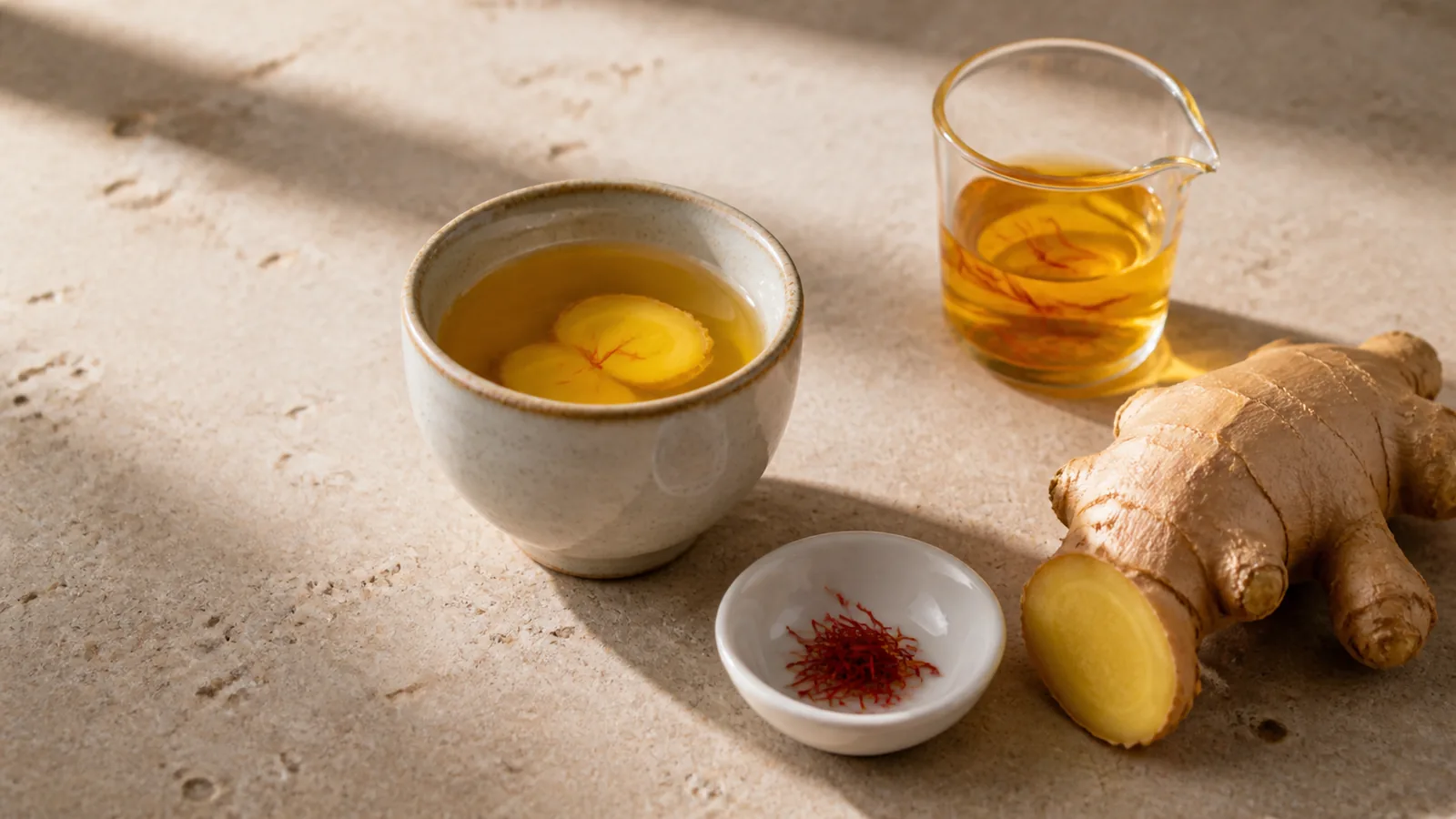
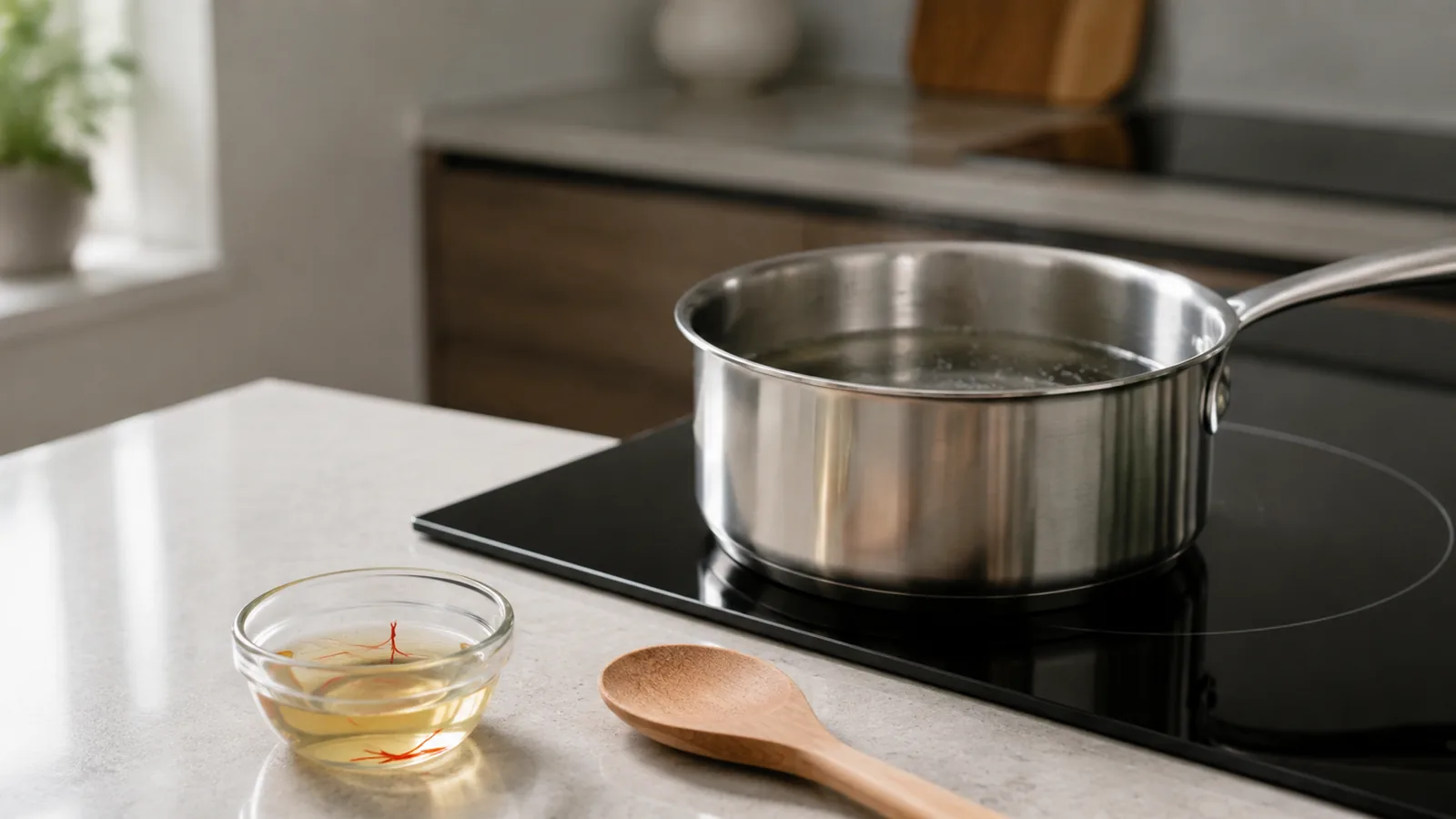
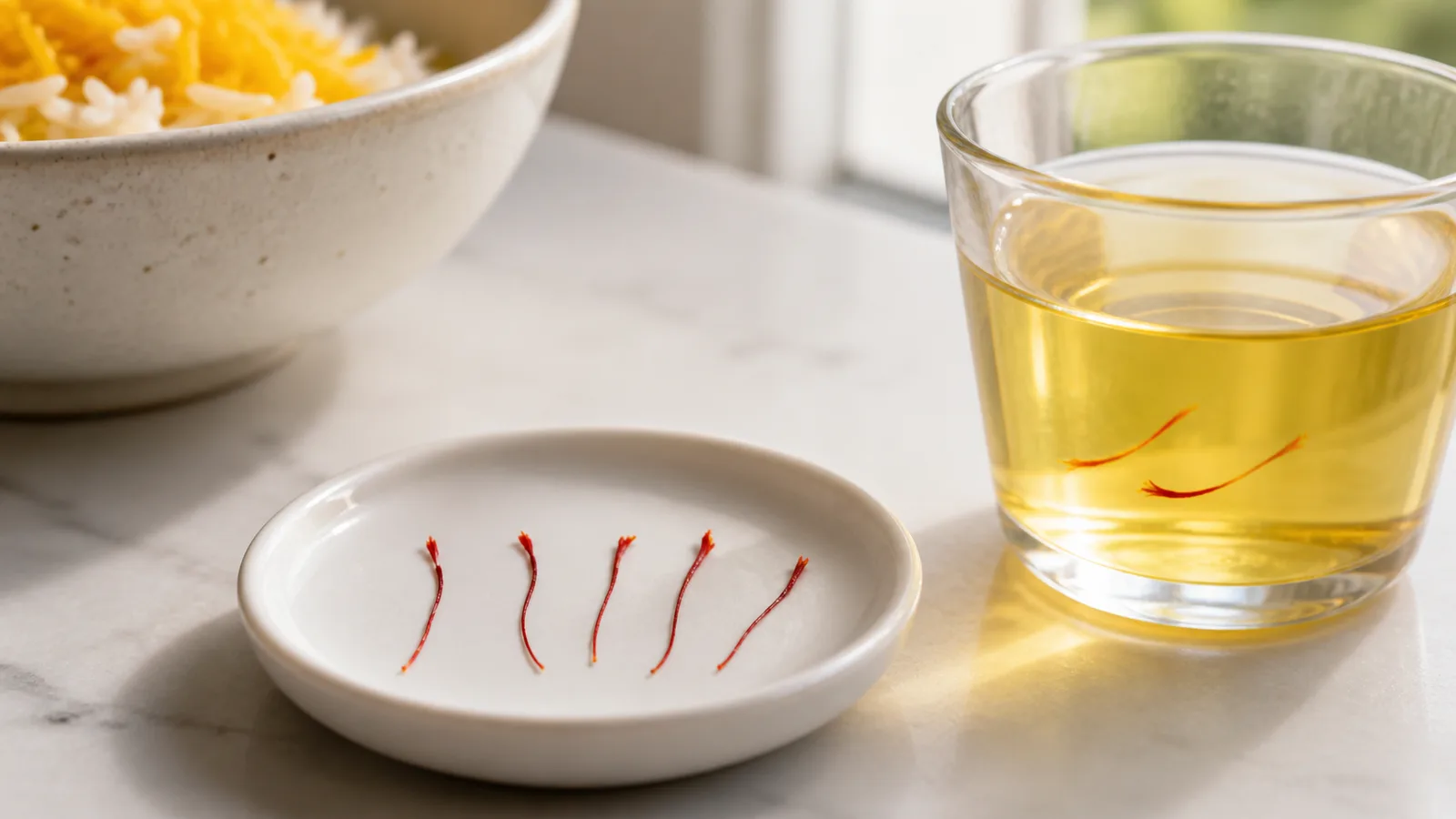
A traditional suggestion is to soak a few saffron strands in milk or water for 10 to 15 minutes, apply the liquid, leave it for about 20 minutes and rinse. This has not been shown to reduce pigmentation. Milk can spoil, and both food proteins and botanicals may irritate, so do not store the mixture. If you try a rinse-off mask after patch testing, make one use, keep it away from the eyes and stop if it stings.
Saffron toner
Do not put saffron, rose water or distilled water in a bottle and assume refrigeration makes it safe. The FDA explains that contaminated water, ineffective preservation and handling can introduce harmful microorganisms into cosmetics. Our one-use saffron toner method uses a clean cotton pad and avoids claiming an untested shelf life.
How to use saffron oil on the face
Choose a plain facial oil you already tolerate. Put one drop on clean fingertips, press it over a small area of slightly damp skin, then assess how your skin responds. Almond, coconut and olive oils do not suit every face; coconut and olive oil can feel heavy, while almond oil is inappropriate for someone with a relevant allergy.
An oil can reduce surface dryness and improve the feel of moisture, but saffron-infused oil is not proven to restore elasticity, fade scars or prevent ageing. If you make an infusion, use completely dry tools and leave water out of the stored bottle.
Saffron scrub
Sugar and coarse oatmeal can create unnecessary friction, especially on acne-prone or pigmented skin. Honey does not turn an abrasive scrub into a treatment. A gentle cleanser and a properly formulated exfoliant are more controlled ways to remove loose surface cells; redness is not a healthy glow.
Can saffron improve hair beauty?
There is not solid clinical evidence that saffron stimulates hair follicles, stops hair loss, promotes hair growth or strengthens roots. Mixing saffron with olive oil or coconut oil and massaging it into the scalp may coat the hair and add temporary shine, but that is a conditioning effect rather than new growth.
If you try an oil on the hair lengths, use a small amount and wash it out with your normal mild shampoo. A 30-minute scalp treatment is unnecessary if it causes itching, buildup or tenderness. Avoid oils on an inflamed scalp, and see a dermatologist for sudden, patchy or persistent hair loss rather than increasing saffron.
Beauty use should protect the skin barrier
High-quality, genuine saffron reduces the risk of unknown adulterants, but purity does not guarantee that your skin will tolerate it or that a beauty claim is true. Use a modest amount, patch-test the finished preparation and do not combine several new DIY treatments at once.
Saffron can be an attractive detail in a routine. The fundamentals still do more work: gentle cleansing, moisturising, sun protection and treatment chosen for a specific concern. If you decide to experiment, begin with a few genuine saffron threads, not a concentrated paste.