Will saffron keep me awake at night? Saffron itself contains no caffeine and is not generally considered a stimulant. A culinary amount in food or a caffeine-free drink is therefore unlikely to cause wakefulness for most people. The tea, sugar, timing and your individual response may matter more than the threads.
That does not make saffron a sleeping medicine. Research on defined supplements has explored sleep outcomes, but it cannot guarantee that a homemade drink will make you drowsy or fix insomnia.
Saffron and Sleep: Will Saffron Keep You Awake at Night?
If a saffron drink seems to disturb your sleep, inspect the whole recipe. Black, green and oolong tea contain caffeine. Chocolate, a large quantity of sugar, a heavy late meal, alcohol and drinking too much liquid close to bedtime can also change sleep or cause discomfort.
People respond differently to foods and routines. The most useful test is simple: keep the preparation consistent, try it earlier in the day, and stop using it at night if you repeatedly notice wakefulness, reflux, nausea or another unwanted effect.
Saffron and Its Effects on Sleep
Small clinical trials have tested standardised saffron extracts in adults reporting sleep difficulties. A 2022 systematic review and meta-analysis described promising changes in some sleep measures while calling for more research on dose and long-term safety.
Those findings concern controlled preparations taken over time. They do not establish that saffron immediately raises serotonin or melatonin in a person drinking tea, and they do not prove that a few threads work as a sedative. Persistent insomnia needs a broader assessment than one ingredient.
How Saffron May Affect Sleep
Researchers have proposed several biological pathways, but a plausible mechanism is not the same as a demonstrated effect in a kitchen serving. Saffron may also feel relaxing because a warm, aromatic drink becomes part of a predictable wind-down routine.
Sleep depends on light exposure, schedule, stress, pain, medicines, caffeine, alcohol, breathing problems and many other factors. If you snore heavily, stop breathing during sleep, experience severe daytime sleepiness or struggle for weeks, seek qualified medical advice.
How to Use Saffron for Better Sleep
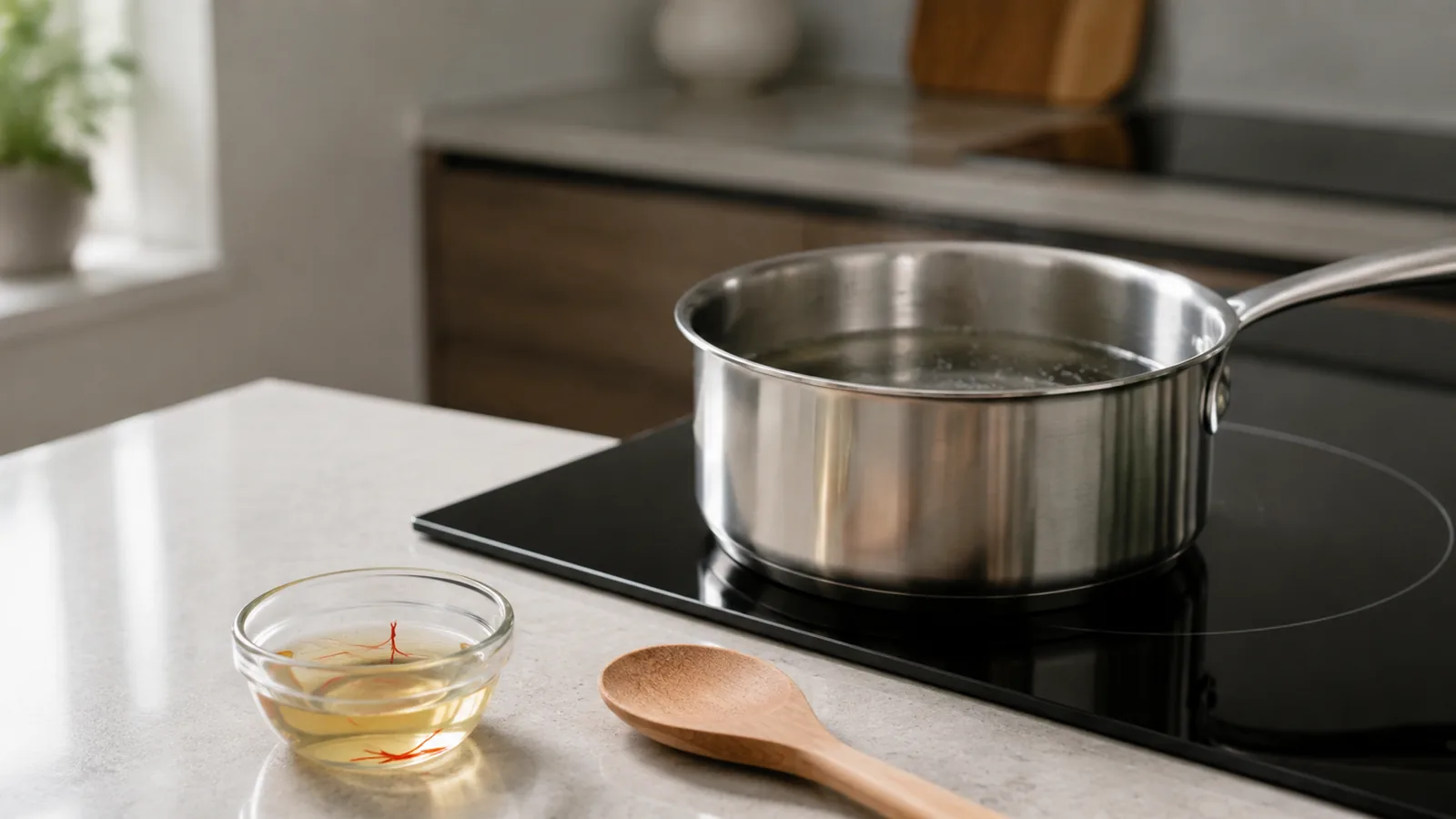
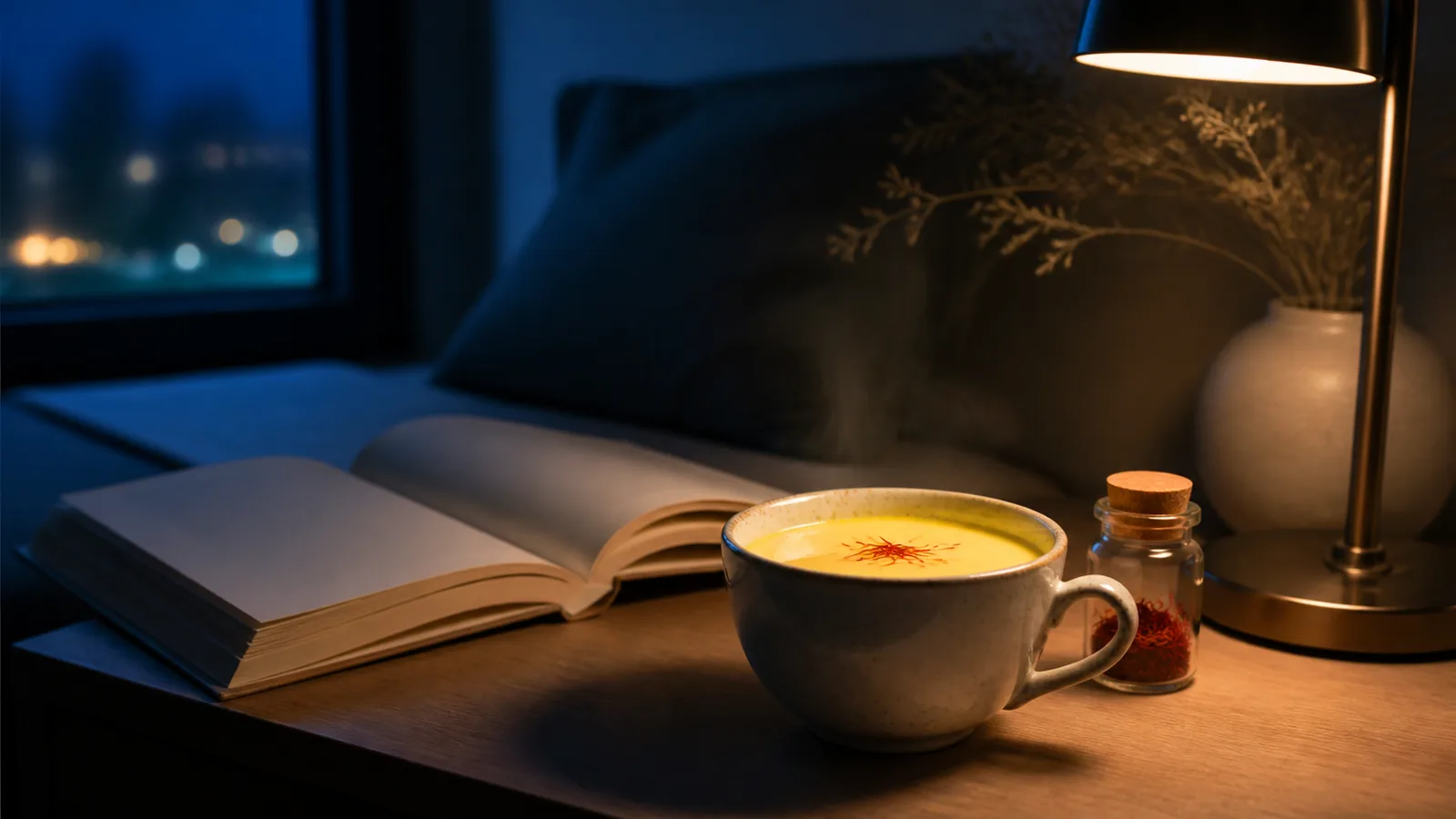
If you enjoy saffron in the evening, bloom a small culinary pinch in warm water or milk for 15 to 20 minutes. Add it to a caffeine-free drink and keep sweetener modest. This is a pleasant recipe, not a proven dose for better sleep.
Avoid black or green tea late in the day if you are sensitive to caffeine. Decaffeinated tea can still contain a small amount. Drink the cup early enough that reflux or a night-time bathroom trip does not become the real reason you are awake.
Precautions
Do not copy a supplement dose into a home drink or count threads as though they were uniform. Excessive or concentrated saffron can cause adverse effects, and pregnancy warrants special caution (PMID 28293386).
Ask a doctor or pharmacist before concentrated use if you are pregnant or breastfeeding, take regular medicines, have low blood pressure or a bleeding condition, or are preparing for surgery. Stop after an allergic reaction or repeated dizziness, nausea or headache.
Conclusion
Saffron is unlikely to keep you awake simply because it is saffron. It is caffeine-free, but the drink carrying it may not be. Treat an evening cup as food, pay attention to your own response, and do not replace evidence-based sleep care with a spice.
See our separate answer to whether saffron makes you sleepy, or browse our culinary saffron.