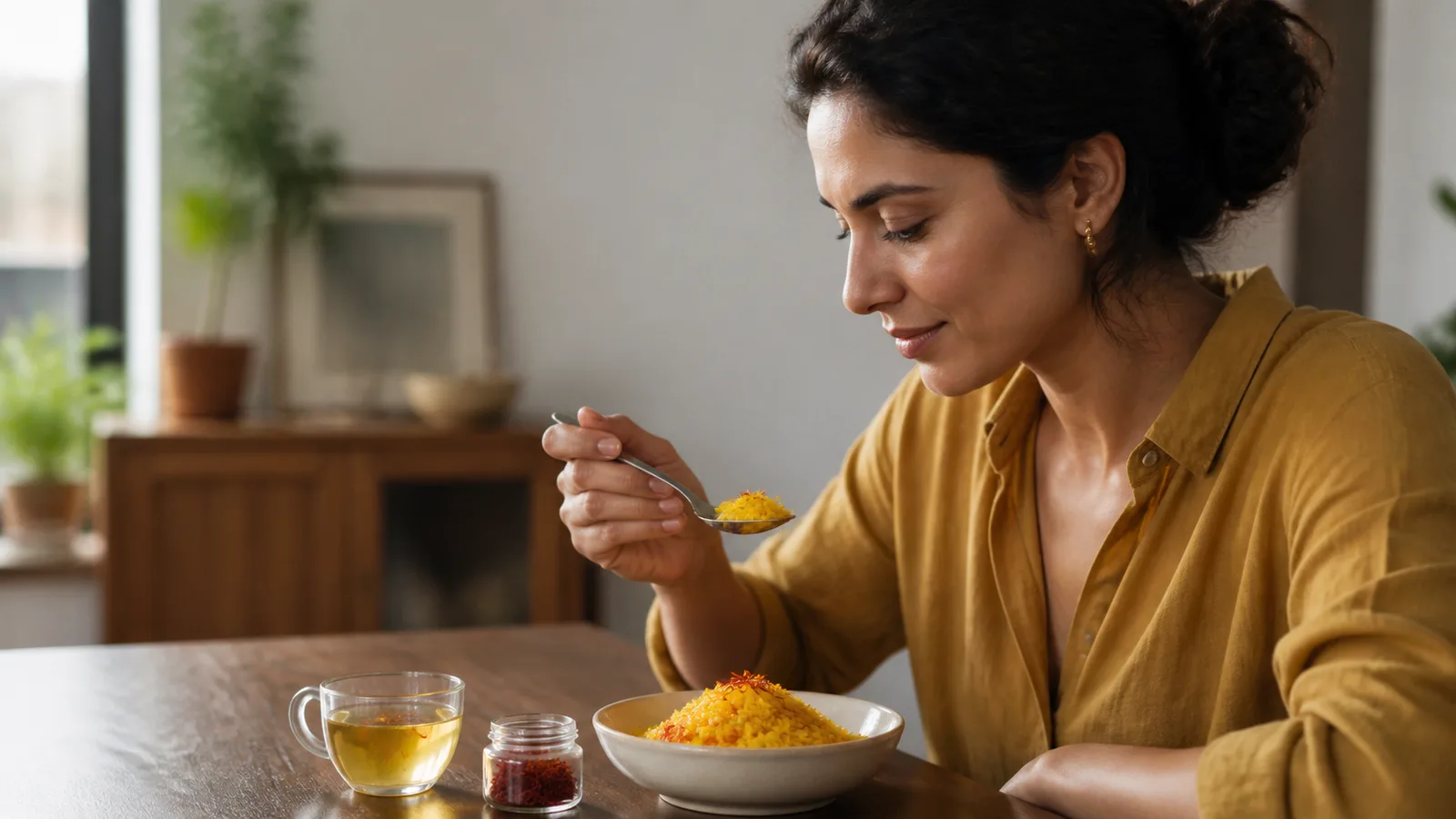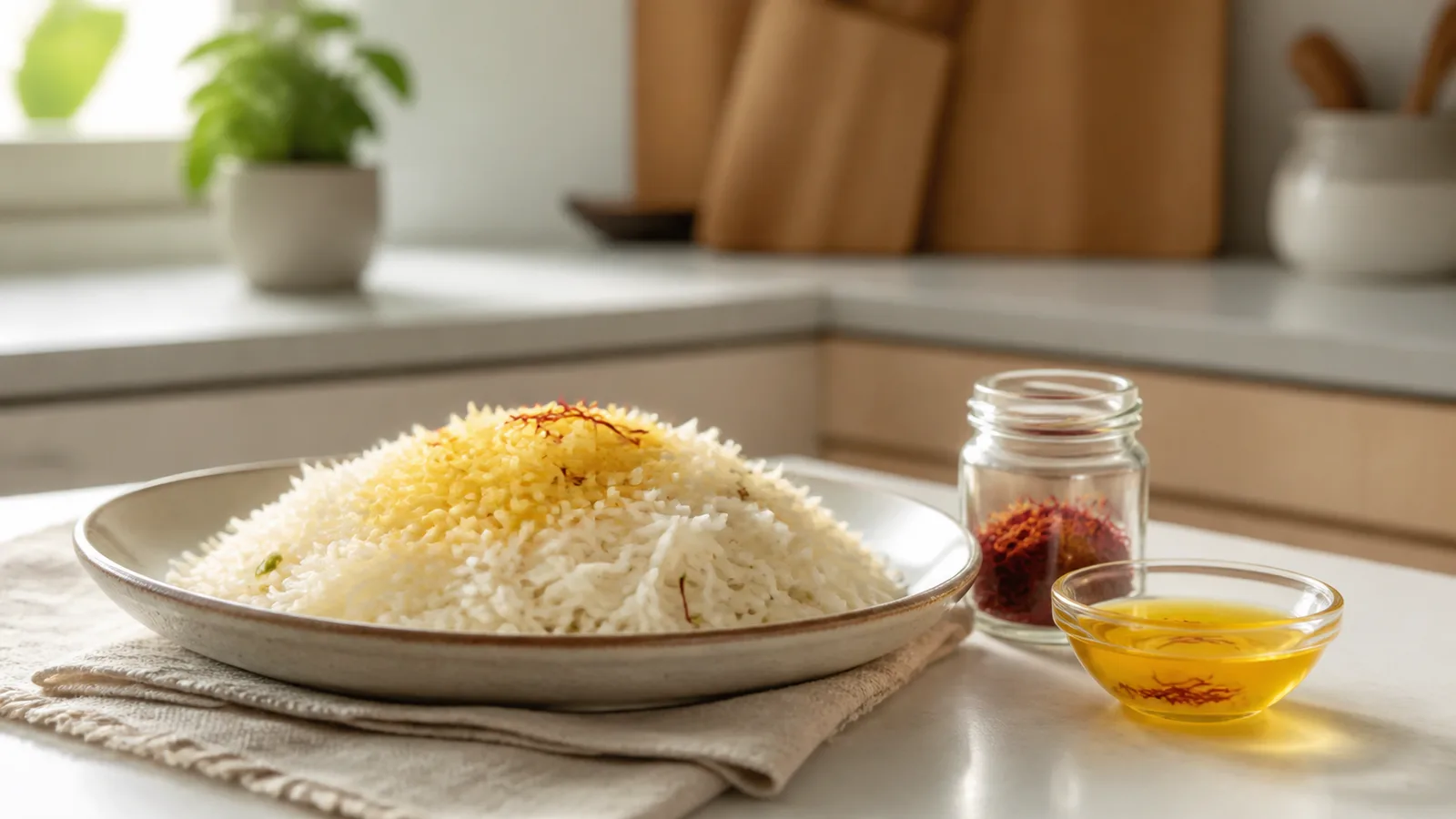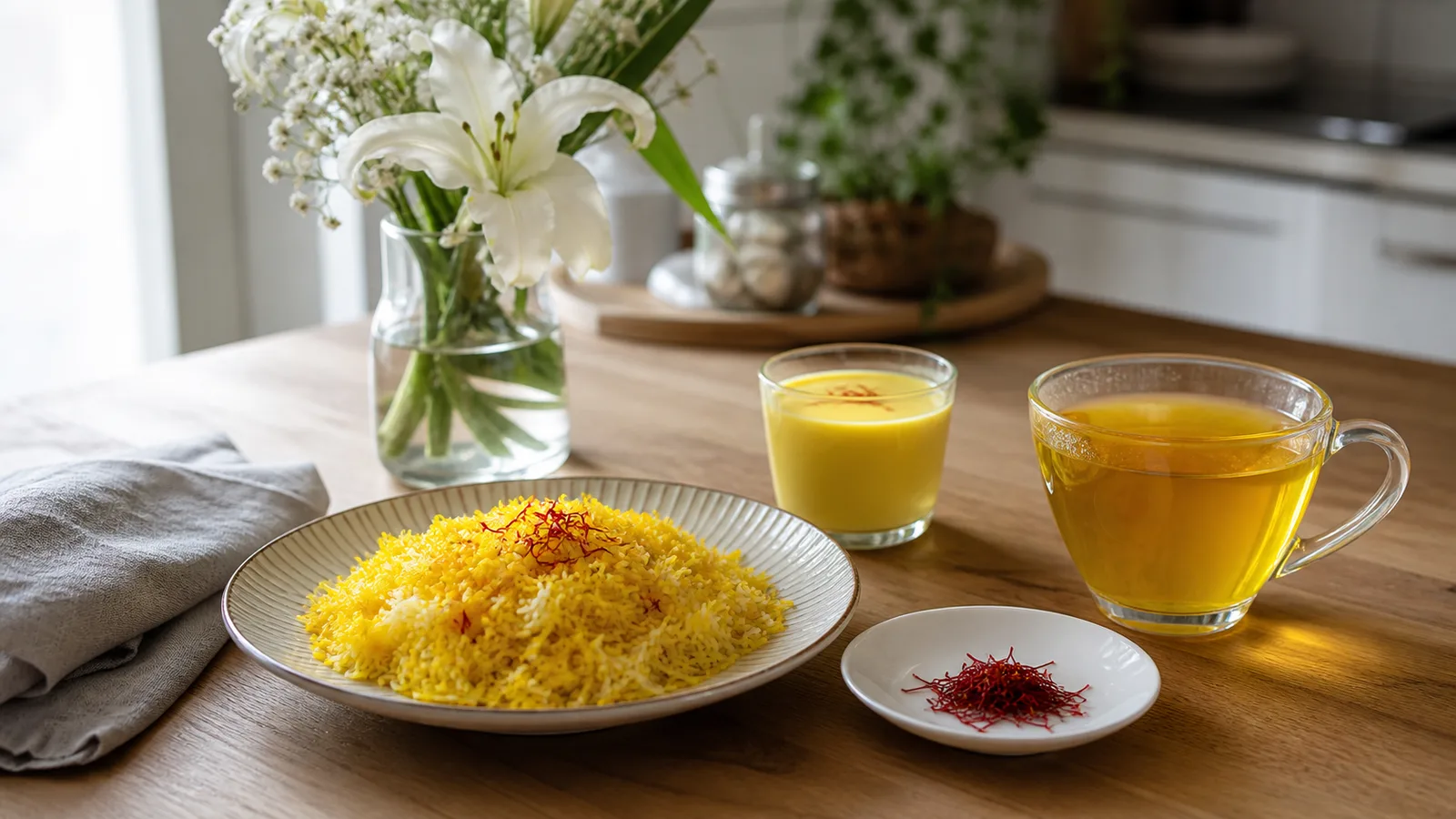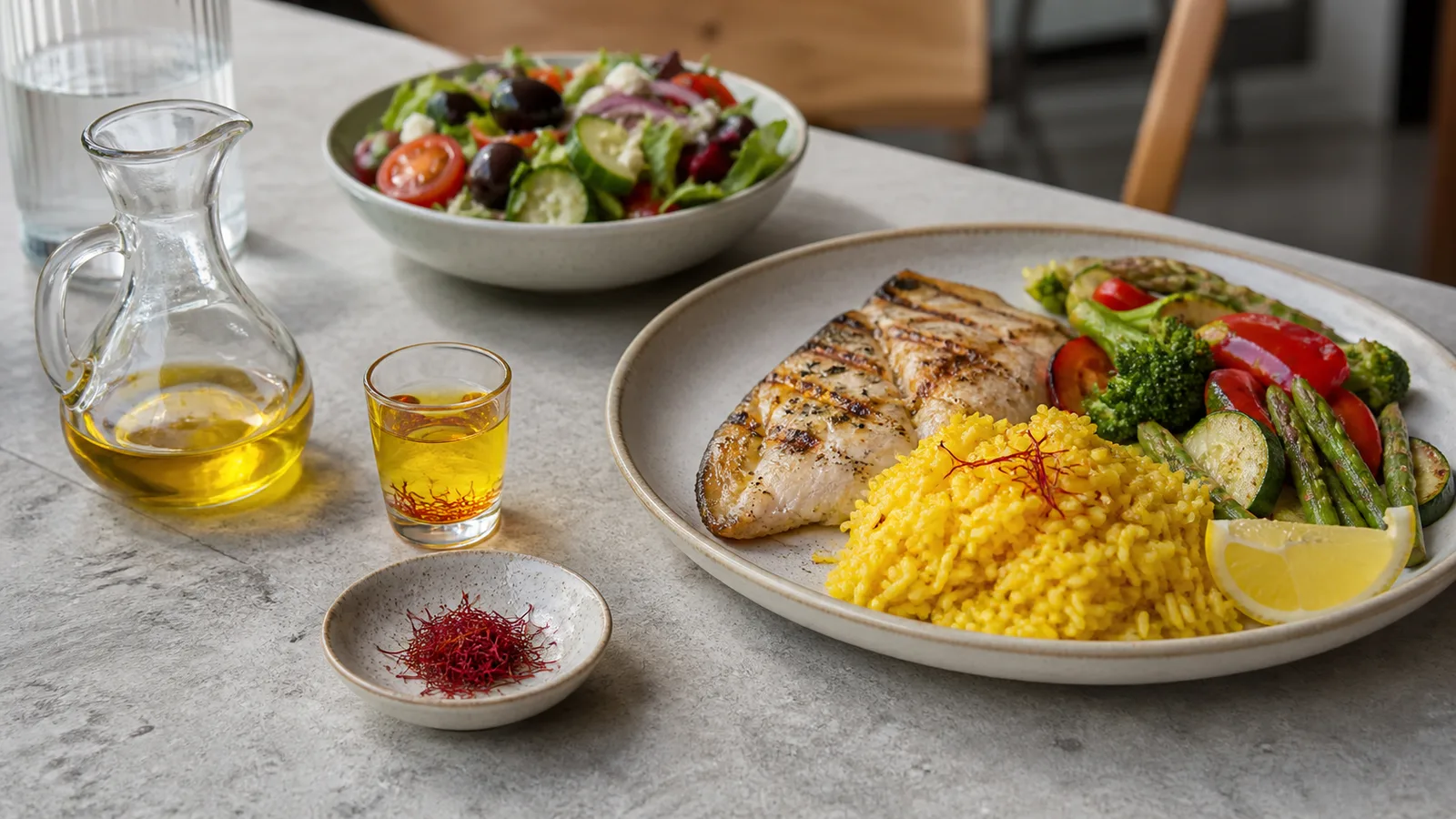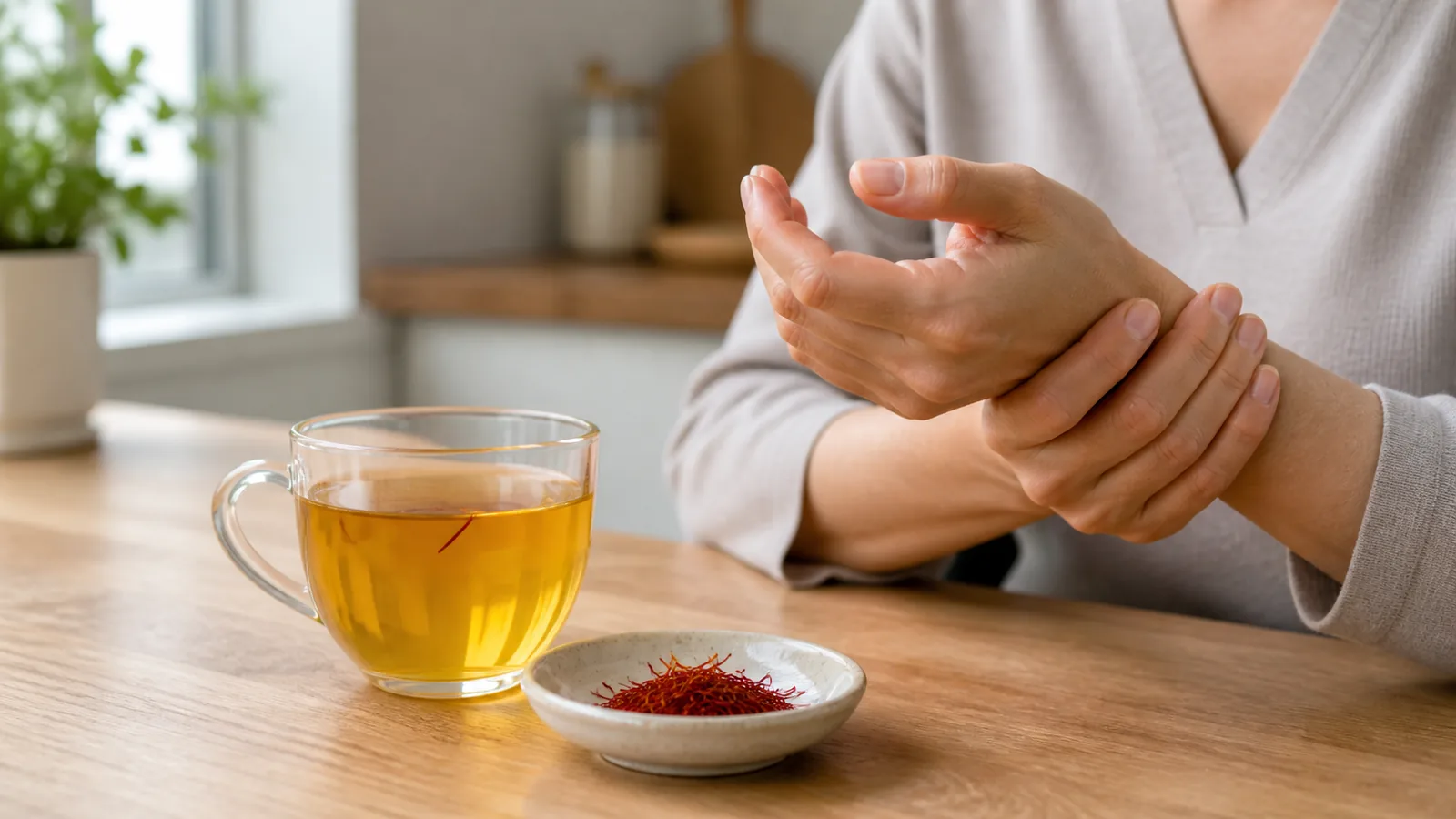
Is it safe to drink saffron every day? A small culinary amount in food or a drink is likely to be tolerated by many adults, but daily use is not necessary and there is no universal thread count that is safe for everyone. The recipe, product, medicines, pregnancy and personal health all change the answer.
Daily saffron tea is also not the same as a standardised supplement. Thread length and weight vary, household infusions extract different amounts, and adding more does not create proportionally greater benefit.
Drinking Saffron Every Day: Is It Safe?
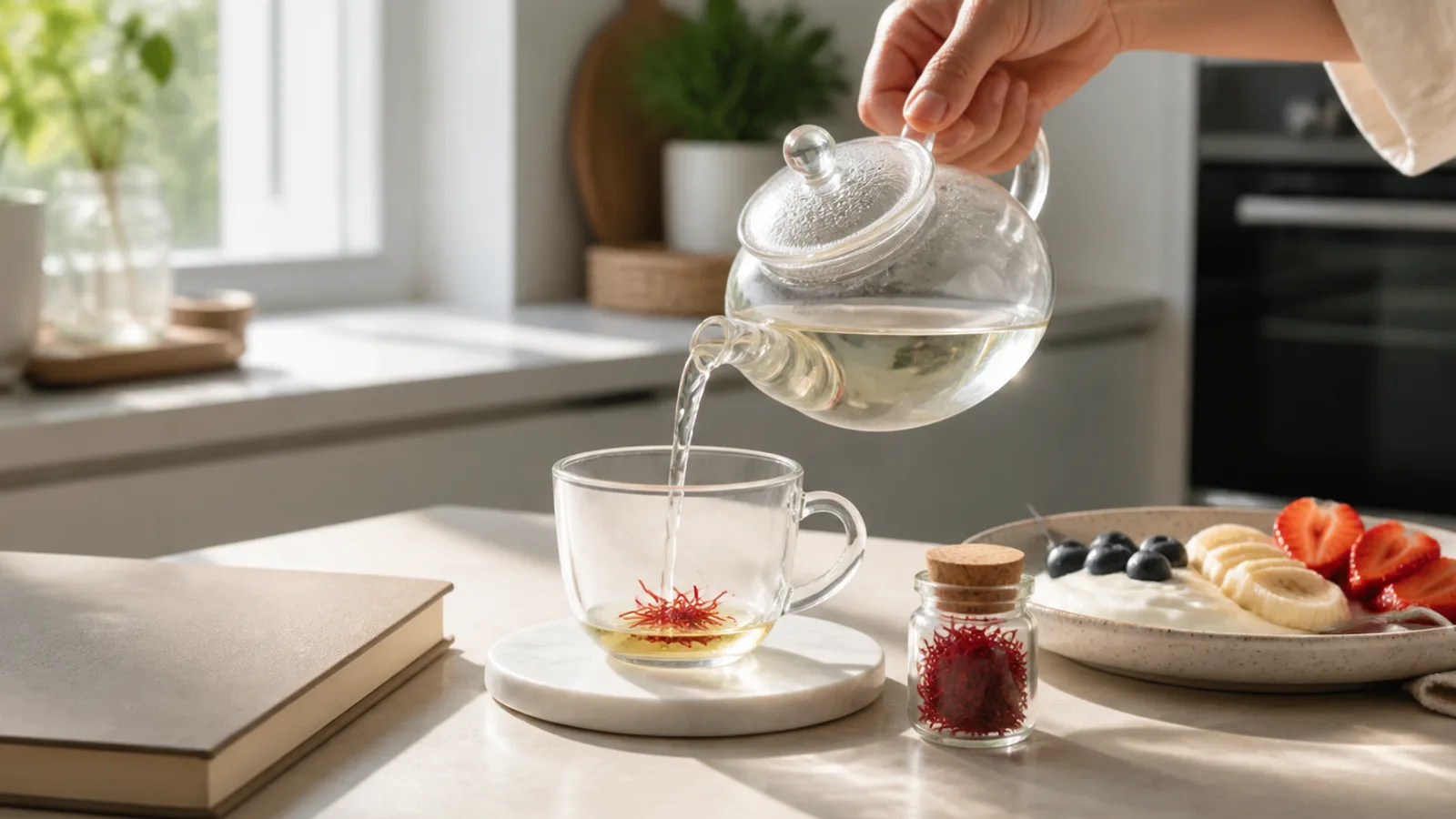
Can I drink saffron tea every day? If you choose to, use saffron as a spice: bloom a modest culinary pinch in warm water or milk, judge it by flavour, and avoid continually increasing the amount. Keep track of the complete drink, including caffeine, sugar and dairy or plant-milk ingredients.
Stop and reassess after nausea, dizziness, headache, unusual bleeding, low-blood-pressure symptoms or an allergic reaction. Trouble breathing or facial swelling requires urgent help.
Health Benefits of Drinking Saffron
Saffron, also called kesar, contains crocins, crocetin, picrocrocin and safranal. Trials have examined measured preparations for mood, sleep and other outcomes. A review of saffron evidence reviews found promising findings alongside important weaknesses in study quality and reporting.
That evidence does not show that drinking saffron every day prevents inflammation or heart disease, boosts the brain, or treats depression and anxiety. Questions about the benefits of kesar should be answered in terms of the tested preparation and outcome, not transferred wholesale to tea. Daily use should not replace food variety, prescribed medicine or professional care.
How Much Saffron Should You Drink Daily?
How much saffron per day? There is no authoritative universal dose for a homemade drink. The former advice of 30 milligrams or 10 to 15 threads gave a false sense of precision: threads differ in size, and clinical study amounts are not automatically personal recommendations.
How much saffron is too much depends on actual weight, concentration, frequency and the person using it. “A few threads” is a culinary starting point, not a medical limit. Do not experiment with gram-level quantities, and do not rely on an article to manage a suspected saffron overdose. Contact a poison service or urgent medical care after a large ingestion or significant symptoms.
Can you smoke saffron? It is a food spice, not a smoking product. Burning and inhaling it has no established benefit and exposes the lungs to smoke and combustion products. Do not smoke or vape saffron.
Precautions
Pregnancy and breastfeeding deserve particular caution, especially with repeated or concentrated use. A toxicology review describes adverse effects and pregnancy concerns at higher exposures while noting evidence limitations (PMID 28293386).
Kesar side effects are saffron side effects under another name. Ask a doctor or pharmacist before regular concentrated intake if you take medicines, have low blood pressure, a bleeding condition or an allergy, or are preparing for surgery. Check whether a supplement has independent quality testing; adulteration and inaccurate labelling can change the risk.
A saffron drink made with black or green tea contains caffeine. Milk allergy, lactose intolerance and added sugar may be more relevant to a particular cup than saffron itself.
Conclusion
Drinking saffron every day is a preference, not a requirement for health. Keep culinary use modest, avoid smoking or improvised high doses, and seek individual advice before making concentrated saffron part of a daily routine.
For a non-daily preparation guide, see saffron in hot water, or browse our culinary saffron.