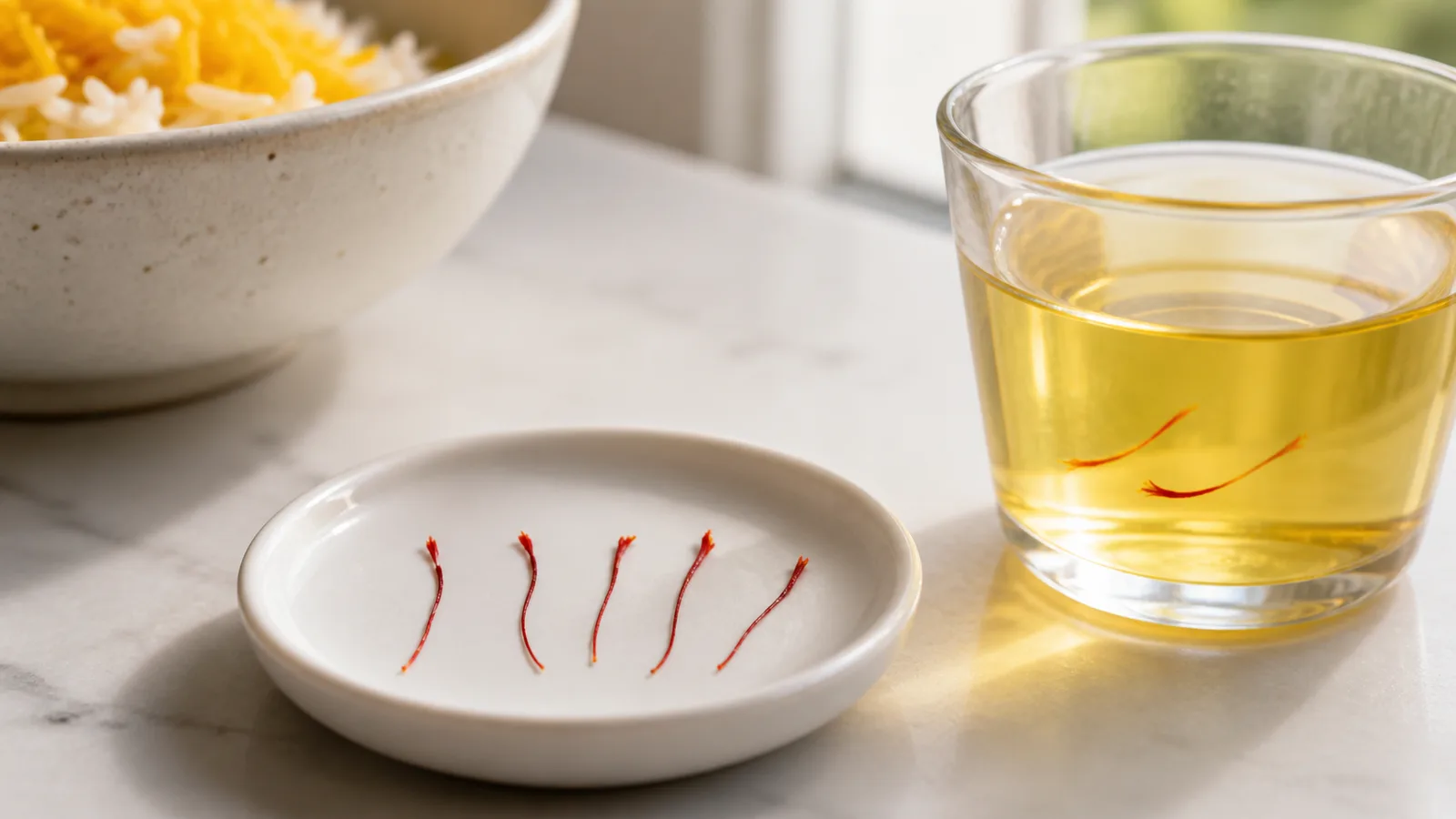
If saffron seems to make you feel good, the reason may be a mix of context, expectation and—when a standardized extract is used consistently—a modest change in mood, stress or sleep. Research offers plausible explanations, but it cannot confirm the cause of one person’s immediate experience. Saffron is not expected to create a drug-like high.
Start with the timing. Feeling brighter during a saffron meal or just after a cup of tea is different from the gradual symptom changes measured in clinical trials. The aroma, color, food, company and pause in your day may all contribute. Those effects are meaningful without needing to be described as an antidepressant action.
How does saffron improve mood in studies?
The best evidence concerns groups of people assessed over several weeks. A 2026 systematic review of 34 randomized trials found improvements on some self-reported depression and anxiety scales, but not on all clinician-rated or general mood measures. Results varied substantially between studies. That supports a possible modest effect for some populations, not a guarantee that saffron will make everyone happy.
One eight-week placebo-controlled study enrolled 56 adults with subclinical low mood, anxiety or stress. Participants taking a standardized extract reported improvements in selected outcomes, including depressive feelings and social relationships. The trial summary does not show an instant boost after ordinary culinary use, and its small sample limits broad conclusions.
Evidence is also genuinely mixed. In a newer six-week study of 51 adults, saffron did not improve the main combined outcome of depression, anxiety and fatigue, although one broader mental-health score changed. This negative primary result helps keep claims about saffron mood-enhancing effects in proportion.
Crocin, safranal and picrocrocin: what is known?
Crocin, crocetin, safranal and picrocrocin help give saffron its color, aroma and flavor. Laboratory and animal studies have led researchers to investigate antioxidant, inflammatory, stress-response and neurotransmitter pathways. These are hypotheses about how an effect might occur; they are not direct proof of what happened in your brain.
The familiar statement that crocin increases serotonin levels and therefore creates contentment or joy is too certain. Human trials generally measure symptoms rather than serotonin production inside the brain. Serotonin is one part of complex mood biology, not an “overall happiness” meter.
Stress and the sense of feeling more at ease
Reduced tension can feel like a clearer mind, easier conversation or a greater sense of well-being. A very small crossover study exposed 19 healthy young men to a laboratory stress test after a single extract, isolated safranal or placebo. The saffron conditions changed self-reported stress/anxiety and delayed the timing of peak salivary cortisol and cortisone. Read the acute stress study.
That is not evidence that saffron simply lowers cortisol or works as a natural relaxant for everyone. The study was small, used specific preparations and examined a controlled stressor. Our article on saffron and cortisol explains why timing and concentration matter more than the slogan “lower is better.”
Sleep may change how the next day feels
Good sleep supports emotional regulation, energy and resilience. A systematic review identified five randomized saffron sleep trials with 379 participants and found early evidence of better sleep quality or duration in some settings. The authors of the sleep review also called for stronger research.
If sleep genuinely improves over time, better mood the next day may be an indirect result. That differs from saying saffron immediately calms the mind or ensures restful sleep. A tea ritual may also help someone wind down, while caffeine in a blended drink could do the opposite.
Other reasons you may notice a pleasant effect
- Sensory pleasure: saffron’s aroma, golden color and flavor can make a meal feel special.
- Context: cooking, sharing food or taking a quiet break can reduce stress independently of the spice.
- Expectation: knowing that a product is sold for mood can influence how an ordinary good day is interpreted.
- Another ingredient: a “saffron” blend may contain caffeine, herbs, sweeteners or vitamins that alter the experience.
- Natural variation: mood changes from day to day. One episode cannot establish cause.
To separate a pattern from a coincidence, record the product, amount, timing, sleep and mood for several weeks—provided a clinician agrees that the supplement is appropriate. Our guide to the saffron mood timeline explains why trial endpoints do not promise a personal onset date.
When feeling “so good” is not a benefit
A mild sense of relaxation is different from unusually elevated mood. Stop the new supplement and seek medical advice if the change comes with very little need for sleep, racing thoughts, agitation, impulsive decisions, confusion or behavior that feels out of character. The cause may be another ingredient, an interaction or an unrelated health issue.
Do not use a pleasant response as a reason to increase the amount, combine products or stop prescribed treatment. If depression or anxiety is persistent, severe or worsening, professional care should not wait. Thoughts of self-harm require urgent help.
Calling saffron a “natural antidepressant” skips over diagnosis, product standardization and the mixed trial record. Natural describes an origin; it does not establish a medicine’s effectiveness, dose or suitability for one person.
Bottom line
Saffron may contribute to modest mood, stress or sleep changes for some people, but science cannot tell you that it caused one immediate good feeling. Food, ritual, expectation and normal mood variation are credible explanations too. Enjoy the experience, keep the claim proportionate, and treat a dramatic change as a safety signal rather than proof that more saffron is better.