There is no single approved saffron dosage for mental health. In adult mood studies, a common research amount is about 28 to 30 mg per day of a specific standardized extract, often taken for six to eight weeks. That is a description of trial protocols—not a personal prescription, and not proof that every 30 mg product is equivalent.
“How much” cannot be separated from what the bottle contains, who will take it and what condition is being treated. Culinary threads, ground spice, stigma extract, petal extract and products standardized to different compounds are not interchangeable milligram for milligram.
What saffron doses have mood studies used?
A recent review of the depression literature found that many short adult trials used 30 mg daily for roughly six weeks. Its authors also noted important limitations: studies were often small, products and plant parts varied, and long-term outcomes remain unclear. The review of dosing patterns and evidence is useful for understanding what researchers tested, but it does not establish a universal treatment dose.
Some newer trials used nearby, product-specific amounts. For example, a 12-week placebo-controlled study in 202 adults with depressive symptoms tested 28 mg per day of one standardized extract. It reported a modest advantage on its main depression scale, while several secondary outcomes showed no between-group difference. See the trial summary.
Other studies have used different preparations or amounts, including 60 mg per day in a small six-week comparison with sertraline. That does not create a ladder in which more saffron produces a stronger effect. It means each result belongs to the preparation, population and protocol actually studied.
Why “30 mg to 200 mg” is not a responsible recommendation
You may encounter broad advice saying to use 30 mg to 50 mg for mild symptoms and 150 mg to 200 mg for severe anxiety or depression. Clinical severity is not a reason to increase a supplement on your own. The evidence does not establish 150 or 200 mg as a routine escalation for stronger psychiatric symptoms, and higher exposure may increase adverse effects.
Likewise, “start with 30 mg and increase as necessary” sounds practical but leaves out the most important details: what extract, how it was standardized, what medicines are involved and who is monitoring the mental-health condition. A trial amount is not a dosing algorithm.
A 2026 systematic review of saffron adverse events examined 102 clinical trials and one case report. Saffron was generally well tolerated, but adverse events were reported across the literature; gastrointestinal symptoms were the most common, and the authors advised clinical monitoring for higher doses or prolonged medicinal use.
Answers to common saffron dosage searches
How much saffron for anxiety?
Trials and reviews have reported group-level changes in anxiety scales, often while studying a standardized extract around the same 28–30 mg daily range used in mood research. That does not identify the right amount for an individual or establish saffron as first-line treatment for an anxiety disorder. Product matching and professional review matter more than copying a number.
How much saffron for depression?
Thirty milligrams per day is common in short adult depression studies, but the research does not authorize self-treatment. Depression can become dangerous, and delaying effective care is a larger risk than choosing the “wrong” supplement dose. Do not stop or change an antidepressant without the prescriber.
Searches for saffron dosage for depression, saffron for depression dosing, or how to take saffron for depression and anxiety all need the same boundary: published protocols inform a clinician-led discussion; they are not individual instructions. Our comparison of saffron and antidepressants explains why small head-to-head studies cannot settle treatment choice.
How many mg of saffron for ADHD?
Do not transfer an adult mood amount to a child or adolescent. The small ADHD trials used particular extracts under research supervision, and the evidence base remains limited. Age, weight, diagnosis, other treatment and the exact preparation all affect the decision. Read our evidence review of saffron for ADHD, then discuss any supplement with the child’s clinician.
Saffron extract dose versus culinary saffron
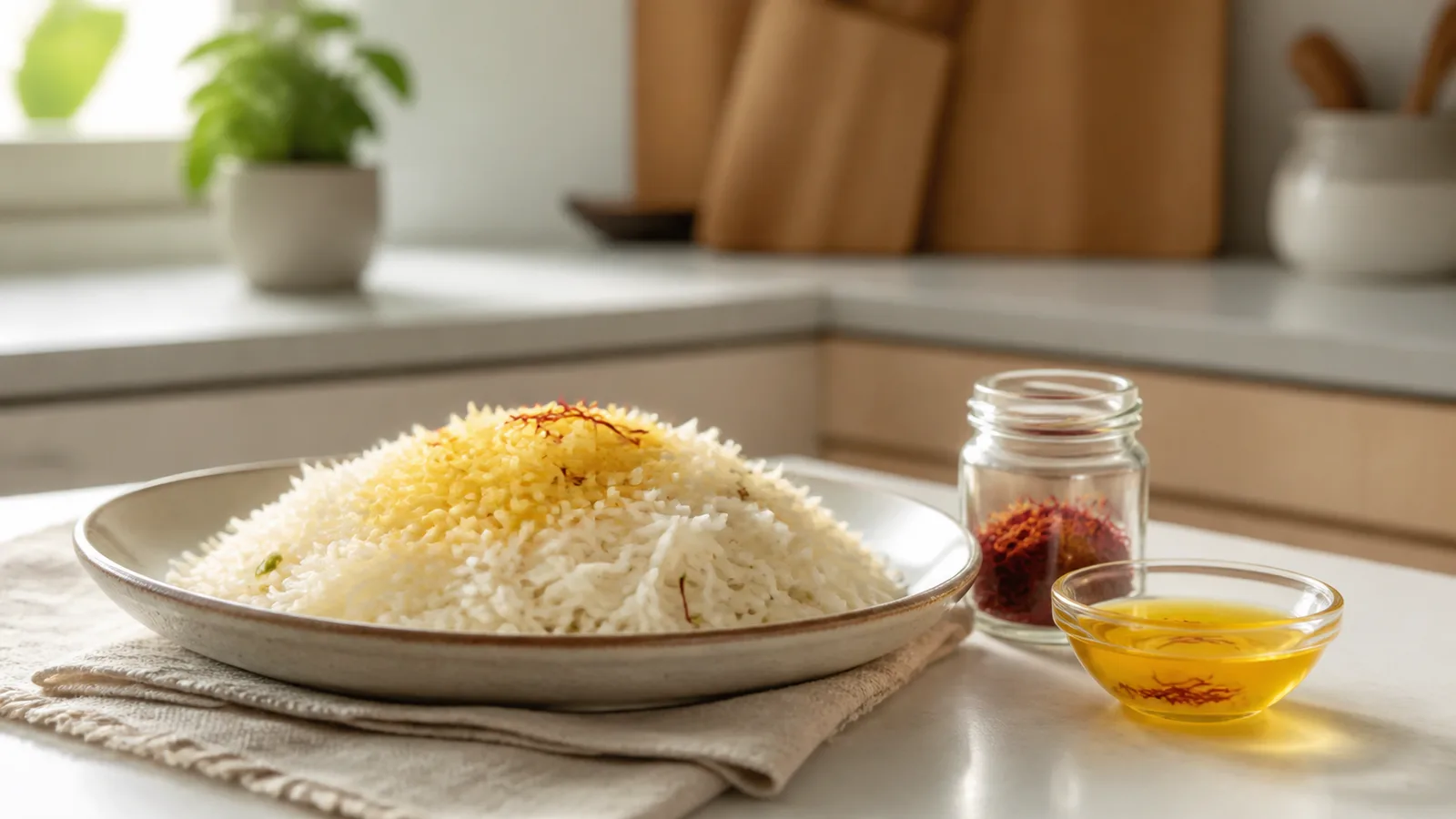
A saffron extract dose is weighed and may be standardized to selected compounds. A few threads in food are not chemically identical to a capsule, and there is no reliable conversion from “strands” to a trial extract. Thread size, moisture, origin and handling vary. This is why a saffron supplement dosage cannot be reverse-engineered from a recipe.
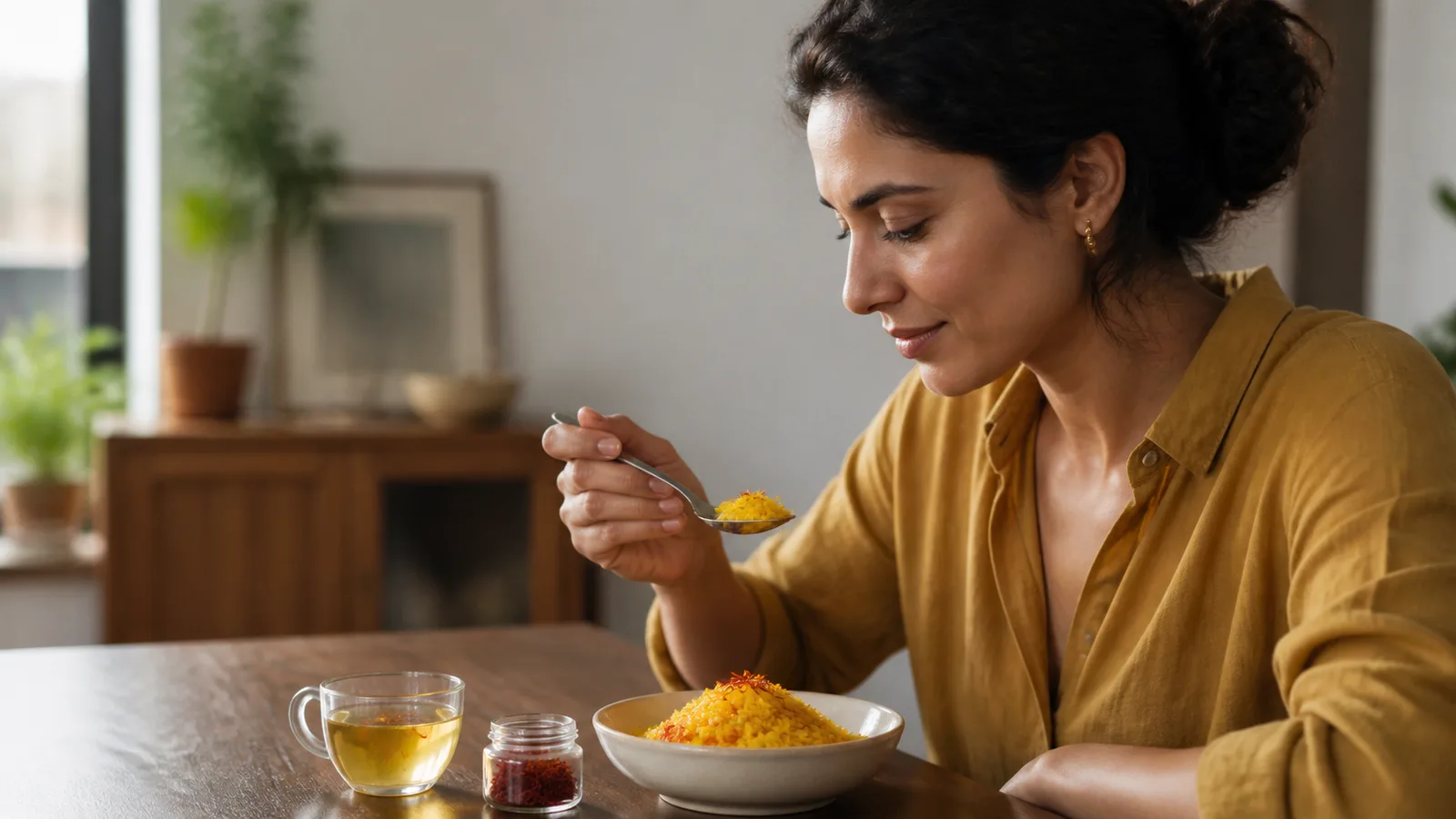
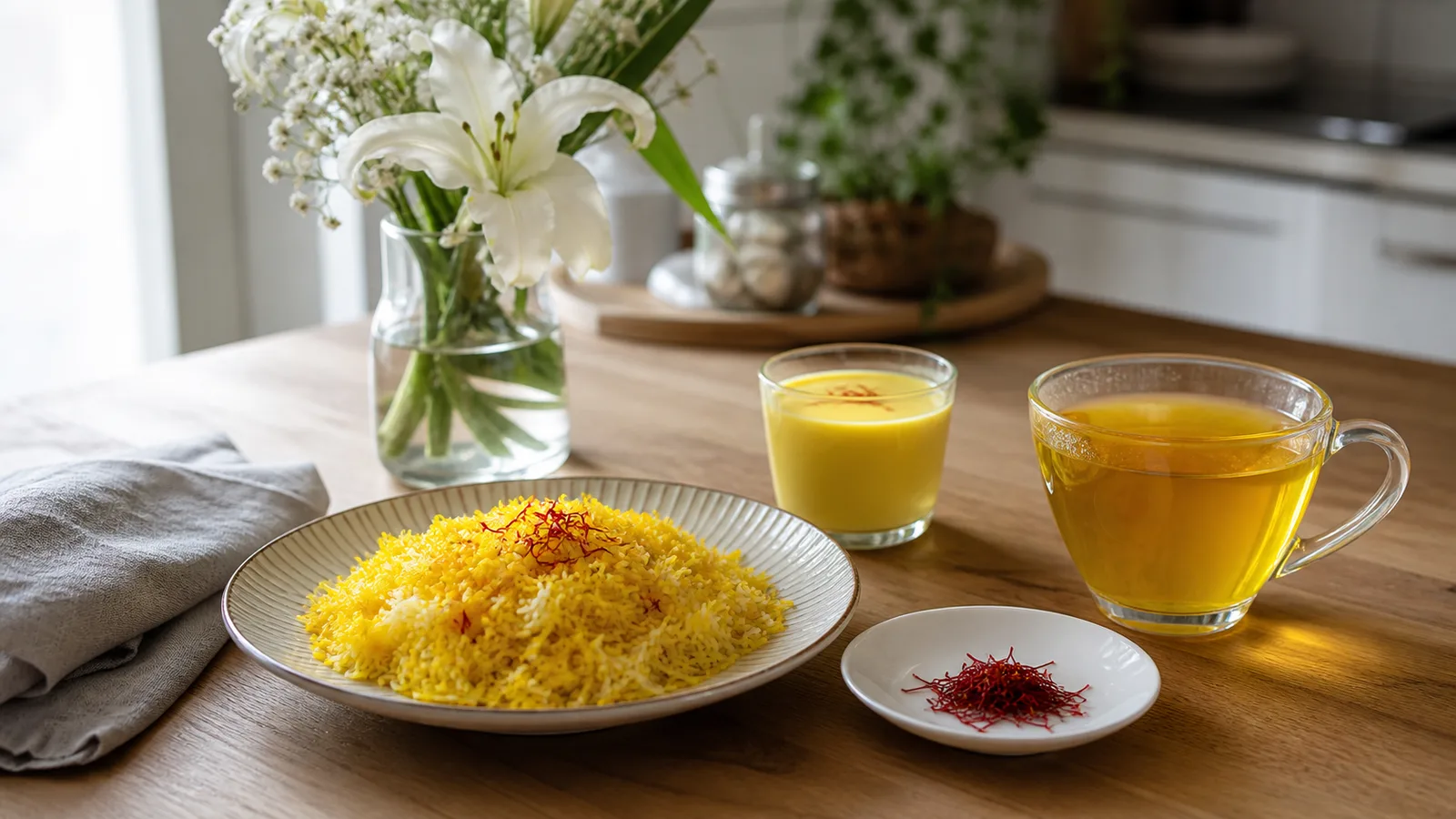
Saffron daily intake as a spice is a food question; concentrated daily use for mood is a supplement and health-care question. Enjoying saffron rice or tea does not require treating the meal as psychiatric therapy. Conversely, adding more threads to mimic a clinical dose is imprecise and wasteful.
Timing does not fix an uncertain dose
Morning versus evening has not been shown to determine whether saffron treats anxiety or depression. Choose a consistent time only if a clinician has agreed that the product is appropriate, and follow its tested directions. If it seems to affect sleep or causes nausea or dizziness, stop and ask for advice rather than moving the dose around repeatedly.
Most mood trials assess outcomes over weeks, not after one serving. Our guide to how long saffron may take to affect mood separates a study endpoint from a guaranteed personal response.
A safer way to discuss saffron with a professional
If you take medication, the review should happen before starting the supplement—not after a side effect appears.
- Bring the actual label, including species, plant part, extract ratio and standardization.
- List prescribed medicines, over-the-counter products and other supplements.
- State the symptom, diagnosis and goal instead of asking only for a milligram number.
- Agree on what improvement and side effects will be tracked, and for how long.
- Seek prompt help for worsening depression, unusual mood elevation or thoughts of self-harm.
Bottom line
About 28 to 30 mg daily of a named standardized extract is common in short adult mood trials. It is not an approved universal dosage of saffron, and it does not justify increasing to 150–200 mg for severe symptoms. Match any decision to the evidence for the exact product and to the person’s health, medicines and diagnosis—with clinical guidance when mental health is the goal.