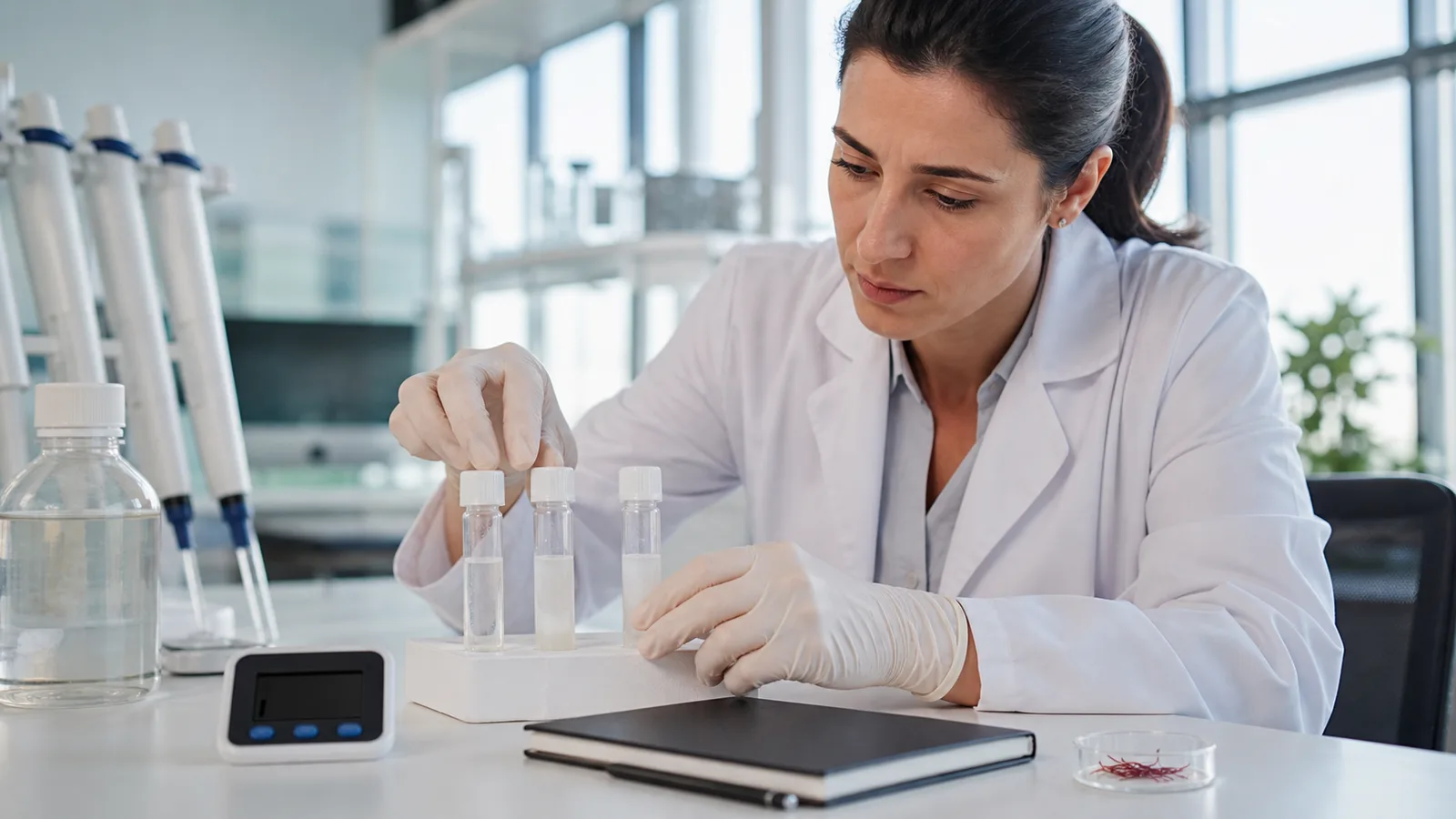
Does saffron raise cortisol? Human studies do not show a consistent cortisol increase. They also do not establish saffron as a reliable way to lower chronically high cortisol. Research on saffron and cortisol levels is still small: trials of specific extracts measured saliva or blood cortisol, with mixed results—no change in some settings, a shift in the timing of an acute stress response in one, and a reduction in another small product-specific trial.
If the question is “Does saffron raise cortisol levels?”, that is a more accurate answer than saying saffron simply “balances stress hormones.” Cortisol changes across the day and rises for many normal reasons. One measurement—or feeling calmer after a drink—does not show that the adrenal system has been corrected.
What cortisol does in the body
Cortisol is made by the adrenal glands under control of the hypothalamic-pituitary-adrenal (HPA) axis. It helps regulate metabolism, blood sugar, blood pressure, inflammation and the response to physical or psychological stress. The Endocrine Society emphasizes that cortisol is more than a “stress hormone”; it is essential to normal function.
Levels normally rise toward morning and fall later in the day. Sleep, exercise, illness, pain, food, medicines, the collection time and the stress of the test itself can affect a result. Blood, saliva, urine and hair cortisol also answer different questions. This is why a single number should not be interpreted without the test method and clinical context.
What research on saffron and cortisol has found
An acute laboratory stress study
A 2023 randomized crossover study gave 19 healthy men a single 30 mg dose of one standardized saffron extract, synthetic safranal or placebo before a laboratory stress test. The saffron and safranal conditions reduced self-reported stress and anxiety and delayed the time to peak salivary cortisol and cortisone. That is not the same as showing that saffron lowered total cortisol, treated high cortisol or produced a lasting hormonal change.
A sleep trial found no cortisol effect
In a 28-day sleep trial, 120 adults with unsatisfactory sleep took placebo or 14 mg or 28 mg of a defined saffron extract in the evening. Sleep ratings improved on some measures, but evening salivary cortisol did not differ between groups. An apparent sleep benefit therefore did not require a measurable cortisol reduction.
Longer mood studies are not consistent
A 2025 trial in healthy adults with subclinical mood symptoms found no significant effect on HPA-axis reactivity. A separate small 2026 trial of another standardized formulation reported lower serum cortisol after 28 and 56 days. Different participants, products, sampling methods and outcomes make these studies difficult to combine into a dosing rule.
The practical conclusion is modest: saffron does not appear to raise cortisol consistently, and some formulations may influence the response under specific conditions. Larger independent trials with standardized timing and repeat measurements are needed before claiming that saffron lowers cortisol.
Does feeling less stressed mean cortisol is lower?
No. Stress is an experience involving thoughts, emotions, behaviour and several body systems. Cortisol is one biological signal. They can move together, but they do not have to. A person can feel tense with a normal cortisol pattern, and a medical cortisol disorder may not feel like ordinary day-to-day stress.
Saffron extracts and constituents such as crocin and safranal have been studied for mood, stress and anxiety symptoms. If a symptom improves, that may be worthwhile, but it does not prove a particular serotonin or cortisol mechanism. Our review of saffron and anxiety separates patient-reported outcomes from mechanism claims.
Can saffron lower cortisol caused by chronic stress?
The visible search phrase “saffron lower cortisol” points to a common goal, but chronic stress is not one laboratory diagnosis. The current evidence does not justify using saffron as a natural alternative to medical assessment or pharmaceuticals for a cortisol disorder.
For ordinary stress, start with the causes that can actually be changed: sleep opportunity, workload, pain, alcohol, caffeine timing, nutrition, movement and access to psychological support. A calming cup of saffron tea can be part of a pleasant routine, but it should not carry a hormone-treatment promise.
When “high cortisol” needs medical evaluation
Weight gain, anxiety, tiredness, poor sleep and high blood sugar have many possible causes. They cannot diagnose excess cortisol by themselves. Persistent features such as easy bruising, wide purple stretch marks, progressive muscle weakness, difficult-to-control blood pressure or diabetes deserve clinical review, especially when several occur together.
Tell the clinician about every steroid medicine, including tablets, injections, inhalers, creams and nasal sprays. Do not stop a prescribed corticosteroid suddenly. Proper evaluation may require timed saliva, urine or blood testing and sometimes more than one type of test.
Should you take saffron for stress?
If the purpose is flavour or a relaxing ritual, a small culinary amount in food or tea is different from taking an extract. If the purpose is persistent anxiety, low mood, sleep difficulty or a suspected hormonal problem, define that outcome first and seek appropriate care. A supplement should not delay diagnosis.
Before a concentrated product, check the exact extract, serving, other ingredients and medicine interactions. Pregnancy, breastfeeding, low blood pressure, an upcoming operation, a bleeding disorder, bipolar disorder and regular medicines all call for product-specific advice. Our guide to saffron precautions and safety provides a fuller checklist.
Bottom line
Saffron has not been shown to raise cortisol in a consistent way. Nor is there enough evidence to prescribe it for lowering cortisol. Small trials suggest that certain extracts may change perceived stress, the timing of an acute cortisol peak, or serum cortisol in selected groups, while other trials found no cortisol effect. Treat those findings as early, product-specific evidence—not proof of hormonal regulation.
Evidence reviewed 28 August 2026. This article is educational and does not replace endocrine or mental-health care.