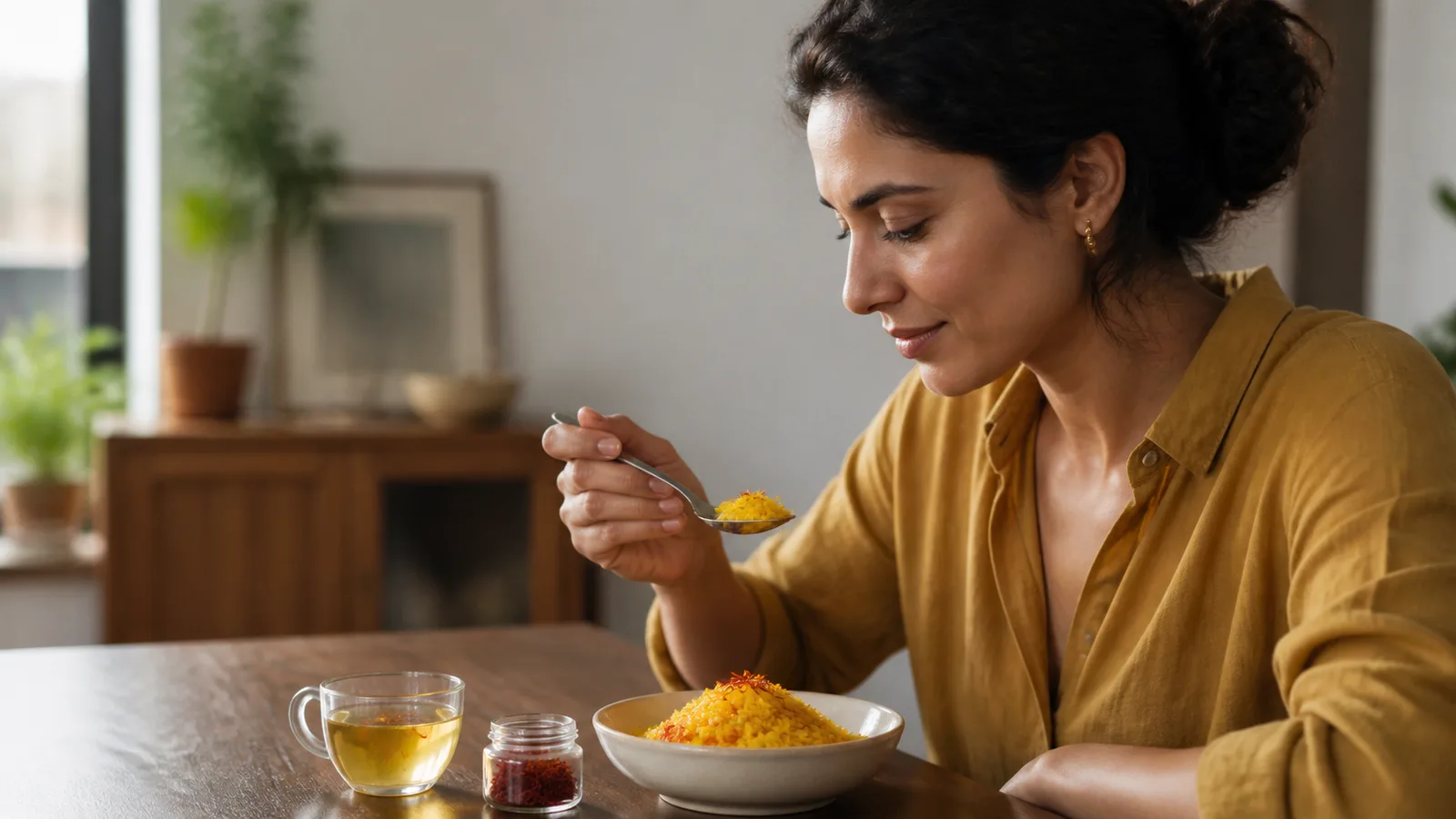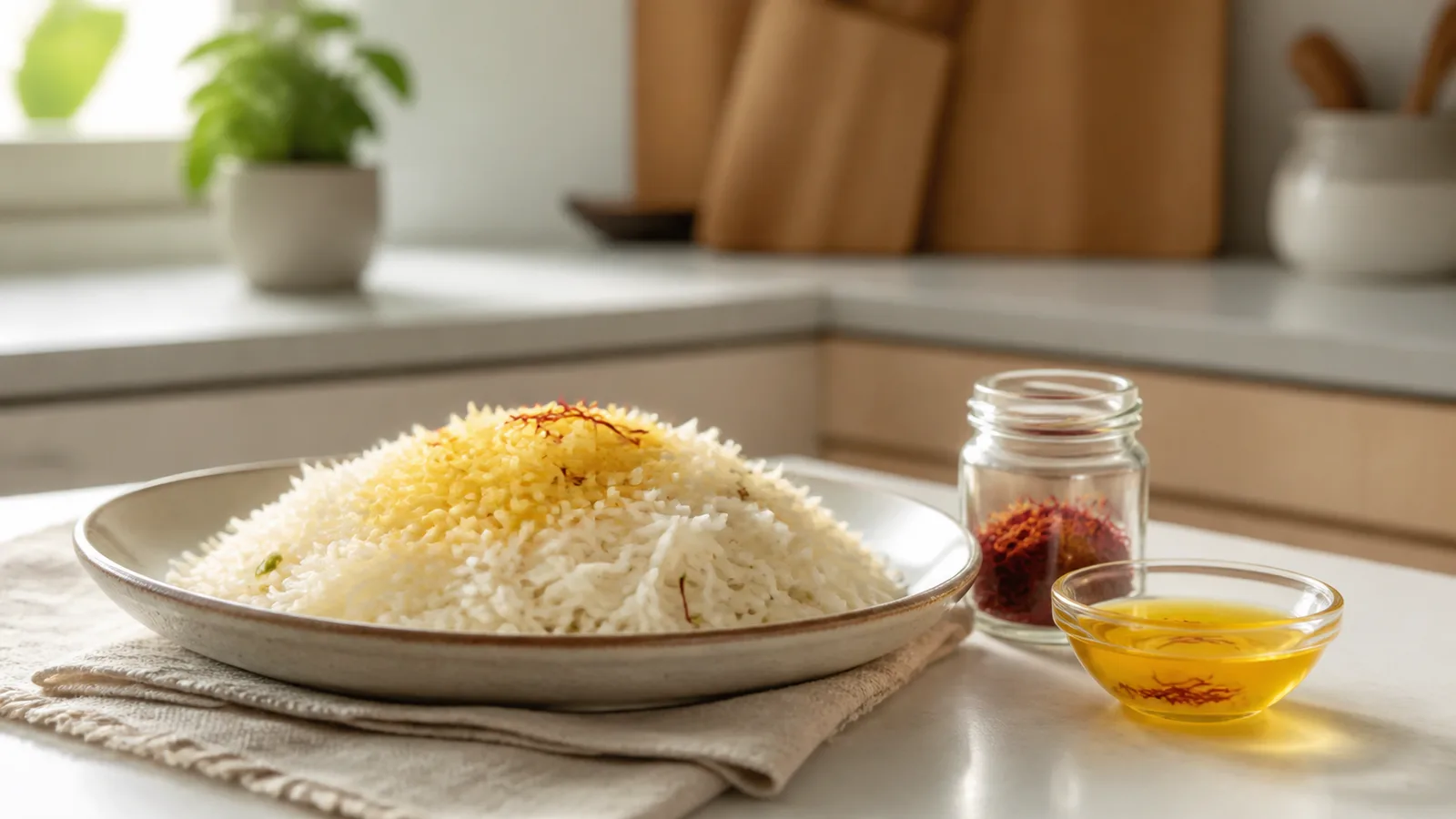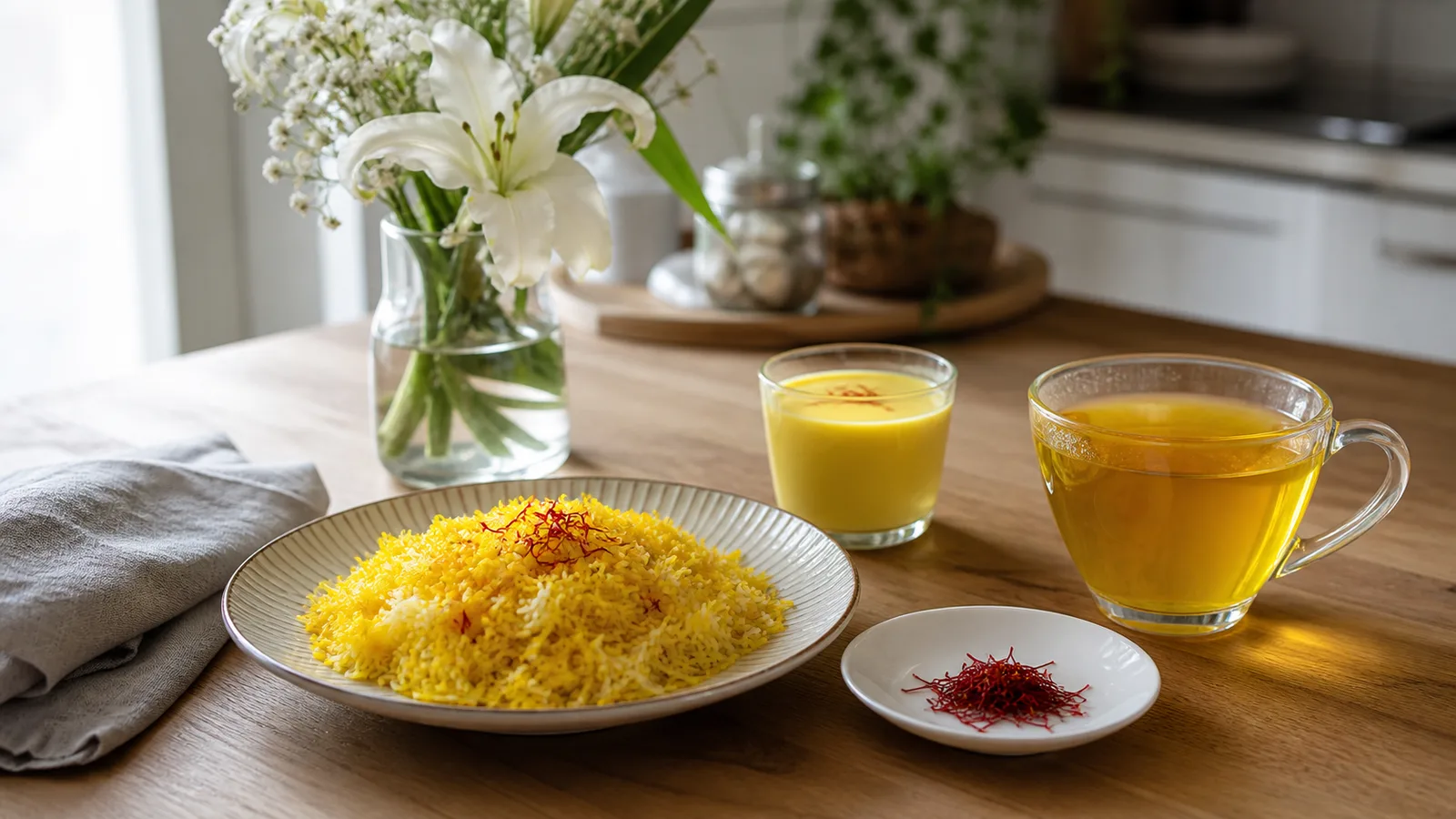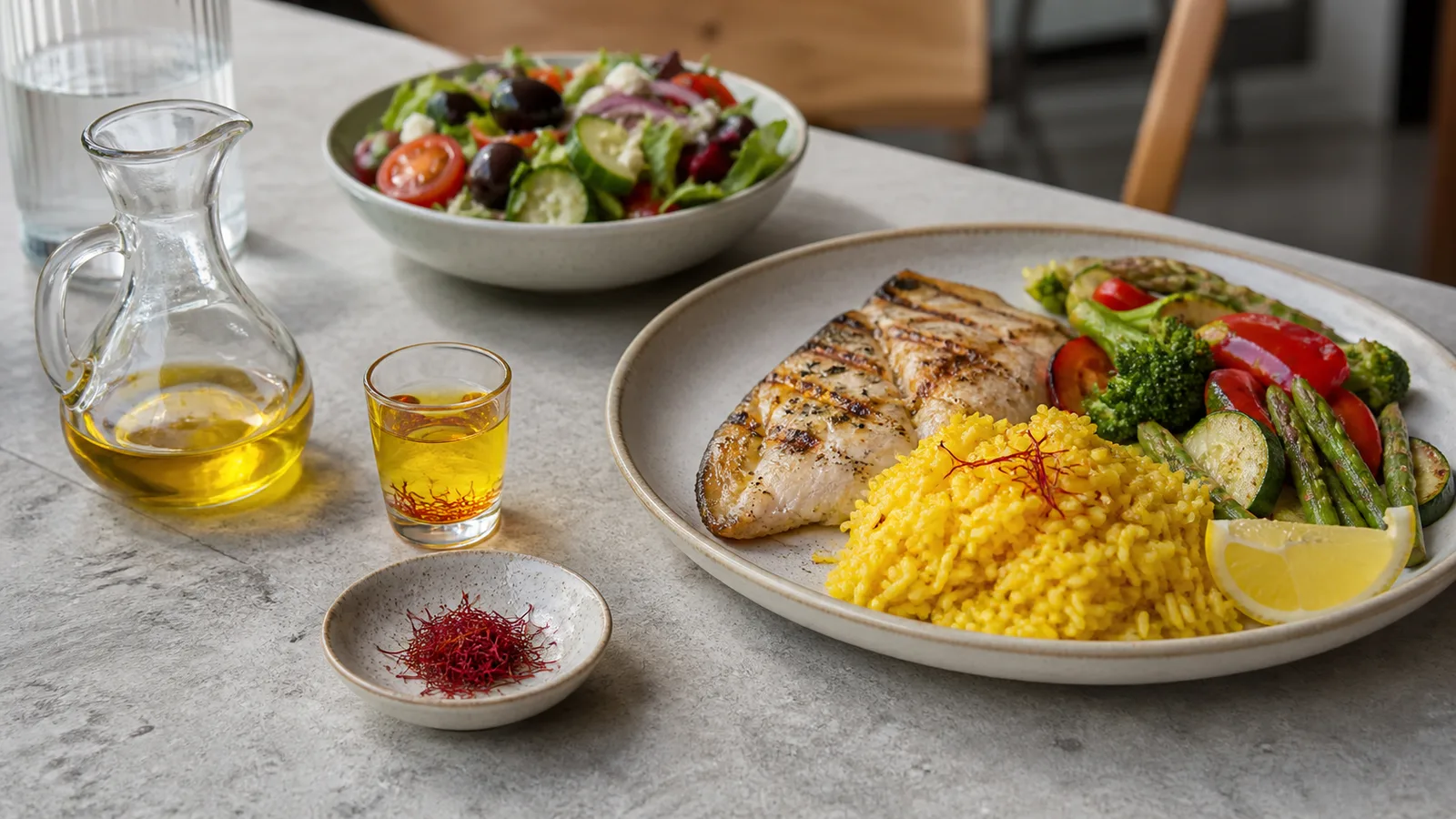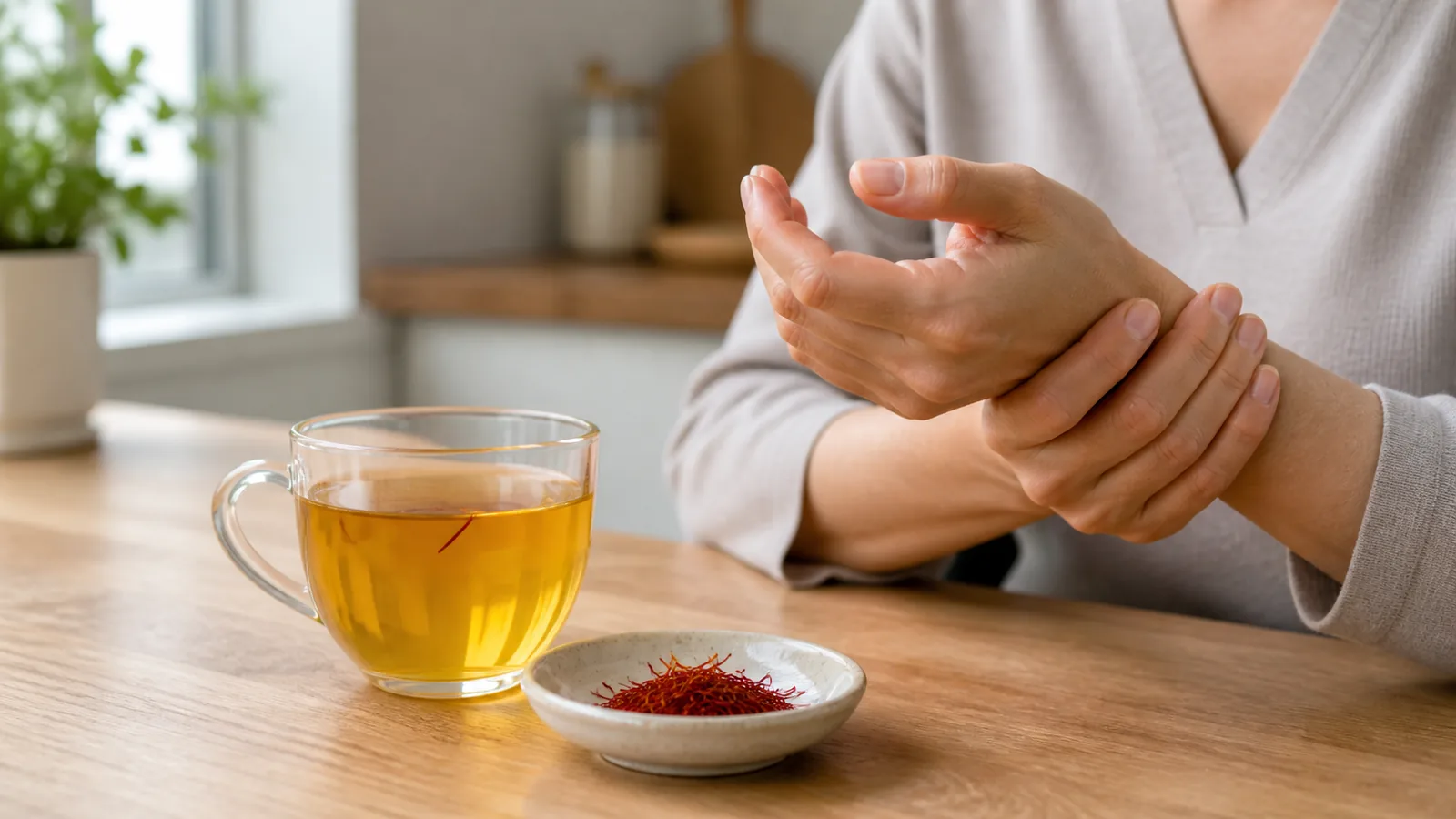
What does saffron do to the human body? In food, it mainly adds aroma, bitterness and golden colour. Concentrated saffron extracts have produced small or moderate changes in some human trials of mood symptoms, sleep, cognition, sexual function and cardiometabolic markers. The evidence is not equally strong for every claim, and a laboratory mechanism does not mean saffron improves every organ.
The answer to “what does saffron do for the body?” also depends on the form. Claims about the health benefits of saffron for the body often blur this distinction: a few threads in rice are not the same exposure as a standardized capsule taken daily in a study. The spice can be enjoyed without turning dinner into treatment.
What happens after saffron is consumed?
Saffron contains crocins, crocetin, picrocrocin and safranal. Crocins contribute much of the colour, picrocrocin contributes bitterness, and safranal is important to the aroma. During digestion, crocins are broken down and crocetin is absorbed and further metabolized.
These compounds have antioxidant and anti-inflammatory activity in experimental systems. That information helps researchers choose what to test. It does not prove that a culinary serving “detoxes” the body, prevents disease or reverses oxidative damage in a person.
Mood, anxiety and stress
Mood is one of the better-studied areas. A 2026 GRADE-assessed meta-analysis of 34 randomized trials found improvements on several depression and anxiety scales, although results varied considerably between studies. Many trials used specific extracts for several weeks and involved people with diagnosed or subclinical symptoms.
Saffron is sometimes described as raising serotonin, but human brain serotonin is not routinely measured in these trials. Crocin and safranal may interact with several pathways in laboratory models; a clinical symptom change does not prove one neurotransmitter explanation. Saffron is not a replacement for diagnosis, psychotherapy or prescribed medicine.
Online anecdotes—including “saffron depression reddit” discussions—can reveal what an individual felt, but they cannot establish the product, diagnosis, dose, other treatment or cause of the change. Controlled evidence deserves more weight than a dramatic personal report.
Sleep and cognitive function
Some trials report better subjective sleep or cognition in selected groups. Results in adults with poor sleep, mild cognitive impairment or dementia cannot be assumed to apply to a healthy person seeking an instant mental boost. Evidence for long-term prevention of dementia or age-related decline is not established.
If mood or sleep improves, concentration may feel easier as a secondary effect. That is different from proving faster processing, better memory or greater productivity in everyone. Our article on what saffron does to the mind examines those outcomes separately.
Heart, blood pressure and metabolic markers
Saffron has not been shown to “clean” arteries, broadly improve blood circulation or prevent heart disease. Meta-analyses have found small average changes in some blood-pressure, glucose and lipid measurements, but estimates differ with the participants and studies included. A meta-analysis of eight blood-pressure trials found reductions of less than 2 mmHg on average and noted that they might not be clinically important.
A broader review of 32 cardiometabolic trials reported changes in several markers, yet those pooled results do not show fewer heart attacks or strokes. Saffron should not replace blood-pressure, diabetes or cholesterol treatment. If anything, a possible effect on those measures is a reason to check a concentrated extract against existing medicine.
Skin health
Antioxidant chemistry and laboratory protection from free radicals are often stretched into claims that eating saffron clears acne, lightens dark spots, removes pigmentation, boosts collagen and slows ageing. Robust human evidence does not support that package of promises. Skin pigmentation, acne and ageing have different causes and require different studies.
A saffron drink should not replace sunscreen, acne care or evaluation of a changing skin lesion. Topical cosmetics are also different from oral saffron and can cause irritation or allergy. “Radiant complexion” is a marketing phrase, not a standardized clinical outcome.
Digestion and bowel function
Saffron has a long culinary and traditional history, but good human evidence is lacking for claims that it stimulates digestive enzymes, treats bloating or works as a useful laxative. A warmly spiced meal may be pleasant; that experience does not establish a digestive treatment.
Concentrated saffron can itself cause gastrointestinal symptoms. A recent safety review found nausea and other digestive complaints among the most frequently reported adverse events. Persistent pain, vomiting, blood in stool, unexplained weight loss or a major change in bowel habits needs medical assessment.
Reproductive and sexual health
Human research has examined PMS, period cramps, menopausal symptoms and sexual dysfunction. A 2024 reproductive-health review included a mixture of laboratory, animal and human evidence. That breadth is useful for research mapping, but it cannot prove that saffron balances hormones, regulates every menstrual cycle, improves fertility or increases sperm quality.
Some small clinical trials have reported changes in sexual-function scores, including libido, in people experiencing antidepressant-related difficulties. Sperm quality, libido and fertility are not interchangeable outcomes. Anyone trying to conceive or treating menstrual, erectile or fertility concerns should use condition-specific care rather than a general “reproductive health” claim.
How strong is the overall evidence?
An evidence map of 19 saffron meta-analyses found signals across several outcomes but also judged that the scientific and reporting quality of the reviews needed improvement. Common limitations include small trials, short follow-up, work from a limited number of research settings, varying extracts, inconsistent outcomes and possible publication bias.
This creates a familiar pattern: promising average changes, but less certainty about the exact person, product, dose and long-term result. It also means “more studies exist” is not the same as “the benefit is settled.”
Side effects and who needs caution
Saffron used in ordinary food amounts is generally different from medicinal supplementation. Reported supplement effects include nausea, digestive upset, headache, dry mouth, appetite changes, dizziness and allergy. Long-term data are thinner than short-term trial data.
Get product-specific advice during pregnancy or breastfeeding, for a child, before surgery, or if you have low blood pressure, a bleeding disorder, bipolar disorder, an allergy or take regular medicine. Read who should not take saffron supplements without review before assuming “natural” means risk-free.
Food or supplement?
For flavour, bloom a small amount of threads in warm liquid and add the whole infusion to food. For a health goal, first define the outcome and look for human evidence using a comparable product. Milligrams of a standardized extract cannot be converted reliably into a thread count.
Do not use saffron to replace prescribed care. If a clinician supports a supplement trial, record the exact product, serving, start date, expected outcome, adverse effects and review date. Stop if a new reaction appears instead of continually increasing the amount.
Bottom line
Saffron gives food distinctive colour and aroma, and specific extracts have shown promising effects in some areas of human research. The clearest signals concern certain mood-related outcomes; findings for sleep, cognition, cardiometabolic and sexual-function measures are more context-dependent. Claims about acne, collagen, digestion, hormone balance and fertility are much less secure. The useful question is not whether saffron benefits “the whole body,” but which product changed which outcome in which people.
Evidence reviewed 28 August 2026. This article is educational and does not replace medical care.