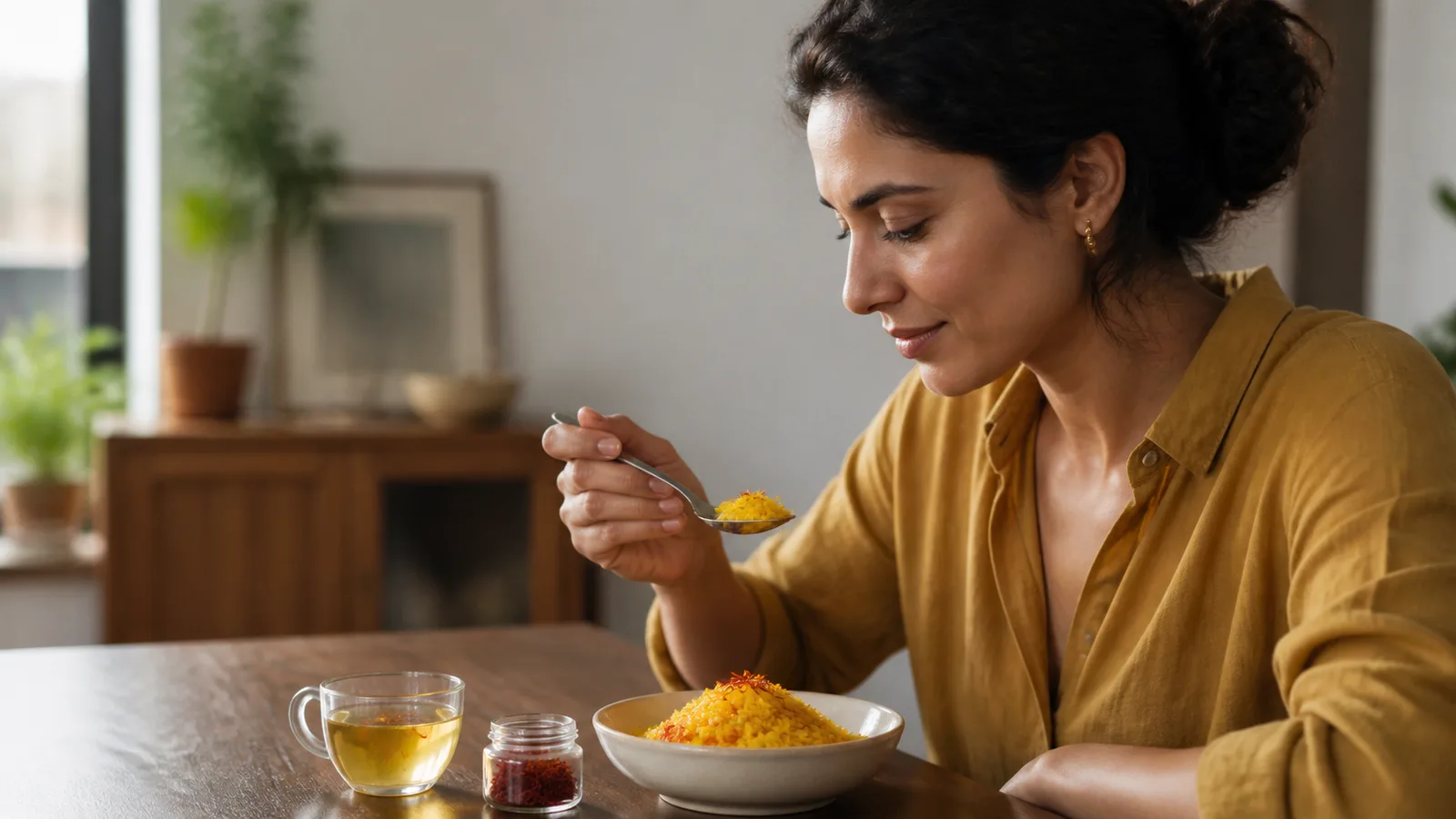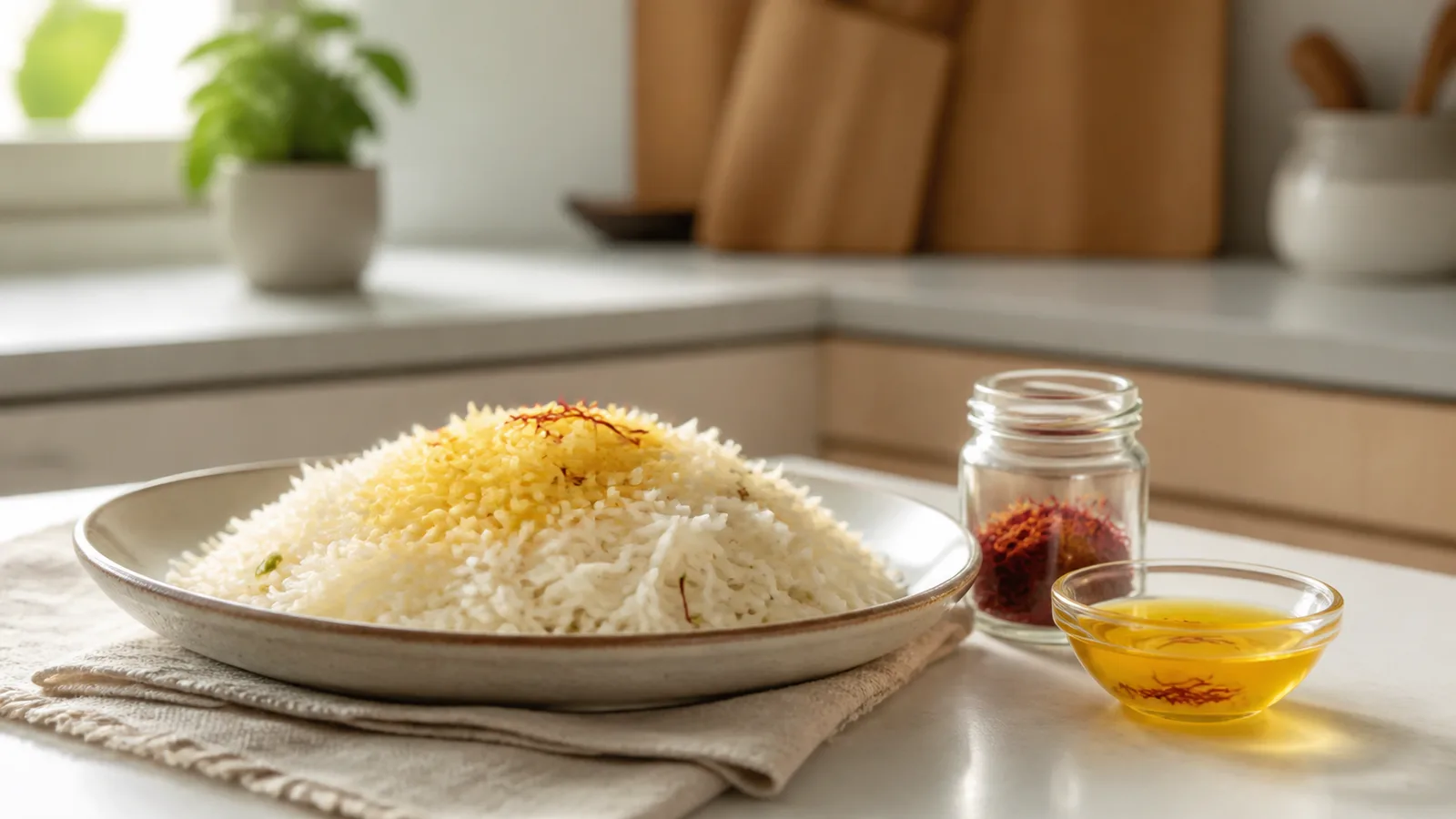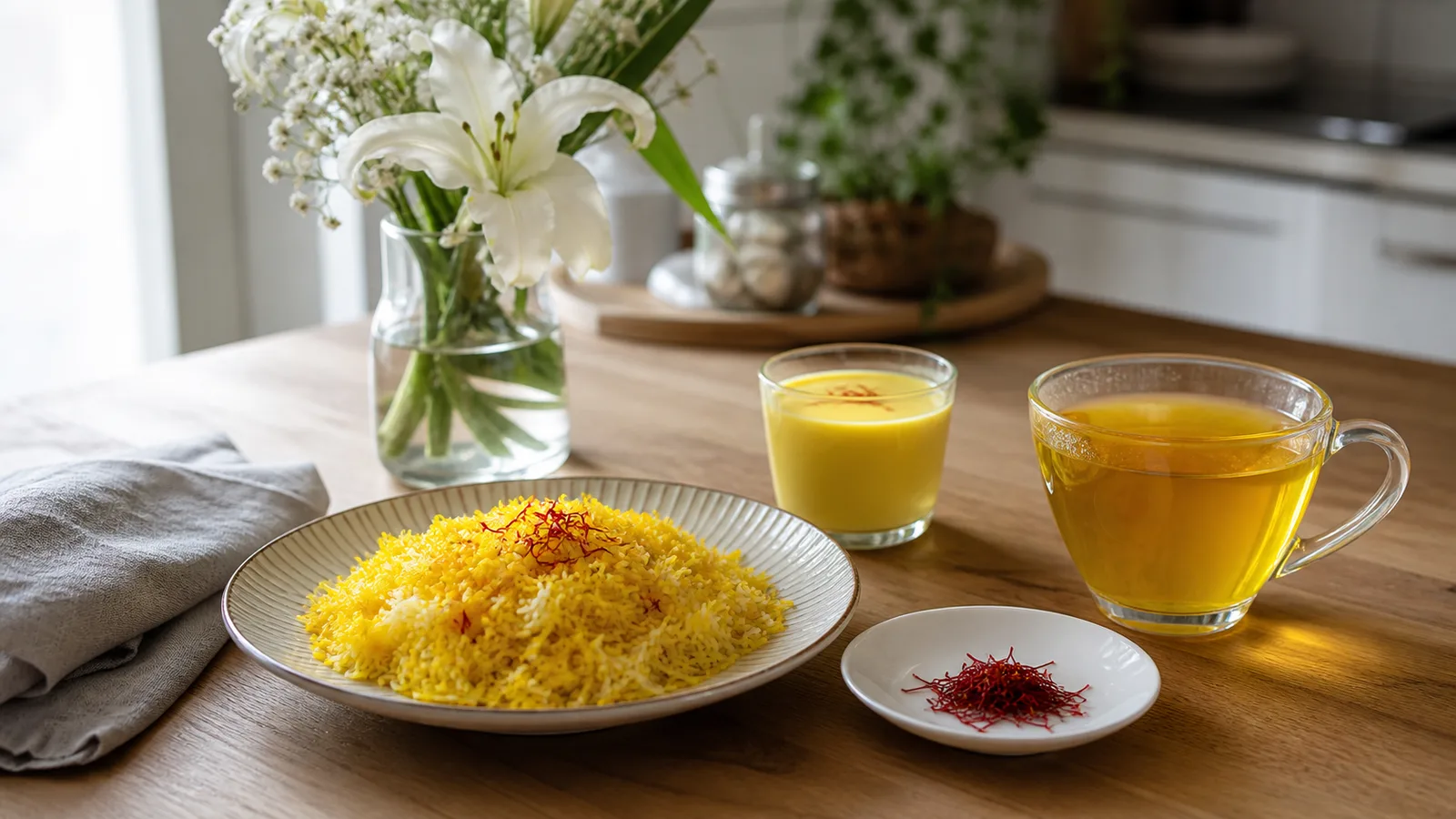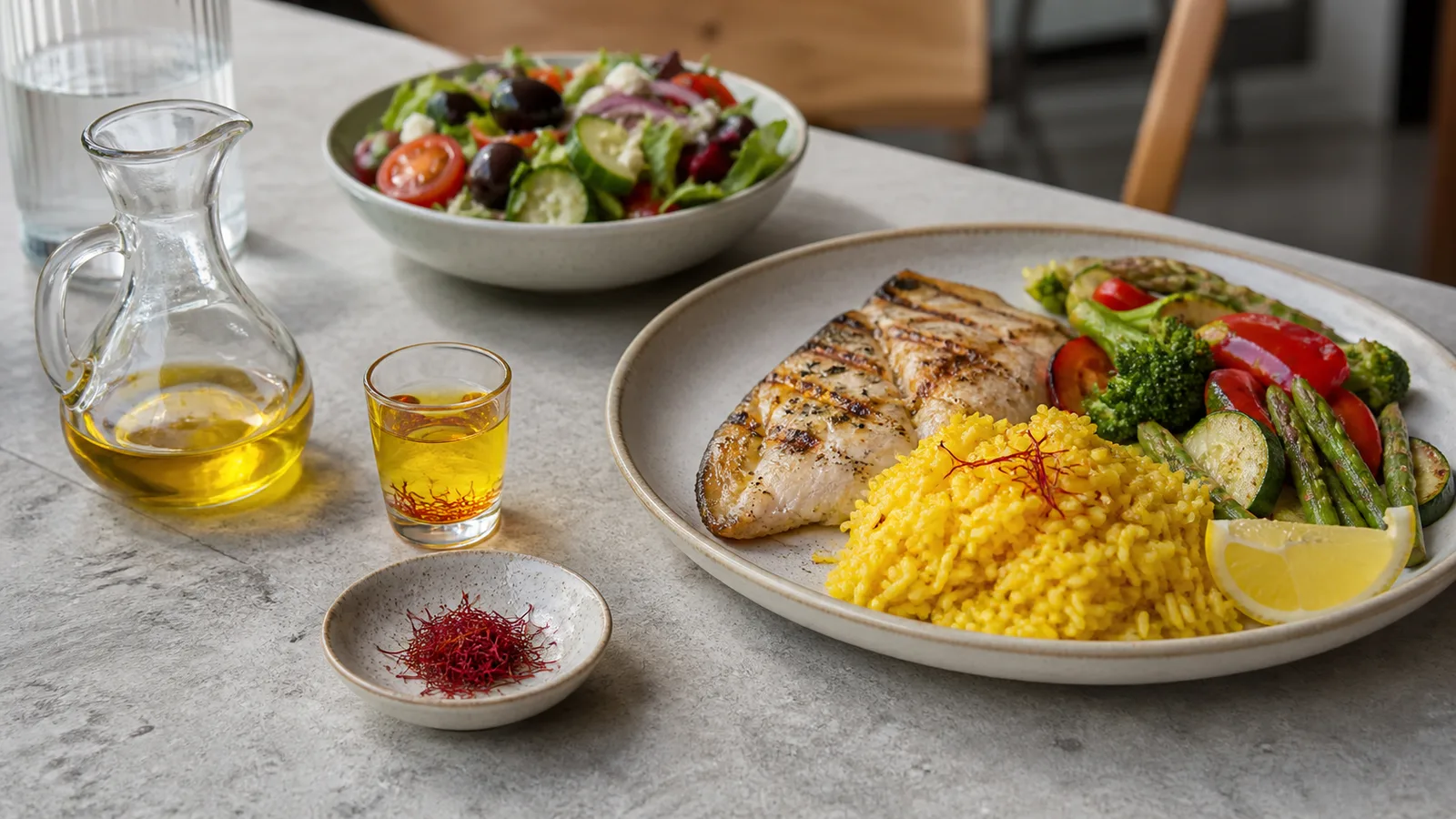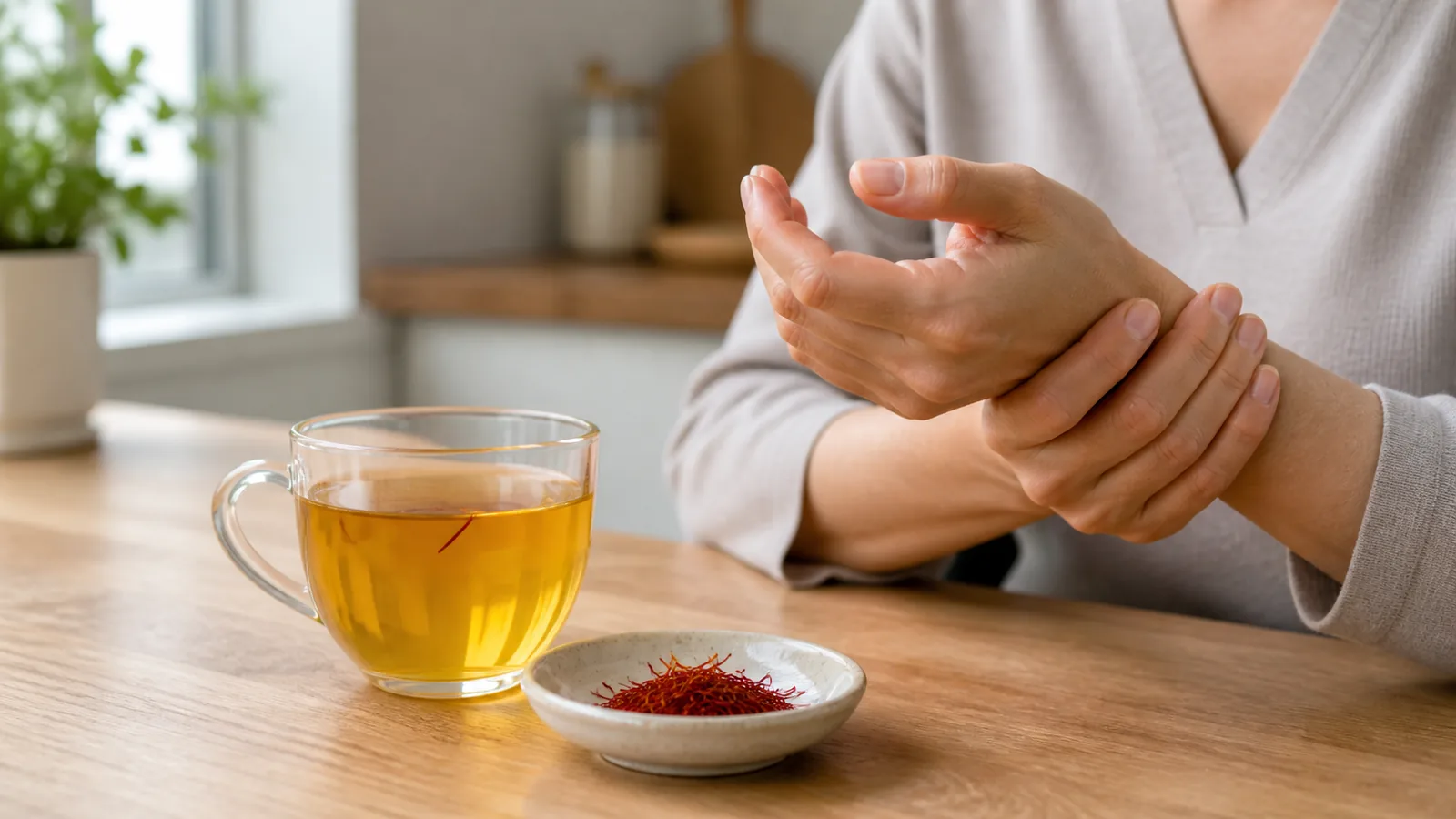
How much saffron should a woman take daily? There is no women-only daily dose that fits every purpose. In food, use the small amount a recipe needs for flavour and colour. In research, 30 mg per day appears in some trials of specific saffron capsules for PMS or mood symptoms, but that is a study regimen—not a universal recommendation and not an amount that can be translated reliably into a number of threads.
Pregnancy, breastfeeding, medicines, health conditions and the reason for taking saffron can all change the answer. A saffron daily dosage should describe the exact product and goal, not just the person’s sex.
Food use and supplement dosing are different
A pinch of threads added to rice, soup, milk or tea is culinary use. A capsule or liquid extract delivers a more concentrated, repeatable exposure and may be standardized to one or more saffron constituents. Even when both labels show milligrams, whole threads, powders and extracts are not interchangeable.
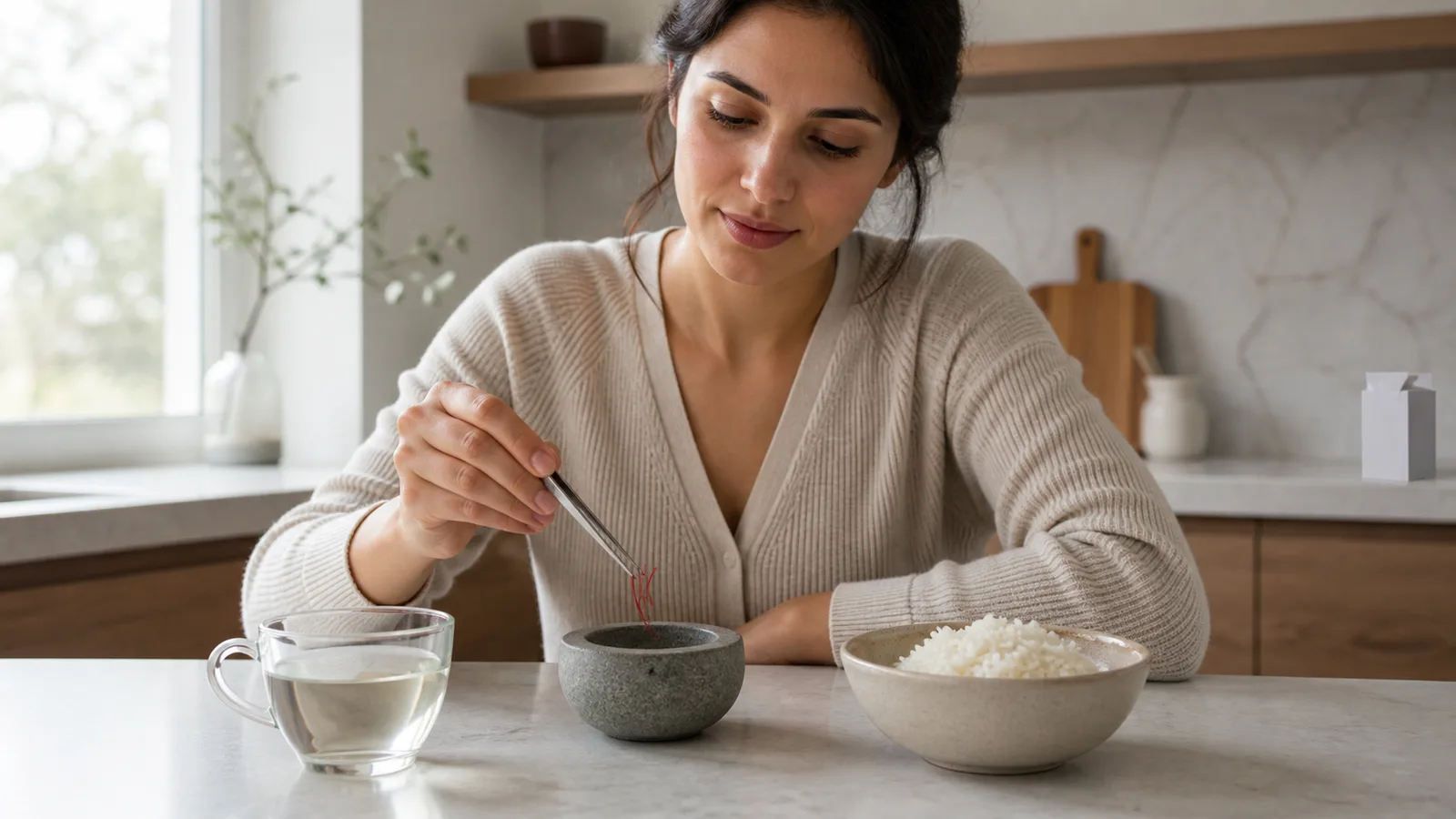
For ordinary cooking, start with a small pinch for a family dish and adjust the next recipe to taste. There is no need to weigh a medical-style saffron dose per day to enjoy the spice. Our guide to the best way to consume saffron explains how to crush and bloom the threads so a little goes further through the dish.
Questions such as “how much saffron a day,” “how much saffron should I take daily,” and “how much saffron to take daily” sound alike, but they cannot be answered until food use is separated from a specific supplement and health goal.
Why 30 mg per day appears so often
Thirty milligrams is frequently repeated because several clinical trials used a total of 15 mg twice daily. For example, an early PMS trial assigned women aged 20 to 45 to 30 mg of saffron capsules per day or placebo for two menstrual cycles. A later PMDD trial tested 15 mg twice daily during the luteal phase of two cycles, alongside fluoxetine and placebo groups.
Those studies help researchers estimate whether a defined preparation may change symptoms in a defined group. They do not establish 30 mg as the best daily dose for every woman, every brand or lifelong use. The PMDD schedule was not even a full-month daily regimen. Product composition, participant selection, trial duration and supervision are part of the result.
Saffron for women: which benefits have been studied?
The search phrase “saffron benefits for female” is much broader than the evidence. Trials and reviews have examined separate outcomes such as PMS, painful periods, mood symptoms, sexual function and menopausal symptoms. A 2026 systematic review and meta-analysis reported improvements in PMS and dysmenorrhoea outcomes, but the clinical studies remain limited and do not create one preventive supplement routine for all women.
Crocin, crocetin and safranal are often invoked to explain possible antioxidant, mood or reproductive effects. Mechanisms seen in cells or animals cannot prove better skin, balanced hormones, improved fertility or a radiant complexion in a person. Each claim needs its own human evidence.
How much saffron per day is safe?
There is no single evidence-based ceiling that makes every product safe below it and dangerous above it. Safety depends on the preparation, duration, health history, medicines and life stage. Large gram-scale amounts are not ordinary culinary use and should not be self-administered.
That is why “how much saffron is safe” and “how much is too much saffron” do not have one universal numerical answer. A daily serving that was studied for one standardized extract is not a safety limit for every other form.
A 2026 systematic review of 102 saffron trials estimated adverse events related to saffron at about 17.5%. Gastrointestinal symptoms were most common and usually minor, but the reviewers advised clinical monitoring for medicinal use at higher doses or over longer periods. That is better evidence than repeating an exact “too much” number without product context.
So, how much saffron is too much? For a supplement, more than the label or clinician-led plan is too much. Stop and seek advice for persistent nausea, vomiting, diarrhoea, dizziness, unusual bleeding, a rash or another new symptom. Breathing difficulty, facial or throat swelling, fainting or severe confusion needs urgent care.
Pregnancy and breastfeeding change the answer
Do not start a saffron supplement during pregnancy without the maternity clinician’s approval. Pregnancy evidence is limited and inconclusive, while traditional and experimental concerns about uterine effects make concentrated or high intake inappropriate for self-experimentation. This warning should not be distorted into a precise miscarriage threshold.
The same caution applies while breastfeeding because infant exposure and product-specific safety have not been established adequately. A small amount in a shared meal is a different exposure, but individual pregnancy risks still belong in the conversation. Read our dedicated guide to saffron during pregnancy before treating food and supplements as the same thing.
When medicines or health conditions are involved
Ask a pharmacist or clinician to review the exact product if you take antidepressants or other psychiatric medicines, anticoagulants or antiplatelet drugs, blood-pressure medicine, diabetes medicine or several medicines together. Also get advice for low blood pressure, a bleeding disorder, bipolar disorder, an upcoming operation or a known spice allergy.
Do not replace prescribed treatment with saffron or add it to a mental-health regimen without the prescriber. Interaction evidence is incomplete, which is a reason for more care—not proof that no interaction can occur.
How much saffron extract per day?
Follow neither a generic internet number nor the weight used by a different product. Start by identifying:
- the full botanical name and plant part;
- whether it is stigma powder or a standardized extract;
- the amount per capsule and serving;
- the constituent specification, if stated;
- other active ingredients;
- the evidence for the exact goal and duration.
Bring that label to the professional reviewing it. “30 mg” on two unlike preparations does not guarantee the same exposure.
When to take saffron
No time of day has been proved best for women in general. Trial schedules often divide a dose to keep the protocol consistent, not because morning and evening are universally superior. If a clinician supports a supplement, follow the product-specific plan and choose a routine you can track without doubling missed servings.
For culinary use, timing follows the recipe. Saffron tea or milk can be consumed when it suits you, but it should not be promised as a sedative, stimulant or hormonal treatment. If it repeatedly causes stomach upset, stop rather than moving the dose around the clock.
How to consume saffron daily without losing perspective
Decide first whether you are enjoying a spice or testing a supplement for a measured outcome. For food, modest use in varied meals is enough. For a supplement, record the product, serving, start date, expected outcome, adverse effects and review date. Change one thing at a time.
If the outcome does not improve, do not keep increasing the amount. Reassess the diagnosis, evidence and product with a qualified professional. Our overview of who should not take saffron without a safety review covers the main caution groups.
Bottom line
How much saffron should a woman take daily cannot be answered by sex alone. Use culinary saffron in the small amount a recipe needs. Treat the familiar 30 mg research figure as a description of particular trials, not a self-directed dose. For a supplement, the safest amount is the product-specific plan agreed after considering the goal, evidence, medicines, pregnancy status and follow-up.
Evidence reviewed 28 August 2026. This article does not replace individual medical advice.