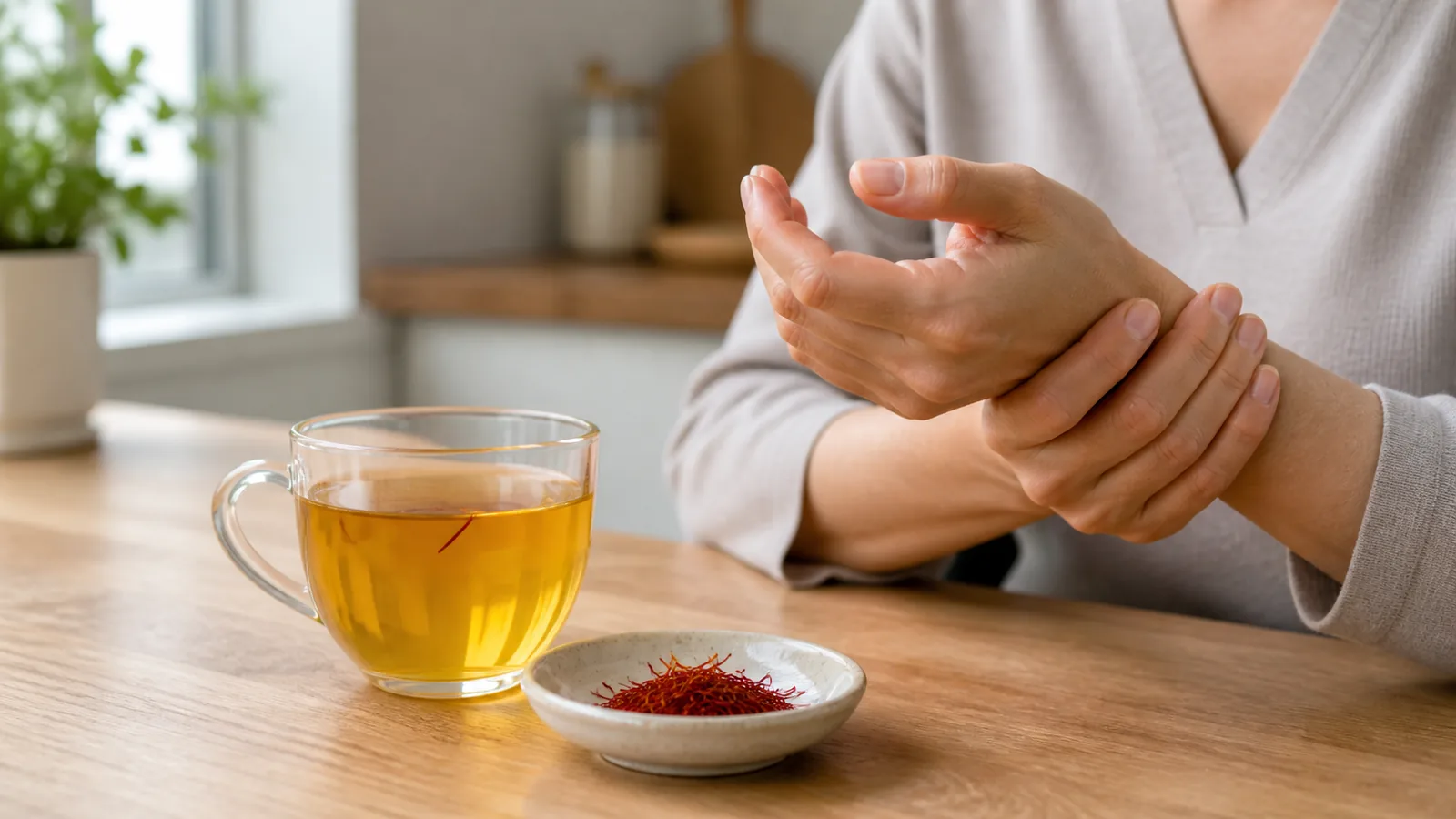
Saffron does not “clean,” strengthen or heal the uterus in a general medical sense. Standardized saffron preparations have shown possible benefits for premenstrual syndrome (PMS) and menstrual pain in some clinical trials, but evidence for regulating cycles, improving ovarian function or increasing fertility is much weaker. Pregnancy changes the safety question: medicinal amounts and concentrated extracts should not be used without an obstetric clinician’s advice.
Medical note: this article explains research and does not diagnose or treat pelvic pain, abnormal bleeding, infertility or pregnancy problems. Sudden or severe pain, heavy bleeding, fainting, fever or symptoms during pregnancy need prompt medical care.
What does saffron do to the uterus?
The most accurate answer is that researchers have studied saffron for symptoms associated with the menstrual cycle, not for a broad category called “uterine health.” Saffron contains compounds such as crocin, crocetin and safranal that have biological activity. Proposed mechanisms include effects on inflammation, oxidative stress, mood and pain perception. A proposed mechanism is not proof that saffron directly relaxes uterine muscle, balances hormones or improves blood flow to the uterus in everyday use.
The old version of this page made all three claims too confidently. Human evidence should be read by the exact condition, preparation and outcome that was tested.
PMS and menstrual symptoms
PMS can include physical and emotional symptoms before menstruation. A 2008 randomized, double-blind trial compared 30 mg per day of saffron capsules with placebo for two menstrual cycles in women with PMS. The study reported improvement in daily symptom scores, but it was an early trial and specifically tested a capsule dose—not ordinary saffron in food.
A 2026 systematic review and meta-analysis of randomized trials found an overall benefit for PMS symptoms and a smaller effect for dysmenorrhea, or painful periods. The result is encouraging, but it does not establish one dose or product for every person, and it does not mean saffron should replace evaluation of persistent pain. Read the PMS and dysmenorrhea review on PubMed.
Menstrual cramps are not always “normal”
Cramping can occur as the uterus contracts during menstruation. Severe or worsening pain may also be associated with conditions such as endometriosis, adenomyosis, fibroids, infection or other causes. Saffron research does not identify the cause of pain.
The older article called saffron a natural uterine muscle relaxant. That description goes beyond the evidence reviewed here. Someone who wants to try a standardized supplement for PMS or pain should first discuss the exact product with a clinician or pharmacist, particularly when taking medicine or managing another health condition.
Does saffron regulate periods or hormones?
Evidence does not support promising that saffron will make irregular cycles regular. Menstrual timing can change with pregnancy, polycystic ovary syndrome, thyroid disorders, weight change, stress, perimenopause, medication and other factors. A supplement should not delay a pregnancy test or medical assessment.
A 2024 systematic review collected cell, animal and human studies across female reproductive conditions. It found areas of interest, including PMS, dysmenorrhea, menopause and sexual function, but the evidence base mixed very different types of research. Findings about hormone regulation, ovulation or protection of reproductive tissue in a laboratory cannot be converted into a claim that saffron improves a person’s fertility. See the female reproductive-system review.
Fertility and trying to conceive
There is not enough clinical evidence to recommend saffron as a fertility treatment for women. Infertility can involve ovulation, fallopian tubes, the uterus, sperm, age-related factors or a combination. Proper evaluation is more useful than adding an unproven supplement.
The source post said saffron could improve ovarian function and make conception easier. Those claims have been removed because they were not supported by reliable outcome evidence. If a fertility clinic has prescribed medication or scheduled a procedure, the clinical team should know about every supplement being used.
Pregnancy: food use is not the same as a supplement
The older article warned that “too much” saffron might cause uterine contractions and miscarriage, then another source claimed saffron supported circulation, blood pressure and fetal health after the first trimester. The second reassurance is not supported, and the first warning lacked a defined dose.
A 2026 review of saffron use in pregnancy concluded that clinical efficacy and safety evidence remained limited and inconclusive. The sensible distinction is between a small culinary amount used to flavor food and a medicinal dose or concentrated extract. Pregnant people should not start the latter unless their obstetric clinician has reviewed it. Review the pregnancy evidence summary on PubMed.
Saffron does not determine a baby’s skin color. Skin pigmentation is primarily influenced by genetics; eating a colored spice cannot select a child’s complexion.
Breastfeeding and milk supply
The source article claimed that crocin increases milk production and that saffron heals cracked nipples. We did not find adequate clinical evidence for either instruction. Do not apply an unsterile saffron mixture to broken skin where an infant may ingest it.
Low milk supply and nipple injury have many causes, including positioning, latch, feeding frequency, infection and infant factors. A lactation professional or clinician can address the cause. Using saffron normally in food is not the same exposure as taking an extract, and concentrated use while breastfeeding should be reviewed by a clinician.
Children should not receive a made-up saffron dose
The source gave “about 0.1 gram per serving” as a safe amount for children and promised benefits for growth, immunity, vision and memory. It provided no age, body weight, preparation or clinical source. That is not a responsible pediatric dosing rule and has been removed.
A tiny culinary amount within an age-appropriate family food is different from a supplement. Do not give a child saffron extract for a health condition without pediatric advice.
What about male fertility and sexual function?
Male reproductive effects are not effects on the uterus, but the merged source promised them. A systematic review found conflicting results for semen parameters and methodological limitations across a small set of saffron trials. It found a signal for erectile-function measures, not proof that saffron improves sperm count, cures infertility or treats premature ejaculation. See the male reproductive evidence review.
Couples trying to conceive should avoid placing the whole burden on one partner or one supplement. Semen analysis and appropriate evaluation provide more actionable information.
Mood, memory and the broader “health benefits” list
Saffron extracts have been studied for mood, but they should not be described as increasing serotonin in a proven, uniform way or as treating depression without the risks of medication. The source also promised protection from nerve damage and memory loss, stronger immunity and vision in children, hair growth, skin collagen, liver and kidney “detoxification,” cold treatment, correction of anemia, blood-pressure control and diabetes treatment.
Those claims do not explain uterine effects, and several were medically unsafe or unsupported. They have not been repeated as benefits. Our article on the properties of saffron, evidence and safety explains how to distinguish culinary use, tradition and clinical research.
Possible side effects and when to ask first
Human trials generally report saffron preparations as well tolerated, but side effects can occur. Reviews have reported gastrointestinal symptoms, nausea, dry mouth, reduced appetite and headache. Product strength and purity vary. Ask a doctor or pharmacist before using a concentrated product if you are pregnant or breastfeeding, take prescription medicine, have a bleeding or blood-pressure concern, or are preparing for surgery.
The evidence-based conclusion
Saffron may help some PMS and menstrual-pain symptoms when used in studied preparations. That is more limited than “supporting uterine health,” balancing hormones or improving fertility. During pregnancy and breastfeeding, uncertain evidence calls for more caution, not stronger promises. The safest approach is to enjoy saffron as food and treat any supplement as a biologically active product that deserves condition-specific evidence and professional review.