India is the top country in spices when the question means overall production, domestic consumption, product range and export activity. Current official records describe it as the largest producer, consumer and largest exporter across the broad spice basket. That does not mean India leads every individual spice, owns 70% of all world production or can be declared the home of the “best” spices by taste. Different countries lead particular crops and markets.
Why India is number one in spices
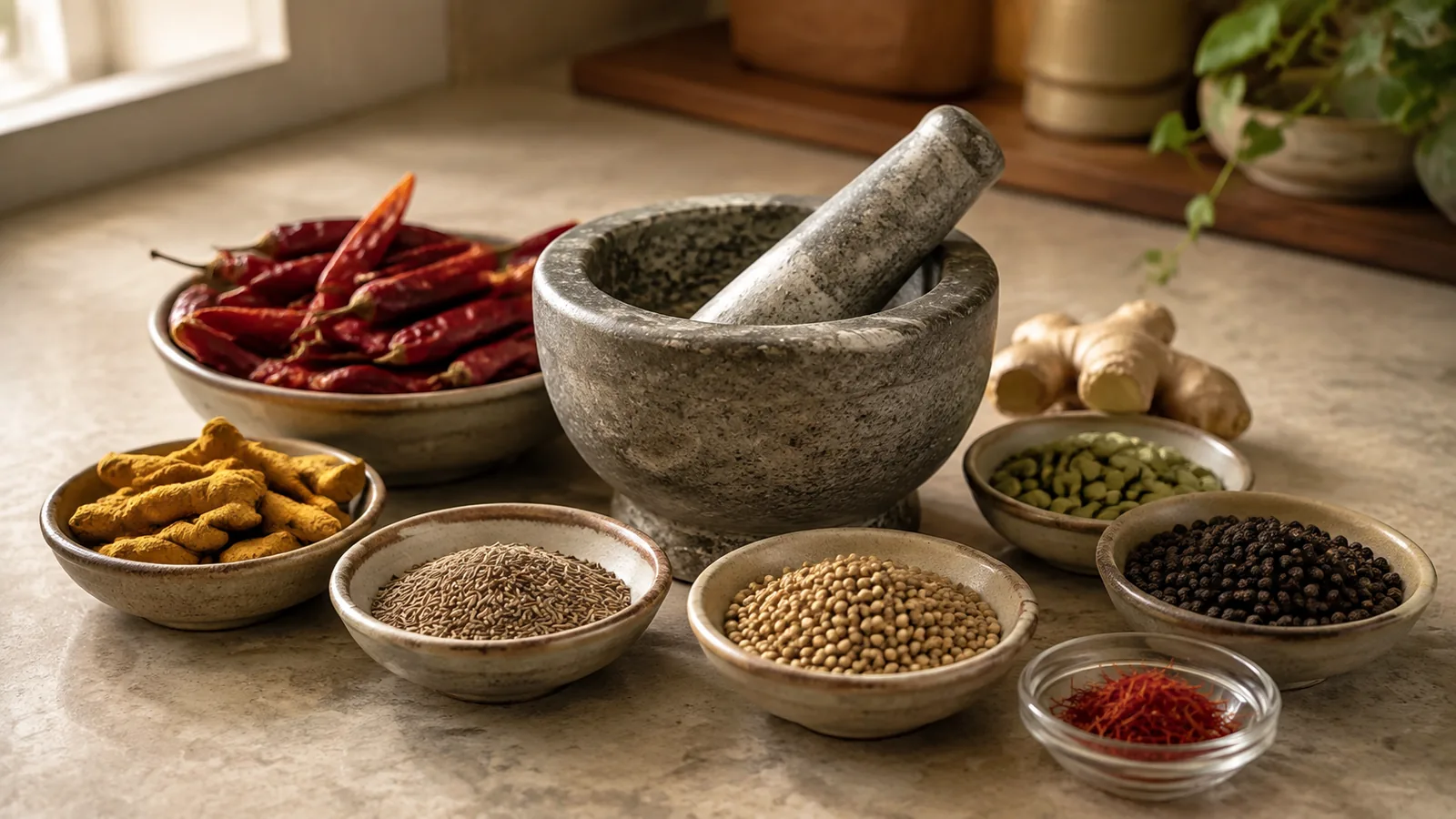
India’s scale and variety set it apart. Tropical coasts, dry inland regions, hills and cooler northern growing areas support very different crops. Chilli, cumin, turmeric, coriander, ginger, black pepper, small cardamom, fenugreek, fennel, mustard, garlic and many other spices all contribute to the sector.
People asking which country is rich in spices usually mean this breadth as much as tonnage. India is the largest spice producing country overall because it combines many crops, substantial acreage, a vast home market and an export-processing industry.
The Spices Board of India, a statutory body under the Ministry of Commerce and Industry, describes India as the world’s largest producer, consumer and exporter of spices and spice products. Its 2024–25 annual report records production of about 12 million metric tonnes and exports of more than 1.80 million tonnes in that year.
Those dated figures are more useful than the old claim that India produces “over 70% of the world’s spices.” The current official report does not support that simple global percentage. Spice statistics depend on which crops and products are counted, and a large share of India’s harvest is used within India rather than exported.
Largest producer, consumer and exporter are different measures
A country can grow the most, consume the most at home or earn the highest export value without leading all three measures for every crop. Processed goods add another layer: curry powders, oleoresins, essential oils and other value-added products are not measured in quite the same way as whole pepper or dried chilli.
Production
India’s production advantage comes from the number of crops and the area under cultivation, not from one single spice. The 2024–25 report says cultivation spans more than 75 distinct spices across varied agro-climatic zones. Production volume is therefore broad as well as large.
Consumption
Indian households, restaurants and food manufacturers use a substantial portion of this output. Spices are part of daily cooking across many regional cuisines, but the blends and techniques differ sharply from Kerala to Kashmir, Gujarat to Bengal, and Tamil Nadu to Punjab. “Indian spices” is a wide family, not one standard flavour.
Exports
The Board’s current spice export performance data records 1.734 million tonnes of spices and spice products exported in 2025–26, worth US$4.43 billion. It identifies chilli, cumin, spice oils and oleoresins, small cardamom, mint products, turmeric, curry powder and paste, ginger, pepper and coriander as major contributors to export earnings.
That makes India a central supplier and processing hub. It does not say that every bag sold as “Indian spice” is automatically superior, or that another country cannot lead the trade in one particular spice during a given year.
Which countries compete with India in the spice trade?
Indonesia, Vietnam, China and Sri Lanka all have major roles in particular spice supply chains and belong in any useful discussion of the top spice producing countries. Vietnam is strongly associated with pepper and cassia; Indonesia with cloves and nutmeg; China with crops such as garlic, ginger and cassia; Sri Lanka with true cinnamon and pepper. Their exact positions change by crop, year, whether trade is measured by weight or value, and whether processed products are included.
That is why “largest spice producing country” and “top spice producing countries” need a category. India is the strongest overall answer across the broad basket. A crop-by-crop question may produce a different leader.
Which country has the best spices in the world?
There is no objective best-spices country. Taste depends on the dish and the buyer. A cook seeking delicate true cinnamon may look to Sri Lanka; someone choosing a particular pepper may compare origins in India and Vietnam; a nutmeg buyer may consider Indonesia; and a saffron buyer has a different set of regions to assess.
This also does not answer which country eats the most spicy food. Preference for chilli heat is not the same as spice variety, production or export leadership, and cuisines use aromatic spices even when a dish is not hot.
Quality is also batch-specific. Variety, maturity at harvest, drying, cleaning, moisture, storage, contamination controls and time since processing matter. Good whole cardamom pods, for example, should be judged as an actual lot rather than by a country slogan. A celebrated origin cannot rescue stale or poorly handled material. A less famous region can produce an excellent lot.
For buyers, “best” should mean fit for purpose: the right flavour profile, safe handling, traceable origin and good condition at a fair price. Cultural reputation is valuable context, but it is not a laboratory result.
Is India also number one in saffron?
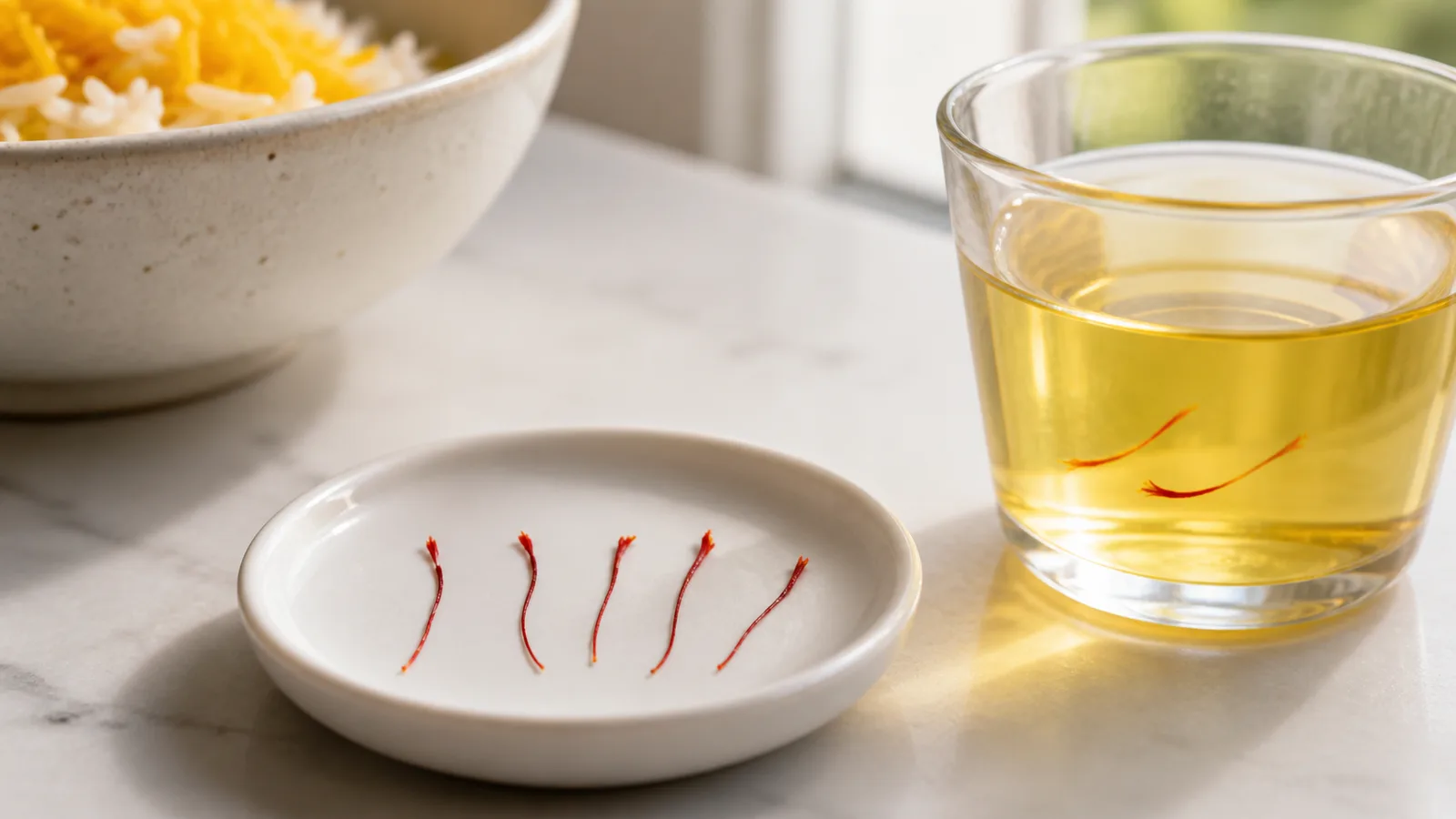
India produces famous Kashmir saffron, but it is not the world’s largest saffron producer. Iran leads saffron production by a wide margin. Kashmir’s lower-volume, protected-origin product can command a high retail price, which is a different kind of leadership.
Our comparison of saffron price and origin by country explains the distinction between production volume, protected regional names, grade and retail cost. This matters because a broad fact about India’s spice industry should not be used to make a false claim about one crop.
Why India’s spice range is so broad
Climate is part of the answer, but so are accumulated farming knowledge, domestic demand and processing infrastructure. The country can grow moisture-loving crops in one region and drought-tolerant seeds in another. Different harvest seasons also spread production across the calendar.
India has built grading, cleaning, milling, sterilisation, extraction and packaging capacity around that farm base. The Spices Board’s account of India as a global processing hub for spices explains how whole spices and imported material can be processed or combined into value-added products for different markets.
This is also why export totals may include more than crops grown entirely within India. A processing hub can import a particular ingredient, add value and re-export a finished product. Production, processing and export origin should not be treated as interchangeable labels.
India’s cultural place in the spice world
Spices are woven into Indian food rather than added as a decorative afterthought. Tempering whole spices in hot fat, grinding fresh masala, roasting seeds and layering aromatics are practical techniques used differently across regions. The same cumin or cardamom can play a different role depending on when it enters the pan and what accompanies it.
India’s historical role in overland and maritime trade helped move pepper, cardamom and other products across continents. Yet history should not be reduced to a slogan. Growers, traders, processors, home cooks and regional cuisines all shaped the reputation now condensed into “Land of Spices.”
Who is the king of spices?
Black pepper is commonly nicknamed the “king of spices,” while cardamom is sometimes called the “queen of spices.” These are cultural labels, not production rankings. They do not change the country answer: India remains the broad overall leader, while individual pepper and cardamom markets have their own competitors and yearly data.
How to read spice-country claims carefully
- Check the year. A trade ranking without a date may already be obsolete.
- Check the measure. Production weight, export weight, export value and domestic consumption are not the same.
- Check the product scope. Whole spices, blends, extracts and oleoresins may be grouped differently.
- Check the crop. Overall leadership does not prove leadership in cinnamon, pepper, nutmeg or saffron.
- Check the source. A current statistical authority is stronger evidence than a repeated marketing percentage.
For a shopper, the country label is only the first clue. Look for the specific spice, form, harvest or packing information, lot traceability and storage condition. Anyone comparing saffron pack sizes can see the current saffron products; the product details matter more than a vague “number one” claim.
The clear answer
India is number one in spices overall: it has exceptional breadth, very large production and consumption, and a leading export and processing industry. Current official figures support that answer. What they do not support is the claim that India grows 70% of every spice or produces the best version of every crop.
For a general-knowledge question, India is the right response. For a buying decision, ask the narrower question—Which spice? Which crop year? Whole or ground? Which quality evidence?—and judge the actual product in front of you.