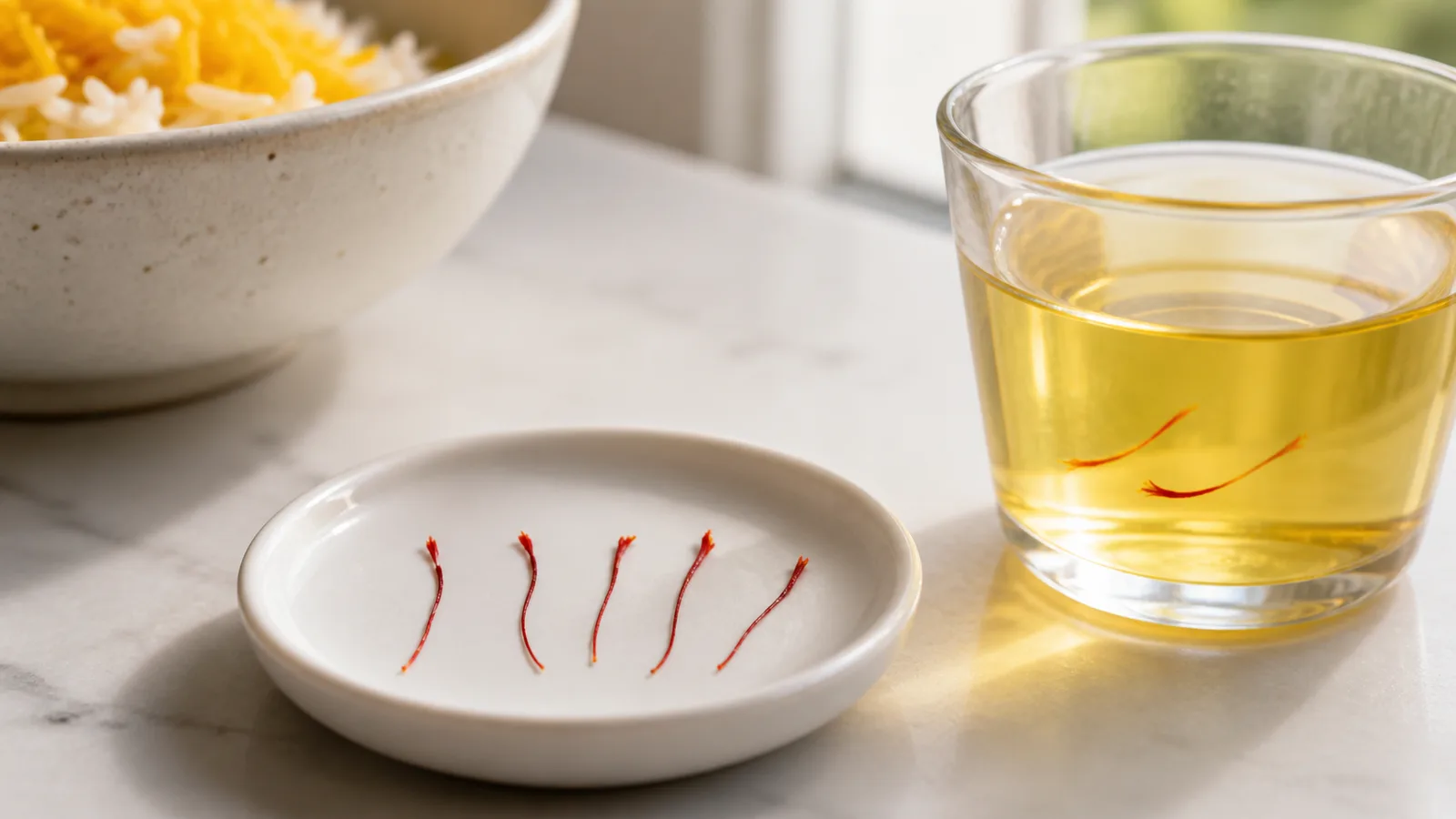
Iran is usually the country where saffron is cheapest at the point of production. Its large harvest and established supply chain can lower the price before export. For a shopper in another country, however, the cheapest saffron may come from a local seller once shipping, duties, packaging, grade and retailer margins are included.
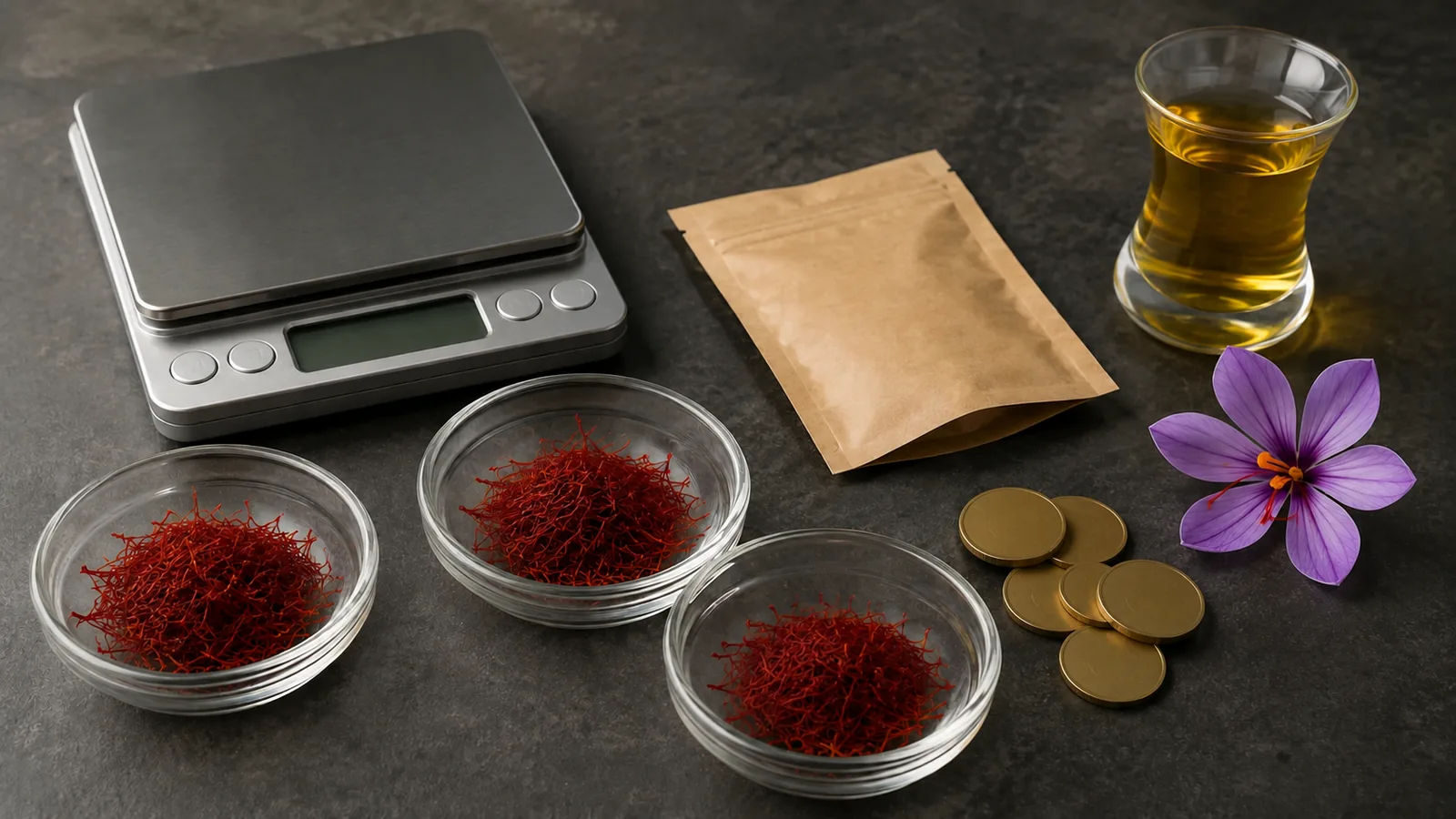
Cheapest Saffron Countries
Saffron is known as the world’s most expensive spice, yet prices vary depending on the country of origin. People often ask which country has the cheapest saffron. Iran is widely recognized for offering saffron at lower source prices than many other major producers. Iranian saffron can be both high quality and more affordable because production is much larger and the growing and trading infrastructure is well established.
The Food and Agriculture Organization’s description of Iran’s qanat-based saffron system identifies Iran as the world’s largest producer. Scale helps explain why saffron can be cheaper in Iran, but it does not make every Iranian grade or retail offer inexpensive. Premium whole threads, careful testing and protective packaging still cost more.
Is Saffron Cheaper in Iran?
Often, yes—especially when the comparison is made at origin between similar grades and quantities. That is why Iran is the usual short answer to “cheapest saffron in the world.” A price in an Iranian wholesale market is not the same product offer as a small jar on a European, American or Asian retail shelf. Export handling, freight, insurance, import rules, taxes and repackaging can all change the final cost.
Currency conversion also makes online comparisons look more precise than they are. Exchange rates move, some quotes exclude delivery, and wholesale prices may require a much larger purchase. Compare the total delivered price for the same net weight rather than a headline “price per kilogram” that may not be available to an ordinary buyer.
Other Affordable Sources
India and Morocco also produce saffron, though genuine regional products can cost more than large-volume Iranian saffron. Spain has a long-established saffron trade, and certified regional products may carry additional production and verification costs. None of those comparisons is fixed: harvest size, grade, seller and destination market can reverse the order in a particular shop.
Iran, India and Spain Compared
Iran: usually the strongest candidate for the lowest source price because it produces at much greater scale. It also offers many grades, so two Iranian quotes may describe noticeably different products.
India: Kashmir saffron has a protected regional identity and limited production. Genuine traceable Kashmir saffron is commonly treated as a premium product, not a bargain substitute.
Spain: Spain sells both domestically produced saffron and imported saffron. “Azafrán de La Mancha” is a protected designation with a defined product specification, documented in the European Union’s official record. A package sold in Spain is not necessarily La Mancha saffron, so the label and origin statement matter.
Morocco: saffron from the Taliouine area has a strong regional reputation and relatively small production. Local buying conditions may be attractive, but a tourist-market price and a verified export price are not automatically the same.
Where Is Saffron Cheapest for the Buyer?
The lowest farm-gate or wholesale price does not always produce the lowest retail price. A buyer in Germany may find an established European seller cheaper than ordering a single gram internationally. Someone in the Gulf may have different freight and retail options. Turkey, Dubai and other trading hubs can offer a wide range, but the city or country alone does not guarantee a low price or authentic contents.
Use a like-for-like calculation:
- Confirm the net saffron weight, excluding the jar and decorative packaging.
- Convert the total delivered cost into a price per gram.
- Compare the same form—whole threads with whole threads, not threads with powder.
- Check grade, origin, harvest or batch information and any credible test evidence.
- Include shipping, duties, taxes and minimum-order requirements.
This makes a ten-gram package comparable with a one-gram jar and exposes offers that look cheap only because they contain less saffron.
Factors Affecting Saffron Price
Several factors determine the cost of saffron, including climate, yield, labor-intensive harvesting, drying, market demand and the size of the crop. Each Crocus sativus flower yields only three stigmas, and the flowers open during a short seasonal window. Separation and drying require careful handling, which keeps saffron expensive even in countries with efficient supply chains.
Grade and Thread Content
Packages with a high proportion of red stigma generally command more than material containing more yellow style. Long, intact threads may also cost more than broken material. These descriptions are useful only when the seller applies them honestly and consistently; a grade name on its own is not laboratory proof.
Threads Versus Powder
Powder may be cheaper because it contains broken saffron, but it is also harder for a shopper to inspect and easier to adulterate. Whole threads are usually the safer format when buying from an unfamiliar source. The guide to identifying real saffron explains visual and infusion checks without pretending that a home test can replace laboratory analysis.
Quantity, Packaging and Age
A larger pack normally has a lower price per gram, but only if it can be used while the aroma remains strong. Light-protective, sealed packaging adds a legitimate cost. Oversized presentation boxes add cost too, without adding saffron. Always compare net weight and consider how much the kitchen will actually use.
Current Market Conditions
Weather, harvest volumes, freight and exchange rates change. That is why a permanent article should not promise a fixed country ranking or quote a supposedly universal current price. The site’s saffron price guide provides the context needed to read current offers.
When Cheap Saffron Is Not Good Value
A very low price can reflect old stock, excess moisture, a low proportion of red stigma, weak material or adulteration. It can also be legitimate clearance or efficient sourcing. Price is a warning signal, not a purity test.
Look closely when a seller promises a premium origin and top grade at a price far below comparable offers. Avoid products with an unexplained sweet fragrance, unnaturally uniform fibers, damp clumps or no traceable seller. Cheap material that needs several times the dose is not cheaper in the finished dish.
Where to Buy Affordable Saffron
For those seeking genuine saffron at reasonable prices, sourcing from a trusted supplier is crucial. Compare the full delivered price, net weight, thread condition and traceability instead of choosing by country name alone. A verified source should make it possible to understand what is being sold and how it has been stored.
The online saffron shop lists the formats currently available. Buy an amount suited to your actual use, keep it sealed away from light, heat and moisture, and bloom a measured portion when cooking. Careful use protects more value than buying a large “cheap” pack that loses aroma in the cupboard.
Which Country Has the Cheapest Saffron?
Iran is generally the best answer at source because its production scale supports competitive prices. For an individual buyer, the cheapest authentic saffron is the verified product with the lowest delivered cost for a comparable grade and weight. That may be Iranian saffron from a local retailer rather than saffron ordered directly from Iran.
Start with Iran when comparing cheapest saffron countries, but finish the comparison with the package in front of you: purity, net weight, freshness, storage, testing and total cost. A low number is useful only when the saffron is genuine and strong enough to do the job.