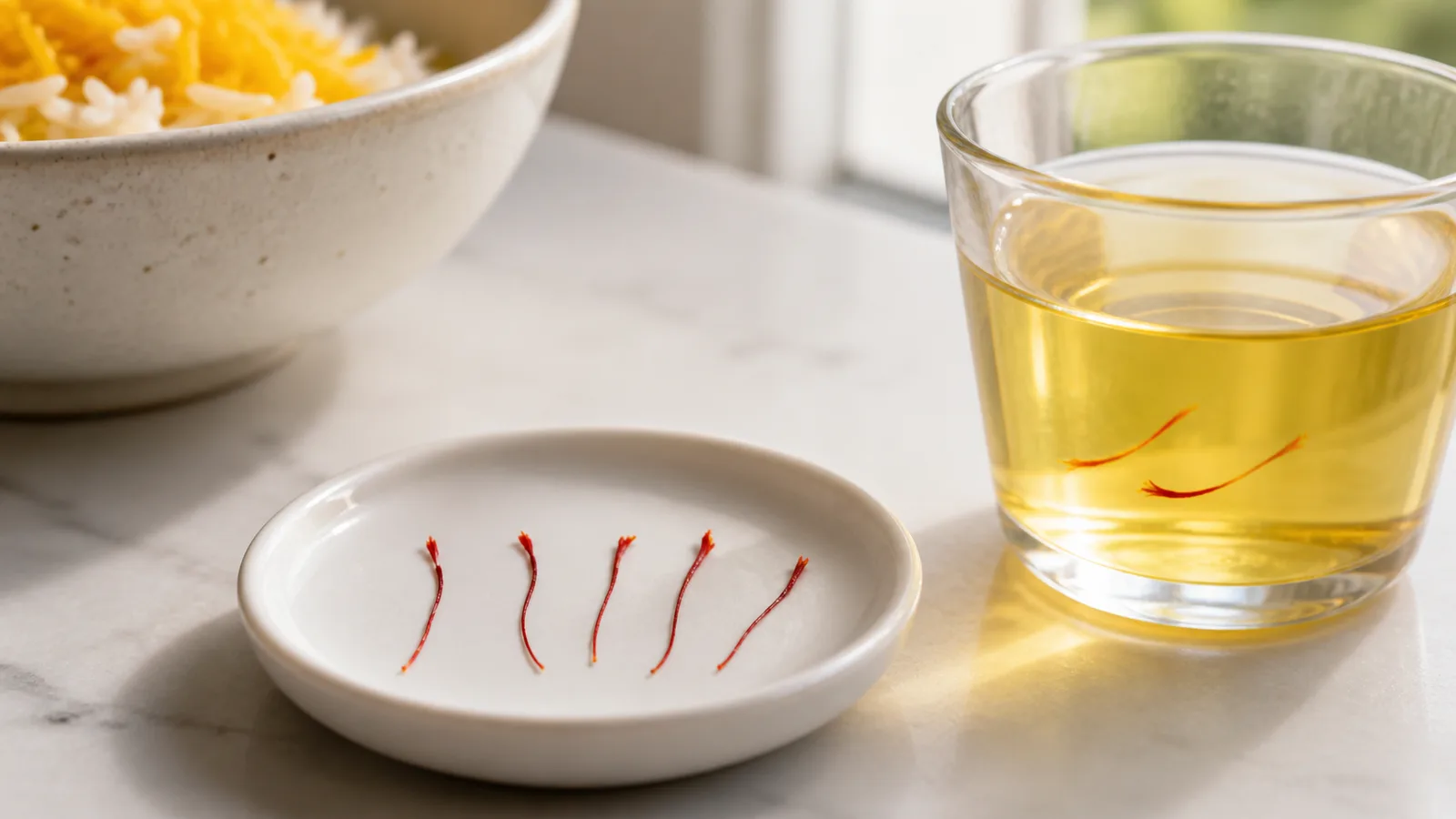
Irani saffron and Kashmiri saffron come from different growing regions and supply systems. Iranian saffron is produced at far greater scale and is usually easier to find; genuine Kashmir saffron comes from a smaller protected region in India and is often scarcer. Either can have excellent color, aroma and flavor, so the better choice depends on the actual batch rather than the country name alone.
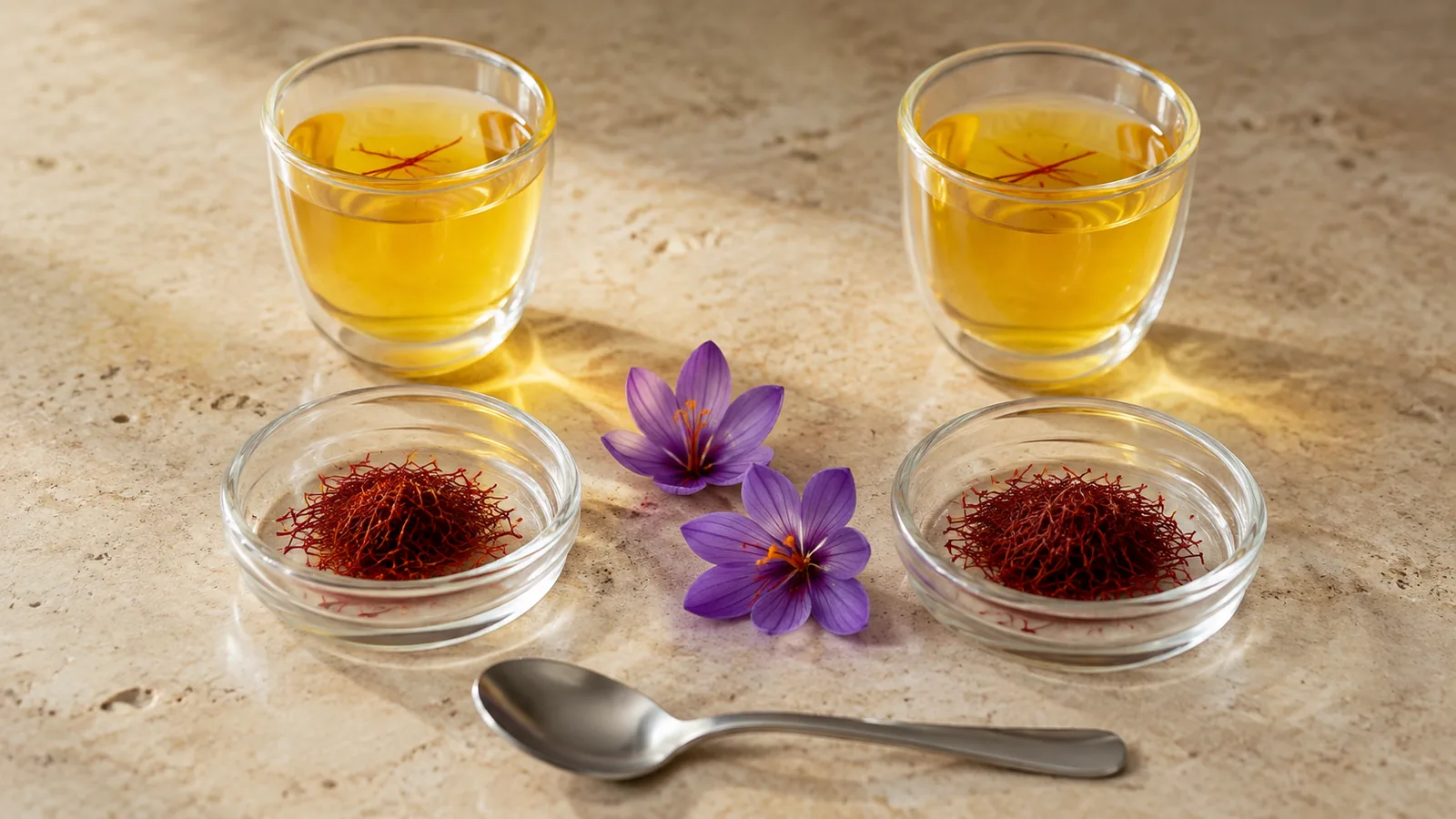
Irani vs Kashmiri Saffron
“Irani saffron” usually means Iranian saffron. Iran has centuries of cultivation experience and remains the world’s largest producer. The Food and Agriculture Organization documents the country’s qanat-based saffron system and the relationship between its dry climate, irrigation knowledge and saffron-growing communities.
Kashmiri saffron is grown in the Kashmir region of India. “Kashmir Saffron” is a registered geographical indication; the official Geographical Indications Registry entry identifies the registered product and geographic area. That protected identity is more specific than a seller merely writing “Kashmiri” on an online listing.
The most dependable difference between the two is therefore provenance. In other words, a comparison of Kashmiri saffron vs Iranian saffron begins with where and how each batch was produced. They are not two different plant species: both are the dried stigmas of Crocus sativus. Growing conditions, harvest timing, stigma separation, drying, grading and storage can still create meaningful differences between individual lots.
Color and Aroma Differences
Kashmiri saffron is often described as having long, thick, deep reddish-orange threads. Iranian saffron is commonly sold in several cuts and grades, ranging from all-red separated stigmas to products that retain more of the yellow style. Those general descriptions can help a shopper understand the market, but they are not a reliable blind test of origin.
Thread dimensions vary within a harvest, and processing changes what reaches the package. A high-grade Iranian batch may have darker or longer threads than a particular Kashmiri batch, while another comparison may show the reverse. Photographs can also be affected by lighting and editing.
Aroma has the same limitation. Both origins can produce a strong, complex scent with floral, hay-like and gently bitter notes. Claims that all Kashmiri saffron is sweeter or every Iranian batch is more pungent are too broad. Freshness and storage frequently explain more than nationality.
Flavor and Culinary Use
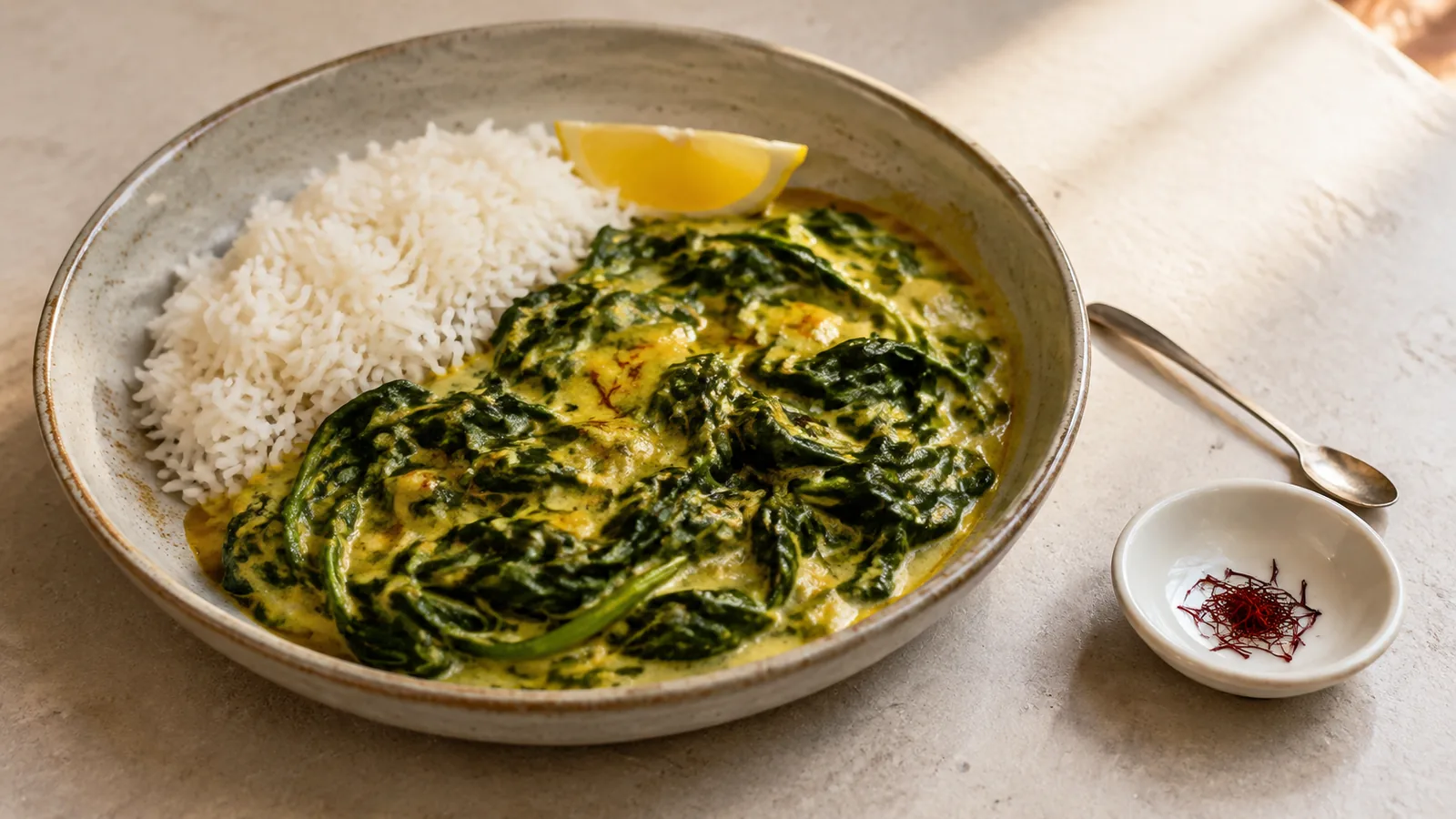
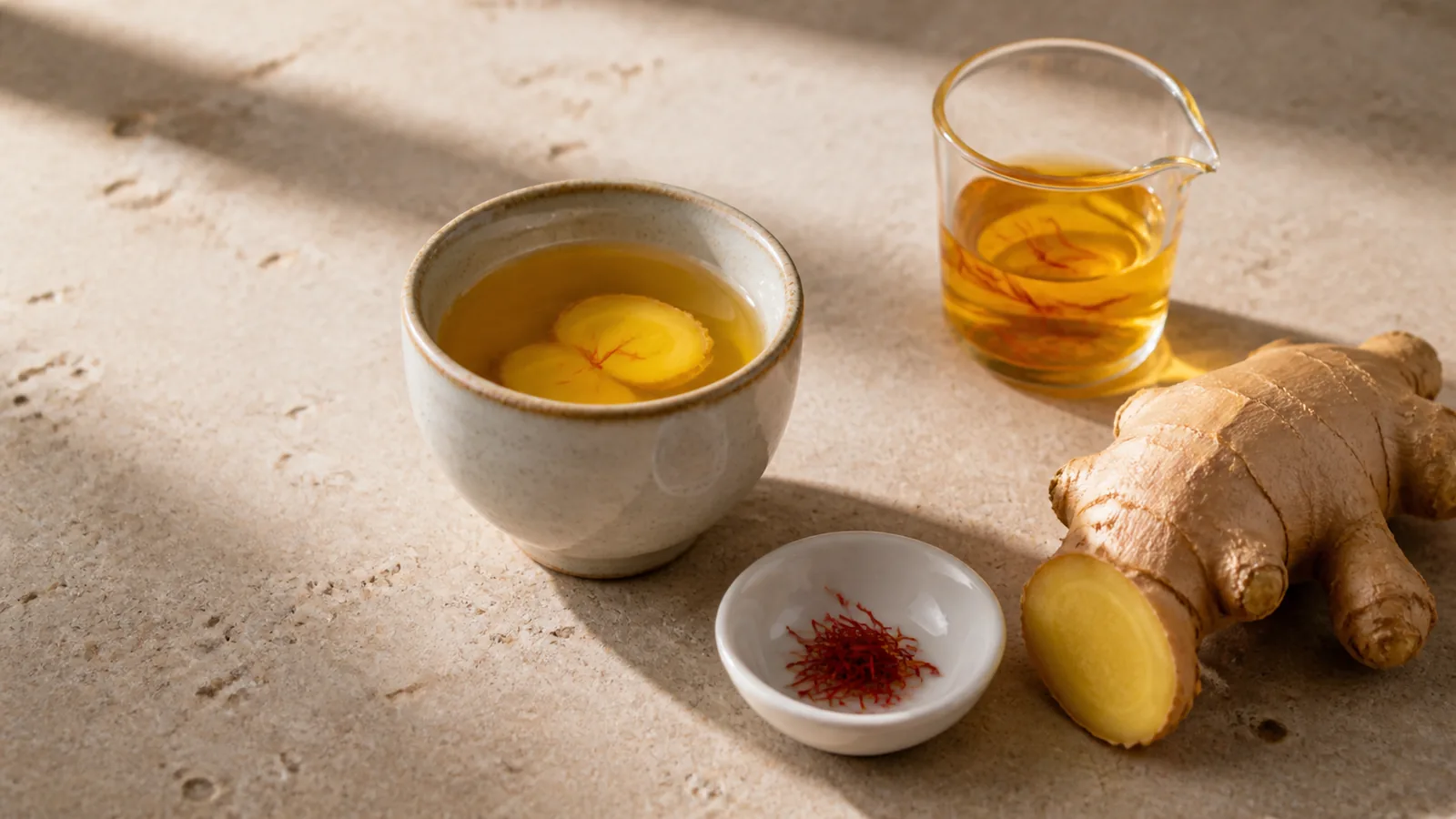
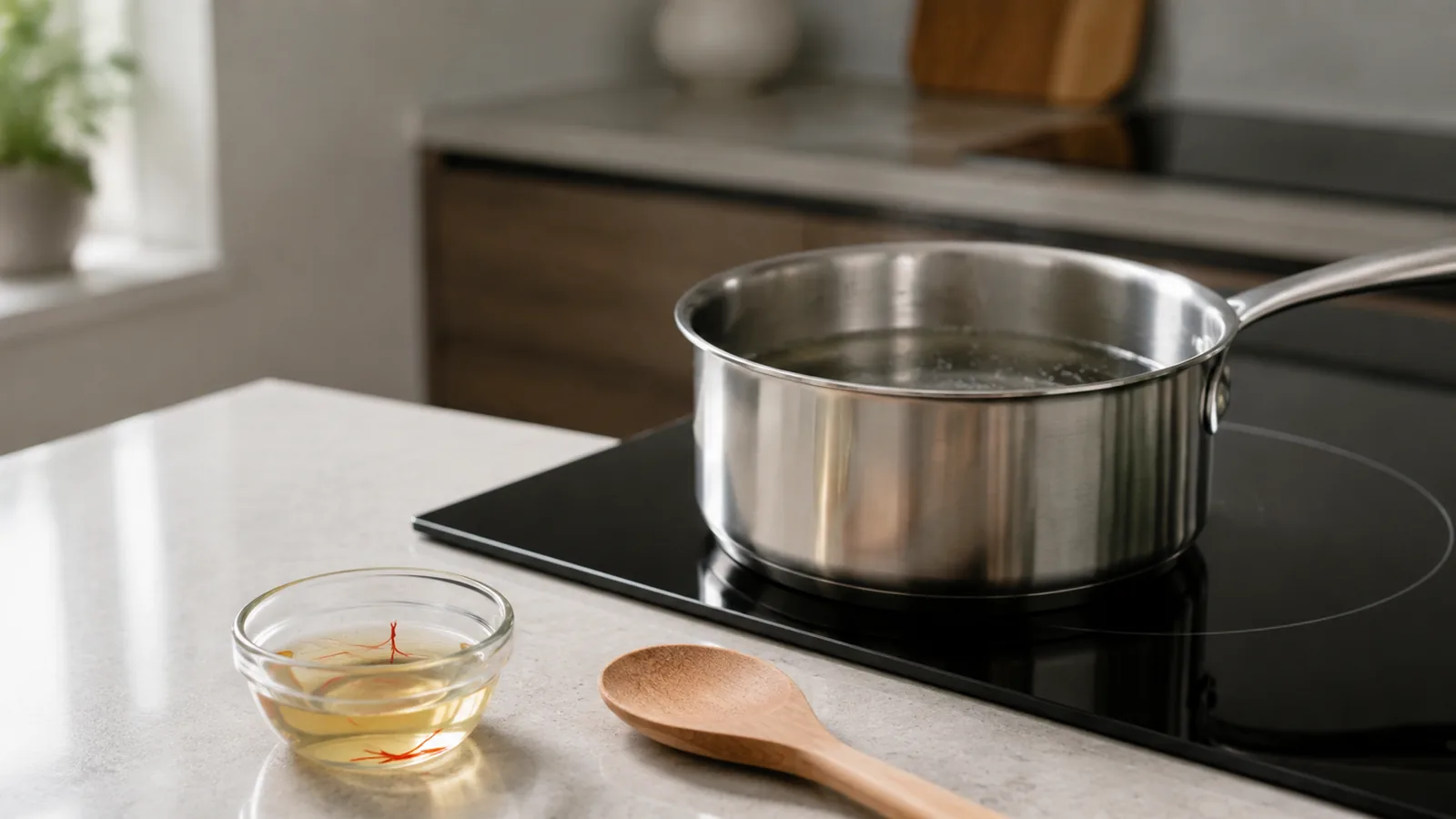
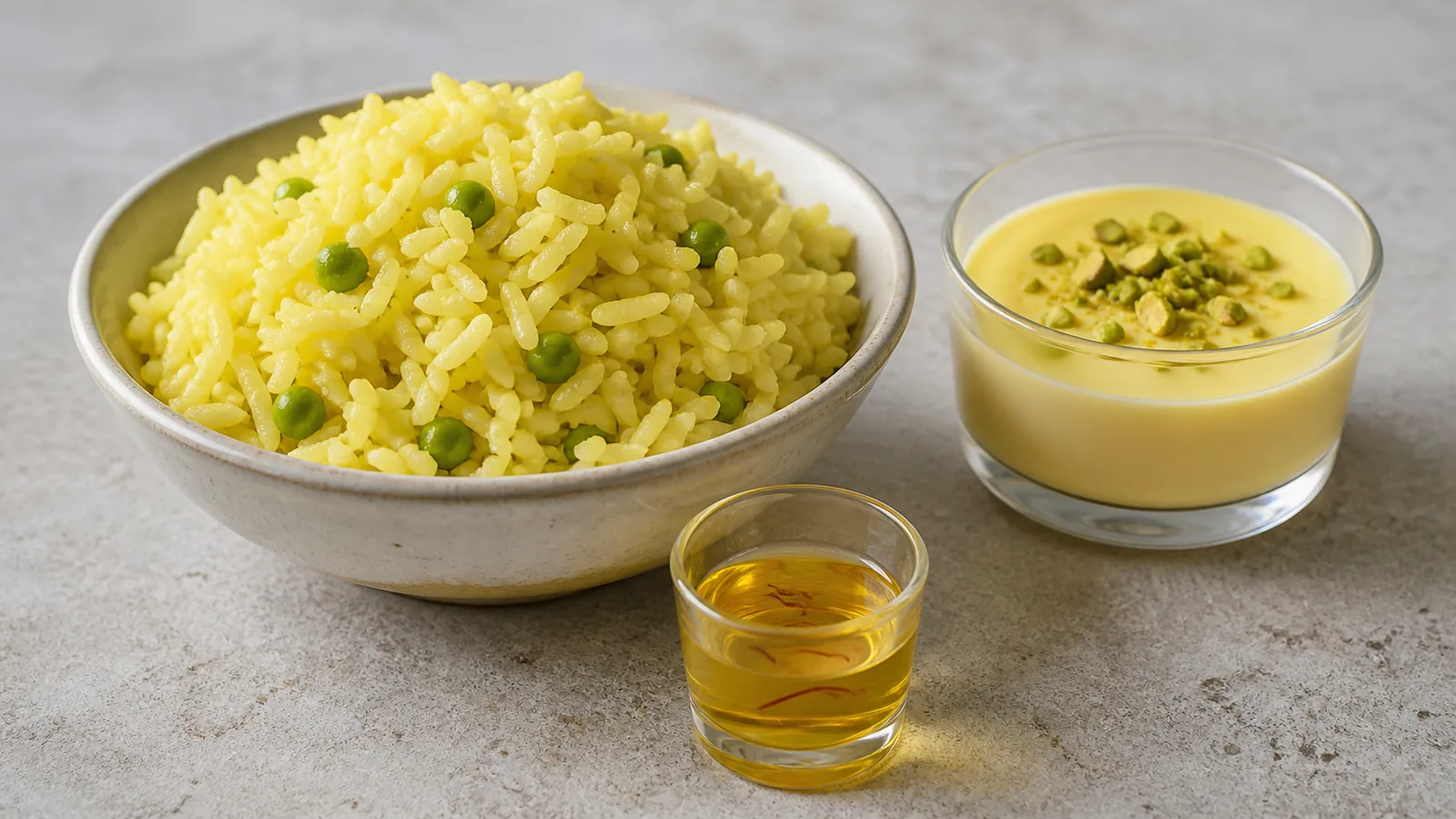
Both types work in rice, desserts, bread, tea, milk and savory sauces. The dose and extraction method have a stronger practical effect than the passport of the threads. Crushing a measured pinch and blooming it in warm water allows the color and aroma to disperse evenly; scattering dry threads over a finished dish often wastes their potential.
For a fair Irani vs Kashmiri saffron tasting, use the same weight, water temperature and steeping time for each sample. Taste the infusions before adding other spices. This makes genuine batch differences easier to notice and avoids mistaking a larger dose for better saffron.
The guide to brewing saffron gives a practical extraction method. Start lightly: more saffron can introduce extra bitterness rather than a better result.
Price and Availability
Iranian saffron is generally more widely available because Iran produces at much greater scale. This often supports a lower source price and gives buyers a broad choice of grades. Export costs, packaging, testing and retailer margins still mean that Iranian saffron is not always the cheapest offer in every country.
Genuine Kashmir saffron is grown in limited quantities and is commonly sold as a premium regional product. Scarcity and traceability can raise its price. A surprisingly cheap “Kashmir” offer deserves careful checking, particularly when the seller provides no producer, batch or origin documentation.
Compare the total delivered price per gram for the same form and approximate grade. The site’s saffron price guide explains why a wholesale kilogram quote should not be compared directly with a sealed retail gram.
Grades and Names Are Not Directly Equivalent
Iranian sellers use terms such as Negin, Sargol and Pushal to describe different cuts or presentations. Kashmir has its own trade and regional terminology. A grade name from one system is not necessarily a one-to-one match for a name from the other.
Ask what the package physically contains. Are the threads mostly red stigma, or is more yellow style attached? Are they whole or broken? Is the product sold as threads or powder? Is there credible batch testing? Clear answers are more valuable than an unexplained superlative such as “number one grade.”
How to Compare Two Packages
- Confirm the origin claim. Look for a named producer or packer, geographic information and a batch reference.
- Compare the same form. Whole threads are easier to inspect than powder.
- Check net weight. Ignore the size of the presentation box and calculate the price per gram.
- Inspect the threads. Look for recognizable stigma structure, dry condition and an absence of unrelated material.
- Smell before brewing. Reject musty or artificially perfumed material.
- Run a controlled infusion. Use equal weights and preparation so color, aroma and flavor can be judged fairly.
- Consider storage. A fresh, protected batch is a better purchase than a famous origin kept in light or damp conditions.
Home checks can identify warning signs but cannot certify origin or purity. The guide to identifying real saffron explains those limits and the value of reliable laboratory evidence.
Common Misunderstandings
Darker Threads Always Mean Better Saffron
Deep red stigmas are desirable, but darkness alone is not proof of strength, freshness or origin. Lighting, moisture and deliberate coloring can mislead the eye. Aroma, traceability and testing belong in the judgment too.
More Expensive Means More Powerful
Price can reflect scarcity, protected origin, packaging and shipping as well as quality. It is not a laboratory result. Compare the usable saffron and the evidence behind it rather than assuming the cost settles the question.
One Origin Is Always Sweeter or Stronger
Regional tendencies may be discussed by experienced buyers, but a fixed national flavor rule ignores harvest and processing differences. When the choice matters, compare current batches under the same conditions.
Which One Should You Choose?
Choose Iranian saffron when you want broad availability, several grade options and strong value from an established producing country. Choose verified Kashmir saffron when its protected regional origin, scarcity and particular batch appeal to you. For everyday cooking, authenticity and freshness matter more than prestige.
The difference between Irani saffron and Kashmiri saffron is real at the level of origin, production scale, market availability and regional identity. Color, aroma and flavor cannot be assigned safely from the name alone. Buy whole threads from a traceable source, store them well and compare equal doses. The all-red saffron collection provides one current format to consider.