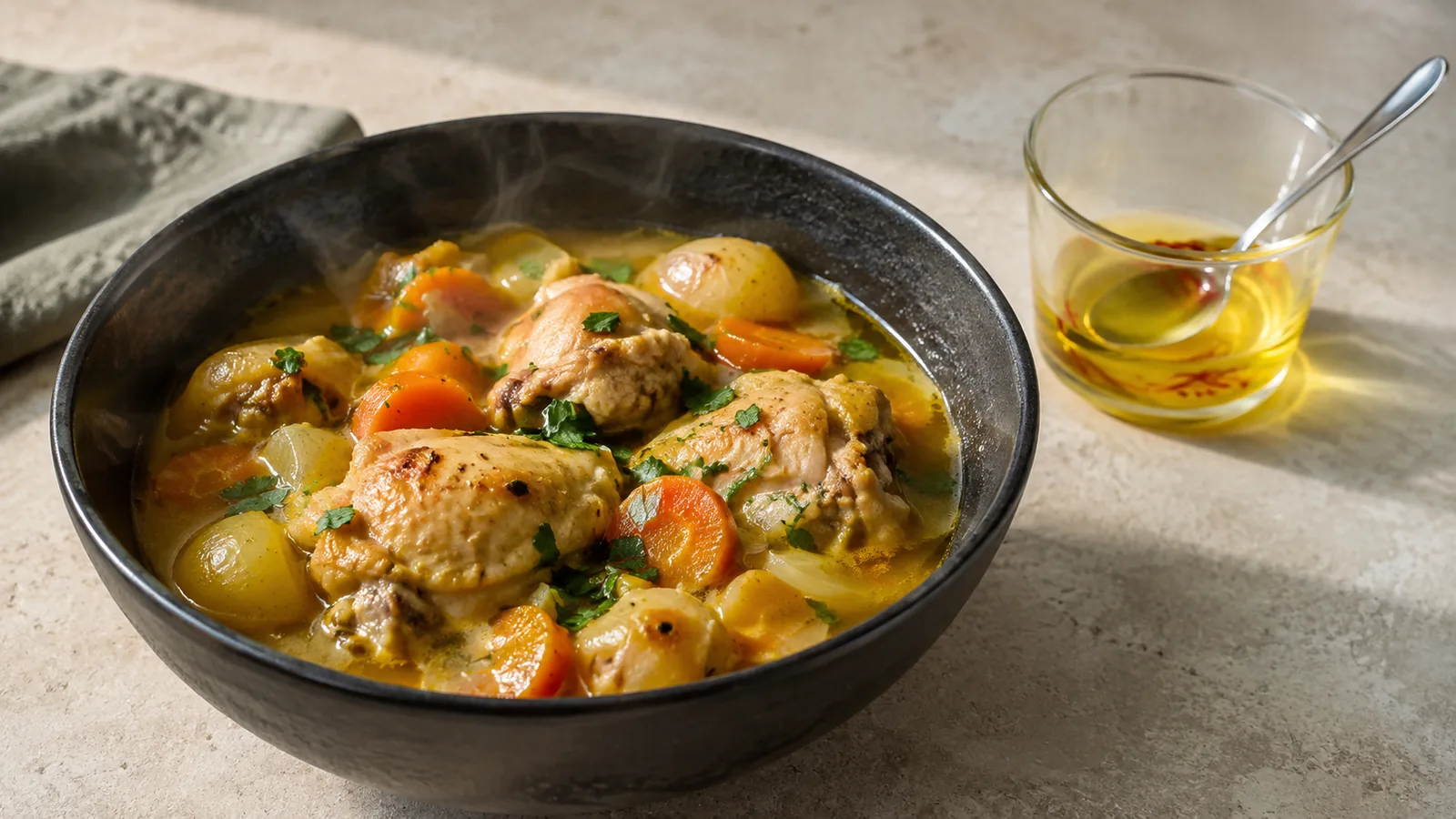
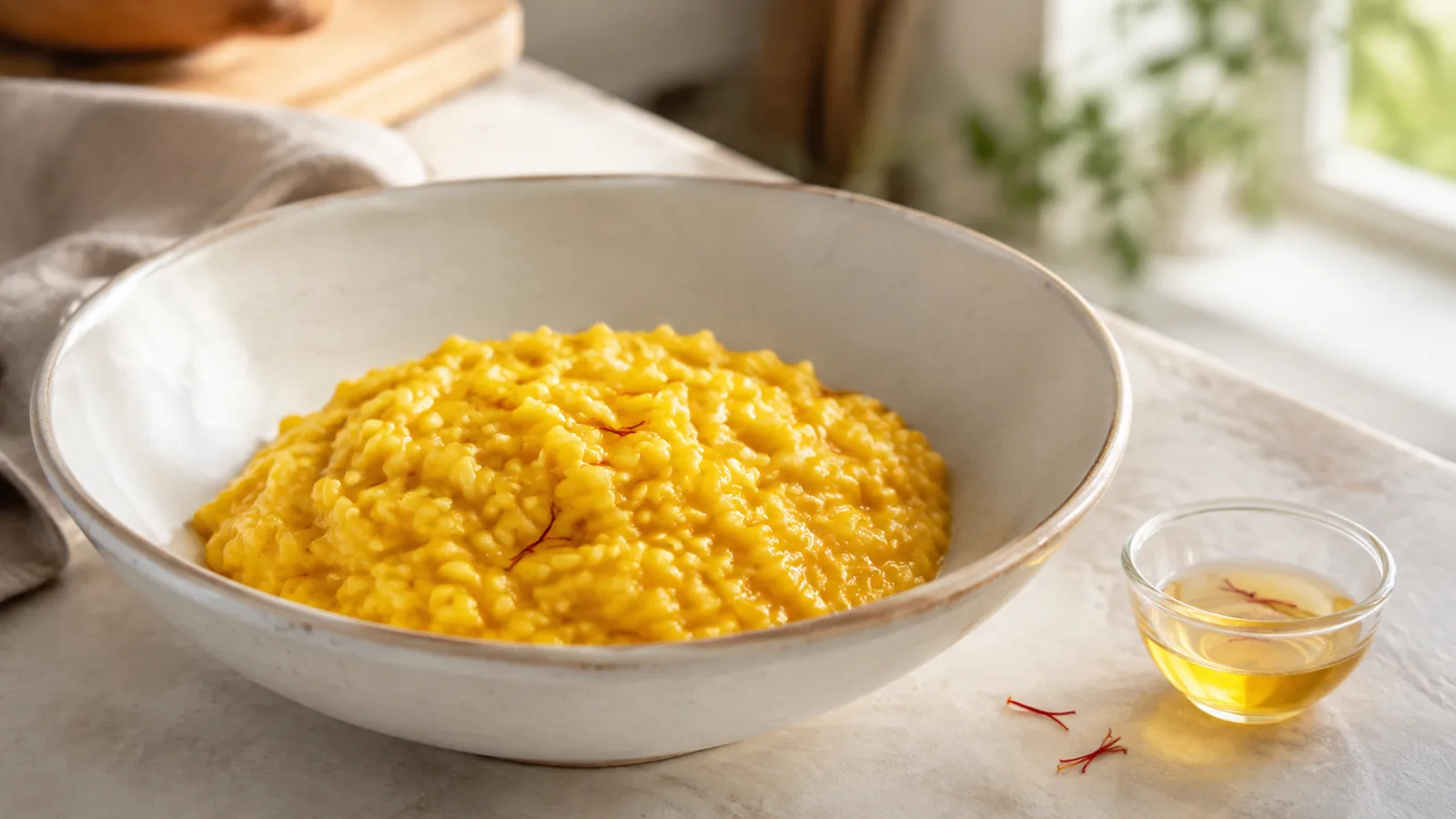
The best time to put saffron in milk is after the threads have had a few minutes to infuse in a small portion of warm milk. Add that golden liquid while the rest of the milk is warming gently, then keep the heat below a hard boil. This gives the spice time to spread without flattening its aroma.
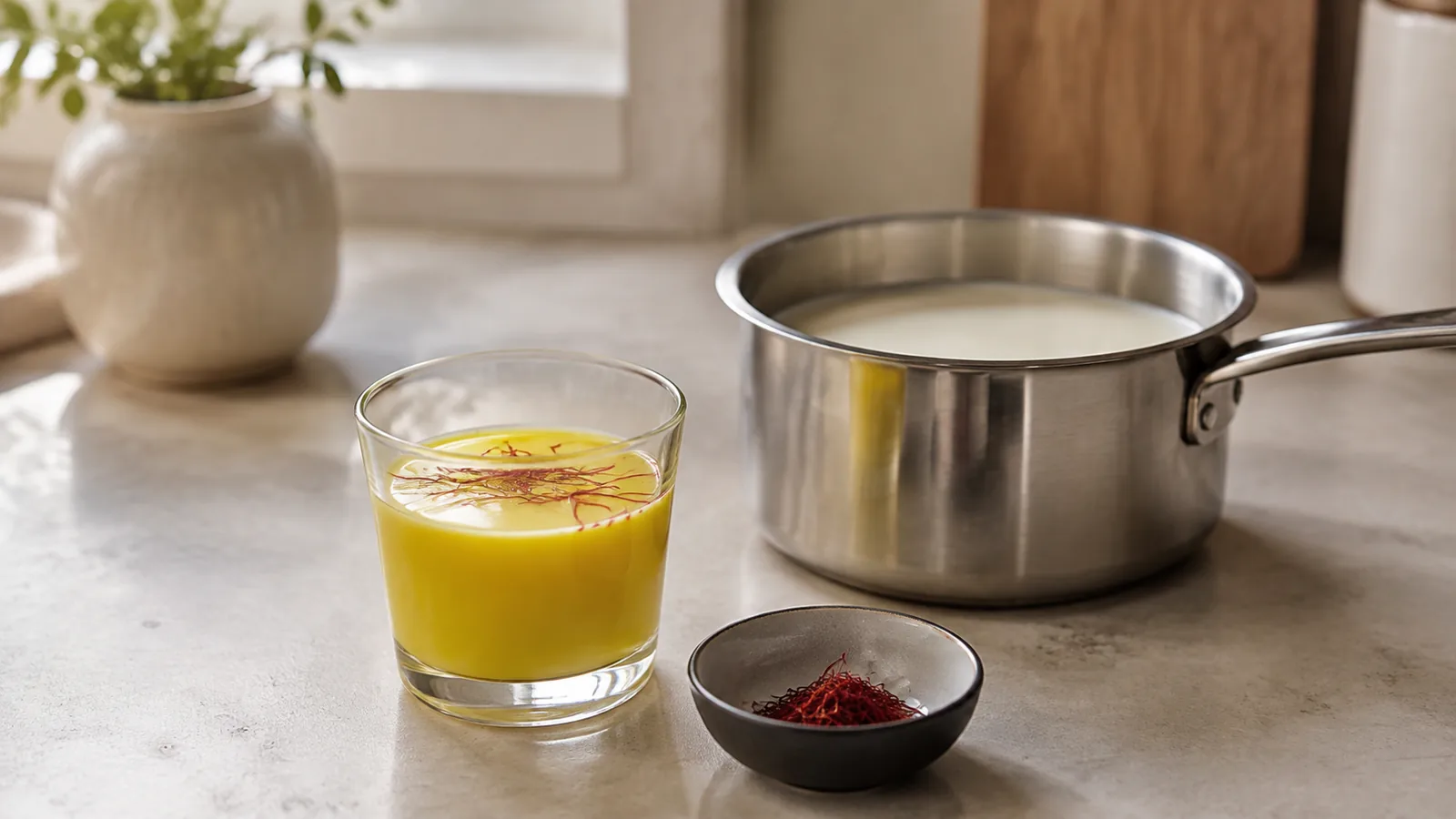
Saffron in Milk Timing: When to Add for Best Flavor and Color
Saffron in milk timing depends on the drink or dessert you are making, but the underlying method stays simple: extract first, combine second. Dry threads dropped into a full pan of milk can gather on the surface or release unevenly. A small infusion is easier to control and distribute.
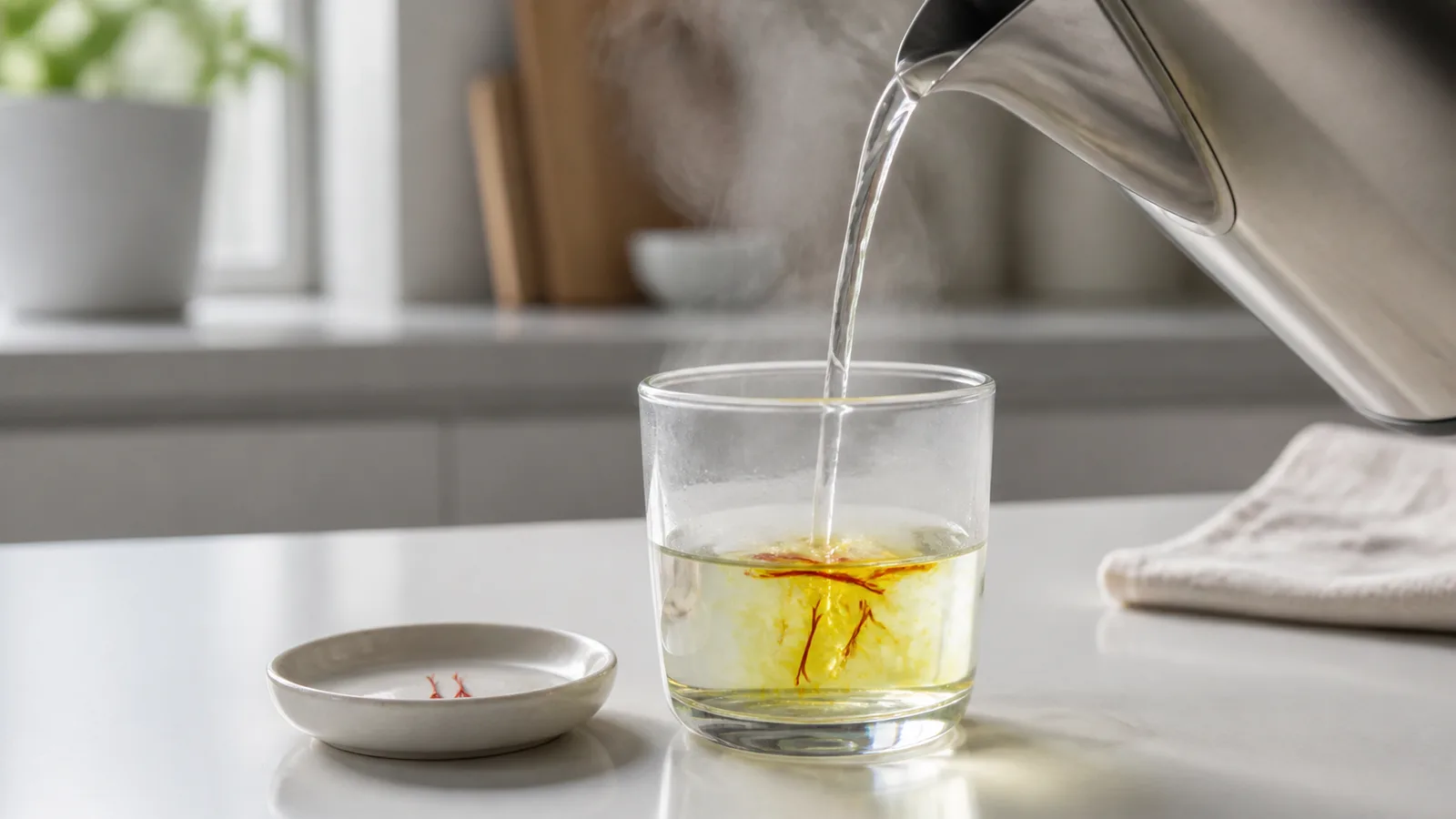
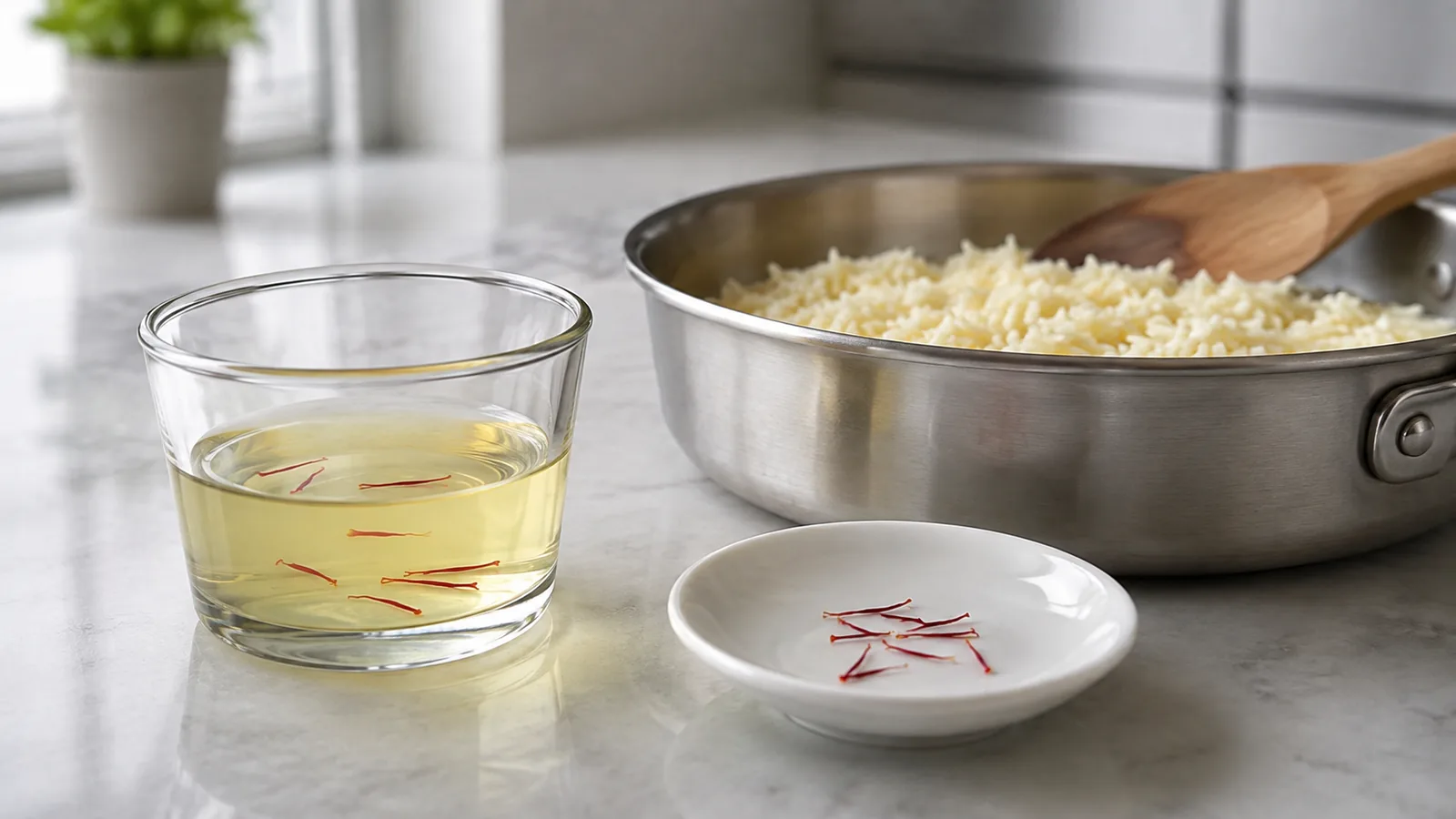
For most recipes, crush the measured threads lightly, cover them with two or three tablespoons of warm milk, and leave them for 10 to 15 minutes. The milk should feel warm rather than scalding. Stir the infusion into the larger quantity of milk during gentle heating.
Best Time to Add Saffron to Milk
When making a warm saffron drink, add the prepared infusion once the milk is hot enough to steam but before it reaches a vigorous boil. Reduce the heat, stir well, and allow a few minutes for the colour and aroma to spread.
For a milk-based dessert, timing follows the structure of the recipe:
- Rice pudding or kheer: add the infusion after the rice has begun to soften, leaving enough cooking time for the flavour to blend.
- Custard: infuse the saffron in part of the milk, then use that milk as the recipe directs. Avoid adding dry threads after the custard has thickened.
- Ice cream or chilled pudding: add the infusion to the cooked base before chilling, unless the recipe uses no heat.
- Milk tea or a simple saffron drink: add it during the final gentle heating and serve once the flavour is balanced.
This approach preserves the old advice to add saffron early enough to infuse, while avoiding unnecessary prolonged boiling.
Steeping Saffron in Warm Milk
Lightly crushing the threads increases the surface area that touches the liquid. Use a clean mortar and pestle or press them between dry fingertips; they do not need to become a fine powder. Add the crushed saffron to a small cup of warm milk and cover it while it steeps.
Ten to 15 minutes is a practical starting point. A pale infusion may simply need more time, especially when the milk is only lukewarm. Colour alone is not a reason to add more saffron immediately. Give the existing dose time to develop, then taste.
If you want a broader explanation of infusion methods, see our guide to the best way to brew saffron.
How Much Saffron Should Go in Milk?
The right quantity changes with the volume of milk, the strength of the threads and the other flavours in the recipe. For four servings, 0.05 to 0.1 gram is a sensible range to test. If you do not have a scale that reads hundredths of a gram, begin with a modest pinch rather than relying on an exact thread count.
Use less when saffron is meant to sit quietly behind vanilla, cardamom or rose. Use the upper end only when saffron should lead the drink or dessert. More is not automatically better: too much can become medicinal or bitter and wastes an expensive ingredient. Our saffron quantity guide explains how to adjust by serving size.
When to Add Saffron to Cold Milk
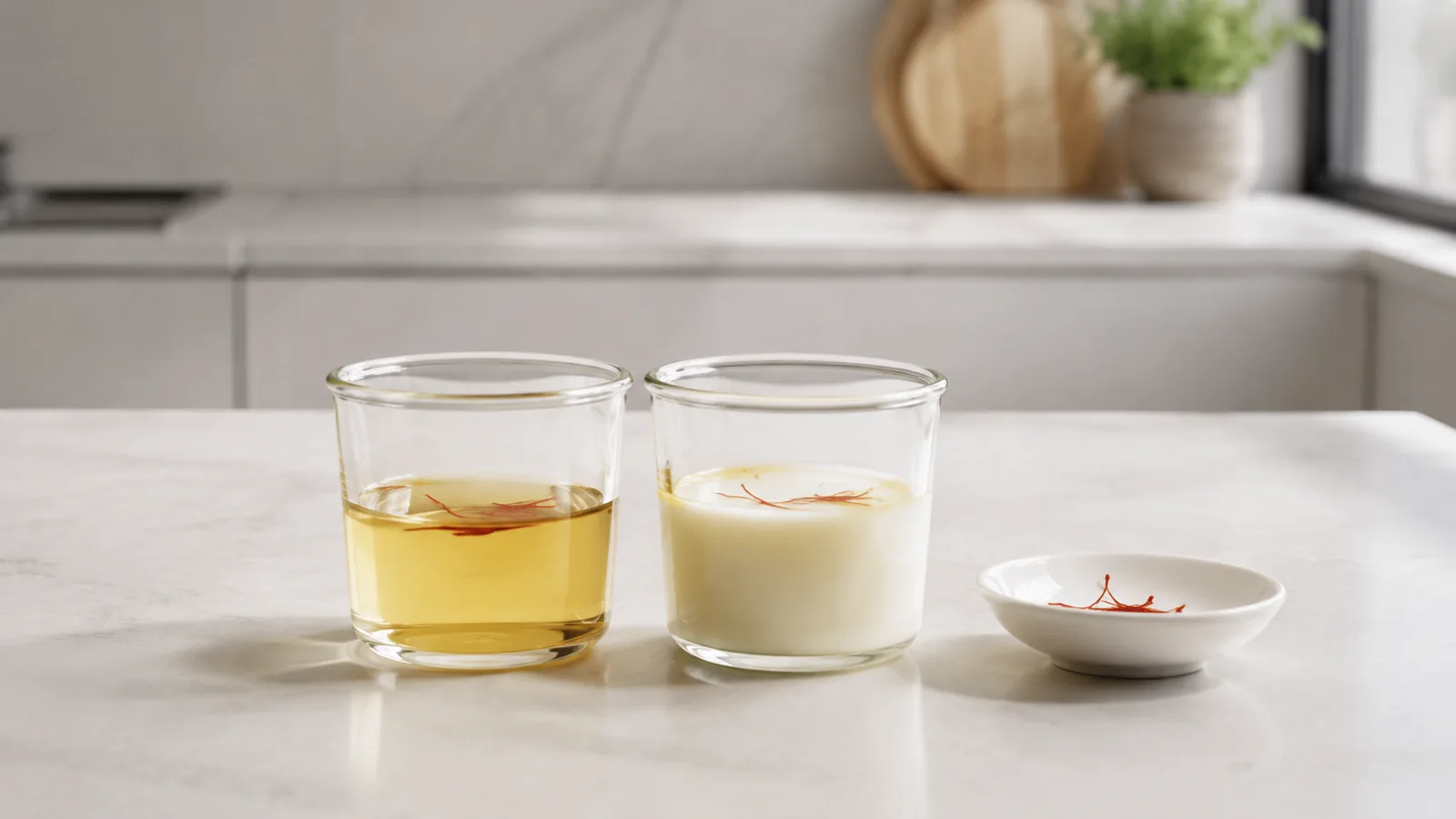
For a cold drink or saffron milkshake, the most reliable method is still to start warm. Make a small warm-milk infusion, let it cool, stir it into cold milk, and refrigerate the mixture. This produces a more even result than dropping intact threads straight into a cold glass.
If a no-heat recipe requires direct cold infusion, crush the saffron first and allow several hours in the refrigerator. Keep the milk covered and chilled throughout. An overnight infusion can work, but taste it before serving; a long steep should not be used to compensate for an excessive dose.
Why Timing Matters
Milk changes how quickly saffron disperses. Its fat and proteins create a rich base, while moderate warmth helps the spice release colour and aroma. High heat is not required. Repeated or vigorous boiling may dull delicate aromas, and adding whole threads at the last moment can leave the drink uneven.
The safest sequence is therefore warm, steep, combine and heat gently. This also lets you assess the infusion before it enters the full recipe.
Common Problems and Simple Fixes
The Milk Has Colour but Little Aroma
The saffron may have been old, exposed to air, or boiled for too long. Fresh threads should smell distinctive before use. Next time, cover the infusion while it rests and add it during gentler heating.
The Flavour Is Bitter
Too much saffron is the usual cause. Dilute the drink or dessert base with more milk, then rebalance any sugar or other seasoning. Do not try to hide excessive saffron with more spice.
The Threads Float on Top
Crush them more lightly before steeping and stir the prepared infusion through the warm milk. Floating threads are harmless, but they show that extraction and distribution could be more even.
The Milk Curdles
Saffron itself is not a dependable cause of curdling. Acidic ingredients, overheated milk or sudden temperature changes are more likely. Use fresh milk, moderate heat and add acidic components only as the recipe requires.
A Reliable Method for Saffron Milk
- Measure a modest amount of saffron for the number of servings.
- Crush the threads lightly in a dry mortar.
- Warm a few tablespoons of milk without boiling it.
- Cover the saffron with the warm milk and steep for 10 to 15 minutes.
- Warm the remaining milk gently, then stir in the infusion.
- Taste after a few minutes and adjust the recipe only if needed.
That method works for a plain drink and adapts easily to custard, rice pudding and other milk-based recipes. Choose clean, intact threads before you begin; our saffron shop lists the current grades available.
Conclusion
Put saffron into milk after a short warm infusion and before the milk undergoes its final gentle heating. For cold preparations, cool the infusion first or allow crushed threads more time under refrigeration. Careful timing, a measured dose and moderate heat produce a balanced golden milk without wasting the spice.