You can add saffron to milk that has just boiled, but do not keep the spice at a rolling boil. Take the pan off the heat, let the bubbling settle, and stir in a prepared saffron infusion. That small timing change protects the aroma and distributes the colour more evenly.
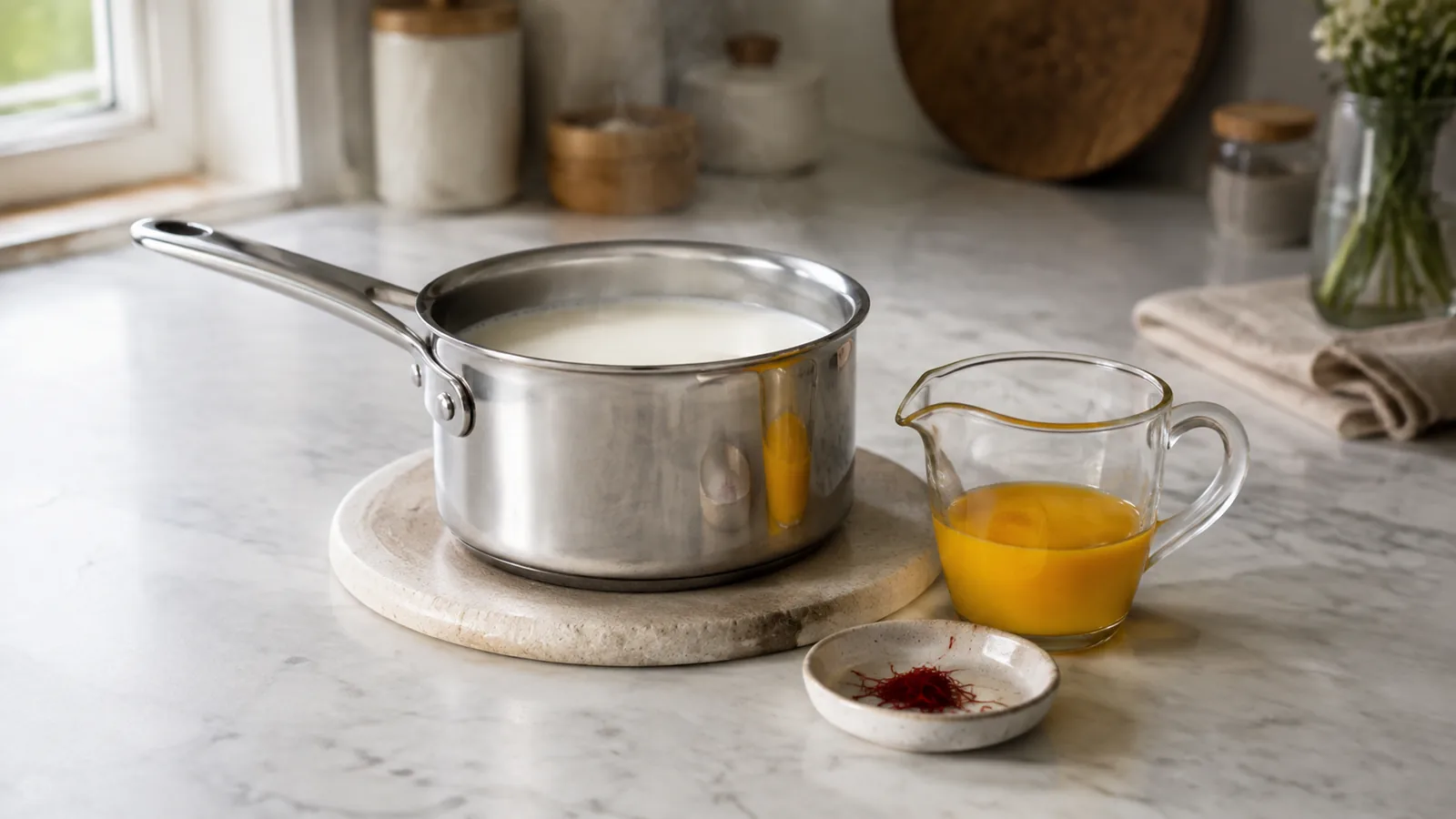
Adding Saffron to Boiling Milk: Is It a Good Idea?
Saffron in hot milk works best with controlled heat. Milk often needs to reach a boil for food safety or for the structure of a particular dessert, but saffron does not need that same treatment. Separating the two jobs gives you more control: heat the milk as the recipe requires, then add saffron once the heat is lower.
The practical distinction is between milk that has boiled and milk that is still boiling hard. The first is perfectly usable. The second exposes delicate aromas to more heat than they need.
Can You Add Saffron to Boiling Milk?
Yes, provided you reduce or remove the heat immediately. If a pan is already boiling when you remember the saffron, move it off the burner and wait until the surface calms. Stir in the infusion, cover the pan for a few minutes, then continue the recipe at a gentle simmer only if necessary.
A few threads added directly will still colour the milk, so the dish is not ruined. The concern is quality, not a dangerous reaction. Prolonged boiling can drive away some of the fragrance, while whole threads may release unevenly in a large pan.
Better Method: Add Saffron to Warm or Simmering Milk
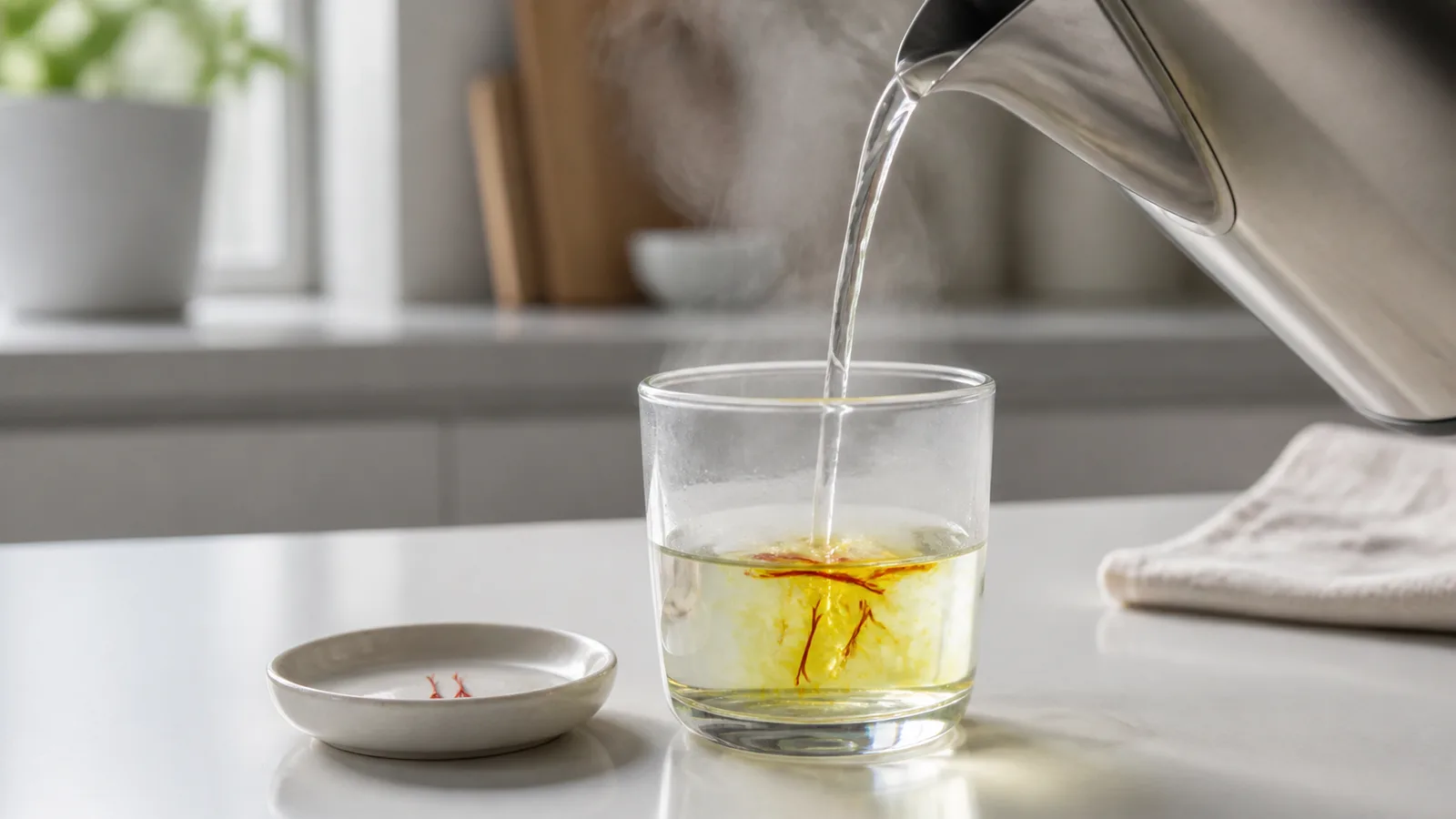
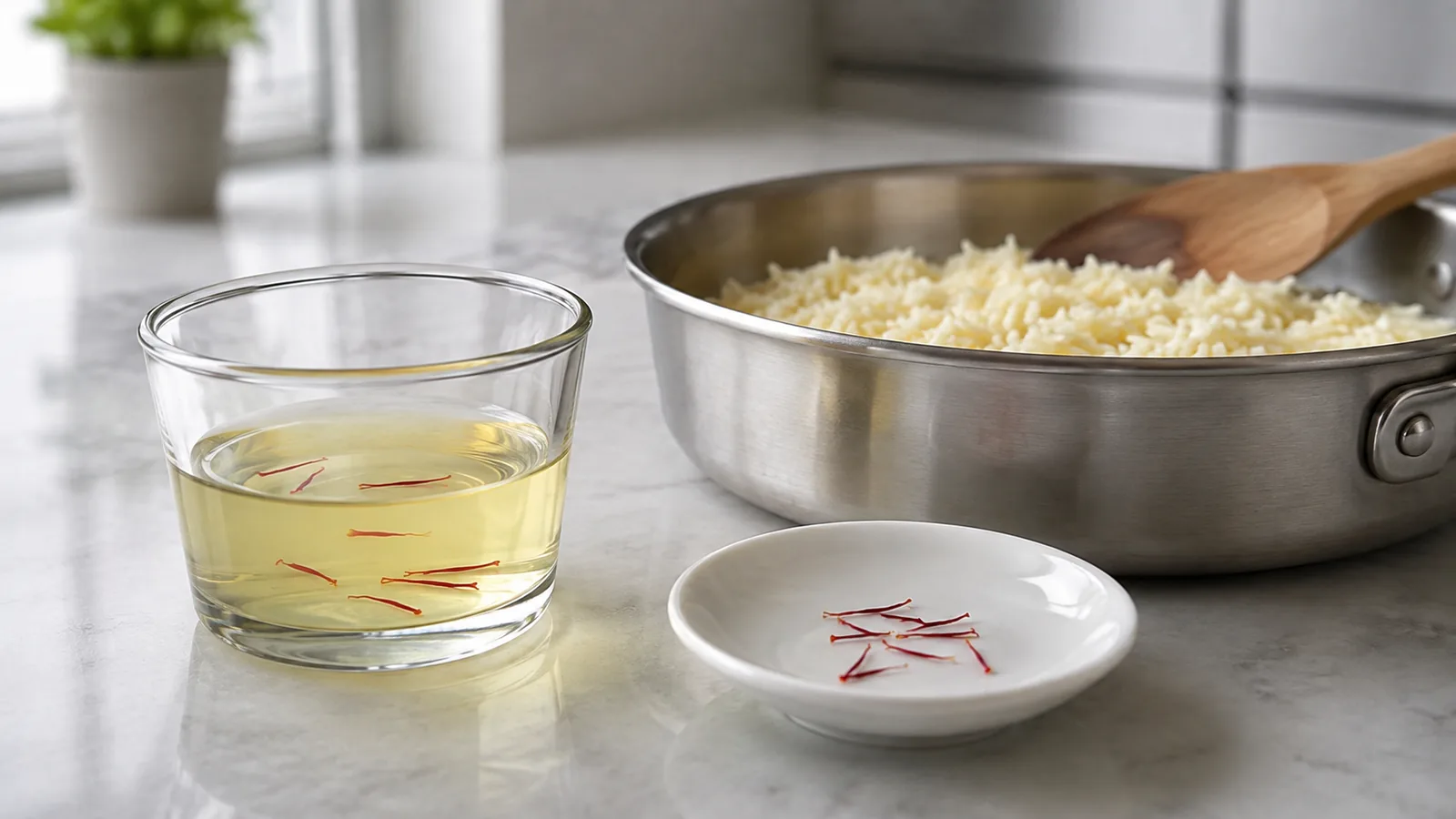
Before heating the main pan, crush the measured saffron lightly. Put it in a small cup, add two or three tablespoons of warm milk, cover, and leave it for 10 to 15 minutes. The liquid should become fragrant and take on a golden tone.
Add this saffron-infused milk while the larger pan is warm or simmering gently. Stir from the bottom so the infusion reaches the whole mixture. If the recipe must return to the heat, keep that stage brief and avoid a vigorous uncovered boil.
This is the same basic extraction principle used in our guide to brewing saffron, adapted for a dairy base.
When to Add Saffron to Boiling Milk
The right moment changes slightly with the dish:
- Plain saffron milk: heat the milk, remove it from the burner, add the infusion, cover briefly, and taste before serving.
- Rice pudding or kheer: cook the rice until it has started to soften, then add the infusion with enough gentle cooking time left for it to blend.
- Custard: infuse part of the milk before combining it with the remaining custard ingredients. Follow the recipe’s temperature controls to prevent curdling.
- Tea or spiced milk: add saffron near the end, after harder spices have had time to infuse.
- Ice cream base: add the infusion to the cooked base before chilling it.
For a closer look at recipe timing, see when to put saffron in milk.
Why Not Add Saffron to Boiling Milk?
A hard boil creates steam and constant movement. Volatile aromatic compounds can escape with that steam, especially when the pan is uncovered. The milk may also reduce around the threads, making a small dose taste harsher and increasing perceived bitterness.
It is sometimes said that boiling “burns” saffron instantly. That is too absolute. Saffron in a wet pan does not behave like dry threads scorched against hot metal. A short contact with boiling milk is unlikely to destroy everything, but continued high heat gives no useful advantage and may leave the aroma flatter.
How Much Saffron to Use
For four servings, 0.05 to 0.1 gram is a reasonable range to test. Saffron varies in strength, and milk drinks may also contain cardamom, vanilla, rose or sugar, so taste matters more than an exact thread count. Begin at the lower end for a subtle drink.
If the finished milk is too pale, wait a few minutes before adding more. Extraction continues after the infusion enters the pan. If it tastes bitter or medicinal, dilute it with more milk and adjust the other ingredients proportionally.
What Temperature Should the Infusion Be?
You do not need a thermometer for ordinary kitchen use. Warm the small portion of milk until it is comfortably hot and steaming lightly, not bubbling. Covering the cup while it rests helps retain aroma.
Do not pour a cold infusion into a delicate custard at the wrong stage, because a sudden temperature change can affect the custard even though the saffron itself is fine. Bring components to compatible temperatures as the recipe directs.
Common Mistakes
- Boiling the infusion for a long time: gentle warmth and patience extract the spice more cleanly.
- Adding too much at once: colour develops before the full flavour is obvious, so allow time before adjusting.
- Leaving threads whole: lightly crushed threads expose more surface to the milk.
- Letting milk scorch: stir the pan and control the burner; scorched dairy can be mistaken for bitter saffron.
- Adding the spice at the final second: give the infusion a few minutes to distribute before serving.
A Simple Saffron Milk Method
- Measure a modest pinch of saffron and crush it lightly.
- Steep it in a few tablespoons of warm milk for 10 to 15 minutes.
- Heat the remaining milk according to the recipe.
- Once any vigorous boiling has stopped, stir in the infusion.
- Keep the pan covered for a few minutes, then taste and adjust.
Good results begin with clean, aromatic threads. The current selection is available in our saffron shop.
Conclusion
Adding saffron to boiling milk is possible, but the better habit is to wait until the bubbling stops. Prepare a small warm infusion, stir it into the hot milk, and use only gentle heat afterward. You keep the recipe’s required milk-heating step without sacrificing the spice’s most delicate character.