Do not take saffron if you have had an allergic reaction to it. Stop a new saffron product if it causes concerning symptoms, and do not start a medicinal-dose supplement without professional advice during pregnancy, while breastfeeding, before surgery or alongside medicines that may interact. Those are different situations from adding a small amount of saffron to food.
Avoiding saffron in certain conditions does not mean treating the spice as dangerous for everyone. Saffron safety depends on the form, amount and person. A few threads in a shared meal, a daily powder and a concentrated extract are not equivalent exposures.
Who should avoid saffron completely?
Can you be allergic to saffron? Yes. An allergic reaction to saffron can occur, although published food-allergy reports are uncommon. Anyone with a confirmed saffron allergy or a previous immediate reaction after eating or handling it should avoid it unless an allergy specialist advises otherwise. Check spice blends, curry mixes, drinks and supplements as well as jars labelled simply “saffron,” because it can appear as a minor ingredient.
Food allergy to saffron appears to be rare, but it is real. Published medicine includes a case report of saffron-related anaphylaxis. Occupational exposure to saffron pollen is a separate issue seen among some people who handle flowers during processing; pollen research should not be used to claim that every reaction to the dried culinary stigma works in the same way.
Saffron allergy symptoms to take seriously
A mild allergic reaction can involve itching, hives or swelling. Breathing difficulty, throat or tongue swelling, wheezing, faintness, confusion or rapidly worsening symptoms can signal anaphylaxis. The NHS guidance on anaphylaxis treats it as a medical emergency. Use prescribed emergency medication if you have it and call your local emergency service; do not wait to see whether saffron tea settles the reaction.
Not every headache or stomach upset is an allergy. A clinician can help distinguish an immune reaction from an ordinary side effect or a response to another ingredient. Do not deliberately repeat a suspected exposure at home to “test” it.
When not to take a saffron supplement
Pause before using a concentrated product in any of the following circumstances:
- The label conflicts with your condition or medicine. Follow the exact warning for that product rather than generic advice from another brand.
- You are pregnant or breastfeeding. Food-level exposure and medicinal supplementation are different, and safety evidence for repeated higher exposure remains incomplete.
- You take prescription or over-the-counter medicines. Ask a pharmacist to review the exact product, amount and full medicine list.
- You have a bleeding disorder or take medicine that affects clotting. Do not assume a botanical extract is harmless alongside anticoagulant or antiplatelet treatment.
- You have low blood pressure or use blood-pressure medicine. Trial averages cannot predict whether a supplement will add to your own treatment effect.
- You are preparing for surgery or a procedure. Tell the surgical team about every supplement and follow their stop-date instructions.
- The product has no clear ingredient list, serving information or responsible manufacturer. An unknown powder is not a sensible health experiment.
The U.S. FDA’s medicine-and-supplement guidance explains that supplements can affect how medicines are absorbed, metabolized or excreted and may create problems around surgery. Its example of stopping some supplements two or three weeks before a procedure is general guidance, not proof that every saffron user should choose an exact two-week deadline. Your surgical team should set that date.
Pregnancy and breastfeeding
The old blanket statement that saffron inevitably stimulates the uterus or causes miscarriage is stronger than the human evidence supports. A 2026 review of saffron use in pregnancy concluded that the clinical safety evidence remains limited and inconclusive. That uncertainty is the reason for caution with supplements and medicinal amounts—not a reason to frighten someone who ate a normally seasoned meal.
If you are pregnant or breastfeeding, discuss any regular saffron supplement with your obstetric, midwifery or pharmacy team. They can consider the product, amount, timing and your medical history. Do not use saffron to induce labour or self-treat a pregnancy symptom.
Heart conditions, blood pressure and bleeding
Saffron has been studied for effects on blood pressure and laboratory markers related to clotting, but that does not make it an anticoagulant medicine, nor does it establish a universal interaction. It does make casual supplement advice risky for someone already receiving cardiovascular treatment.
Do not stop prescribed blood-pressure medicine, aspirin, warfarin or another treatment because of something read about saffron. Give a pharmacist the supplement label and ask a specific question: can this preparation be used with this medicine at this amount? Our broader guide to what to avoid with saffron covers interaction checks in more detail.
Excess saffron intake and side effects
More is not better. A 2026 systematic review of human safety evidence found that saffron was generally well tolerated, but adverse events did occur. Gastrointestinal complaints were the most common category; reported symptoms also included headache, dizziness, fatigue and, less often, other reactions. Most events were mild to moderate, while the authors called for clinical monitoring when saffron is used medicinally at higher amounts or for longer periods.
There is no sound reason to turn “excess saffron intake” into one universal thread count. Threads differ in weight, and extracts differ in concentration. Stop escalating a product because the expected effect has not appeared. If you develop repeated vomiting, severe abdominal pain, faintness, abnormal bleeding, palpitations or another serious symptom, stop taking it and seek medical advice.
When ordinary culinary saffron is different
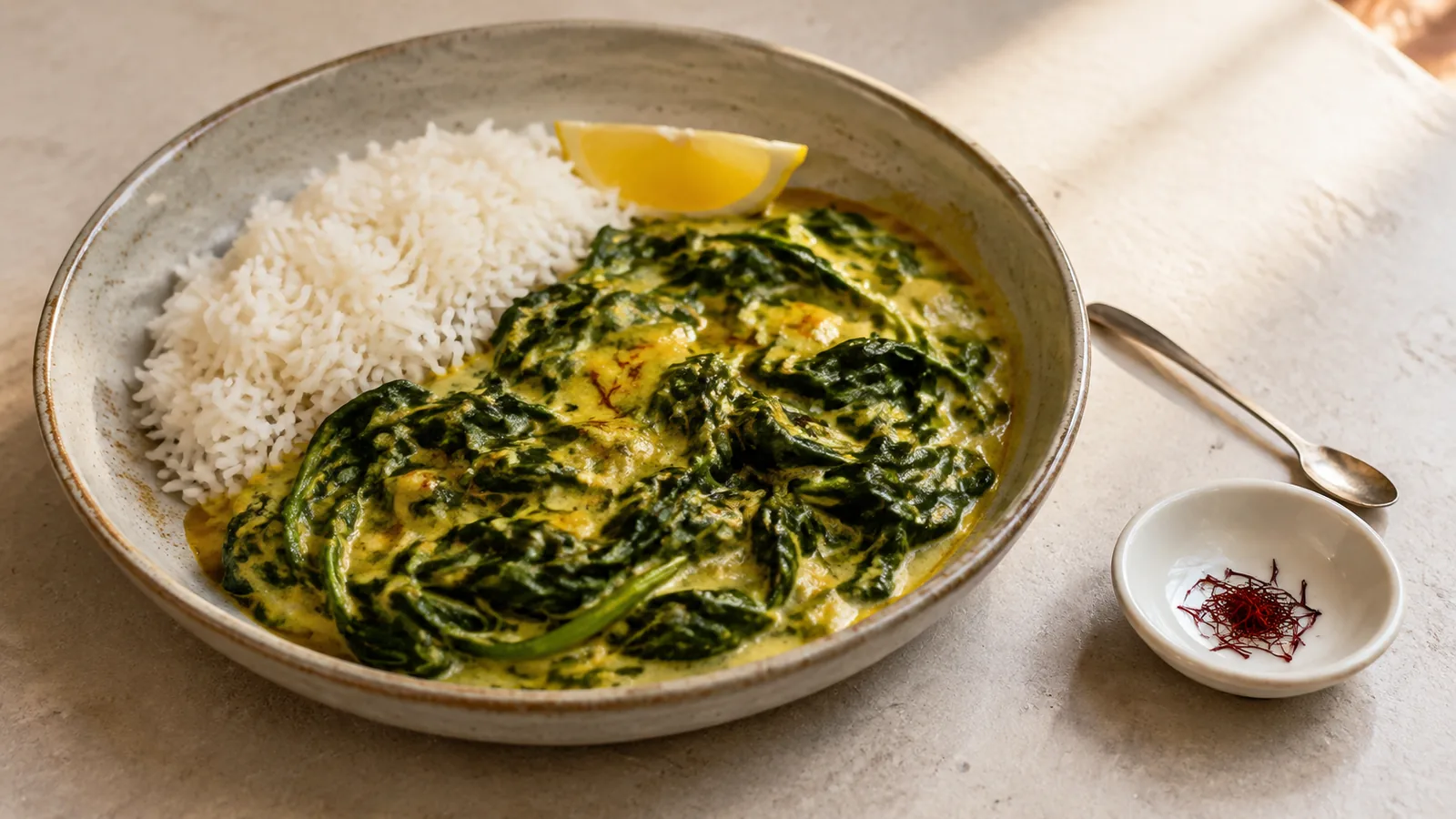
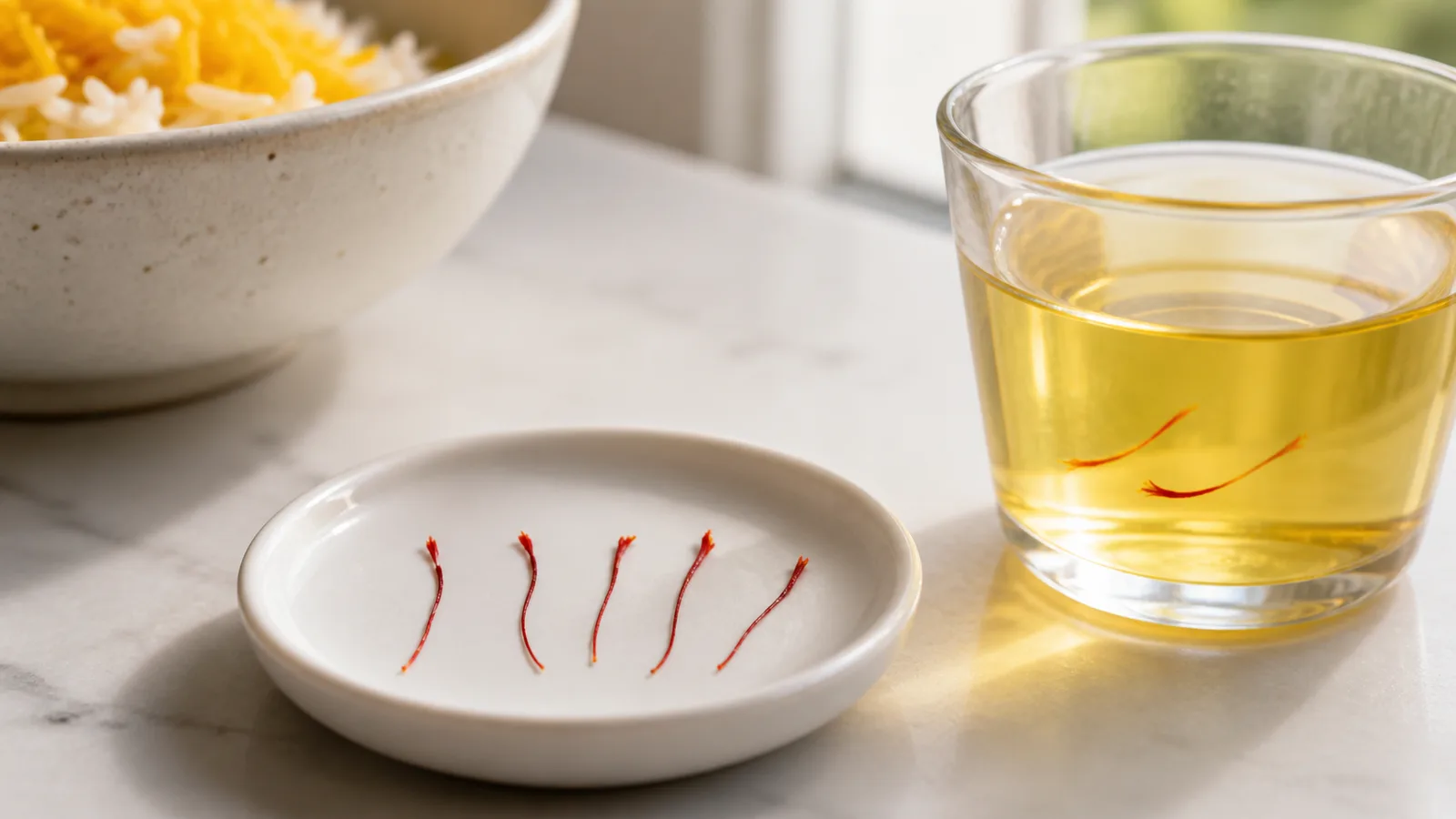
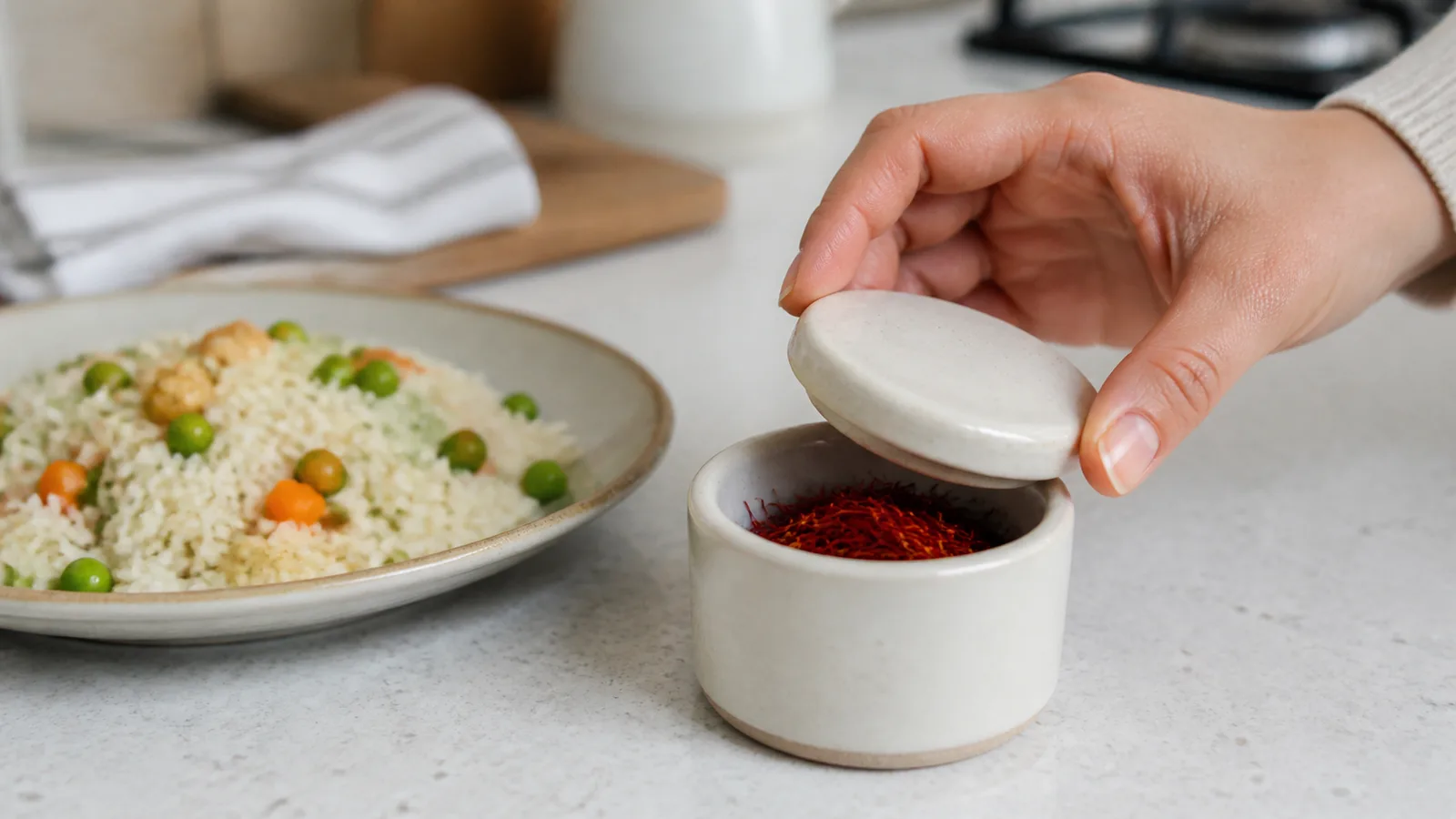
For most adults without an allergy, the small amount used to flavour a dish is a different proposition from daily supplementation. Use genuine saffron in normal recipes, store it well and avoid making the food carry medical promises. If a clinician has given you a restriction that applies even to food amounts, that personal instruction comes first.
The practical answer to “when not to take saffron?” is therefore specific: avoid it after an allergic reaction; pause supplements when medicines, pregnancy, breastfeeding, surgery or a health condition make the risk uncertain; and stop when a product causes a significant adverse effect. Caution should be precise, not automatic.