What should you avoid with saffron? Avoid a known allergen, large or unknown amounts, smoking or inhaling it, unverified products, and supplement-style use without individual advice during pregnancy or alongside medication. Who should avoid saffron entirely? Anyone with a confirmed saffron allergy. Do not use a blog’s gram threshold to decide that an exposure is safe, and do not treat culinary threads and concentrated extracts as interchangeable.
Saffron Consumption Tips: What to Avoid for Safe Use
Is saffron safe? Is saffron safe to take in every form? A small amount used across food is a very different exposure from swallowing grams, taking a daily extract or using a mixed supplement. A 2026 systematic review of human saffron safety data found studied preparations generally well tolerated, with gastrointestinal problems most often reported, but recommended added caution and monitoring for higher-dose or prolonged medicinal use.
Saffron safety depends on the person, exact product, amount, reason for use and other medicines. “Natural” does not make every form or quantity harmless.
Avoid Excessive or Unknown Consumption
How much saffron is too much cannot be answered by one number for every person. The former article’s statement that more than 5 grams causes a predictable set of effects was not a safe boundary. Reviews combine old reports, animal research, culinary threads and varied extracts; they do not establish a universal line below which an individual cannot be harmed.
Is too much saffron bad for you? Yes. Too much saffron side effects can include nausea, vomiting, abdominal discomfort, diarrhoea, dizziness, headache, weakness or other unexpected symptoms. A deliberate gram-level amount, an unknown amount, a concentrated product or symptoms after exposure warrant prompt expert advice.
For a possible saffron overdose, do not wait for symptoms or induce vomiting. In the United States, Poison Help advises calling 1-800-222-1222 without waiting for signs of poisoning. Elsewhere, contact the local poison centre or urgent medical service. Call emergency services for collapse, a seizure, severe breathing difficulty or another life-threatening sign.
Do Not Smoke Saffron
Can you smoke saffron? Do not. Culinary saffron is intended for food, not combustion or inhalation. Smoking creates hot particles and combustion products, gives no controlled amount and has no established health benefit. There is no reason to assume that something safe to eat in a recipe is safe for the lungs.
The answer to “Can I smoke saffron?” is also no. Changing the wording does not change the risk.
If saffron or another substance has already been smoked and causes breathing trouble, chest pain, severe dizziness, confusion or persistent coughing, seek urgent medical advice and describe exactly what was inhaled.
Avoid Saffron After an Allergic Reaction
A saffron allergic reaction may involve itching, hives, rash, swelling, wheezing, vomiting or breathing difficulty. Saffron allergy symptoms can overlap with reactions to another ingredient, additive or contaminant, so retain the label and obtain medical assessment.
Someone with a confirmed saffron allergy should avoid the spice and check blends, tea and supplement labels. Call emergency services for mouth or throat swelling, severe breathing difficulty, collapse or other signs of anaphylaxis. Official NHS anaphylaxis guidance explains why immediate hospital treatment is required.
Pregnancy and Breastfeeding Need Individual Advice
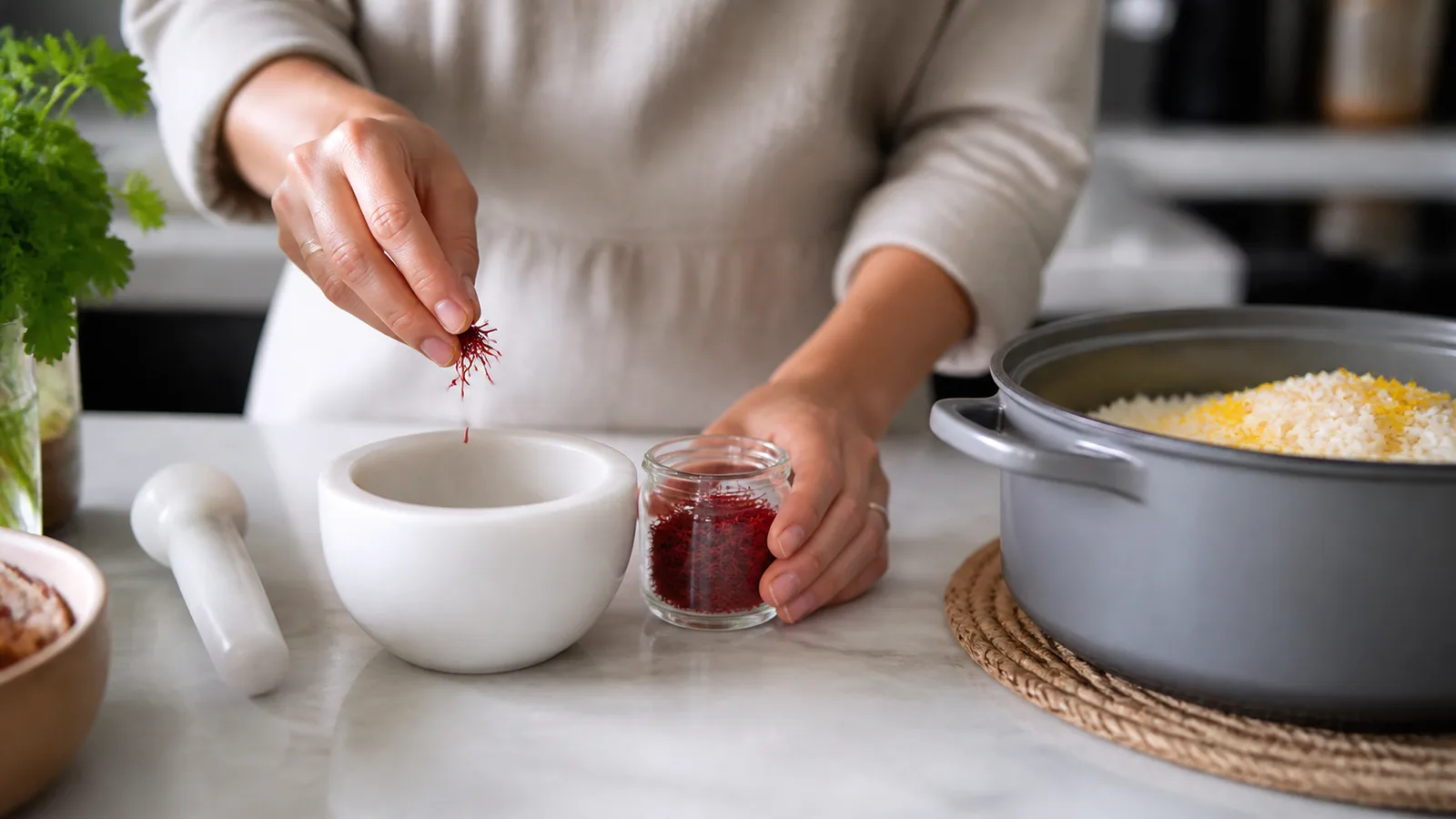
A few threads in a shared dish and a supplement or high-quantity preparation are not the same exposure. Do not use saffron medicinally in pregnancy without the obstetric clinician’s advice. A 2026 pregnancy systematic review found limited, varied clinical evidence; it supports caution without proving that every saffron-containing food causes miscarriage.
There is also insufficient dependable information to promise supplement-style use is safe while breastfeeding. Discuss the exact product, amount and infant circumstances with a clinician or pharmacist.
What Not to Take With Saffron
What should you not take with saffron? No trustworthy universal interaction list applies to every culinary exposure and supplement. Evidence for saffron interactions in humans is incomplete, while extracts and combinations can differ substantially.
Ask a clinician or pharmacist before concentrated or repeated use if you take anticoagulant or antiplatelet medicine, blood-pressure medicine, antidepressants or other psychiatric medicine, cancer treatment, immunosuppressants, or several prescriptions. This is a review list, not a claim that every combination causes harm.
Do not stop or reduce prescribed medicine because saffron is described as natural. Bring the exact product label to the consultation so the professional can assess its form, concentration and other ingredients.
Saffron Water Side Effects
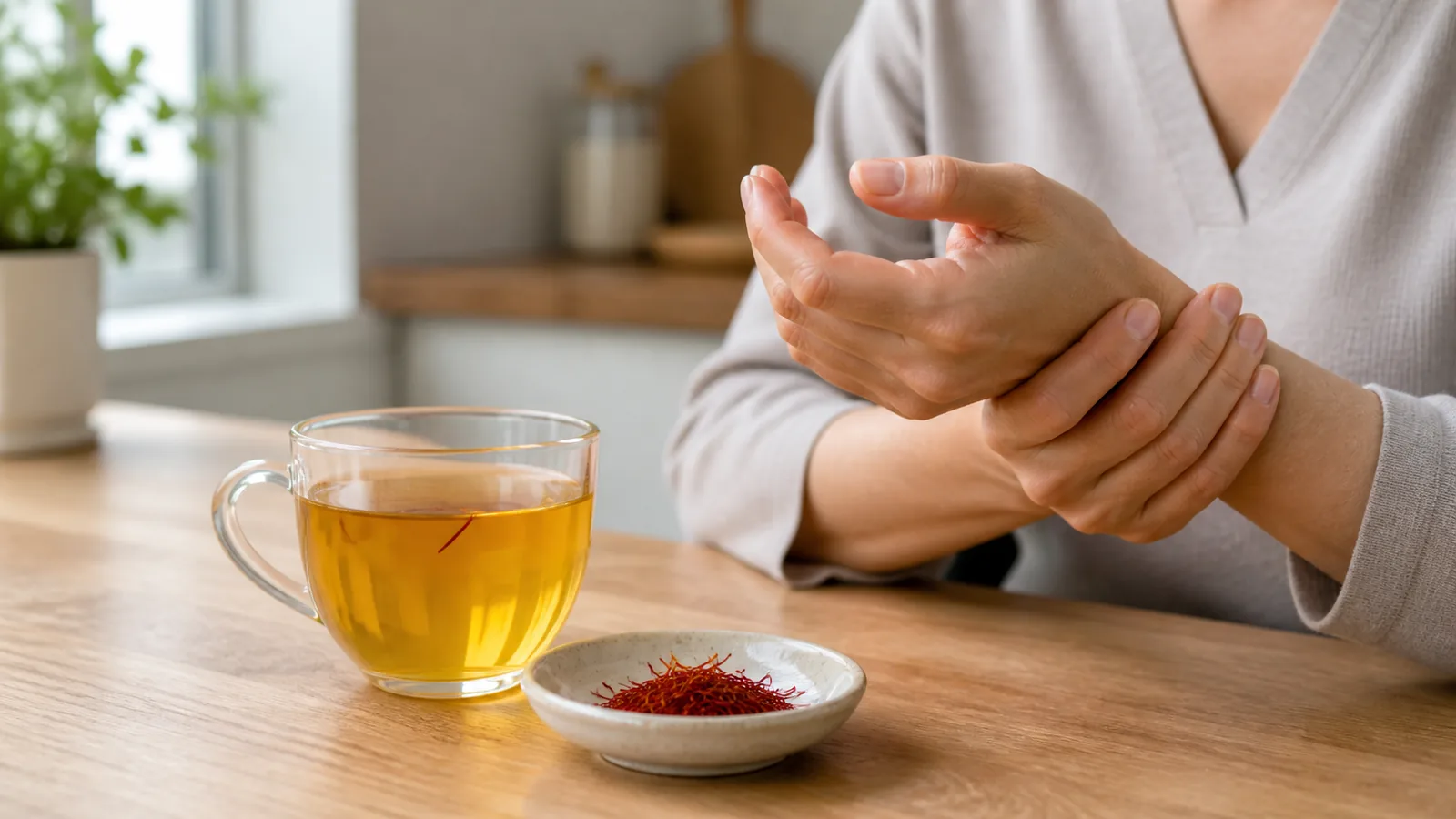
Saffron water side effects are not a separate category from saffron exposure. A weak drink made with a few threads differs from a concentrated bottle or repeated large preparation. Possible adverse effects can include gastrointestinal discomfort, headache, dizziness or allergy, but those symptoms may also have another cause.
Avoid using saffron water as a meal replacement, detox, pregnancy treatment or way to consume a high quantity quickly. More colour or bitterness does not mean more benefit.
Avoid Low-Quality or Unverified Saffron
An adulterated or mislabelled product adds risks that do not come from Crocus sativus itself. Avoid mystery powder, wet or musty threads, broken seals and sellers who cannot identify the botanical product or lot. Artificially coloured fibres and unrelated plants may look convincing in a photograph.
Whole threads make the structure easier to inspect, but visual checks cannot certify purity. The ISO 3632-1:2025 specification defines requirements for dried saffron, while test methods address properties that a home water test cannot confirm. See our guide to recognising real saffron and home-test limits.
Avoid Poor Storage
Light, heat, air and moisture gradually weaken saffron’s colour and aroma. Keep dry threads in a tightly closed food-safe container in a cool, dark cupboard. Do not store them above a stove, in direct sun or where steam enters the jar.
Discard material that is damp, mouldy, contaminated by pests or has an unexplained odour. Do not try to rescue spoiled saffron by heating or washing it.
Saffron Dangers and Disadvantages in Context
Does saffron have side effects? It can, particularly with allergy, concentrated products, large amounts or individual susceptibility. The dangers of saffron are often overstated when food use and high exposure are discussed as though they were identical. Kesar side effects and side effects of kesar refer to the same spice under another name. Practical saffron disadvantages include high cost, variable product quality, staining, bitterness when overused and the danger of exaggerated medical claims.
Is saffron dangerous? Not inherently when that phrase means a modest food use by someone without an allergy. It becomes riskier when the amount, product or person changes. For a focused overdose discussion, read can too much saffron be toxic?
The Short Safety Rule
Avoid smoking saffron, guessing large doses, repeating a known allergen, using an unknown product or self-prescribing an extract around pregnancy, medication or illness. Use a small recipe amount for food, and let a poison professional—not an online threshold—assess a concerning exposure.