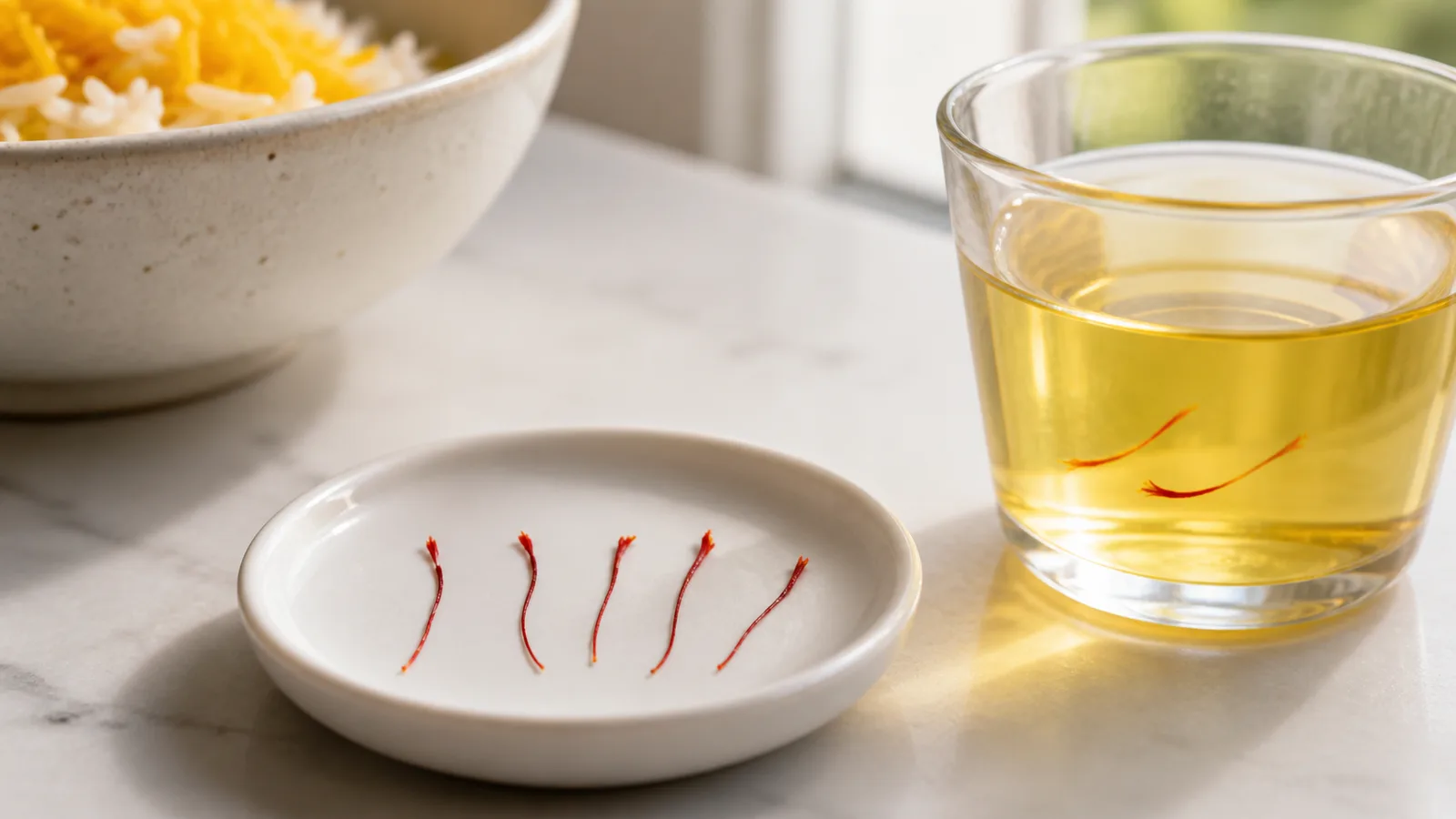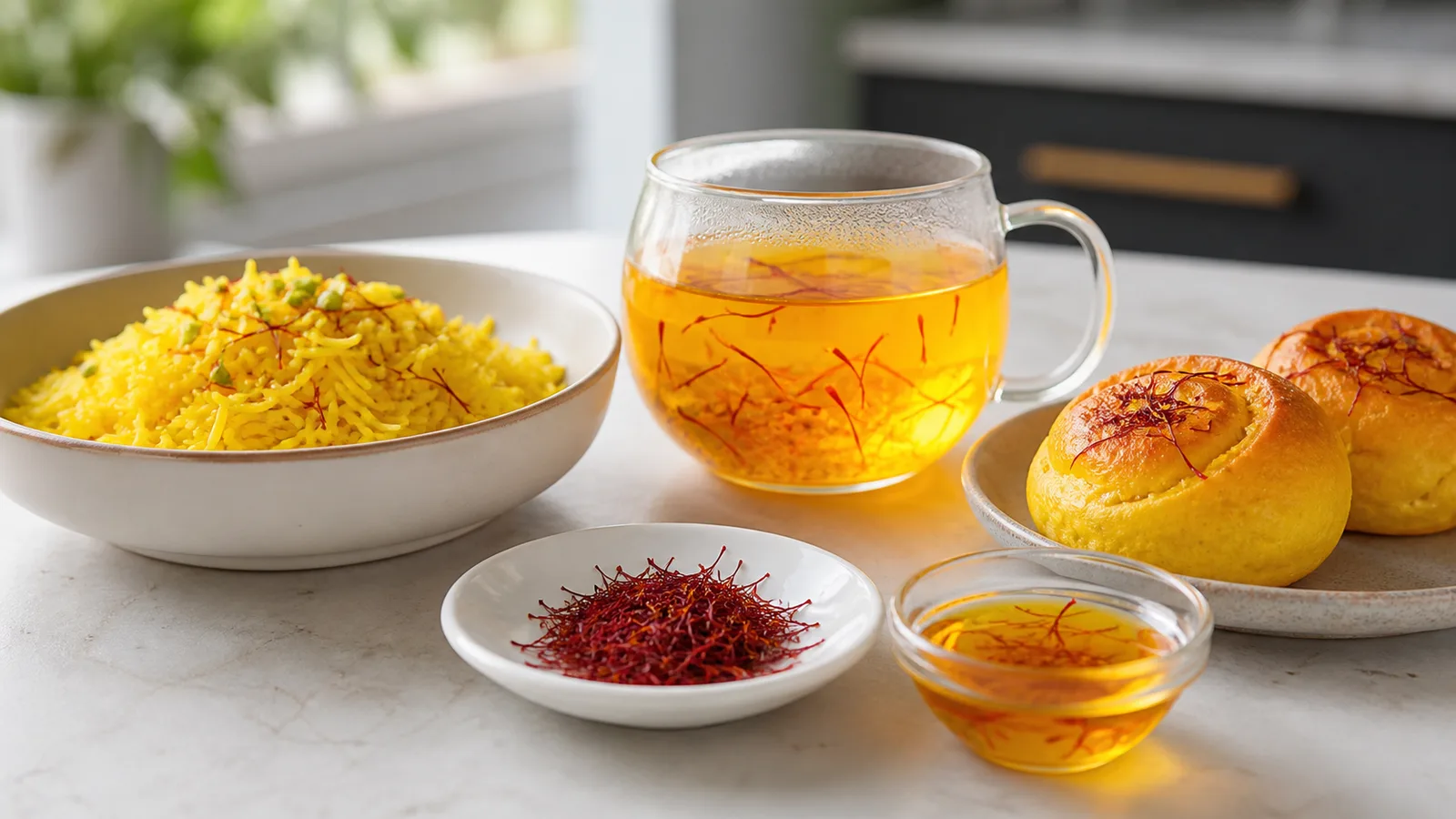
What is saffron best used for? Its best-supported and most rewarding use is culinary: a small pinch gives rice, sauces, soups, breads, desserts and drinks a golden colour, layered aroma and gentle bitterness. Saffron is also used in traditional ceremonies, fragrance, natural dyeing, cosmetics and scientific research, but those uses need different products and evidence.
Best Uses of Saffron: Cooking, Drinks, Colour and More
The point of saffron is not to make every dish taste strongly of one spice. At its best, it brings a warm floral scent, honeyed and hay-like notes, a little earthiness and a clear golden hue. Using too much can make food bitter and wastes an ingredient that works well in tiny amounts.
If you ask what is saffron used for in everyday life, cooking is the clear first answer. The wider list of saffron uses includes drinks, colour, fragrance, cultural traditions, cosmetics and research.
Why use saffron instead of a yellow food colour? Colour is only part of the answer. A dye can imitate gold, but it cannot reproduce saffron’s aroma and flavour. Turmeric creates a different earthy profile, while annatto and other colourings have their own character.
Culinary Uses of Saffron
Rice dishes
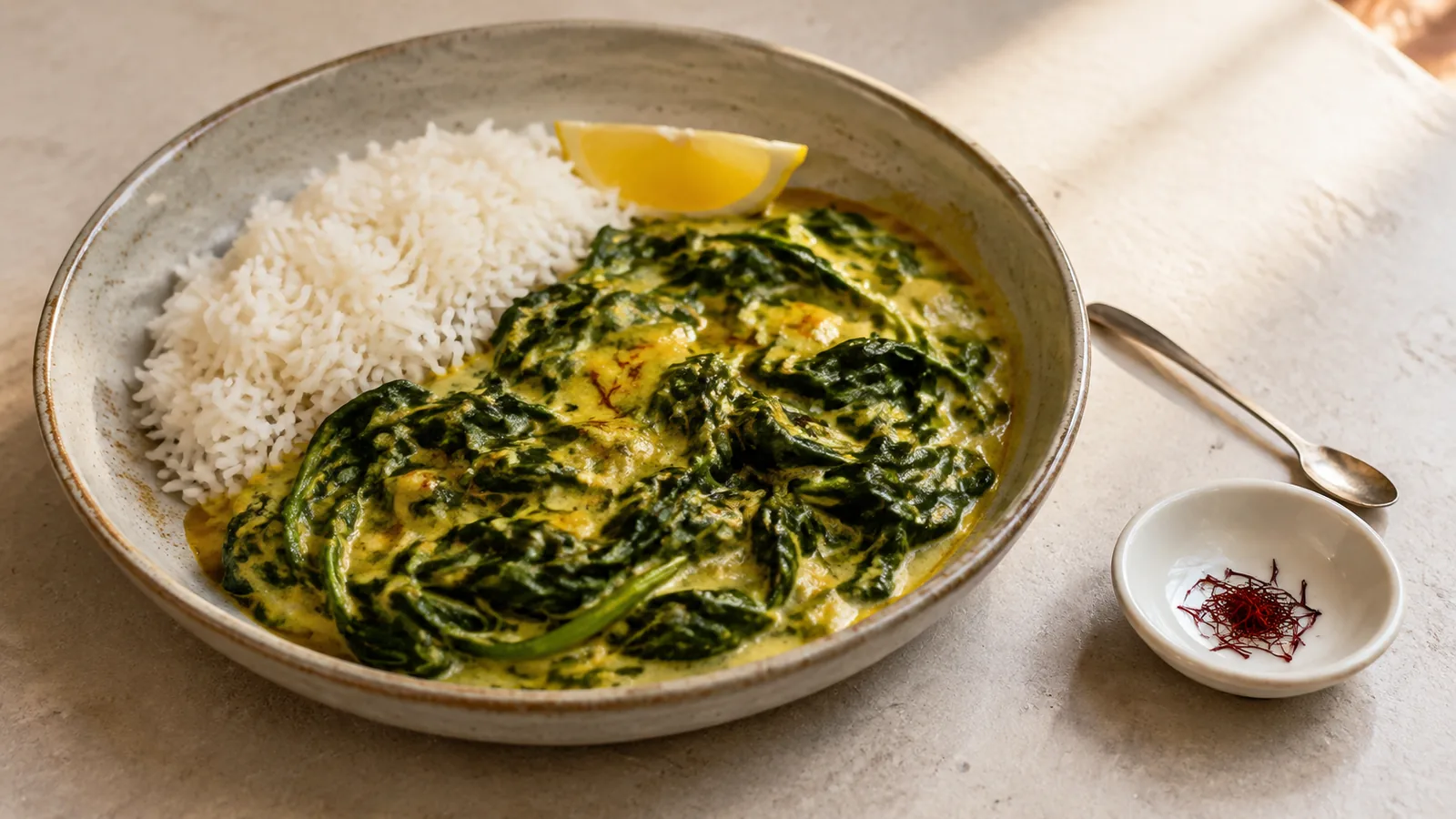
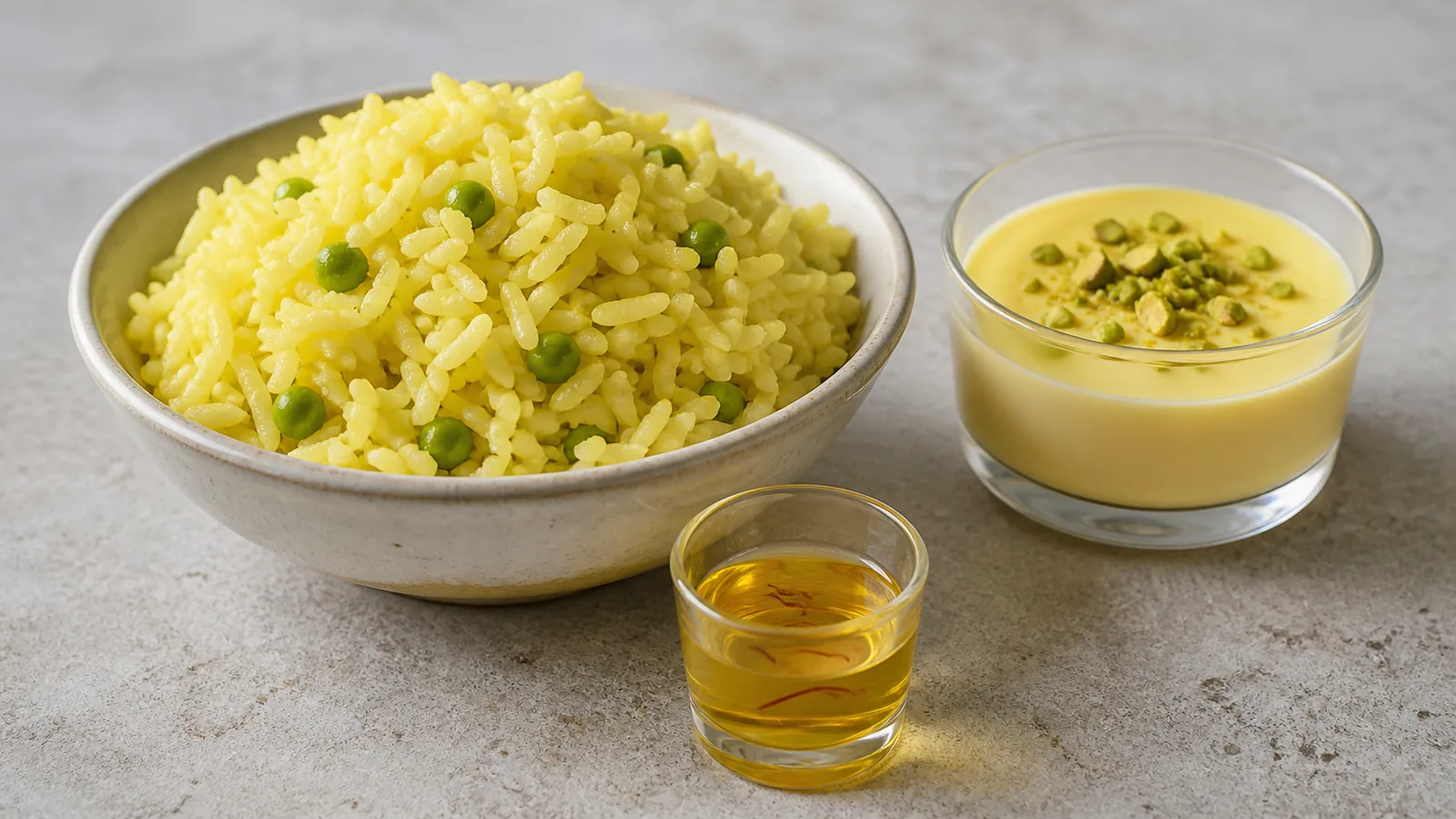
Rice is one of the classic uses of saffron in food. Persian saffron rice and tahdig, Spanish paella, Italian risotto alla Milanese and South Asian biryani each use the spice differently. Bloom the threads first so the colour spreads evenly, then add the liquid at the stage the recipe specifies.
Soups, stews and sauces
Saffron pairs well with seafood broth, tomato-free fish stews, chicken, lamb, beans and creamy sauces. Add it to a liquid component rather than dropping dry threads into a finished thick sauce. This gives the pigments time to disperse and keeps a few strands from concentrating in one bite.
Bread, pastry and desserts
Use saffron in enriched bread, buns, custard, rice pudding, ice cream and milk-based sweets. It is especially effective with cardamom, rose, vanilla, citrus, pistachio and almond. Bloom it in the recipe’s water or milk and count that liquid in the formula.
Tea and other drinks
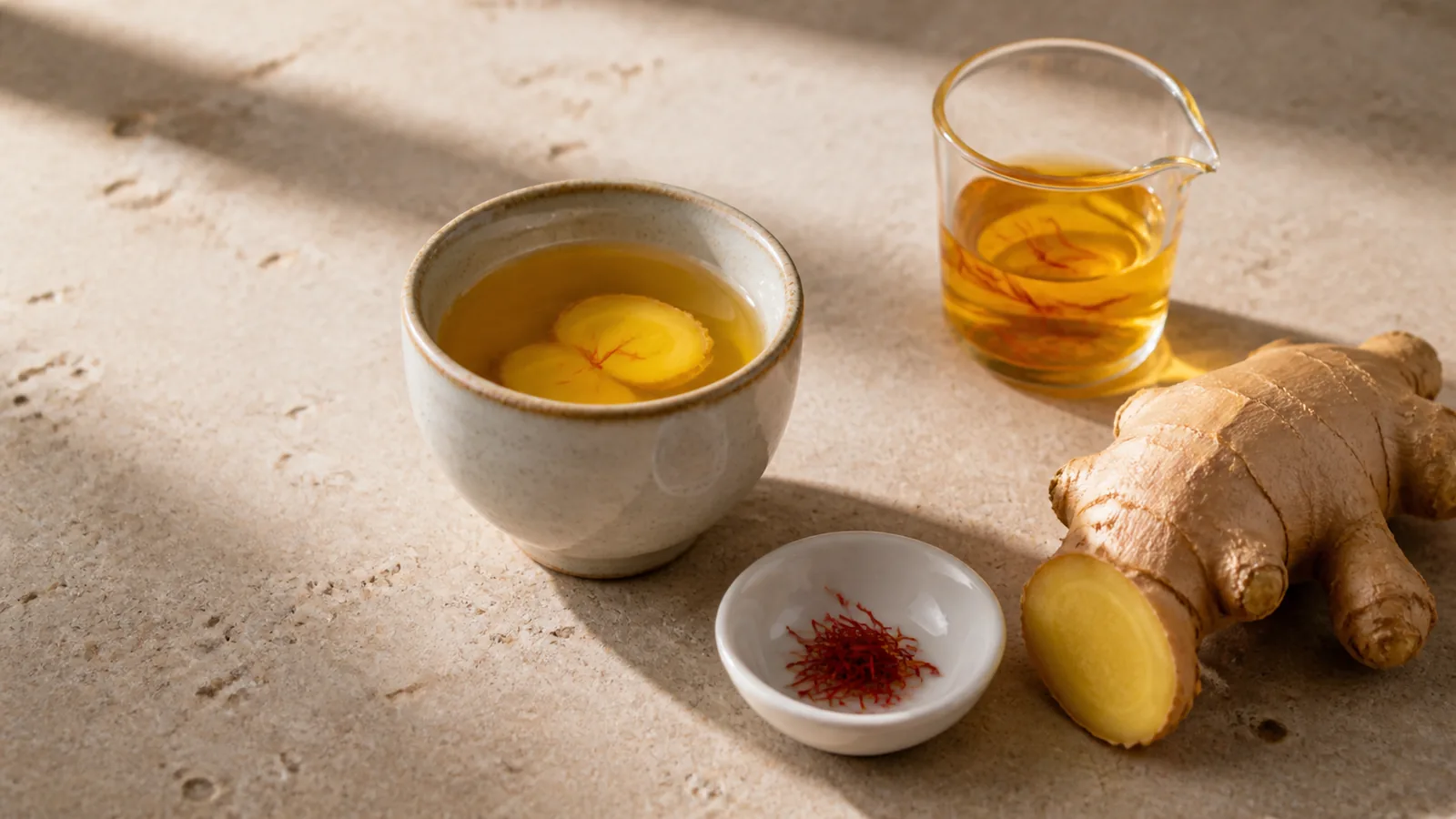
A few threads can steep in hot water alone or alongside black tea, green tea, ginger, cardamom or lemon. Saffron milk and cold infusions are also possible. These are drinks for flavour and enjoyment; they should not be sold as detoxes or guaranteed treatments.
How to Prepare Saffron for Cooking
- Take the small amount your recipe needs.
- Lightly crush the threads with clean fingers or a mortar.
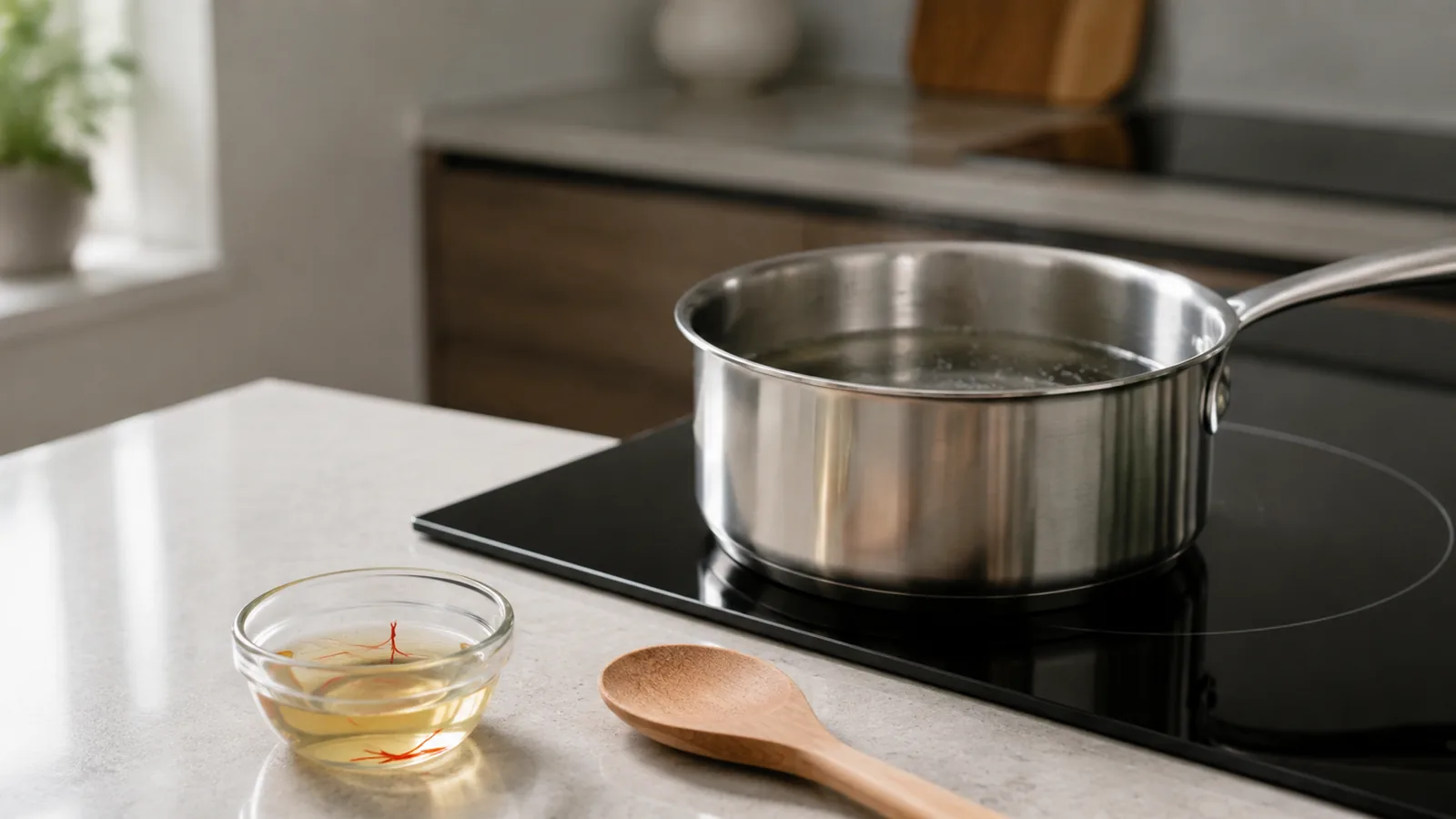
- Cover them with a little warm water, milk or stock.
- Let the mixture stand for 10 to 15 minutes.
- Add both the golden liquid and threads to the dish.
Warm liquid extracts saffron efficiently. It does not need prolonged hard boiling, and a spoonful should not be measured casually from an expensive jar. For more detail, follow our guide on how to prepare saffron.
Medicinal Uses: Research Is Not a Home Prescription
The historical use of saffron in medicine has encouraged clinical research into mood, sleep, cognition, sexual function and cardiometabolic markers. A meta-research review of saffron health outcomes found encouraging signals as well as important weaknesses in the quality of the evidence.
That does not make a culinary jar a medicine or prove that saffron treats depression, anxiety, dementia, heart disease, digestive problems or obesity. Trials use particular preparations, populations and monitoring. Do not replace prescribed care or copy a research dose from an abstract.
Beauty and Skincare Uses
Saffron appears in perfumes, soaps and formulated skincare, and it has a long history in beauty traditions. The brightening, anti-ageing, acne and pigmentation promises made for homemade masks are much stronger than the clinical evidence.
Direct use can stain or irritate skin, and genuine saffron is too valuable to assume that more is better. Use a properly formulated cosmetic according to its directions, patch-test when appropriate and see a dermatologist for a persistent skin concern.
Natural Dye, Fragrance and Cultural Use
Saffron has historically coloured textiles, manuscripts and ceremonial foods. It can produce warm yellow-to-orange tones, although using food-grade spice as dye is expensive and results depend on fibre, concentration and technique.
Its aroma also has a place in perfumery, usually as part of a formulated accord rather than by applying threads or an untested oil directly to skin. Religious, wedding and seasonal food traditions give the spice meaning beyond flavour; those cultural uses vary between communities.
What Form Is Best for Each Saffron Use?
- Whole threads: best for cooking, blooming and visual inspection.
- Powder: convenient for even distribution, but harder to assess and easy to overmeasure.
- Prepared food infusion: useful when colour and aroma need to spread through a recipe.
- Standardised extract: a supplement or research product, not interchangeable with culinary threads.
- Cosmetic ingredient: should be used within a properly formulated product rather than improvised from a health claim.
The ISO 3632-1:2025 saffron specification covers dried saffron as filaments, cut filaments and powder. Form and testing matter because a red-looking product is not automatically pure or strong.
What Saffron Is Used For Most Often
The most common saffron use is still food. Searches for “saffron spice uses,” “usage of saffron,” “use of saffron” and “zafran uses” all lead back to the same practical strength: a tiny amount transforms aroma, flavour and colour across many culinary traditions.
For most buyers, whole food-grade threads are the best place to start. Browse our saffron products, and use the spice in a recipe where its character can be noticed rather than hidden.