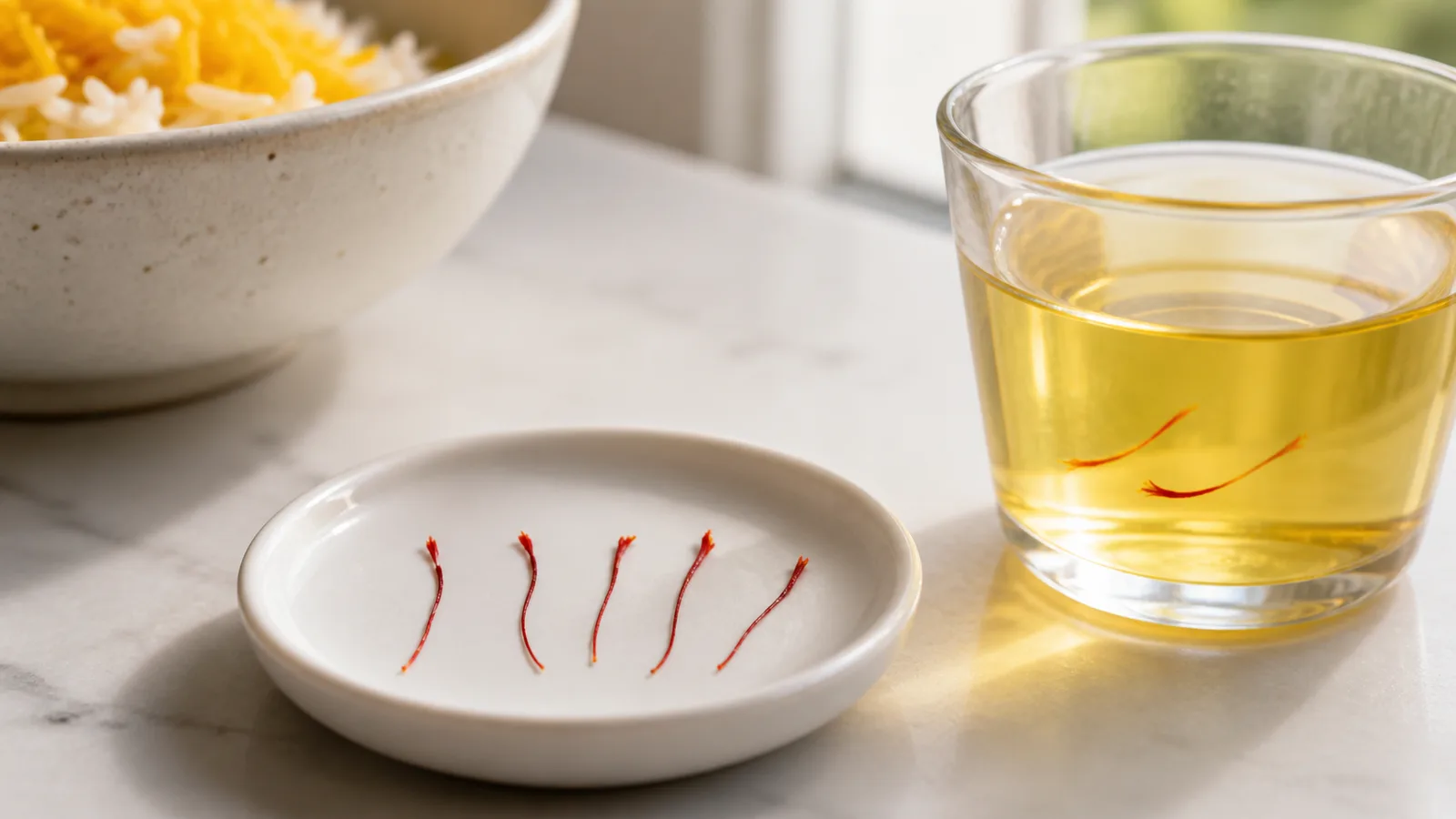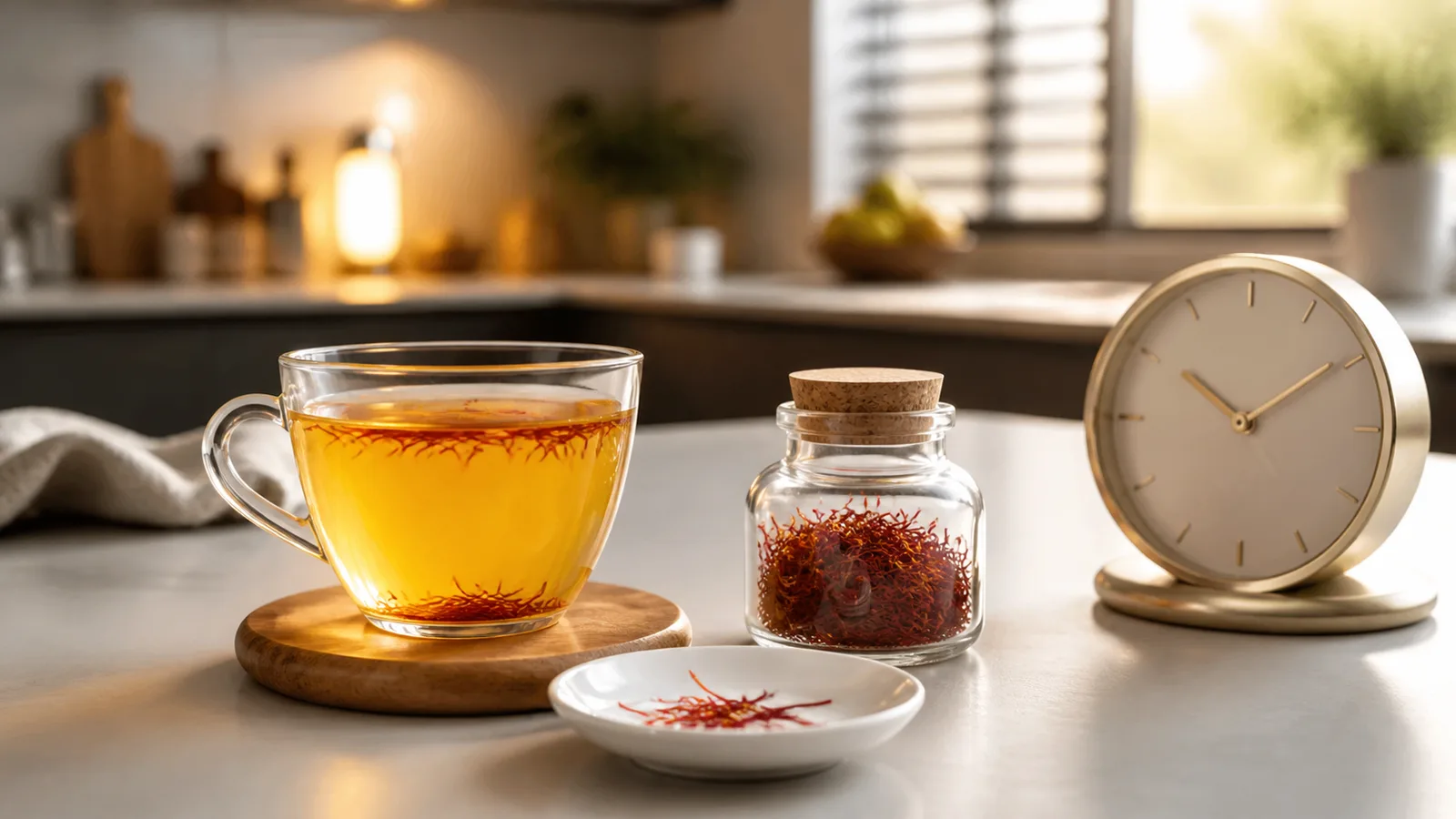
When should you take saffron, morning or night? For saffron used in food, choose the time that suits the meal; there is no good evidence that ordinary culinary use becomes more beneficial at a particular hour. For a saffron extract supplement, follow the exact product label or a clinician’s instructions. Evening use has been studied for sleep, but that does not make night the best time for every product or every person.
Best Time to Take Saffron: Morning or Night?
The best time to take saffron depends first on what “take” means. A few threads bloomed for rice or tea are not the same as a standardised extract with a measured amount. Research protocols also vary: some trials used one evening serving, others divided an extract between morning and evening, and some reports do not establish a special time-of-day advantage.
Timing can help with routine and tolerance. It cannot turn an unsuitable supplement into a safe one, and it should not be used to promise energy, better skin, weight loss or a medical result.
When Morning Makes Sense
Morning is a reasonable choice when saffron is part of breakfast, tea or another established daily routine. It may also be easier to notice how a new product affects you when you are awake rather than taking it immediately before bed.
The old version of this article said morning saffron boosts energy, serotonin, focus and digestion and reduces stiffness. Those claims go beyond evidence about timing. Saffron has been researched for several health outcomes, but a study of an extract does not prove that a morning serving will produce those effects in an individual.
If a labelled supplement directs one serving in the morning, follow that direction rather than moving it to night. If it causes nausea or other symptoms, stop and ask a clinician or pharmacist for advice instead of repeatedly changing the hour to work around the reaction.
When Night May Be the Better Fit
Night is the more directly studied option when the specific reason for using a saffron extract is sleep. In one randomised trial, adults with unsatisfactory sleep took a standardised extract one hour before bed for 28 days. Sleep-quality ratings improved more than with placebo, although several other sleep measures did not differ and the authors called for longer studies with objective measurements. Read the published evening-intake trial for the exact population and protocol.
Another trial used a standardised extract twice daily rather than only at night. It also reported improvements in some self-reported sleep outcomes, which shows why a single universal schedule cannot be inferred from one study. The twice-daily sleep trial describes that different regimen.
This evidence does not show that culinary saffron is a sedative, that everybody should take it before bed, or that it treats diagnosed insomnia. Persistent sleep problems deserve proper assessment. Our separate guide looks more closely at what saffron research says about sleep.
Best Time of Day to Take a Saffron Extract Supplement
If you are searching for the best time of day to take saffron extract supplement products, begin with the label in your hand. Extracts can differ in concentration, serving size, other ingredients and the evidence used to market them. Do not transfer directions from a clinical study or a different brand onto your own bottle.
- Once-daily product: use the labelled time, if one is given. If no time is specified, choose a consistent hour that you can remember.
- Divided serving: do not combine morning and evening servings into one larger amount for convenience.
- With-food direction: take it with the stated meal. Do not assume an empty stomach improves absorption.
- Sleep-oriented product: only use an evening schedule if it matches the label or professional advice, and do not combine it casually with other sleep products.
The U.S. Food and Drug Administration advises consumers to take supplements only as described on the label and to discuss benefits, risks and possible medicine interactions with a health professional. Its dietary-supplement guidance also cautions that “natural” does not guarantee safety.
Does Saffron Need to Be Taken With Food?
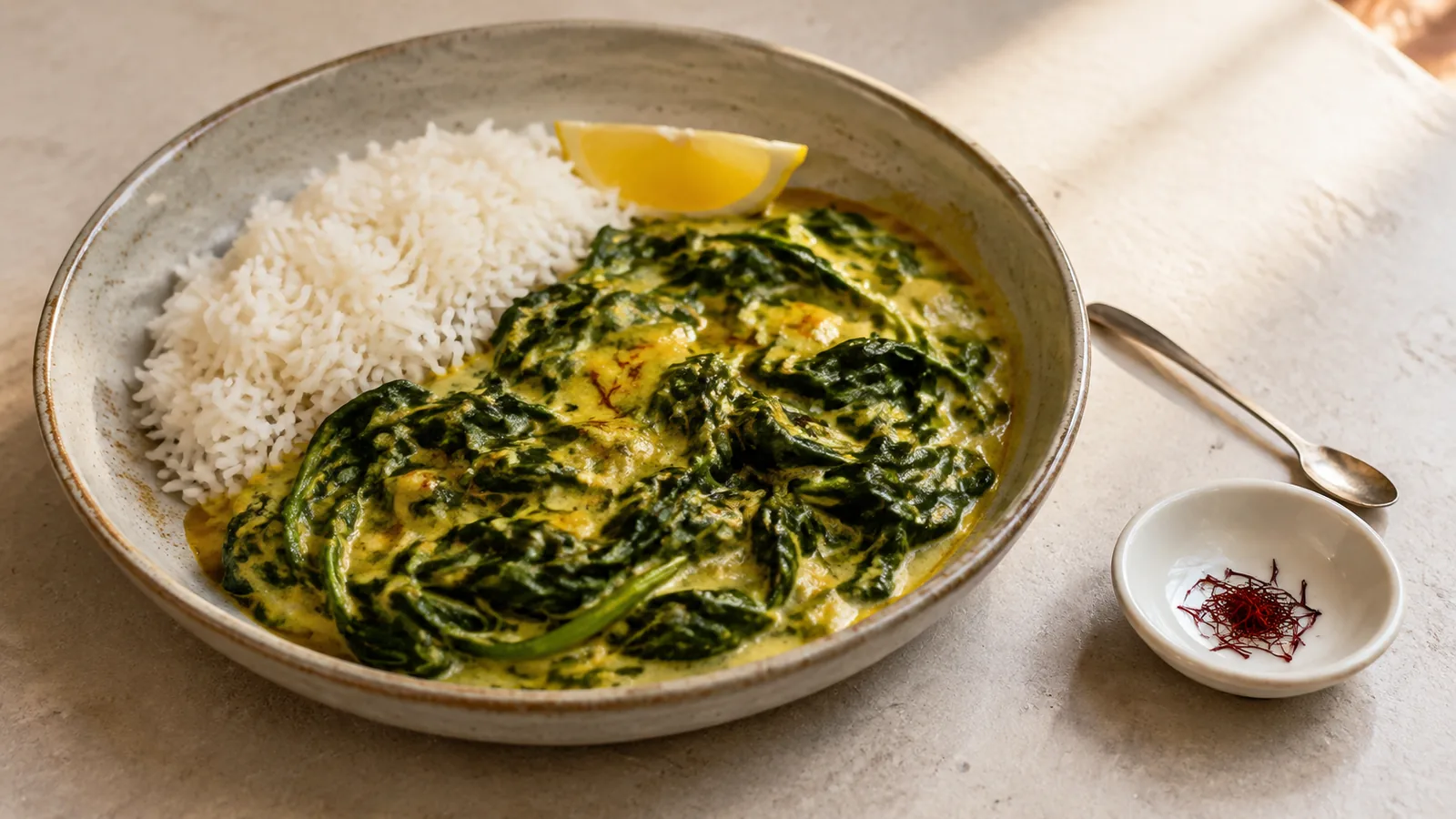
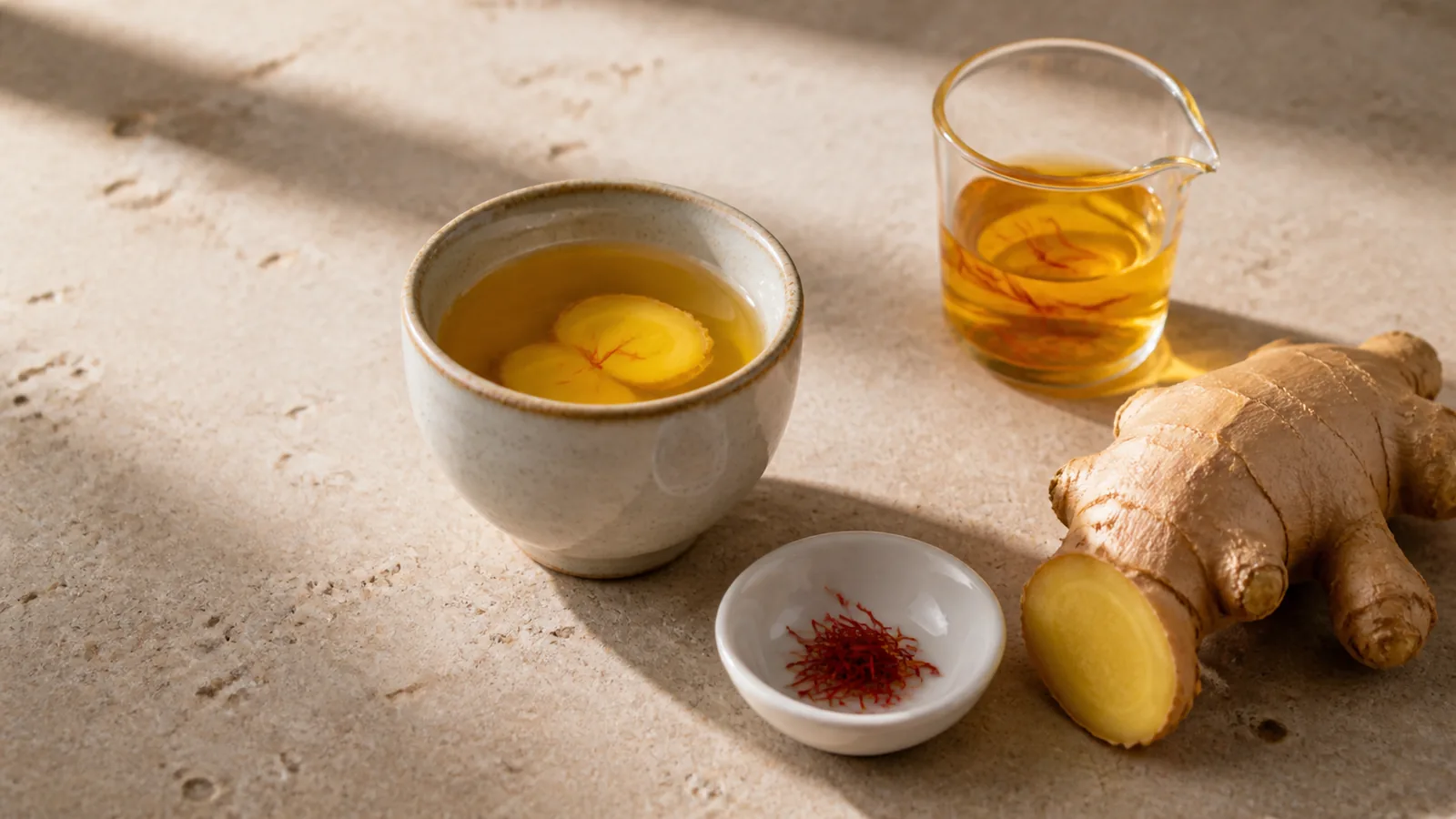
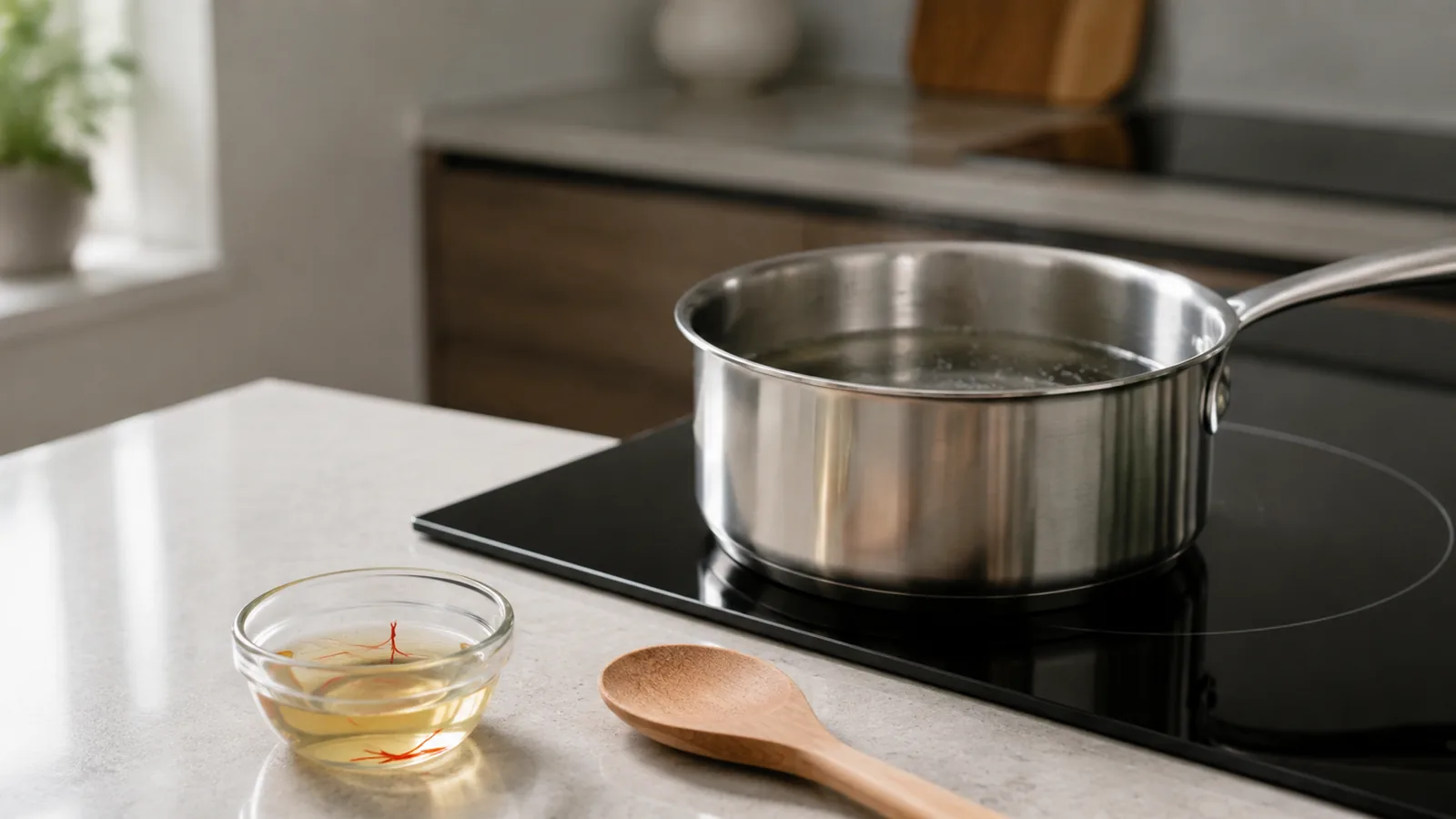
For cooking, saffron is naturally consumed with food. Blooming threads in a little warm water or milk before adding them to a dish is a preparation method, not a medical dosing rule.
For an extract, follow its label. If the label allows either approach and you find it unsettles your stomach, ask a pharmacist whether taking that particular product with a meal is appropriate. Do not increase the amount because a meal seems to soften the taste or immediate sensation.
Choose Consistency Over a Supposed Perfect Hour
A reliable routine is usually more useful than chasing a narrow timing window. Pick a time that matches the intended use, the product instructions and your normal day. Keep the amount and form consistent so that you do not confuse a schedule change with a dose change.
If you use saffron only in meals, there is no need to take it daily or at the same hour. Use it when it suits the recipe. If you use a supplement for a specific health concern, agree on the product, amount and timing with a qualified professional rather than relying on a general blog schedule.
When to Get Individual Advice
Ask a clinician or pharmacist before supplement-style use during pregnancy or breastfeeding, before surgery, with prescription medicine, or if you have a medical condition or a previous saffron reaction. The FDA notes that supplements can affect how medicines are absorbed, metabolised or excreted; see its guidance on mixing medicines and dietary supplements.
Stop the product and seek advice for an unexpected reaction. For broader precautions, read what to avoid with saffron.
The Practical Answer
Morning or night can both be sensible. Use morning when it fits food or a morning label direction. Use night when the exact product or a sleep-study-informed plan calls for evening use. If neither applies, consistency, label compliance and personal safety matter more than the clock.