What Makes Saffron Special? Discover Its Unique Benefits
Saffron is special because three tiny stigmas from each Crocus sativus flower can colour, scent and flavour an entire dish. Those threads are picked and separated by hand, dried with care and used in cuisines that stretch from Persian rice to Spanish paella and Italian risotto. Very few ingredients combine such a small yield, distinctive chemistry and long culinary history.
Saffron benefits a kitchen first: it brings golden colour, a complex aroma and a flavour that no cheaper yellow spice reproduces exactly. Research on defined saffron preparations is also interesting, but “special” should not be turned into a promise that a few threads treat disease.
Flavor and Culinary Uses
Saffron does not taste simply “floral” or “sweet.” A good infusion can smell honeyed, hay-like and warm, while the taste is earthy and gently bitter. These saffron qualities explain why saffron is used in small amounts: use enough to notice, but not so much that bitterness takes over.
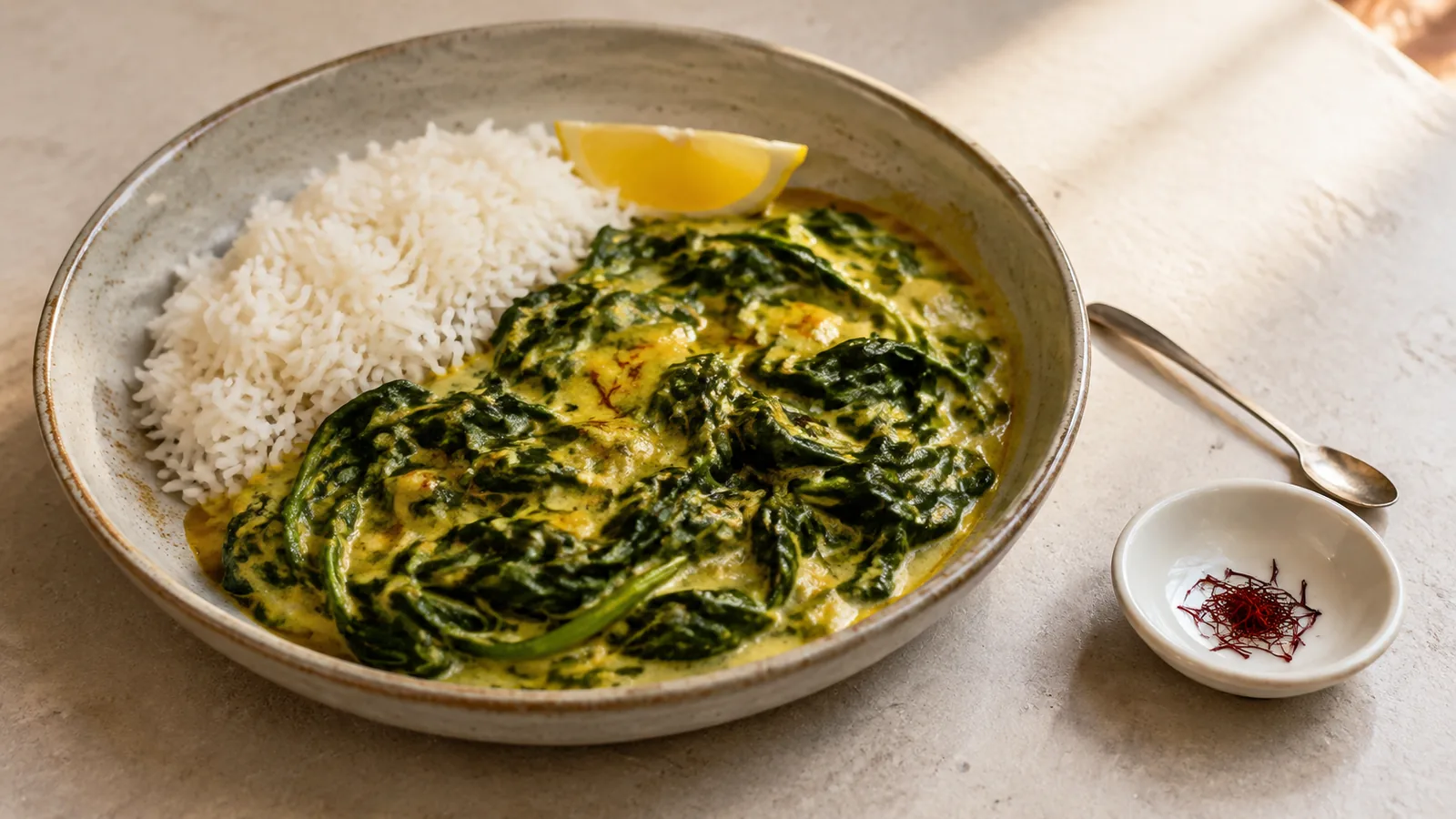
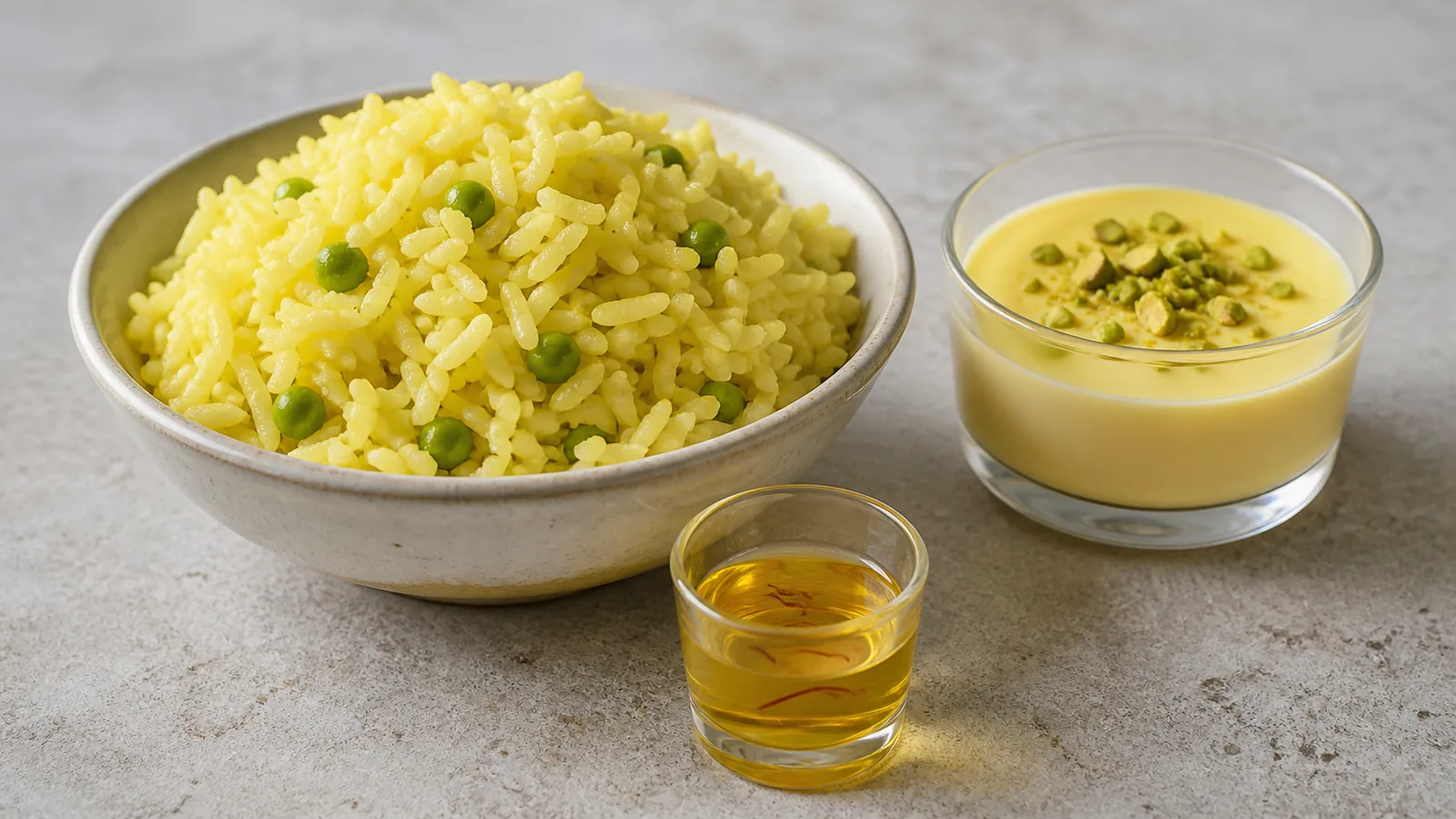
The threads work in both savoury and sweet food. They give Persian tahdig and rice a fragrant golden layer, deepen broths and seafood dishes, lend risotto alla Milanese its identity and sit naturally in milk, custards, buns and ice cream. Saffron also pairs well with cardamom, rose, citrus, pistachio, almond and gentle onion-based sauces.
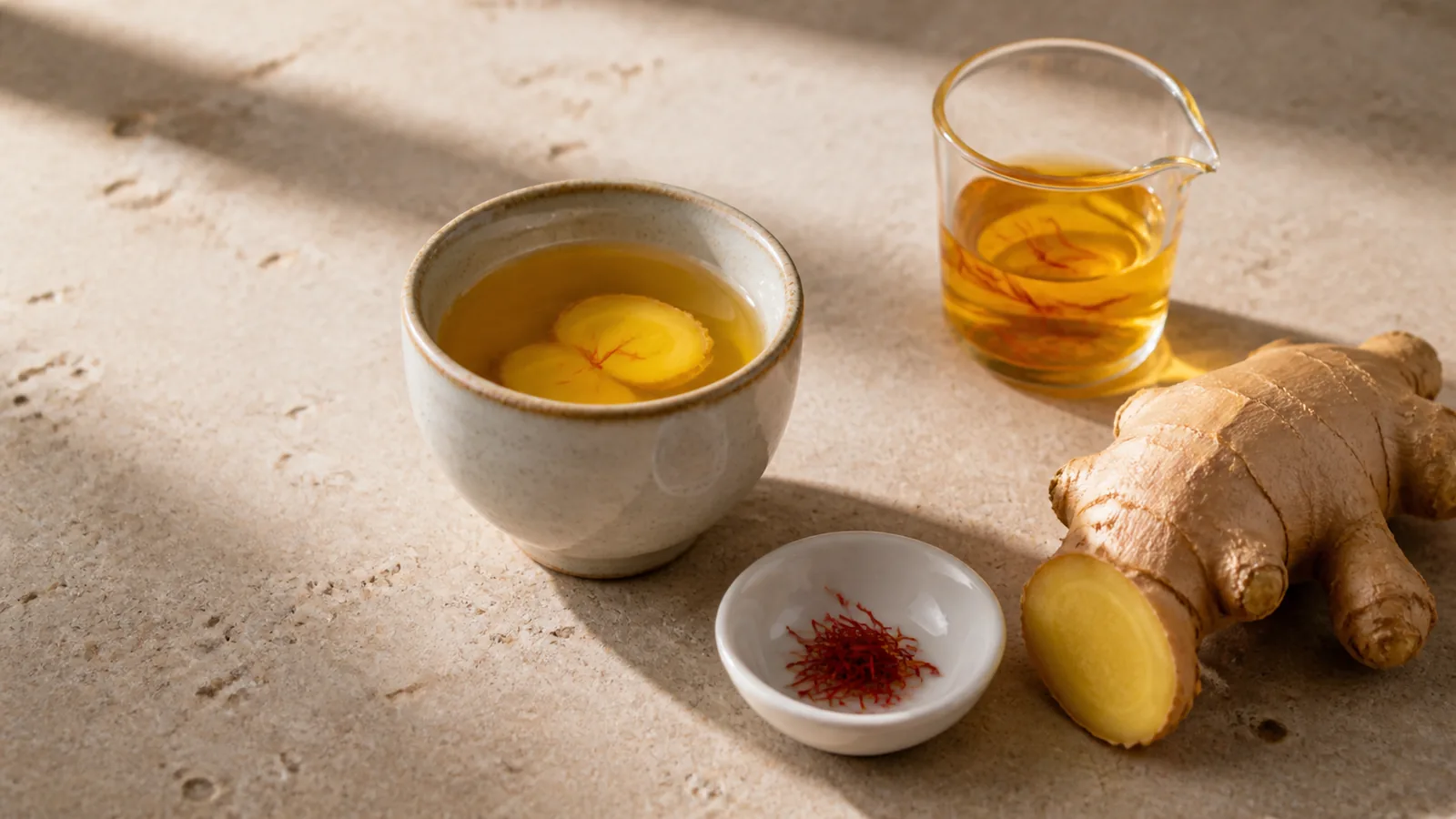
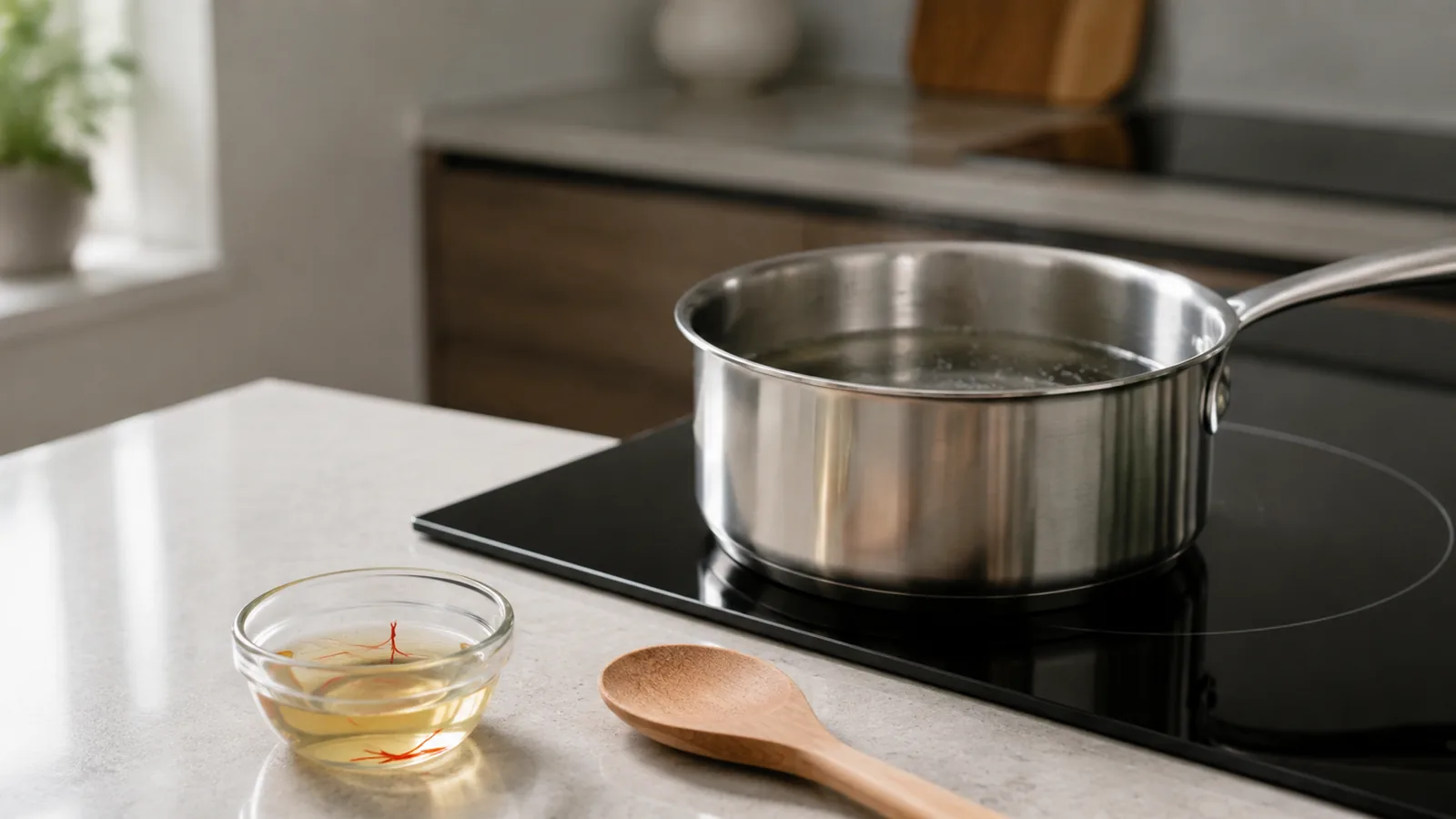
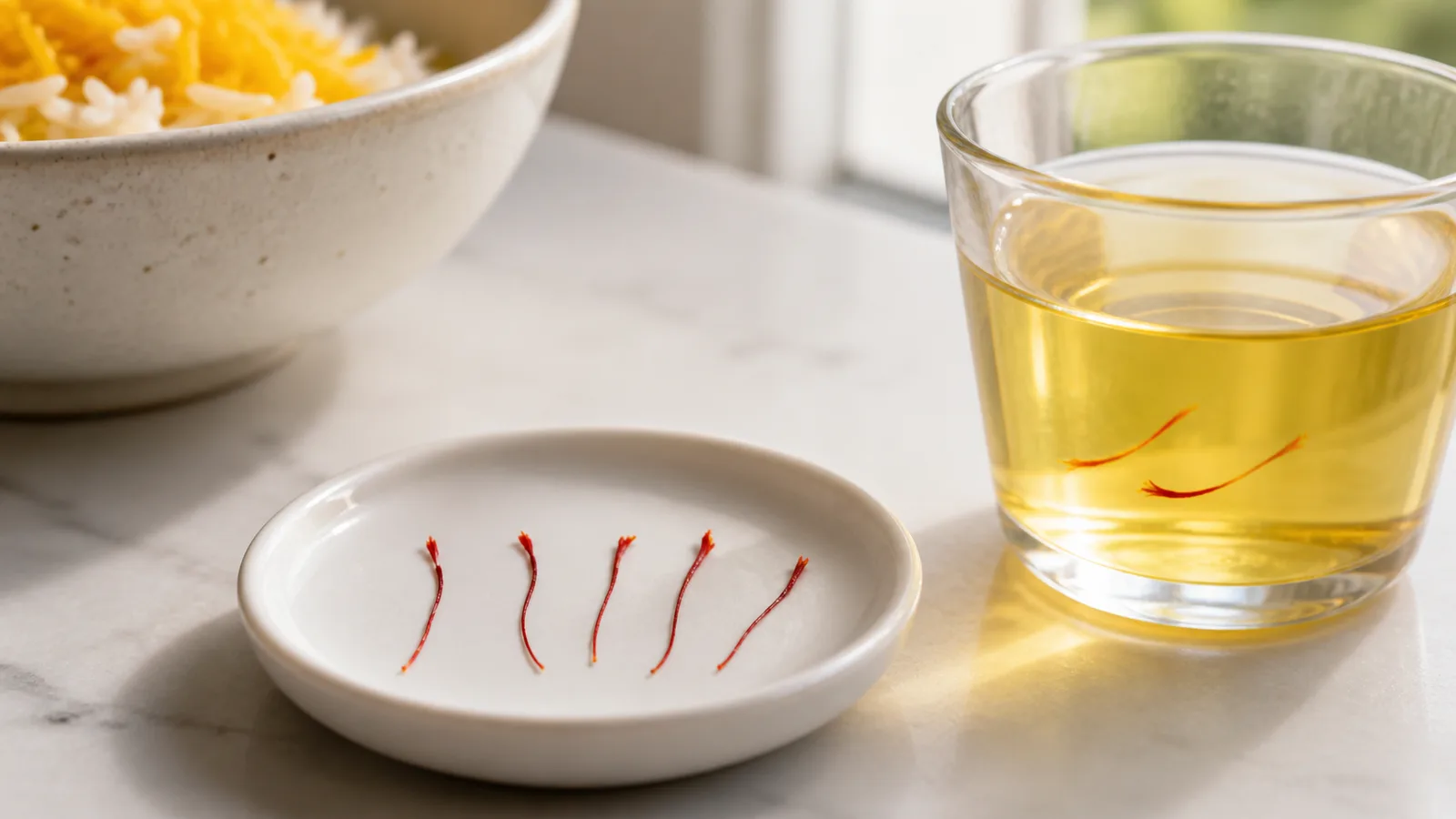
Blooming helps a small amount travel through the whole dish. Lightly crush the threads, cover them with warm—not boiling—water and allow about 15 to 20 minutes before adding both liquid and threads. That is more useful than scattering dry saffron over the surface at the last moment.
Why saffron has such distinctive colour and aroma
Three groups of constituents help explain the sensory experience. Crocins contribute much of the water-soluble golden colour, picrocrocin contributes bitterness, and safranal is important to the characteristic aroma. Drying and storage influence how those qualities develop and how quickly they fade.
The UN Food and Agriculture Organization’s 2025 work on saffron authenticity and post-harvest quality highlights crocin, picrocrocin and safranal as key constituents. It also notes that routine grading alone may not capture every subtle quality difference or sophisticated form of adulteration. Origin, chemistry and handling all matter.
Medicinal Benefits of Saffron
Saffron has a long place in traditional medicine, and modern trials have studied specific stigma preparations and extracts. The most researched area is mood. A 2026 GRADE-assessed review of 34 randomised trials found promising changes on some self-reported depression and anxiety scales, but not on several clinician-rated or other mood measures. Results varied considerably between studies.
That evidence does not prove that culinary saffron automatically improves mood, supports everyone’s memory, aids digestion, promotes skin health or relieves menstrual discomfort. It also does not justify replacing treatment. Trial extracts, doses and participants differ, and eating saffron in a meal is not the same intervention as taking a standardised supplement.
A current systematic review of adverse events found that saffron monopreparations were generally tolerated in trials while adverse effects—most often gastrointestinal—still occurred. Pregnancy, medicines, surgery, health conditions and repeated supplement use deserve individual professional advice. Our fuller guide asks what saffron health research actually shows without turning preliminary evidence into a cure claim.
How Saffron Is Harvested
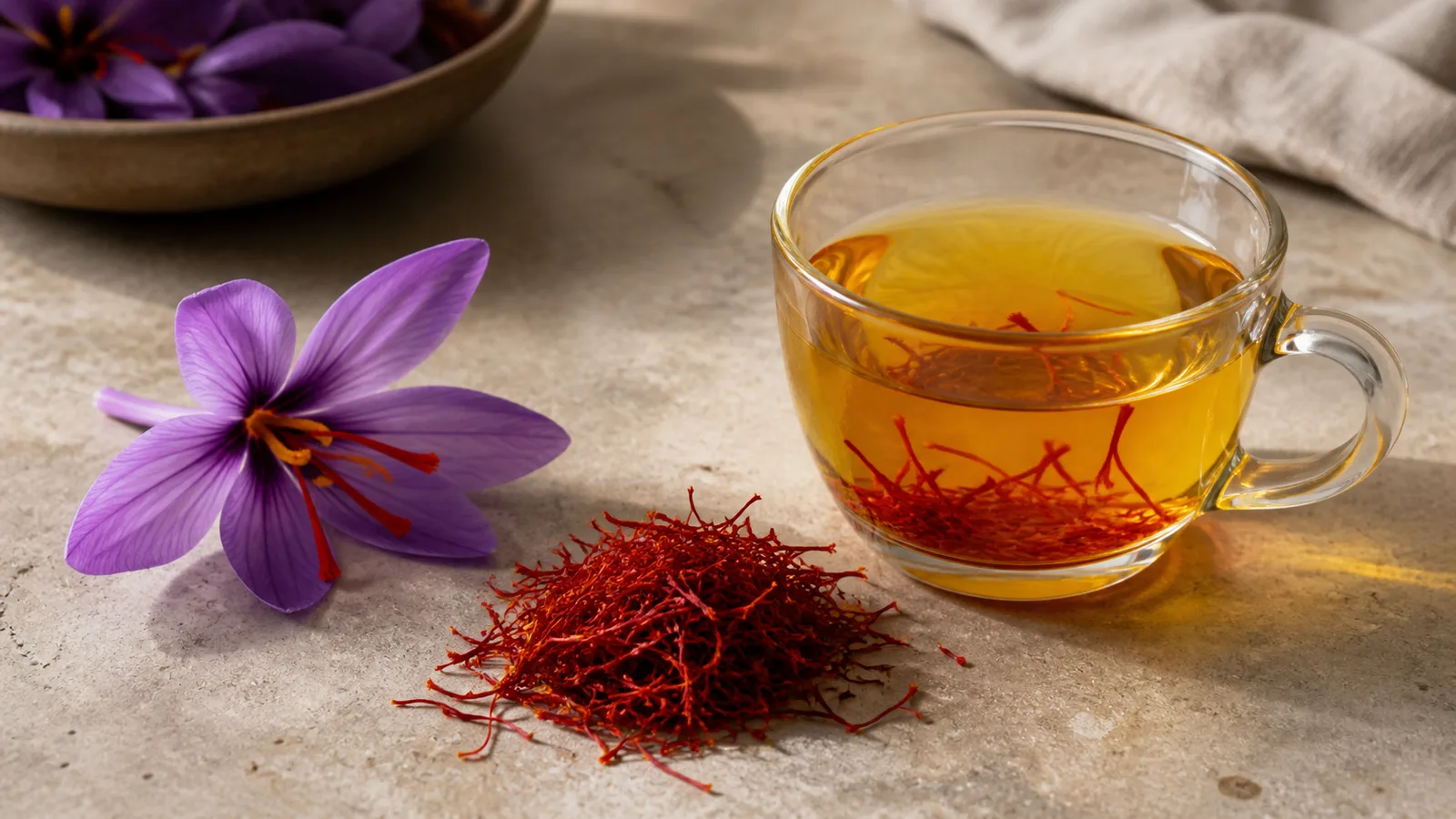
The saffron crocus flowers in autumn. Each purple flower carries three long red stigmas, and those are the threads used as spice. Growers collect the flowers, separate the stigmas and dry them promptly. Timing and drying technique affect colour, aroma, moisture and storage life.
The flower is delicate and the useful portion is tiny. Mechanising the entire sequence without damaging quality remains difficult, so skilled hand work is still central. The crop’s short flowering window concentrates that labour into a demanding part of the year.
Why Saffron Is So Valuable
Price begins with yield and labour, then reflects grade, harvest, origin, testing, packaging and the number of traders between farm and customer. Each flower gives only three threads, and a commercial quantity requires a large volume of flowers. Proper drying reduces the weight further.
Expensive does not always mean excellent. Old stock, excess yellow style, added plant material or poor storage can diminish a costly packet. Equally, a clean, fresh, honestly graded batch may be good value even when its presentation is plain. Our detailed explanation of why saffron is expensive separates production cost from marketing.
Are Iranian and Persian saffron different?
Persian saffron usually means saffron grown in Iran; it is not a separate plant species. Iran is the dominant producing country and the Khorasan region has deep cultivation and processing knowledge. Iranian saffron benefits cooks through a wide choice of cuts, strong supply and a tradition built around rice, stews, sweets and drinks.
Nationality still does not guarantee a particular grade or health effect. An Iranian batch should be judged by the same questions as saffron from Kashmir, Afghanistan, Spain, Greece or Morocco: Is it genuine Crocus sativus? Is the cut described honestly? Is it fresh, dry, clean and traceable? Does the seller support its quality claims?
How to recognise saffron’s real qualities
- Prefer recognisable threads when provenance or authenticity is uncertain; powder is harder to assess visually.
- Look for a clear country of harvest and meaningful batch information, not only words such as “premium.”
- Expect a complex natural aroma, not an overpowering perfume or no scent at all.
- Protect the pack from light, heat, air and moisture after opening.
- Treat a bargain price as a reason to ask questions, not automatic proof of fraud.
Home observations can flag concerns, but they cannot replace laboratory analysis. The current ISO 3632-1:2025 specification covers dried saffron from Crocus sativus in thread, cut-thread and powder forms.
What is so special about saffron?
It is the concentration of work and sensory character in each thread. Saffron begins as a fleeting autumn flower, passes through careful hands and reaches the kitchen as a spice that changes colour, aroma and flavour at once.
That story is remarkable enough without exaggerated medical promises. Buy a traceable batch, store it carefully and bloom a small amount well; saffron’s genuine qualities will do the rest.