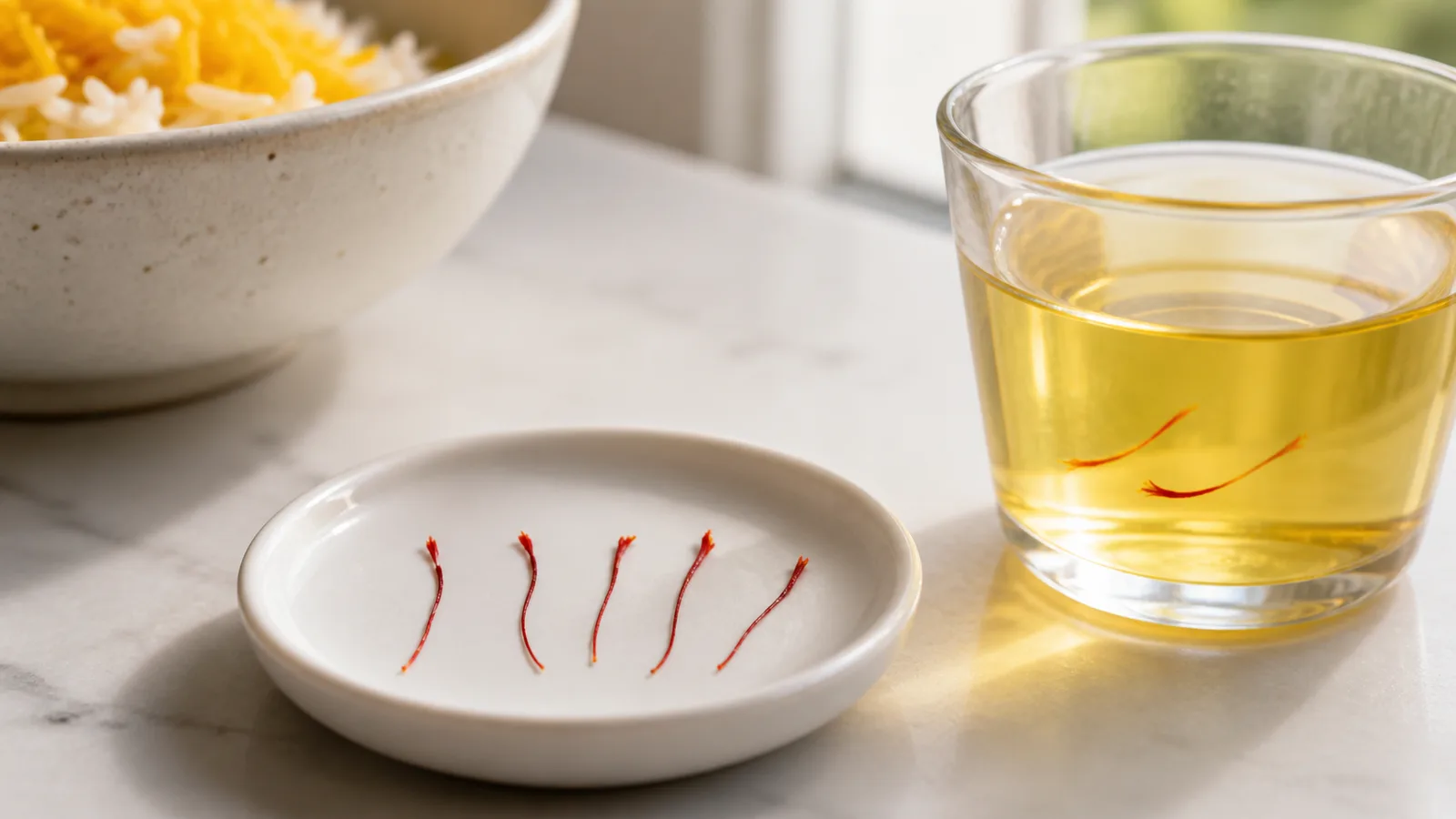
Saffron is the most expensive spice in the world by weight in ordinary commercial trade. Its price is not created by rarity alone. Each flower yields only three stigmas, the flowering window is short, and much of the harvesting and separation must be done carefully by hand.
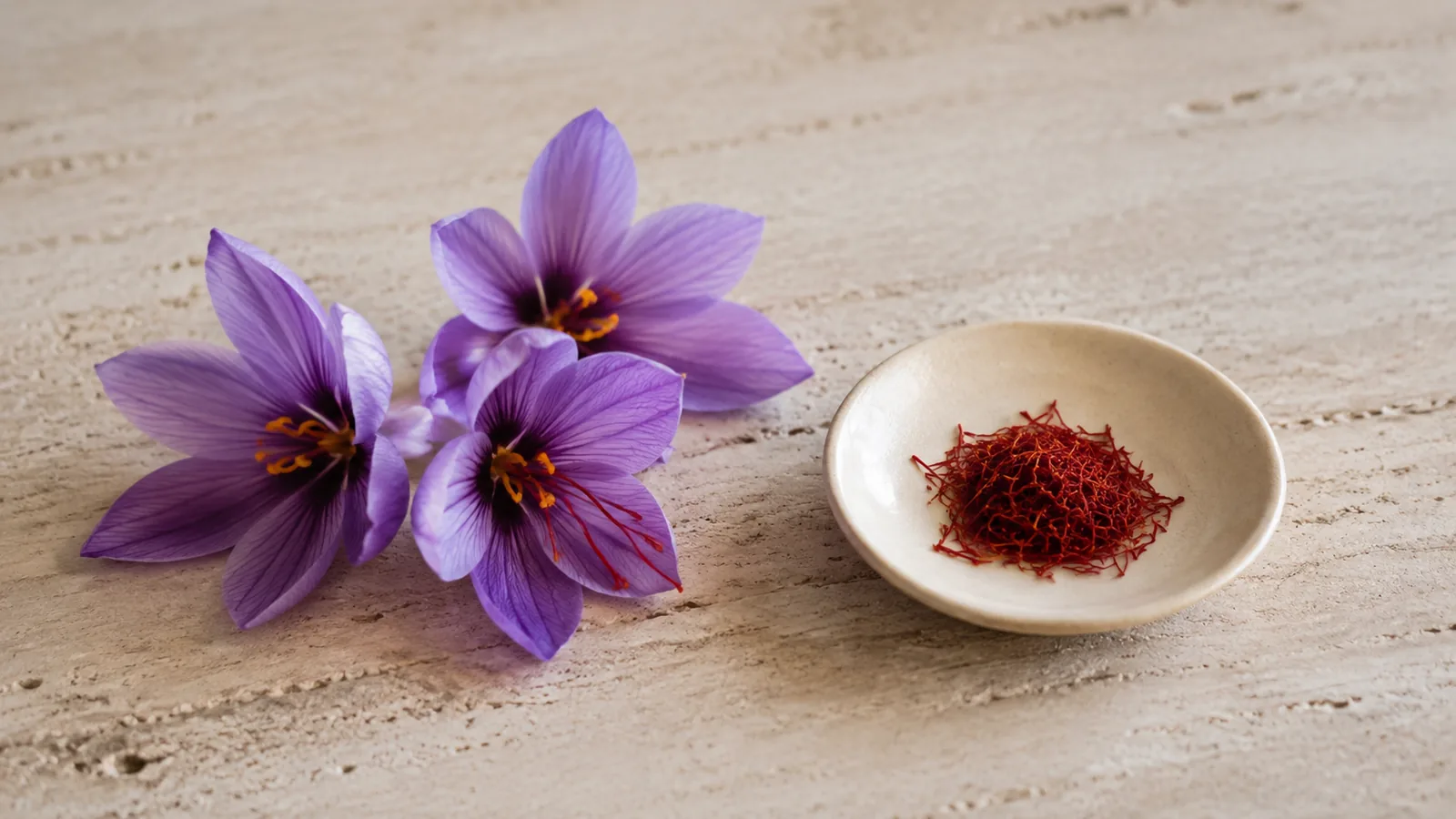
Why saffron is the world’s most expensive spice
Saffron is the dried red stigma of Crocus sativus. A flower produces three of these slender strands. Growers need a very large number of flowers to make a marketable weight of dried spice, and the crop cannot be gathered like grain with one fast mechanical pass.
The flowers are usually picked during a concentrated autumn bloom. Once harvested, they must be handled promptly so the stigmas can be separated and dried. The United States Department of Agriculture’s saffron research record describes both the brief flowering period and the labour-intensive collection of stigmas. Those constraints place a great deal of work behind a small finished weight.
Harvesting is only the beginning
Fresh stigmas contain moisture, so their weight falls during drying. Drying also has to be controlled: poor handling can weaken colour and aroma even after the costly field work is complete. The finished threads then need sorting, testing, packing and protection from moisture, light and strong surrounding odours.
At commercial scale, traceability and laboratory documentation add further cost. They also matter because saffron’s high value creates an incentive for dilution, substitution and misleading origin claims. In 2025, the UN Food and Agriculture Organization highlighted authenticity testing and consistent post-harvest handling as important safeguards in the saffron value chain.
How expensive is saffron?
There is no single honest worldwide price. A retail jar containing one gram, a wholesale carton and an export quote for a kilogram belong to different markets. Origin, grade, harvest conditions, thread composition, packaging, certification, currency, tax and delivery terms all change the figure.
This is why fixed “price per pound” claims age badly. A useful comparison states the date, currency, net weight and market level. It also compares threads with threads and equivalent grades. Our guide to the cost of saffron explains how those variables affect what a buyer pays.
Is any spice more expensive than saffron?
For widely traded culinary spices, saffron is the clearest answer. Very rare botanical materials, limited collectors’ products or ingredients sold outside normal spice markets may occasionally carry higher asking prices. That does not displace saffron from the familiar culinary comparison.
Natural vanilla beans can be costly because many commercial vanilla flowers are pollinated by hand and the pods take months to develop before curing. Green cardamom can also command a high price when harvests are tight or quality is exceptional. Their prices fluctuate, but they generally remain below saffron on a like-for-like weight basis.
If the question is about second- and third-place spices, our separate guide to the top three expensive spices compares saffron, natural vanilla and green cardamom without pretending that one undated retail list applies everywhere.
Why “by weight” matters
Saffron is normally used in tiny quantities. A dish may need only a small pinch of threads, so a high price per kilogram does not mean every serving is expensive. Conversely, comparing a large bag of one spice with a decorative one-gram jar of saffron can exaggerate packaging and retail margins.
Price per gram is the simplest consumer comparison. Divide the product price by its net weight, then include delivery and taxes if comparing sellers. For trade quantities, confirm whether the quote includes documents, insurance and freight. The arithmetic is easy; making sure the products are genuinely equivalent is the difficult part.
Is saffron an herb, a seasoning or a spice?
Saffron is botanically part of a flower and is used as a spice. Culinary herbs are usually the leafy portions of plants, while spices may come from seeds, bark, roots, fruits or flowers. Searchers sometimes call saffron the world’s most expensive herb or seasoning, but “most expensive spice” is the more precise description.
Its value also reflects what a small amount can do. Crocins contribute golden colour, picrocrocin is associated with bitterness, and safranal is central to saffron’s characteristic aroma. The purpose is not merely to make food yellow; genuine saffron adds a recognisable sensory profile when it is stored and prepared well.
Does a higher price always mean better saffron?
No. Price can reflect quality, but it can also reflect presentation, a long supply chain or a seller’s positioning. Look for intact identifiable threads, clear net weight, origin and lot information, suitable packaging and credible quality evidence. Be cautious with powder that cannot be inspected or an offer dramatically below comparable genuine threads.
Likewise, the most expensive saffron is not automatically the right purchase. A cook may prefer a reliable, well-stored product with strong colour and aroma over a lavish gift box. Commercial buyers need repeatable specifications and traceability more than decorative packaging.
The short answer
Saffron remains the world’s costliest mainstream spice by weight. Three stigmas per flower, a short harvest, extensive hand work, weight loss during drying and demanding quality control explain the price. Vanilla and cardamom can also be expensive, but they do not usually overtake genuine saffron in a fair weight-for-weight comparison.
Sources reviewed: the USDA Agricultural Research Service saffron record and the FAO’s 2025 update on saffron production and authenticity.