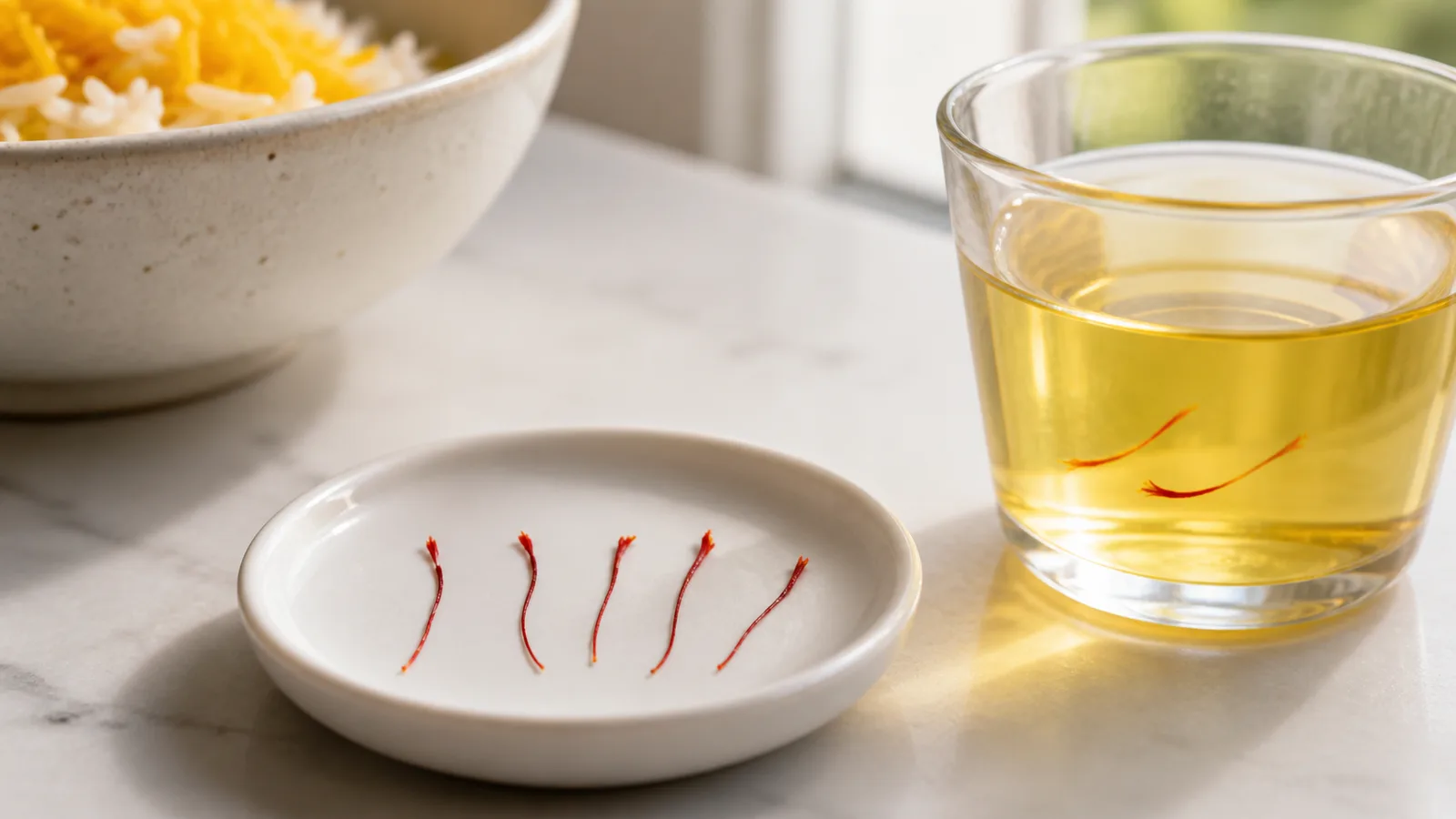
The top three most expensive spices commonly listed are saffron, natural vanilla beans and green cardamom. Saffron is the clearest number one by weight. Vanilla is usually placed second and green cardamom third, but the order below saffron can change with grade, origin, harvest and whether the comparison uses retail or wholesale prices.
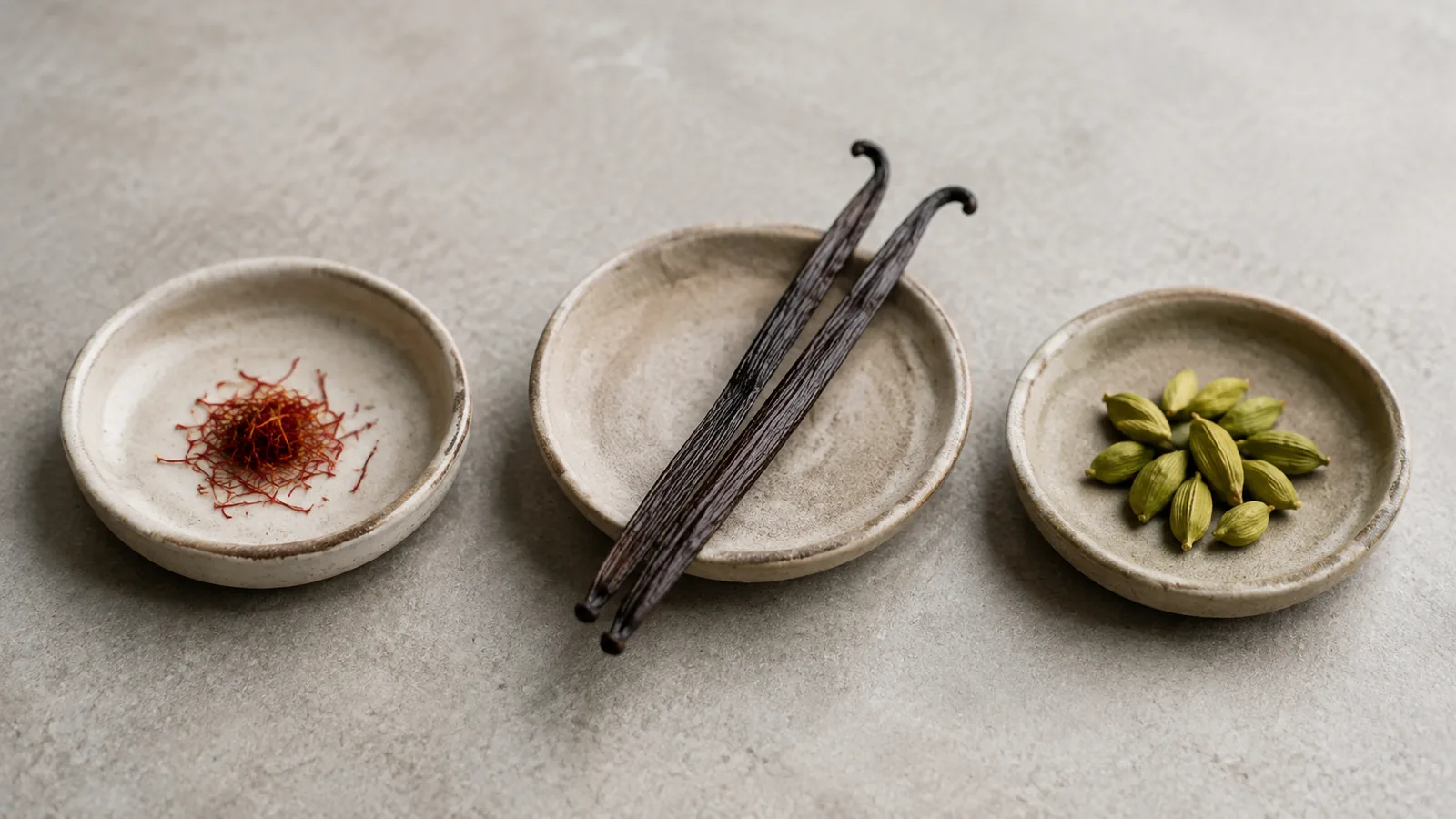
The three most expensive spices at a glance
- Saffron: sold in very small quantities because each thread is part of a hand-separated flower stigma.
- Natural vanilla beans: expensive because commercial vanilla requires close vine care, flower-by-flower pollination in most growing regions, a long fruit-development period and skilled curing.
- Green cardamom: a high-value spice whose price responds strongly to grade, harvest volume, auction conditions and demand.
This is a practical culinary list, not an official permanent world league table. Rare wild spices, luxury retail packs and unusually scarce regional products can cost more than an ordinary batch of vanilla or cardamom. “Most expensive spices” only becomes a fair comparison when the date, unit, grade and market level are the same.
1. Saffron: the most expensive spice in the world
Saffron is the dried stigma of Crocus sativus. Each flower produces only a small amount of usable material, and the harvest arrives in a short seasonal window. Flowers and stigmas require careful handling; drying, grading, testing and packaging add further work before the spice reaches a kitchen.
The US Department of Agriculture’s Agricultural Research Service identifies seasonal flowering and labour-intensive stigma collection as two reasons saffron is so expensive. That USDA saffron research record also focuses on quality, an important point because a headline price means little without knowing what the buyer receives.
Saffron is normally bought by the gram, not by the kilogram. Converting a tiny premium retail pack to a per-kilogram figure can create a dramatic number, but it should not be compared directly with a bulk agricultural price. Packaging, taxes, laboratory verification, origin, thread grade and seller margin all change the result.
Claims that saffron reaches a fixed price such as “$10,000 per kilogram” should therefore be dated and qualified. Some retail equivalents may be higher or lower; bulk producer prices are another market entirely. Our guide to the cost of saffron and what changes it explains those layers in more detail.
2. Natural vanilla beans
Real vanilla comes from an orchid. Outside the plant’s native pollination context, commercial flowers generally need manual pollination during a narrow opening period. The pods then remain on the vine for months and require controlled curing to develop the familiar aroma. Extract made with natural cured beans is a different product from synthetic vanillin.
A June 2026 FAO account from Papua New Guinea describes a nine-month wait from flower to mature bean, starting with hand-pollination and continuing through vine care, harvest and processing. It also shows why one “vanilla price” is misleading: moisture, maturity, curing, storage, theft risk and sales channel all affect value. See the FAO’s current vanilla value-chain account for that production context.
Vanilla is often called the second most expensive spice, but premium saffron and premium vanilla should be compared on the same date and weight basis. Our direct comparison of whether saffron or vanilla is more expensive keeps that question separate from this broader top-three list.
3. Green cardamom
Green, or small, cardamom is usually the third member of the familiar saffron–vanilla–cardamom trio. It should not be confused with large or black cardamom, which is a different market category and flavour. Pod size, colour, moisture, origin and grade all matter.
Unlike an undated “up to $100 per kilogram” claim, auction data show what a particular market did on a particular day. The Government of India’s Spices Board reported average small-cardamom auction prices of about ₹3,035–₹3,037 per kilogram on 2 September 2026, with the recorded maxima higher. Its daily cardamom price archive changes as new auctions are added, so those figures are a dated example rather than a universal retail price.
Cardamom appears below saffron and natural vanilla in many consumer lists, but “third most expensive spice” is the least stable position in the trio. A rare grade sold in a small luxury pack may outrank it, while bulk cardamom at origin can cost far less than a specialty retailer’s product.
Why these spices cost so much
The three crops do not share one production method, yet several economic pressures recur:
- Manual work: saffron stigmas are separated from flowers, vanilla flowers are hand-pollinated in most commercial regions, and cardamom harvest and sorting require repeated handling.
- Small usable yield: the saleable spice is only a limited part of the plant or crop.
- Timing: flowers and pods have harvest windows that cannot simply wait for a convenient day.
- Post-harvest skill: drying or curing determines aroma, colour, cleanliness and market grade.
- Climate and crop risk: weather, disease and yield variation can tighten supply.
- Quality verification: grading, traceability and authenticity controls add value and cost.
Why exact price rankings can be misleading
Retail price is not farm or auction price
A one-gram glass jar includes packaging and retail margin. A producer lot or auction price does not. Multiplying the jar price by 1,000 produces a retail equivalent, not a quote for a one-kilogram transaction.
Whole, ground and extract are different products
Saffron threads should not be compared with a diluted seasoning mix, vanilla beans with synthetic vanilla flavouring, or green cardamom pods with ground powder of unknown age. Form changes both quality and price.
Currency and date matter
Commodity prices and exchange rates move. A list copied in 2026 may still carry a dollar figure from a shortage years earlier. The fair description is “price observed in this market on this date,” not “the spice costs this everywhere.”
Is saffron more valuable than gold?
That phrase is memorable marketing, not a dependable comparison. Gold has a transparent daily market price and standard fineness measures; saffron varies widely by grade, pack size, origin and sales channel. On some dates, a luxury retail equivalent for saffron may look striking beside a metal price, but a bulk spice quote can tell a different story. Compare equal weights, the same currency and the same date before repeating the claim.
How to compare an expensive-spice list
Before trusting a ranking, check whether it provides:
- the exact product form and grade;
- the country or market where the price was observed;
- retail, wholesale, farm-gate or auction context;
- a common unit of weight and currency; and
- the observation date and source.
With those limits stated, saffron, natural vanilla beans and green cardamom are a useful answer to “what are the top three expensive spices?” Saffron is the strongest first-place answer. The second and third positions describe a common mainstream ranking, not a promise that every shop, harvest and specialist spice will line up the same way.