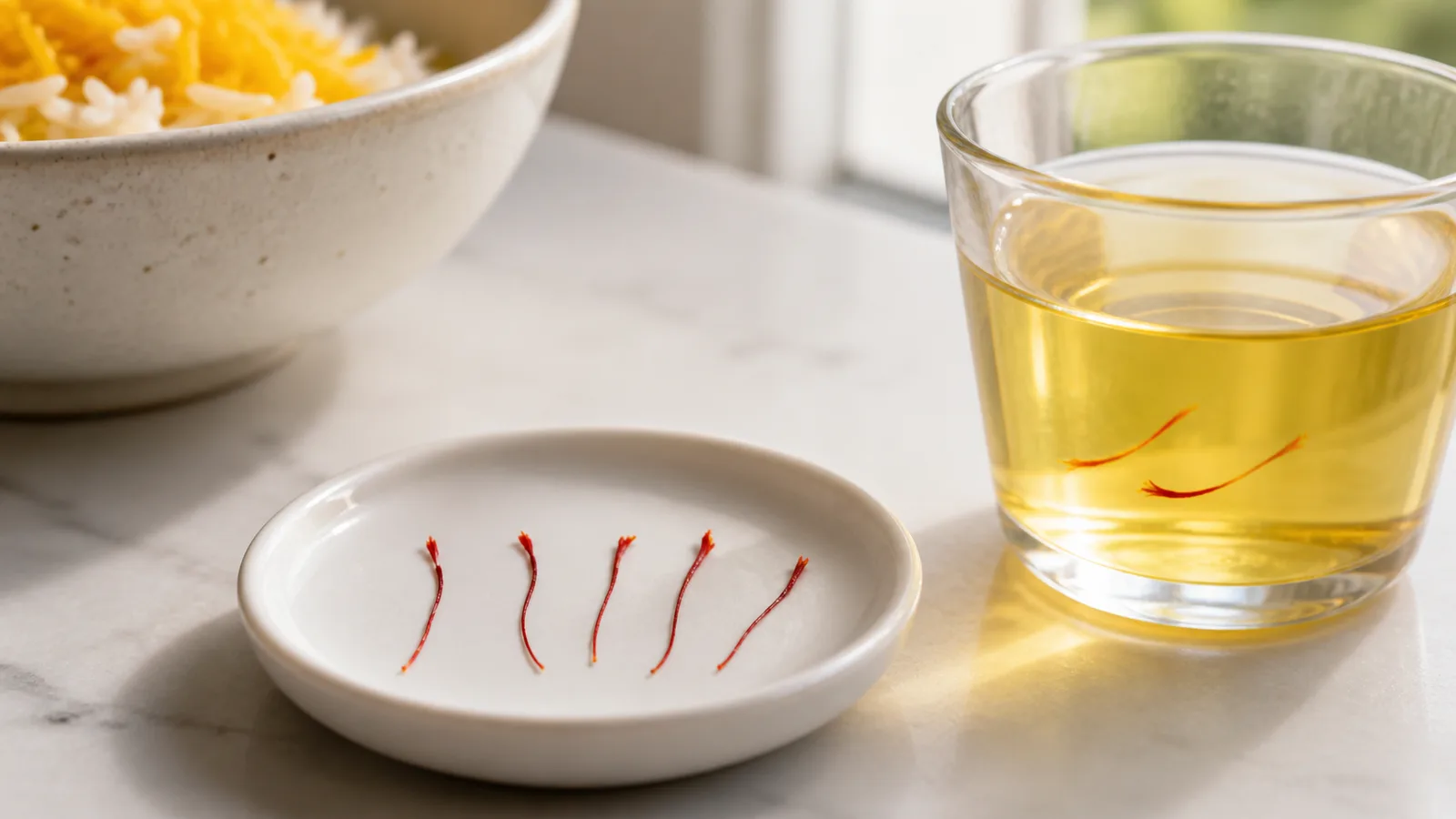
Iran is usually the best answer to “In which country is saffron the cheapest?” because it produces saffron at a scale no other country matches. Still, the cheapest saffron country is not a fixed title: grade, pack size, seller, taxes, exchange rates and authenticity can change the price a buyer actually pays.
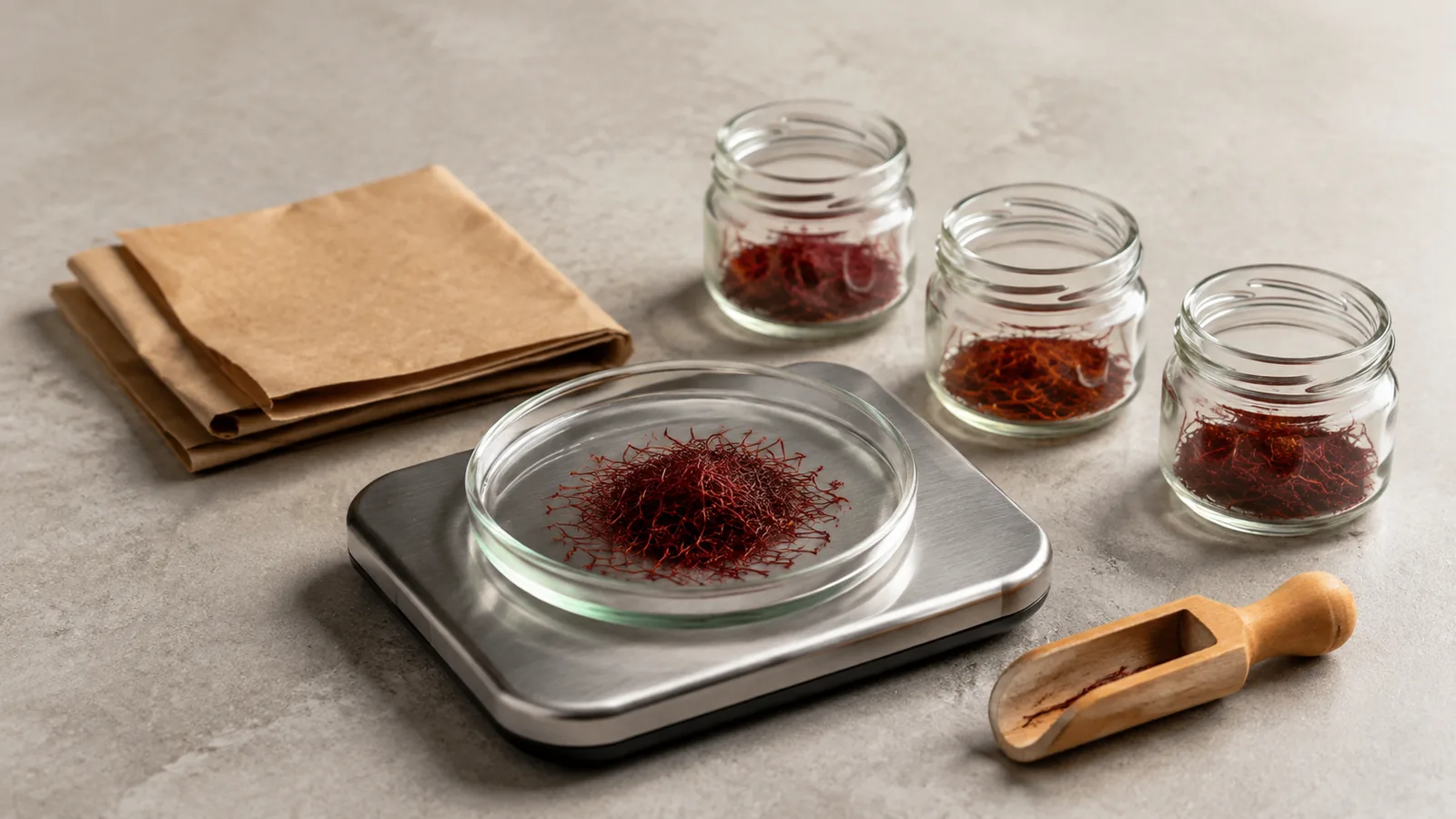
Why saffron is often cheapest in Iran
Iran’s production scale is the main reason. The UN Food and Agriculture Organization reported in September 2025 that Iran produces more than 90% of the world’s saffron. Much of the crop is grown in Razavi Khorasan and South Khorasan, where cultivation, harvesting and post-harvest skills are embedded in the local farming economy.
A buyer close to that production base may encounter shorter supply chains, more sellers and a wider choice of grades and pack sizes. Those conditions can support a lower local price than in a country where saffron has already passed through an exporter, importer, distributor and retailer. This is why searches for the cheapest saffron in the world so often lead to Iran.
That does not mean every Iranian offer is cheaper, or that origin removes the need to check quality. FAO also identifies adulteration and inconsistent post-harvest handling as continuing value-chain risks. A very low quote is not a saving if the pack is underweight, mixed with other material or poorly stored.
Is saffron cheaper in India?
India produces highly regarded saffron in Kashmir, but at a much smaller scale. “Kashmir Saffron” is a registered geographical indication in India, with a defined connection to Jammu and Kashmir. That protected origin, limited production and market demand can support a premium rather than the lowest price.
Within India, shoppers may also find imported Iranian saffron alongside Kashmiri products. A low Indian retail price therefore does not necessarily describe Indian-grown saffron. Check the stated country of origin, not only the country where the shop is located. On a like-for-like comparison of genuine threads and equivalent grade, Iran is generally the more plausible low-cost origin; the individual offer still decides the result.
What about Afghanistan, Spain and other producers?
Afghanistan
Afghanistan has developed an important saffron sector, particularly around Herat. Local production can be competitively priced, but smaller output, processing standards, packaging and export routes all affect the final figure. Afghan saffron is therefore a genuine alternative, not an automatic cheapest option.
Spain
Spain has a long saffron tradition and a strong reputation in international food markets. Spanish-grown, origin-certified or carefully packaged saffron often competes on provenance and quality rather than minimum price. Saffron sold in Spain may also have been grown elsewhere, so “bought in Spain” and “Spanish-grown” are different claims.
Morocco, Greece and other smaller origins
Morocco, Greece and several other countries produce distinctive regional saffron. Their limited output and specialist positioning can make them more expensive at retail, particularly after export. A seasonal local-market offer could still undercut an imported product. That is why no country comparison remains correct without a date, market level and product specification.
Why country prices are easy to compare badly
Two listings can both say “saffron” while describing materially different products. Before deciding which is cheaper, align these details:
- Weight: convert both offers to the same price per gram. A kilogram quote is usually a wholesale or trade figure and should not be compared directly with a one-gram retail jar.
- Form: compare threads with threads. Powder is harder to inspect and may be priced differently.
- Grade and composition: all-red stigma products, mixed red-and-yellow styles and different cutting grades are not equivalent.
- Market level: farm-gate, wholesale, export and retail prices include different services and margins.
- Delivery basis: shipping, insurance, duty, tax, laboratory documents and local handling can change the landed cost.
- Date and currency: harvest conditions and exchange rates move. A price without a date is incomplete.
For more detail on those variables, see our guide to what determines the cost of saffron. It is more useful than copying a fixed price that may already be stale.
How to compare a price per gram or per kilogram
Start with the net saffron weight, excluding the jar or presentation box. Divide the total product price by the number of grams. If a 5-gram pack costs 40 in the seller’s currency, the base product price is 8 per gram. Then add delivery, duty and tax to calculate the amount you will actually pay.
For a kilogram offer, ask whether the quote is retail, wholesale or export trade, and what documents and delivery terms are included. One kilogram equals 1,000 grams, but simply multiplying a one-gram luxury-pack price by 1,000 will rarely produce a realistic bulk comparison. Large orders also require stronger verification, not less.
Cheap saffron versus good value
The lowest number is useful only after authenticity and quality are credible. Whole threads should be traceable to an origin and lot, stored away from moisture and strong light, and sold with enough information to identify the product. For a commercial purchase, agree on grade, moisture or test requirements, packaging, net weight, harvest or packing date and the point at which shipping risk transfers.
Retail buyers should be cautious when an offer is dramatically below comparable genuine-thread products. The better question is not only “Where is the cheapest place to buy saffron?” but “What exactly is included at that price?” A slightly higher price for verifiable threads can yield more colour and aroma per dish than a cheap but weak or adulterated product.
The practical answer
Iran is usually the cheapest major saffron-producing country, especially near the source or in an efficient wholesale supply chain. India, Afghanistan, Spain, Morocco and Greece can all offer excellent saffron, but none is consistently cheapest across every grade, seller and destination.
Use country as the first clue, not the final decision. Compare the same form and grade, calculate the landed price per gram, confirm origin and authenticity, and date the quote. That gives a defensible comparison without mistaking an unusually low price for a genuinely better purchase.
Sources: the FAO’s 2025 saffron production and authenticity update and the Government of India’s Kashmir Saffron geographical-indication record.